Pea Plant Punnett Square Worksheet Answer Key for Genetics Practice
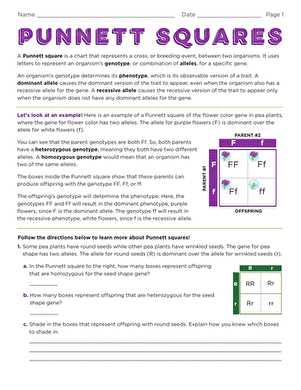
To master the inheritance patterns of traits, it’s crucial to understand how dominant and recessive alleles interact. Use the following guide to check your results when solving genetic problems involving two traits. If you’re struggling to predict outcomes correctly, focus on understanding allele combinations and how they determine phenotypic ratios in offspring.
Begin by identifying the genotypes of the parents involved in the cross. One of the most common approaches is to assign one allele as dominant (represented by an uppercase letter) and the other as recessive (lowercase letter). For example, if you’re working with two traits where the dominant allele is A and the recessive allele is a, start by writing down the potential genetic combinations each parent can pass on.
The next step is to cross these alleles by filling out a grid, marking possible genetic outcomes for the offspring. It’s important to account for all combinations of alleles that can occur. After performing the cross, you’ll be able to calculate the probability of offspring inheriting specific traits based on the genetic makeup of the parents. Make sure to double-check each step to ensure the accuracy of your calculations, especially when determining phenotypic ratios.
Determining Genotypic and Phenotypic Ratios in Hereditary Crosses
Use this method to calculate the genetic outcomes from crosses involving traits governed by simple Mendelian inheritance patterns. The dominant allele will always mask the expression of the recessive allele when both are present in an individual. First, identify the alleles involved: capital letters represent dominant traits, and lowercase letters represent recessive traits.
For example, if a cross involves a heterozygous individual (Tt) crossed with a homozygous recessive individual (tt), the probability distribution of offspring genotypes can be represented by a 2×2 grid. This method is useful for determining the possible genetic combinations in the offspring.
| Gametes | T | t |
|---|---|---|
| t | Tt | tt |
| t | Tt | tt |
In this case, 50% of the offspring will be heterozygous (Tt), and 50% will be homozygous recessive (tt). This results in a 1:1 genotypic ratio. Phenotypically, the heterozygous individuals will display the dominant trait, while the homozygous recessive individuals will express the recessive trait.
Next, calculate the probabilities of inheriting specific traits. In this case, the probability of obtaining the dominant phenotype is 50%, and the probability of the recessive phenotype is also 50%. This method applies equally to traits like seed color or height, where one allele is dominant over the other.
Understanding Genetic Crosses in Inheritance Patterns
To predict the outcome of offspring from a genetic cross, break down the process into manageable steps. Begin by identifying the alleles involved and the parent genotypes. Once these are known, the next step is determining how the alleles combine through random fertilization, taking into account dominant and recessive traits.
Each parent contributes one allele for each gene to their offspring, so it is crucial to track these contributions. Dominant alleles, which mask the effect of recessive alleles, will appear in the phenotype if present in a single copy. Recessive traits will only manifest when an individual inherits two copies of the recessive allele.
Use a grid to visualize the potential combinations of alleles. Each box within the grid represents a possible offspring genotype, showing how the alleles from each parent align. The key is to list all potential allele combinations from both parents, ensuring that every possibility is covered.
For instance, consider a cross between two organisms with genotypes Aa and Aa. Each parent can pass on either an A (dominant) or a (recessive) allele. The offspring could inherit any combination, leading to the following probabilities for the genotype outcomes:
- AA (homozygous dominant)
- Aa (heterozygous dominant)
- aa (homozygous recessive)
Knowing the probability of each outcome is key to understanding how traits are passed down through generations. The ratio of different genotypes will help predict the likelihood of certain traits appearing in offspring.
To gain deeper insights into genetic inheritance, practice with multiple crosses and different genetic traits. As you become more familiar with the process, understanding complex genetic interactions like incomplete dominance or co-dominance will also become easier to grasp.
Key Terminology for Genetic Crosses in Garden Species
Dominant allele refers to a variant of a gene that expresses its effect even when paired with a different form of the gene. This allele will mask the presence of a recessive counterpart in heterozygous individuals.
Recessive allele can only manifest its traits when paired with another recessive allele. In the presence of a dominant allele, its effect is hidden.
Homozygous describes an organism with two identical alleles for a particular gene. This can be either two dominant or two recessive alleles.
Heterozygous refers to an organism that has two different alleles for a given gene, one dominant and one recessive.
Genotype represents the genetic makeup of an individual, specifically the combination of alleles inherited from both parents.
Phenotype refers to the observable characteristics or traits of an individual, which are influenced by the genotype and environmental factors.
Genetic ratio is the ratio of different genotypes that appear in offspring as a result of a cross. This ratio can be predicted through the use of a genetic diagram.
F1 generation is the first generation of offspring produced from a cross between two parental organisms. These individuals inherit one allele from each parent.
F2 generation is the second generation, produced by crossing individuals from the F1 generation. This generation often shows a wider variety of genetic combinations.
Monohybrid cross involves the inheritance of a single characteristic, with each parent contributing one allele for that trait.
Dihybrid cross examines the inheritance of two traits simultaneously, often revealing more complex patterns of genetic inheritance.
Step-by-Step Guide to Solving Pea Plant Inheritance Diagrams
1. Identify the genotype of both organisms involved in the cross. Determine whether they are homozygous or heterozygous for the traits you’re studying. For example, a dominant trait may be represented as “AA” or “Aa,” and a recessive trait as “aa.” This is the first step to understanding the genetic potential of the offspring.
2. Create a grid to organize the possible combinations of alleles. Each box represents a possible genotype for the offspring. Place one parent’s alleles along the top and the other parent’s alleles down the side of the grid.
3. Fill in the grid by combining the alleles from the corresponding rows and columns. Each square represents a potential genetic outcome of the cross. For example, crossing “Aa” with “aa” could produce “Aa” or “aa” offspring, based on the combination in each square.
4. Analyze the results. The frequency of each genotype in the grid will help predict the probability of specific traits appearing in the next generation. Calculate the percentage of each genotype represented by the boxes in the grid.
5. Interpret the results based on the traits you’re studying. The dominant allele will typically determine the phenotype of the organism if present. For example, if “A” represents a dominant trait and “a” represents a recessive trait, the offspring with “Aa” or “AA” will express the dominant phenotype.
How to Interpret Genotypic Ratios in Crosses
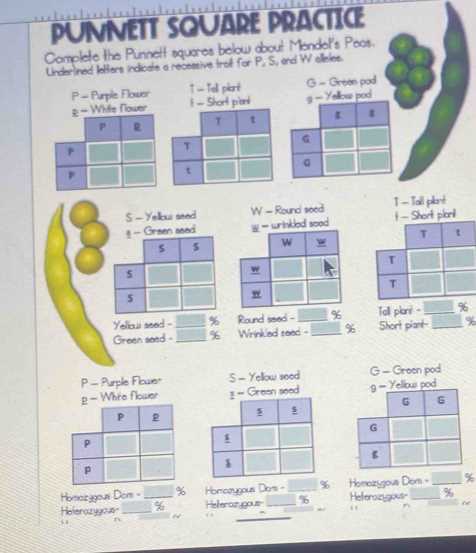
To interpret the genotypic ratios, focus on the combination of alleles inherited from both parents. The ratio tells you how often each genotype appears in the offspring based on the cross.
For a typical monohybrid cross with two heterozygous parents (Tt x Tt), the possible genotypes are: TT, Tt, and tt. The ratio will be 1 TT: 2 Tt: 1 tt. This means, for every four offspring, one will have the homozygous dominant genotype, two will be heterozygous, and one will be homozygous recessive.
In a dihybrid cross, you need to account for both traits. For example, if both traits follow Mendelian inheritance, a cross like AaBb x AaBb will give a 9:3:3:1 genotypic ratio. This implies 9 offspring will inherit both dominant traits, 3 will inherit the dominant trait for the first gene but recessive for the second, and so on.
Understanding these ratios helps predict the genetic composition of offspring, guiding breeding decisions or genetic studies.
Analyzing Phenotypic Ratios for Traits in Genetics
To predict the inheritance of specific characteristics, genetic ratios derived from dominant and recessive alleles can be calculated. For a given trait, the phenotypic ratio reflects the likelihood of expressing certain visible features in the offspring.
The most common ratio encountered in Mendelian genetics is the 3:1 ratio, which typically arises from the cross of two heterozygous individuals. This ratio indicates a 75% chance for the dominant trait to appear and a 25% chance for the recessive trait to manifest.
- Dominant Trait Expression: The dominant allele usually results in the expression of a particular characteristic. When an organism inherits at least one dominant allele, the trait will be visible.
- Recessive Trait Expression: A recessive trait is only observable when an organism inherits two recessive alleles (homozygous recessive). This results in the 25% occurrence rate when both parents contribute recessive alleles.
In some cases, a 1:2:1 ratio might appear, which is common when the trait exhibits incomplete dominance. Here, the heterozygous offspring express an intermediate phenotype between the two homozygous conditions.
For traits controlled by multiple genes (polygenic traits), the phenotypic ratio becomes more complex. These ratios can involve the additive effects of multiple alleles, leading to a spectrum of possible outcomes. The inheritance of such traits requires a more nuanced analysis of multiple gene interactions.
For further detailed reading on genetic inheritance patterns and phenotypic analysis, consult resources like the National Center for Biotechnology Information.
Common Mistakes in Genetic Cross Calculations
One common error is neglecting to account for both alleles when determining possible offspring combinations. Ensure that both the dominant and recessive alleles from each parent are correctly represented across all boxes. This mistake can lead to an inaccurate distribution of traits.
Another issue arises from improper interpretation of genotype ratios. For example, confusing heterozygous and homozygous combinations can mislead the expected phenotype ratios. Make sure to distinguish between dominant and recessive traits based on allele pairing.
Double-check your initial setup of alleles. Mislabeling one parent’s genotype or switching alleles between individuals can cause the entire diagram to be inaccurate, which cascades down through the resulting predictions.
When calculating probabilities, remember that each box represents an independent event. Multiply the probability of individual alleles correctly to avoid miscalculating the chances of particular traits.
Lastly, ignoring the possibility of non-Mendelian inheritance patterns (like incomplete dominance or co-dominance) can result in flawed predictions. Ensure that the genetic model being used is compatible with the traits in question, especially when they do not follow classic dominant/recessive rules.
Real-Life Applications of Genetic Principles in Breeding
Understanding the inheritance patterns of traits in organisms offers a practical foundation for improving agricultural practices. By applying basic genetic principles, such as dominance, recessiveness, and independent assortment, scientists and farmers have successfully bred new varieties with desirable features, from disease resistance to higher yields.
In livestock breeding, knowledge of genetic transmission allows breeders to selectively pair animals with specific traits, such as faster growth or improved milk production. This method ensures that valuable characteristics are passed down to future generations, increasing productivity and efficiency in farming.
In the development of crop varieties, these principles enable the creation of plants with enhanced nutritional value, drought tolerance, or pest resistance. By manipulating genetic combinations, agricultural scientists can introduce traits that better suit changing environmental conditions, ensuring food security despite unpredictable weather patterns.
In medicine, understanding inheritance patterns plays a key role in the study of genetic disorders. Researchers utilize these principles to develop therapies or preventive measures for conditions caused by genetic mutations. These advances have led to treatments for a variety of inherited diseases, such as cystic fibrosis and sickle cell anemia.
Environmental conservation efforts also benefit from genetic knowledge. By preserving genetic diversity in endangered species, conservationists can help maintain healthy populations that are better equipped to adapt to shifting ecosystems and climate change.
How to Use the Answer Key for Practice and Review
To maximize learning, focus on comparing your results with the provided solutions after completing each exercise. Check for any discrepancies in your calculations or logic, and identify where mistakes occurred. This will help you understand why a particular outcome was reached and solidify your grasp of genetic principles. If a mistake is found, retrace your steps carefully, ensuring each step is correctly applied. Revisiting the relevant concepts or examples will often clear up any confusion.
After completing several rounds of practice, use the provided solutions as a reference to assess patterns in your errors. Are certain steps or rules consistently misunderstood? Target those areas for review. If you’re unsure about why a specific conclusion is correct, break down the process step by step, referencing both the instructions and your original work. Keep challenging yourself by attempting similar problems to reinforce these concepts and build confidence.
Finally, use the provided answers as a tool to test your progress. Try solving the problems without looking at the solutions, and compare your results after completing them. If your answers are correct, move on to more complex scenarios to further improve your skills. If discrepancies remain, continue practicing and referring back to the solution set as needed. Regular self-assessment will ensure a strong understanding and mastery of the material.