Complete Answer Key for Basic English Grammar Questions
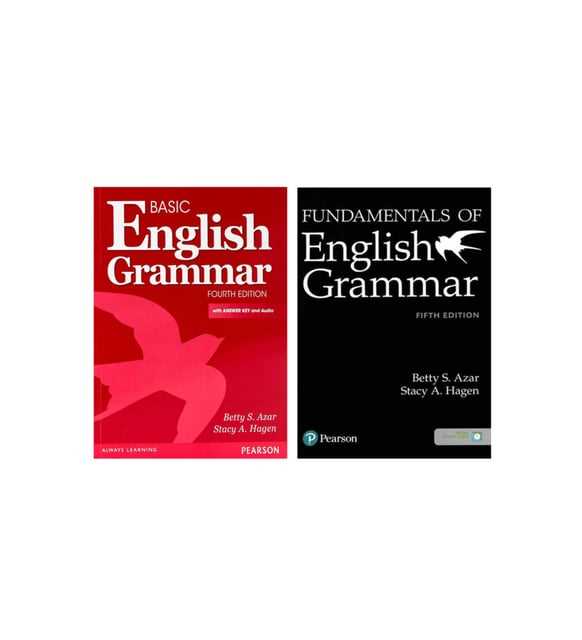
To improve your writing and speaking, it’s crucial to understand how to properly structure sentences and apply language rules. Focus first on mastering subject-verb agreement, as this is foundational for building clear and accurate statements. Always ensure the subject matches the verb in number and person. For example, “He runs” is correct, while “He run” is not.
Next, practice the correct use of tenses. Consistency in verb tense ensures that your writing makes sense to readers or listeners. For instance, mixing past and present tenses within a single sentence can confuse the meaning. To avoid mistakes, always check the timeline of events and stick to one tense unless a change in time is necessary.
Punctuation also plays a key role in clarity. Misplaced commas, periods, or quotation marks can change the entire meaning of a sentence. Make it a habit to review your writing for proper punctuation before finalizing it. For example, using a comma after introductory phrases helps separate thoughts clearly, such as in the sentence “After school, I went home.”
Additionally, understanding the role of articles, prepositions, and pronouns helps in creating coherent and accurate expressions. Practice identifying the correct article (“a,” “an,” or “the”) and how it relates to the nouns in your sentences. Also, pay attention to common mistakes with prepositions, such as “at the weekend” (correct) versus “in the weekend” (incorrect), and ensure pronouns match their antecedents in both number and gender.
Understanding the Structure of Simple Sentences
Begin by identifying the subject and the predicate in each sentence. The subject typically indicates the person, place, or thing performing the action, while the predicate shows the action or state of being. For example, in “The dog runs,” “The dog” is the subject and “runs” is the predicate.
Identifying Parts of Speech and Their Functions
Focus on recognizing different parts of speech, such as nouns, verbs, adjectives, and adverbs. Knowing the function of each word helps you understand the sentence’s overall meaning. For example, an adjective modifies a noun, as in “The red ball,” where “red” describes the ball.
Subject-Verb Agreement in Different Tenses
Ensure the verb agrees with the subject in both number and person. For example, “She walks” (singular subject) vs. “They walk” (plural subject). Pay close attention to irregular verbs, like “He goes” vs. “They go,” to avoid errors in subject-verb agreement.
Common Sentence Fragments and How to Fix Them
Watch for incomplete thoughts that lack a subject or predicate. A fragment like “Running down the street” doesn’t form a complete idea. To fix it, add a subject: “She is running down the street.” This ensures your sentences are fully formed.
Proper Use of Articles and Prepositions
Articles (“a,” “an,” “the”) should be used before nouns to indicate specificity. For example, “I saw a car” (any car) vs. “I saw the car” (a specific car). Prepositions, like “in,” “on,” and “at,” help show the relationship between other words, such as “The book is on the table.”
Understanding and Using Pronouns Correctly
Pronouns replace nouns to avoid repetition. Ensure they agree in gender and number with the noun they replace. For example, “John is tall. He is also strong.” “He” replaces “John” and must agree with it in singular form.
Common Mistakes with Punctuation
Pay attention to commas, periods, and apostrophes. A common error is misplacing commas in compound sentences. For example, “I went to the store, and I bought milk” is correct, while “I went to the store and I bought milk” can confuse the reader.
How to Recognize and Correct Run-on Sentences
A run-on sentence occurs when two independent clauses are joined without proper punctuation or a conjunction. For example, “She loves reading she has many books.” Correct it by adding a period or a comma and conjunction: “She loves reading, and she has many books.”
| Example | Correction |
|---|---|
| She loves reading she has many books. | She loves reading, and she has many books. |
| I like tea it is very soothing. | I like tea; it is very soothing. |
How to Identify Sentence Types and Their Functions
To identify sentence types, focus on their structure and purpose. There are four primary types: declarative, interrogative, exclamatory, and imperative. Each serves a different function in communication.
- Declarative sentences make statements and end with a period. For example, “The cat is sleeping.” Their function is to provide information.
- Interrogative sentences ask questions and end with a question mark. For example, “Is the cat sleeping?” These sentences aim to request information.
- Exclamatory sentences express strong emotions and end with an exclamation mark. For example, “What a beautiful cat!” They convey excitement or surprise.
- Imperative sentences give commands, requests, or suggestions. They can end with a period or exclamation mark, depending on the tone. For example, “Please feed the cat.” Their function is to instruct or prompt action.
Recognizing these types will help you understand the purpose behind a sentence and how to use them correctly in various contexts.
Understanding Subject-Verb Agreement Rules
To ensure sentences are grammatically correct, the subject and verb must agree in number (singular or plural). Here’s how to apply the rules:
- Singular subjects take singular verbs. Example: “The dog runs every morning.” In this case, “dog” is singular, and “runs” is the singular verb form.
- Plural subjects take plural verbs. Example: “The dogs run every morning.” Since “dogs” is plural, “run” is used as the plural verb form.
- When the subject is a collective noun, it can take either a singular or plural verb depending on whether the group is acting as a unit or as individuals. Example: “The team plays well” (singular) vs. “The team are arguing among themselves” (plural).
- Subjects joined by “and” generally take a plural verb. Example: “The cat and the dog are playing together.” Both “cat” and “dog” are plural, so “are” is used.
- Subjects joined by “or” or “nor” take the verb that agrees with the nearest subject. Example: “Either the teacher or the students are ready.” “Students” is closest to the verb, so a plural verb is used.
Following these rules ensures subject-verb agreement, helping your writing sound clear and accurate. Pay attention to exceptions and context to avoid errors in agreement.
Common Mistakes with Tenses and How to Avoid Them
One common mistake is the incorrect use of the present perfect tense. Many learners use it when describing past actions without considering their connection to the present. Example: “I have eaten lunch at noon.” This is incorrect unless you are referring to the present result of the action. The correct form would be: “I ate lunch at noon.”
Another issue is confusion between the past simple and the present perfect. The past simple describes a completed action in the past, while the present perfect focuses on actions with relevance to the present. Example: “I have gone to the store yesterday” is wrong. The correct sentence is: “I went to the store yesterday.”
In addition, many learners mix up the future continuous tense with the simple future. The future continuous should describe an action that will be in progress at a specific future time. Example: “At 10 AM tomorrow, I will be studying.” The mistake is saying, “I will study at 10 AM,” which sounds incomplete for this context.
To avoid these mistakes, focus on the tense’s specific function. Make sure the time frame and action’s relevance to the present or future are clearly understood. Regular practice and paying attention to time expressions will help reinforce correct tense usage.
Using Proper Punctuation in Simple and Complex Sentences
In simple sentences, punctuation is straightforward. A period (.) is used to mark the end of a statement. If the sentence is a question, use a question mark (?). For commands, use an exclamation mark (!). Example: “She runs every day.” “Do you want coffee?” “Go to bed!”
For complex sentences, punctuation plays a crucial role in ensuring clarity. A comma (,) is often used to separate independent clauses joined by conjunctions like “and,” “but,” or “because.” Example: “I wanted to go to the park, but it started raining.” If the sentence starts with a dependent clause, a comma is typically placed after it. Example: “Although it was raining, we went to the store.”
In more advanced structures, semicolons (;) are used to link closely related independent clauses without a conjunction. Example: “She loves reading; he enjoys writing.” Colons (:) introduce lists or explanations. Example: “He bought three things: milk, bread, and eggs.”
To master punctuation, regularly practice identifying sentence types and punctuating them accordingly. For more detailed guidelines, you can refer to authoritative sources like the Purdue OWL.
Clarifying the Use of Articles in English
Articles play a key role in determining the specificity of a noun. There are two types: definite and indefinite.
The definite article “the” is used to refer to a specific item or concept known to both the speaker and listener. Example: “I saw the car you mentioned yesterday.” Here, “the car” is a particular car that both the speaker and listener know.
The indefinite articles “a” and “an” are used to refer to a general item or concept, not a specific one. “A” is used before consonant sounds, while “an” is used before vowel sounds. Example: “She has a book.” “I saw an elephant at the zoo.” Neither the book nor the elephant is specific or known to both parties.
Remember: Use “the” when the noun is specific or previously mentioned, and “a” or “an” when referring to something more general or when it is being mentioned for the first time.
Commonly Confused Pronouns and Their Correct Usage
The pronouns “who” and “whom” are often confused. “Who” is used as the subject of a sentence, while “whom” functions as the object. Example: “Who is coming to the party?” (subject) vs. “To whom should I address the letter?” (object).
“They” and “them” also cause confusion. “They” is a subject pronoun, while “them” is an object pronoun. Example: “They went to the store.” (subject) vs. “I saw them at the store.” (object).
Another common issue is mixing “its” and “it’s.” “Its” is a possessive pronoun, indicating ownership, while “it’s” is a contraction for “it is” or “it has.” Example: “The dog chased its tail.” vs. “It’s raining outside.”
Be mindful of using “I” vs. “me” correctly. “I” is used as the subject, while “me” is used as the object. Example: “John and I went to the store.” vs. “She saw John and me at the store.”
Understanding Prepositions and Their Role in Sentences
Prepositions link nouns, pronouns, or phrases to other words in a sentence, showing relationships of time, place, direction, cause, or manner. For example, “The book is on the table.” Here, “on” shows the position of the book.
When describing location, common prepositions include “in,” “on,” “at,” “under,” and “beside.” Example: “The keys are under the couch.” In this case, “under” indicates the position of the keys in relation to the couch.
For time-related contexts, use prepositions like “in,” “on,” “at,” and “during.” Example: “We will meet at 5 o’clock.” “At” specifies the exact time of the meeting.
Prepositions can also indicate direction or movement. “To,” “into,” “onto,” and “towards” are often used in these cases. Example: “She walked to the door.” “To” shows the direction of her movement.
Incorrect usage of prepositions can lead to confusion. For instance, saying “She is married with him” instead of “She is married to him” is incorrect. Always pay attention to the correct preposition for specific verbs and contexts.
Tips for Correct Word Order in Questions and Statements
To form a proper statement, place the subject first, followed by the verb, and then the object. For example, “She reads books.” The structure is subject-verb-object.
For yes/no questions, invert the subject and the auxiliary verb. Example: “Is she reading?” “Is” comes before the subject “she.” For negative questions, include “not”: “Is she not reading?”
In questions with wh-words (who, what, where, etc.), the word order changes slightly. Start with the wh-word, followed by the auxiliary verb, the subject, and then the main verb. Example: “What did you eat?”
When forming questions with modal verbs, invert the modal verb and the subject. Example: “Can she swim?” “Can” precedes the subject “she.”
Be careful with word order in indirect questions. The word order for indirect questions mirrors that of a statement. Example: “Can you tell me where she lives?” (not “Can you tell me where does she live?”)
Here are key points to remember for correct word order:
- Statements: Subject + Verb + Object.
- Yes/No questions: Auxiliary verb + Subject + Main verb.
- Wh-questions: Wh-word + Auxiliary verb + Subject + Main verb.
- Indirect questions: Statement word order.