Detailed Breakdown of Cell Organelles Structure and Function
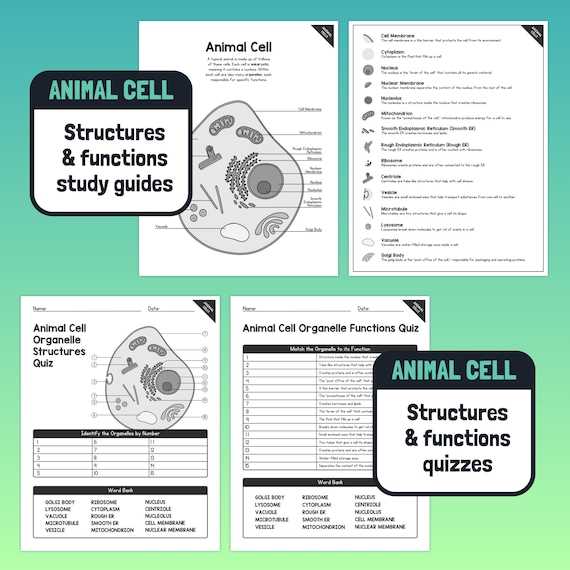
To fully grasp the mechanisms that govern life at a microscopic level, it’s important to explore how various internal components interact within the framework of the living entity. These components perform specific tasks that are crucial for the maintenance and growth of the organism. By thoroughly understanding their roles, you can gain a deeper appreciation for the complexity of life itself.
Each of these components is designed to carry out a unique set of functions that support the cell’s overall operations. Whether it’s energy production, protein synthesis, or cellular transport, these structures work in concert to ensure that the cell remains functional and healthy. Studying their individual roles allows for a clearer understanding of how they contribute to the life cycle and overall homeostasis.
Focusing on their architectural features and the distinct jobs they perform provides a foundation for understanding the biological processes that enable organisms to thrive. Recognizing how these parts work together can also help in solving more complex questions regarding cellular processes and their potential impact on health and disease.
Internal Components and Their Roles in Living Organisms
The nucleus is the control center, housing genetic material and coordinating the activities of the cell, including growth, protein synthesis, and reproduction. It contains the DNA, which is essential for carrying genetic instructions.
The mitochondrion is responsible for energy production, converting nutrients into adenosine triphosphate (ATP), the energy currency for many cellular processes. These structures are often referred to as the powerhouse of the cell due to their role in generating power for various cellular functions.
Ribosomes are the sites of protein synthesis, where messenger RNA (mRNA) is translated into protein chains. They can be found floating freely in the cytoplasm or attached to the endoplasmic reticulum, which helps in the modification and transport of proteins.
The endoplasmic reticulum (ER) has two forms: rough and smooth. The rough ER, studded with ribosomes, is involved in protein synthesis and folding. The smooth ER lacks ribosomes and is involved in lipid synthesis and detoxification processes.
The Golgi apparatus functions as the cell’s packaging and distribution center. It processes and sorts proteins and lipids, which are then distributed to other parts of the cell or sent outside the cell.
Lysosomes contain enzymes that break down waste materials, cellular debris, and foreign invaders. They are involved in cellular cleanup and recycling, helping maintain the cell’s health and efficiency.
The cytoskeleton provides structural support to the cell. It is a network of protein filaments and tubules that maintain the shape, help in movement, and are involved in cell division.
Vacuoles, primarily found in plant cells, are used for storage of nutrients, waste products, and other substances. They help maintain turgor pressure and store materials that are essential for the cell’s survival and function.
Understanding the Structure of the Nucleus and Its Role
The nucleus is surrounded by a double-layered membrane called the nuclear envelope, which regulates the entry and exit of molecules. This membrane contains nuclear pores that allow for selective exchange between the nucleus and the cytoplasm.
Inside the nucleus, chromatin consists of DNA wrapped around histone proteins. This complex serves as the blueprint for cellular activities, as it contains genetic instructions for the synthesis of proteins and other essential molecules. During cell division, chromatin condenses to form chromosomes.
The nucleolus, a dense structure within the nucleus, is responsible for the production of ribosomal RNA (rRNA), which is essential for assembling ribosomes. These ribosomes are then transported out of the nucleus to the cytoplasm for protein synthesis.
The primary role of the nucleus is to store and protect genetic material, ensuring that cellular processes such as replication, transcription, and repair can occur accurately. By regulating gene expression, the nucleus plays a central role in controlling cell function and maintaining cell integrity.
To maintain proper cellular activity, the nucleus is involved in the regulation of the cell cycle, particularly in processes such as DNA replication, transcription, and repair. The nucleus ensures that the cell can replicate its DNA and pass on accurate genetic information during cell division.
The Function and Structure of Mitochondria in Energy Production
Mitochondria are responsible for converting energy stored in nutrients into a usable form, primarily ATP, through cellular respiration. They are often referred to as the “powerhouses” of the cell due to their role in energy production.
The outer membrane of mitochondria acts as a barrier, while the inner membrane contains folds called cristae, which increase surface area for energy production. The inner membrane houses the enzyme complexes that drive the electron transport chain and ATP synthesis.
The matrix, the innermost part of the mitochondrion, contains enzymes for the citric acid cycle (Krebs cycle), which breaks down organic molecules to produce high-energy molecules like NADH and FADH2. These molecules are then used in the electron transport chain to generate ATP.
The process of cellular respiration within mitochondria can be broken down into three main stages: glycolysis, the citric acid cycle, and oxidative phosphorylation. The end result is the production of ATP, which powers various cellular activities.
In addition to energy production, mitochondria are involved in regulating cellular processes such as cell growth, differentiation, and apoptosis (programmed cell death). They play a key role in maintaining cellular health by responding to changes in energy demands and environmental conditions.
How the Endoplasmic Reticulum Supports Protein Synthesis
The endoplasmic reticulum (ER) plays a central role in the synthesis, folding, and transport of proteins within a cell. It consists of two types: rough and smooth, each with distinct responsibilities in protein production.
The rough ER is studded with ribosomes, which are responsible for translating messenger RNA (mRNA) into polypeptide chains. These ribosomes work together with the ER membrane to facilitate the direct insertion of the newly synthesized polypeptides into the ER lumen for further processing.
Once inside the rough ER, proteins undergo modifications, including glycosylation, which adds sugar groups to proteins. This step is crucial for their proper folding and functionality. The ER’s internal environment also assists in maintaining the correct conditions for protein folding, preventing misfolded proteins from being released.
Following synthesis and modification, the proteins are packaged into vesicles, which bud off from the rough ER. These vesicles are then transported to the Golgi apparatus for further sorting and packaging before being sent to their final destinations within or outside the cell.
The smooth ER, while not directly involved in protein synthesis, plays an important role in lipid metabolism and the detoxification of harmful substances. Its function in maintaining cellular homeostasis indirectly supports the overall process of protein production by ensuring a stable cellular environment.
Role of Ribosomes in Cellular Function and Protein Formation
Ribosomes are critical in the process of translating genetic information into functional proteins. These molecular machines are made up of RNA and proteins and can either be free in the cytoplasm or attached to the rough endoplasmic reticulum.
The primary role of ribosomes is to synthesize proteins by translating messenger RNA (mRNA) into a specific amino acid sequence. This process is known as translation. The mRNA sequence provides the instructions for which amino acids should be added to the growing polypeptide chain.
Each ribosome consists of two subunits: a large and a small subunit. The small subunit binds to the mRNA, while the large subunit is responsible for catalyzing the formation of peptide bonds between amino acids, thus elongating the protein chain.
Ribosomes also play a key role in determining the accuracy of protein synthesis. They ensure that the correct tRNA molecules, carrying the appropriate amino acids, align with the mRNA codons. This precise matching process is crucial for producing proteins with the correct sequence and structure, which directly affects their functionality.
In addition to their role in protein synthesis, ribosomes are involved in quality control. Misfolded or improperly synthesized proteins are often identified and discarded to maintain cellular health and prevent malfunction.
Golgi Apparatus and Its Role in Protein Modifications
The Golgi apparatus is central to modifying proteins that are synthesized in the rough endoplasmic reticulum. It processes, sorts, and packages proteins into vesicles for transport to their destinations within or outside the cell.
Proteins entering the Golgi apparatus undergo several modifications, including glycosylation, where sugar molecules are added to the protein. This modification is vital for the protein’s stability, recognition, and activity. Phosphorylation, another common modification, regulates protein activity and cellular signaling.
The Golgi apparatus also facilitates the assembly of complex protein structures, modifying them to their final functional forms. It is responsible for creating the final functional proteins that may need to be secreted from the cell, inserted into the plasma membrane, or sent to organelles like lysosomes.
The Golgi’s unique structure consists of flattened membranous sacs called cisternae, where enzymes catalyze these modifications. After processing, proteins are packaged into vesicles that bud off from the Golgi and travel to their specific destinations.
For further reading, visit National Center for Biotechnology Information for authoritative resources on this topic.
Chloroplasts in Plant Cells and Their Role in Photosynthesis
Chloroplasts are the site where photosynthesis takes place in plants. These specialized structures convert light energy into chemical energy by using sunlight, carbon dioxide, and water to produce glucose and oxygen.
Inside chloroplasts, chlorophyll, the green pigment, captures light energy. This energy is used in the light-dependent reactions to generate ATP and NADPH, which are necessary for the Calvin cycle, where carbon dioxide is fixed into glucose.
Chloroplasts have a double membrane structure. The inner membrane encloses the stroma, a gel-like substance where the Calvin cycle occurs. Within the stroma are thylakoid membranes, which contain chlorophyll and other pigments involved in capturing light energy.
The process of photosynthesis is vital not only for plants but for all living organisms, as it is the foundation of energy transfer in ecosystems. The glucose produced can be used immediately for energy or stored as starch for later use.
Structure and Purpose of Lysosomes in Cellular Digestion
Lysosomes are membrane-bound vesicles containing digestive enzymes that break down waste materials and cellular debris. They are essential for maintaining cellular health by removing unwanted components, such as old organelles and foreign substances.
These organelles have an acidic internal environment, which allows the enzymes inside to function efficiently. Lysosomes fuse with vacuoles or other vesicles containing waste, where the enzymes degrade the contents into smaller molecules that can be reused or expelled from the cell.
Additionally, lysosomes play a role in apoptosis, the programmed cell death process, by breaking down cellular components that are no longer needed. This function is critical for maintaining proper tissue development and preventing abnormal growth.
In summary, lysosomes act as the cell’s recycling centers, performing vital tasks related to waste management and cellular maintenance, ensuring the efficient functioning of the overall system.
The Cytoskeleton: Supporting Structure and Cell Movement
The cytoskeleton is a dynamic network of protein filaments that provides support, shape, and mechanical strength to the cell. It serves as a framework that helps maintain the integrity of the cell, while also enabling cellular movement and transport of materials within the cell.
It is composed of three primary components: microtubules, actin filaments, and intermediate filaments. Microtubules are involved in maintaining cell shape, facilitating intracellular transport, and forming the mitotic spindle during cell division. Actin filaments, also known as microfilaments, contribute to cell movement, muscle contraction, and changes in cell shape. Intermediate filaments provide structural stability, especially in cells that experience mechanical stress.
In addition to structural support, the cytoskeleton plays a critical role in cell motility. It allows cells to move by interacting with motor proteins, such as kinesin and dynein, that “walk” along microtubules, transporting organelles or helping cells crawl across surfaces. This movement is crucial for processes such as wound healing, immune response, and development.
Thus, the cytoskeleton is not only a scaffolding structure but also a highly dynamic system that enables cells to move, adapt, and function efficiently in a variety of environments.