Step-by-Step Guide to Relative Dating Techniques and Answer Solutions
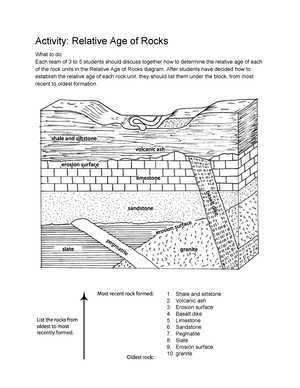
To correctly determine the sequence of events in geological history, it’s important to understand how to interpret the layers of rock and their relative positions. This approach allows you to estimate the age of a given sample without needing specific dates. One of the first steps is to recognize the principle of superposition, which states that the youngest layers are typically found at the top, while the oldest are at the bottom.
Another critical concept is the principle of original horizontality. It suggests that sediments are initially deposited in horizontal layers. Disturbances like folding or faulting can later alter these formations, but identifying the original positions of these layers is key to solving relative chronology puzzles.
As you progress through the exercises, pay attention to markers like unconformities or cross-cutting relationships. These features often signal significant events, such as erosion or intrusion, that help to place a sample in the correct sequence. Verifying your answers involves closely observing these relationships and ensuring consistency with known geological principles.
Relative Dating Worksheet Answer Key
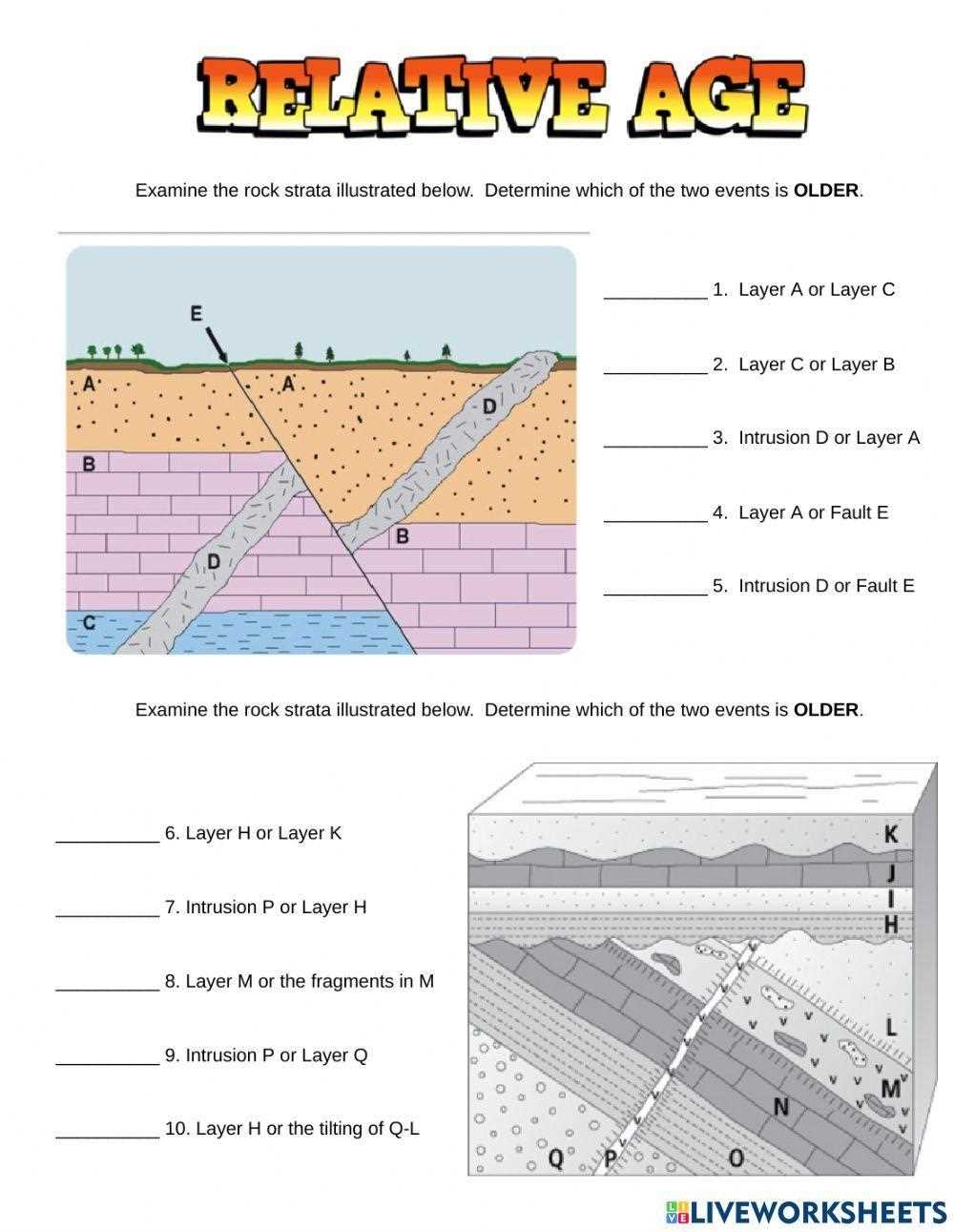
To interpret geological sequences accurately, it’s crucial to apply the correct principles and methods. Start by identifying the age relationship between different layers of rock. Remember, the principle of superposition indicates that the oldest layers lie at the bottom, while the youngest are at the top. This concept is the foundation for determining the order of events in Earth’s history.
Next, focus on recognizing features that disrupt this natural order, such as faults or intrusions. The principle of cross-cutting relationships states that any feature that cuts across another must be younger than the one it disrupts. Apply this when identifying the relative ages of rocks or fossils that have been altered by later geological processes.
For consistency, always check for unconformities–gaps in the geological record caused by erosion or periods of non-deposition. These often appear as irregular surfaces separating different layers of rock. Once you spot an unconformity, use it to refine your understanding of the sequence of events.
Lastly, practice cross-referencing these principles across different layers in the provided scenario. If you follow the correct steps and ensure each principle is applied logically, you’ll be able to solve most geological puzzles. The key is consistency in application, careful observation, and cross-checking findings against each other.
Understanding the Principles of Relative Time Analysis
The first principle to grasp is the Law of Superposition, which states that in any sequence of undisturbed layers, the oldest are at the bottom and the youngest are at the top. This is the basis for understanding the chronological order of rock layers or fossils found in them.
Next, the principle of Original Horizontality dictates that sedimentary layers are deposited as horizontal or nearly horizontal layers. If the layers are tilted, folded, or faulted, it indicates that some event occurred after their original deposition, which helps establish their relative age.
The Law of Lateral Continuity asserts that layers of rock extend laterally in all directions until they thin out or encounter a barrier. This principle helps in identifying and correlating rock layers across different regions.
The Law of Cross-Cutting Relationships is also crucial. This rule states that any geological feature that cuts across another feature must be younger than the one it disrupts. For example, a fault or an igneous intrusion is always younger than the rock layers it cuts through.
Finally, the principle of Faunal Succession is applied when fossils are found in different layers. By comparing the fossils found in various strata, scientists can determine the relative age of those layers based on the known evolutionary sequence of the organisms present.
By consistently applying these principles, one can reconstruct the sequence of events that led to the current arrangement of rocks and their contained fossils. This method helps place geological formations in a chronological framework without the need for absolute age measurements.
How to Identify Key Stratigraphic Layers
To identify key stratigraphic layers, begin by examining the basic principles of sediment deposition. Look for clear, horizontal layers of sediment or rock, which can indicate the relative ages of the strata. The law of superposition tells us that the deeper layers are older, so start by identifying the bottommost layers as the oldest.
Next, check for any signs of disturbance, such as folding, faulting, or tilting, which may suggest tectonic activity after the original deposition of the layers. Disturbed layers can still provide valuable context, but understanding when and why the disturbance occurred is crucial for accurate interpretation.
Pay close attention to the presence of fossils within the layers. Fossils can be used to correlate layers from different locations based on the principle of faunal succession. By identifying key fossil types in certain layers, you can estimate the relative age of the surrounding strata and link them to other known sequences.
Another important factor is the identification of unconformities, which represent gaps in the geological record. Unconformities occur when a layer of rock is eroded or otherwise lost before new layers are deposited on top. Recognizing an unconformity is vital for understanding the geological history of the area, as it marks a period of non-deposition or erosion.
Use available reference materials such as geological maps and regional stratigraphic charts to confirm your observations. These resources can help you match local layers with larger, well-documented sequences from the surrounding region. The US Geological Survey (USGS) provides reliable data and charts for stratigraphic studies. For more detailed resources, visit their site at USGS.
Using Superposition to Determine Relative Age
To determine the relative age of rock layers, apply the principle of superposition. This geological principle states that in an undisturbed sequence of sedimentary rocks, the oldest layers are at the bottom, while the youngest are at the top. Start by identifying the lowest layer in the sequence and consider it the oldest. As you move upward, each successive layer represents a progressively younger formation.
Examine the sequence carefully for any signs of disturbance, such as faults or tilting, which can alter the order of deposition. If the layers have been shifted, the original superposition may no longer apply, so you must assess the degree and nature of the disturbance before drawing conclusions.
Look for key features like unconformities, which represent periods of erosion or non-deposition between layers. These gaps in the geological record can be crucial in understanding the timeline of the area’s history, as they indicate missing sections of the rock record that are important for accurate age estimation.
In cases where fossils are present, use the principle of faunal succession to help confirm the relative ages of different layers. Fossils can provide additional evidence of the sequence in which the layers were deposited, based on the evolutionary history of the species found within them.
Finally, confirm your findings using geological maps and regional studies. These resources can provide context and help you compare your observations with well-documented sequences from surrounding areas, ensuring your interpretation is accurate.
Recognizing Unconformities in Geological Sequences
To identify unconformities in geological sequences, first look for noticeable gaps or interruptions between layers of rock. Unconformities typically occur when there is a period of non-deposition or erosion before the deposition of new layers. These gaps often represent missing time in the geological record.
Common types of unconformities include:
- Disconformities: These are horizontal layers of sedimentary rocks that are separated by an erosional surface, indicating a period of erosion between deposition.
- Angular unconformities: Occur when tilted or folded layers are overlain by horizontal layers. This suggests that there was a period of tectonic activity, followed by erosion and renewed deposition.
- Nonconformities: These occur when sedimentary layers are deposited on top of older, often metamorphic or igneous rocks, indicating a significant time gap between the formation of the two types of rock.
Look for physical characteristics such as irregular surfaces, erosion marks, or varying rock types that can signal an unconformity. Fossils and the sequence of stratigraphic layers can also provide clues, as missing or altered fossils may suggest that part of the geological history is absent.
Carefully analyze the relationship between the rock layers above and below the unconformity. The younger layers will often show clear evidence of deposition after the erosion or non-deposition event. Use these relationships to estimate the relative age of the unconformity and understand the geological processes that led to its formation.
For more detailed analysis, cross-reference your observations with regional geological studies or maps. This will help confirm the nature and extent of the unconformity and its impact on the surrounding rock formations.
Applying Faunal Succession in Dating Fossils
To use faunal succession in fossil analysis, first understand that certain fossil species appear and disappear in a predictable order through different geological periods. By identifying these fossils in rock layers, you can determine their relative age and place them within a specific time frame.
Follow these steps to apply faunal succession:
- Identify Fossils: Examine fossils in the layers you’re studying. Focus on identifying species that are well-documented and have established time ranges in the fossil record.
- Consult Fossil Databases: Use databases and paleontological records to verify the known age range of each fossil species. Look for established correlations between specific fossils and the geological periods in which they are found.
- Compare Layers: Compare fossil-bearing layers in different locations. Fossils found in similar layers across various sites can be used to correlate the relative ages of the layers.
- Note Evolutionary Changes: Track how different species evolve over time. The appearance and disappearance of certain fossils can help determine the relative timing of events, such as mass extinctions or environmental changes.
By using faunal succession, you can construct a more accurate timeline of geological events. This method is valuable for determining the sequence of life forms on Earth and can be especially useful in places where absolute dating methods are not available.
For additional resources on faunal succession and fossil correlations, consult authoritative sources such as the ScienceDirect article on Faunal Succession.
Understanding Cross-Cutting Relationships for Dating
To apply cross-cutting relationships, examine how geological features, such as faults or intrusions, intersect with existing rock layers. A feature that cuts through a rock layer is younger than the layer it disrupts. This principle helps in establishing a relative timeline for the rock layers and features involved.
Follow these steps to apply cross-cutting relationships effectively:
- Identify Cross-Cutting Features: Look for geological features like faults, intrusions, or erosion surfaces that cut through existing layers. These features are often easy to spot due to their distinct appearance compared to the surrounding layers.
- Determine the Order of Events: The feature that cuts through the rock is younger than the rock it intersects. By observing which layers are cut and which layers remain intact, you can infer the sequence of events.
- Consider the Type of Feature: Different types of cross-cutting features, such as igneous intrusions or fault movements, provide insight into the nature of the geological process and its timing in relation to surrounding rock formations.
- Correlate with Other Dating Methods: Combine cross-cutting relationships with other relative dating methods, such as stratigraphy or faunal succession, to create a more accurate timeline of events.
By applying the principle of cross-cutting relationships, you can build a clearer understanding of the geological history of an area. This method provides a framework for determining the relative ages of various features and formations, even when other dating techniques are unavailable.
Interpreting and Solving Common Exercises in Geological Time
To solve typical exercises in geological chronology, begin by carefully analyzing the given stratigraphic layers or geological features. Identify key relationships, such as the principle of superposition or cross-cutting relationships, which can provide valuable clues about the order of events.
Follow these steps to interpret common exercises:
- Examine the Layering Sequence: In exercises with layered rock units, apply the principle of superposition: the lower layers are older than the upper layers. This is the most basic tool to establish a timeline.
- Look for Intrusions and Faults: When faults or intrusions are present, they typically represent events that occurred after the affected layers were deposited. Mark these as younger than the surrounding rock units.
- Use Fossils for Relative Timing: If fossils are provided, apply the principle of faunal succession. Fossils in younger layers are more recent and can help confirm the relative ages of the strata.
- Correlate with Known Events: When exercises include references to specific geological events, such as volcanic eruptions or fossil extinctions, match these events with the stratigraphic units to help deduce the relative chronology.
After determining the relative order of layers and features, double-check the sequence by considering alternative interpretations. Use all available information–whether fossil evidence, cross-cutting features, or other contextual clues–to verify your conclusions.
Verifying Results and Common Mistakes in Geological Chronology
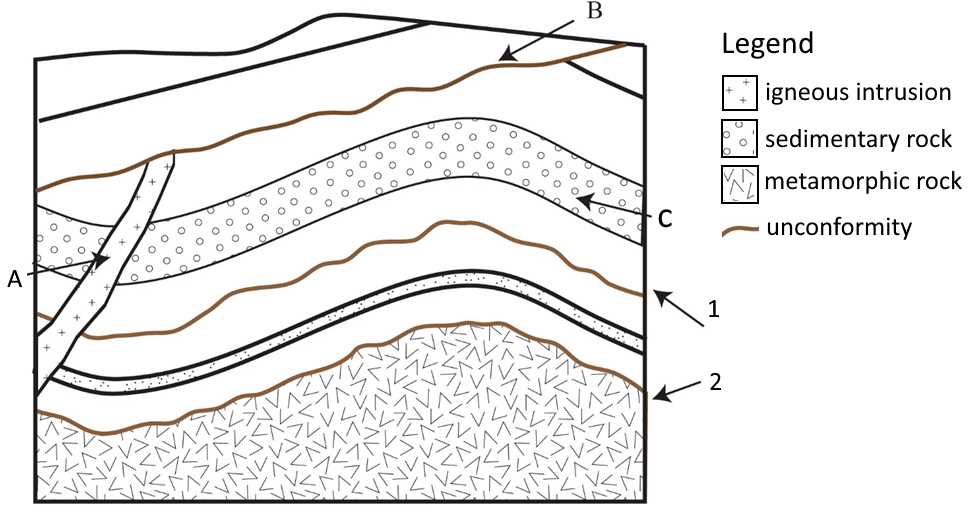
To verify your conclusions in geological sequencing, start by cross-checking your interpretation with the fundamental principles, such as the laws of superposition, cross-cutting relationships, and faunal succession. Confirm that each assumption is based on solid evidence from the layers or fossils, and not just on a superficial pattern.
Common errors to avoid:
- Ignoring Faults and Intrusions: A common mistake is assuming that faults and intrusions are older than the rocks they disrupt. These features are typically younger and should be placed above the affected layers in the chronology.
- Misinterpreting Fossil Data: Relying solely on the presence of fossils without considering their stratigraphic position can lead to incorrect conclusions. Ensure fossils are used in context with the principle of faunal succession.
- Overlooking Unconformities: Missing or improperly identifying unconformities can result in gaps in the timeline. Unconformities represent missing time and should not be skipped or ignored when determining the relative order of events.
- Failure to Correlate Layers: Sometimes, exercises include multiple locations or layers with similar characteristics. It’s important to correlate these units based on rock type, fossil content, and structural features to create a consistent timeline.
After identifying potential errors, verify your results by comparing them with known geological sequences, reviewing your reasoning step-by-step, and using multiple lines of evidence. Double-check the placement of faults, fossils, and other key features to ensure accuracy in the timeline.