Understanding Limiting Factors and Carrying Capacity in Ecosystems
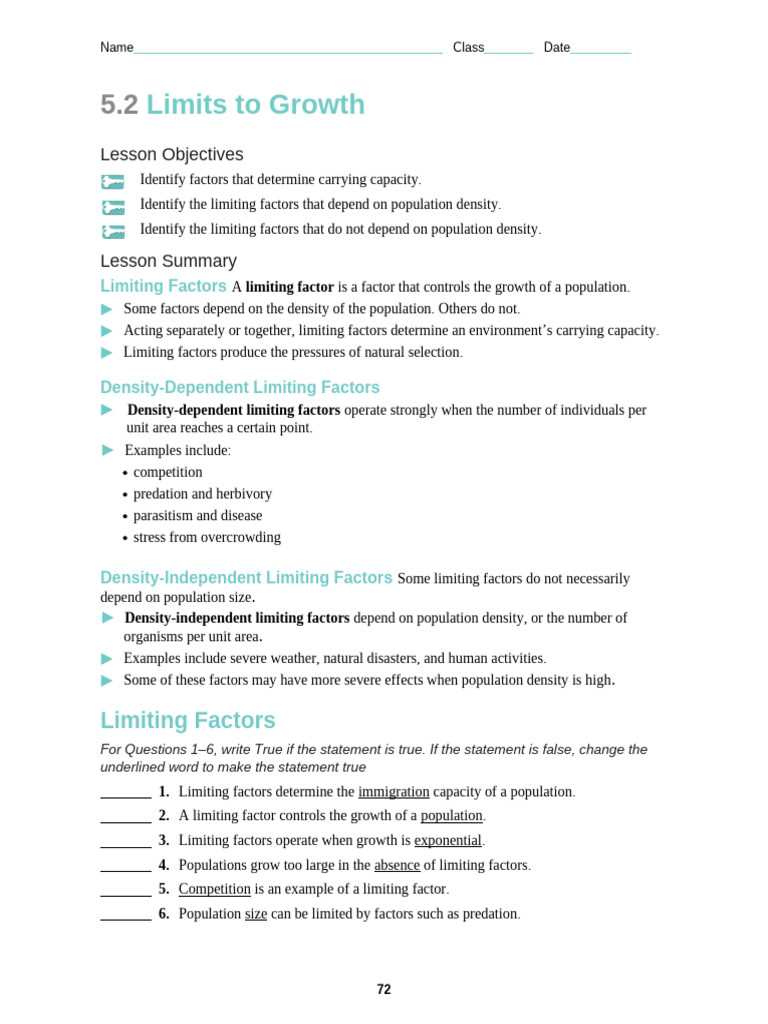
The size of a population within an ecosystem is not infinite. It is determined by several key elements that either support or restrict its growth. When analyzing a species’ ability to thrive, it is crucial to consider environmental resources, the availability of food, and the presence of predators, diseases, and competition. These factors create a balance, dictating how many individuals can survive in a given area over time.
One way to visualize this is by examining the point at which a population stabilizes. This occurs when the reproductive rate equals the death rate, and is heavily influenced by external pressures. Whether it’s the amount of space, food availability, or the number of competing species, these elements continuously shape the population dynamics of any ecosystem.
Understanding how these elements interact helps in making informed decisions regarding conservation efforts and ecosystem management. By identifying the various pressures that affect species survival, we can predict trends in population changes and address environmental challenges before they reach critical levels.
Limiting Elements and Population Sustainability in Ecosystems
In every ecosystem, the number of organisms that can survive is influenced by multiple environmental pressures. These pressures, including resources, climate, and predation, regulate how many individuals can live in a specific area. When these pressures reach a point where they stabilize the population, it is referred to as the ecosystem’s equilibrium point. Without these natural restrictions, a species would grow without control, depleting resources and damaging the environment.
Key resources, such as food, water, and shelter, determine the number of organisms that can be supported. As a population grows, competition for these resources increases, which can limit growth. Additionally, abiotic factors like temperature, rainfall, and soil quality affect the viability of habitats for different species. Predators, disease, and the presence of invasive species further shape population dynamics by reducing the number of individuals that survive to reproduce.
Understanding these pressures is critical for maintaining the balance within ecosystems. By recognizing the specific elements that control growth, we can anticipate shifts in population numbers and take measures to prevent damage to the ecosystem. More information on these topics can be found at the National Geographic website.
How Environmental Pressures Affect Population Growth
Environmental conditions play a significant role in controlling how quickly a population can expand. The availability of resources, such as food, shelter, and water, directly impacts how many individuals can survive and reproduce. When resources are scarce, population growth slows down or even decreases. In ecosystems where resources are abundant, populations can experience rapid growth until they reach their limit.
Key influences on growth include:
- Food Availability: A higher supply of food allows more individuals to survive and reproduce, accelerating population growth.
- Predation: The presence of predators limits the number of individuals in a population by reducing survival rates.
- Competition: Species within the same ecosystem often compete for limited resources, which can inhibit their growth.
- Climate Conditions: Extreme weather conditions, like droughts or frosts, can drastically reduce population sizes by killing individuals or affecting their ability to find food.
When populations exceed the limits imposed by environmental pressures, overpopulation occurs, leading to resource depletion and environmental degradation. Recognizing these limitations helps predict how populations will behave and why they stabilize at a certain point. By understanding these dynamics, conservation efforts can be better directed to maintain a healthy balance in ecosystems.
Understanding Maximum Sustainable Population in Ecosystems
Each ecosystem has a limit to the number of individuals it can support over time. This maximum number is determined by the availability of resources, such as food, water, and shelter, as well as environmental conditions like space and climate. When populations grow beyond this sustainable threshold, they can experience resource depletion, leading to a decline in health and a potential crash in numbers.
Several elements play a key role in determining the upper limit of a population’s size:
- Resource Availability: The amount of food, water, and shelter available in the environment directly impacts how many individuals can be supported. More resources typically allow for a larger population.
- Space: The physical space required for living and reproduction can also limit population size. Crowded conditions can lead to higher competition and stress.
- Climate: Environmental factors such as temperature, precipitation, and seasonal changes influence the growth rate and survival of species.
- Predation and Disease: Natural predators and diseases can reduce population size by increasing mortality rates, preventing overpopulation.
Understanding this concept helps predict population trends and plan conservation efforts. Ecosystems tend to stabilize when populations reach this sustainable limit, ensuring long-term survival and health of the species within them.
Examples of Non-Living Influences on Population Growth
Non-living components in the environment play a significant role in determining the number of organisms an area can support. These components, unlike biological factors, are not influenced by living organisms but still limit survival and reproduction. Some examples include:
- Temperature: Extreme temperatures can affect the ability of organisms to survive. For example, cold-blooded animals cannot survive in environments where the temperature is too low, while excessive heat can cause dehydration and stress.
- Water Availability: Access to fresh water is critical for survival. A shortage can lead to dehydration and limit growth, especially in dry regions or during periods of drought.
- Light: The amount of sunlight affects photosynthesis in plants and overall energy availability in ecosystems. Limited sunlight in shaded environments can restrict plant growth and, in turn, affect herbivores and predators.
- Soil Quality: The quality and nutrients of soil directly impact plant growth. Poor soil conditions with inadequate nutrients will reduce plant productivity, which can affect the entire food chain.
- Air Quality: High pollution levels, including toxic gases or particulate matter, can harm living organisms by disrupting respiration and causing diseases or physiological stress.
Understanding these abiotic influences is crucial for managing ecosystems and predicting how populations will respond to environmental changes.
Examples of Living Influences on Population Growth
Living organisms within an ecosystem can significantly influence the growth of other species. These biological interactions shape the dynamics of populations. Some common examples include:
- Predation: The presence of predators can reduce the number of prey species, preventing their population from growing beyond a certain point. For example, wolves controlling deer populations by hunting them.
- Competition: Species often compete for the same resources, such as food, water, and shelter. When resources are scarce, the competition limits the population size of each species. For example, plants in the same area competing for sunlight.
- Diseases: Pathogens and parasites can spread through populations, reducing the overall number of individuals and limiting growth. An outbreak of disease can decrease a population dramatically, as seen with the spread of white-nose syndrome among bats.
- Mutualism: Some species rely on each other for survival, with both benefiting from the relationship. However, an imbalance can occur if one species is overabundant, limiting the other. For example, certain plants and pollinators depend on one another for reproduction.
- Herbivory: Grazing by herbivores can limit plant populations. If herbivores overgraze, the plants may not have enough time to regenerate, thus preventing further growth. For instance, large herbivores like elephants affecting the growth of vegetation in savanna ecosystems.
These interactions are key in shaping the stability and growth of populations within ecosystems.
Impact of Food Supply on Population Sustainability
The availability of food plays a critical role in determining how many individuals an ecosystem can support. Without sufficient resources, populations will not thrive. Key impacts include:
- Direct Influence on Reproduction: Limited food sources lead to lower energy availability, reducing reproductive rates. Species may experience fewer offspring, leading to a decrease in population growth.
- Survival Rates: When food is scarce, survival rates decrease. Organisms that cannot find enough nourishment are more likely to perish, limiting population size.
- Competition for Resources: High competition for food resources can result in some individuals failing to secure the necessary nutrients. This can create a bottleneck in population growth as only the most competitive individuals survive.
- Impact on Health: Inadequate nutrition weakens immune systems, making organisms more susceptible to disease. This can reduce population stability and lower overall numbers.
- Carrying Capacity Reduction: As food availability decreases, the number of individuals that can be supported by the ecosystem also declines. When food becomes insufficient, populations will either stabilize at a lower number or collapse.
Managing food supply is key to maintaining healthy populations and preventing ecosystem imbalances.
Effects of Predation on Population Size
Predation directly influences the population size of prey species. As predators control the abundance of prey, several outcomes occur:
- Decreased Prey Population: Increased predation pressure reduces prey numbers, leading to population declines. Over time, prey species may struggle to maintain a stable population if predator numbers remain high.
- Impact on Reproduction: Constant predation risks can alter the reproductive behavior of prey species. With fewer individuals surviving to reproductive age, the population growth rate is slowed.
- Predator-Prey Cycles: The relationship between predator and prey often results in cyclical population fluctuations. As prey populations decrease, predators may face food shortages, which leads to a decrease in predator numbers, allowing prey populations to recover.
- Genetic Adaptations: Over time, the pressure from predators can lead to evolutionary changes. Prey species may develop better defense mechanisms, such as camouflage or increased speed, which help them evade predation.
- Disruption of Ecosystem Balance: If predation rates become too high, the balance of the ecosystem can be disrupted. This can lead to overpopulation of certain species, which in turn causes competition for resources.
Managing predator-prey dynamics is vital for maintaining stable ecosystems and ensuring the survival of diverse species.
How Disease and Competition Affect Population Dynamics
Disease outbreaks can significantly reduce the number of individuals within a population. High mortality rates caused by pathogens can lead to rapid declines in population size, especially when the population lacks immunity or resistance to the disease. In some cases, diseases may also affect reproduction rates, further hindering population recovery.
- Impact of Disease: Diseases can lower birth rates and increase death rates, disrupting the balance of population dynamics. The spread of disease is often more rapid in dense populations, which makes crowded environments particularly vulnerable to outbreaks.
- Competition for Resources: Increased competition for food, water, and shelter among individuals of the same species or between different species can limit population growth. When resources are scarce, individuals struggle to survive and reproduce, leading to population fluctuations.
- Competitive Exclusion: In some cases, one species may outcompete another for the same resources, driving the less competitive species to extinction or forcing it to migrate. This reduces biodiversity and can shift ecosystem dynamics.
- Synergy Between Disease and Competition: Disease can exacerbate the effects of competition by weakening individuals, making them more susceptible to the stress of resource scarcity. The combined impact of disease and competition often leads to more pronounced declines in population size.
Understanding the roles of disease and competition in population dynamics is critical for managing ecosystems and protecting vulnerable species. Monitoring disease outbreaks and resource availability can help predict changes in population trends.
Calculating Carrying Capacity and Its Implications
To calculate the maximum number of individuals an environment can support, several variables must be considered, including available resources, habitat space, and environmental conditions. This value is dynamic and can fluctuate based on changes in these factors. The formula for calculating population size under optimal conditions is:
| Variable | Description |
|---|---|
| Population Size (N) | Current number of individuals in the population. |
| Resource Availability (R) | Amount of food, water, and shelter available to the population. |
| Reproduction Rate (b) | Rate at which individuals reproduce in favorable conditions. |
| Death Rate (d) | Rate at which individuals die due to environmental pressures or lack of resources. |
| Environmental Stressors (S) | Natural or human-induced conditions that limit growth, such as disease or climate changes. |
The general equation is:
Carrying Capacity (K) = Resource Availability / (Population Size × Reproduction Rate × Environmental Stressors)
Once calculated, this value is crucial for understanding the sustainability of a population in its environment. If the population exceeds this limit, resource depletion and environmental degradation may occur, leading to a collapse. Proper management of resources and intervention in cases of overpopulation are key to maintaining balance.
Changes in any of the variables (e.g., a decrease in resources or an increase in predators) can have significant impacts on the carrying capacity. By monitoring these variables, populations can be managed to prevent overgrowth and maintain ecological equilibrium.