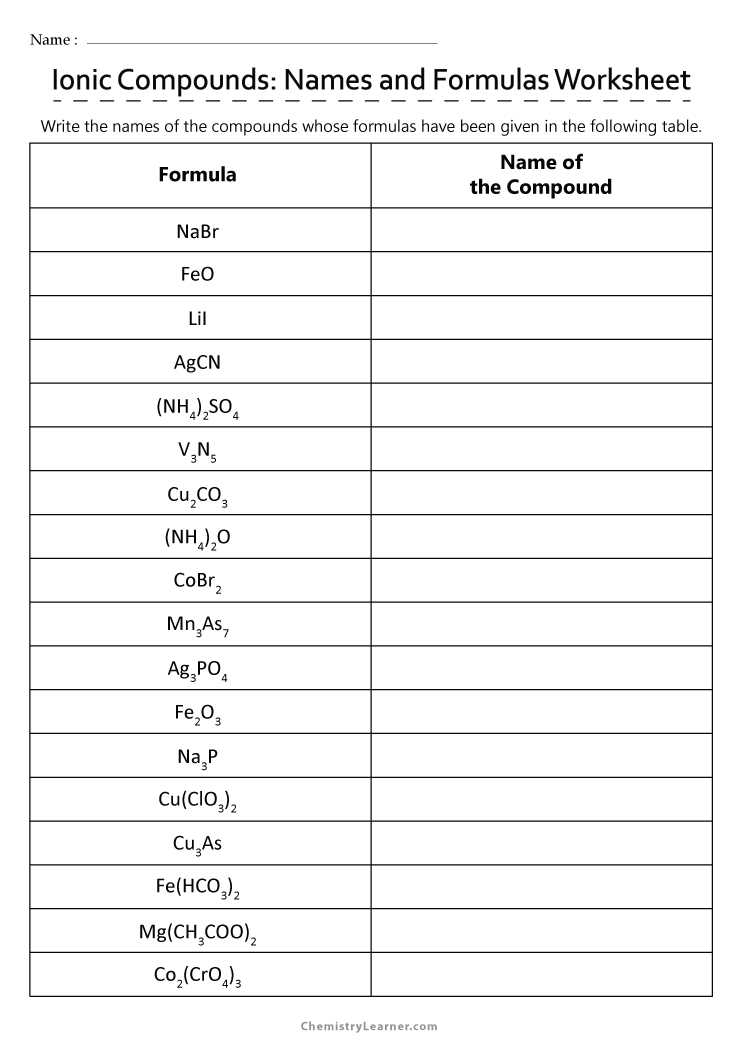
Step-by-Step Guide for Writing Ionic Formulas
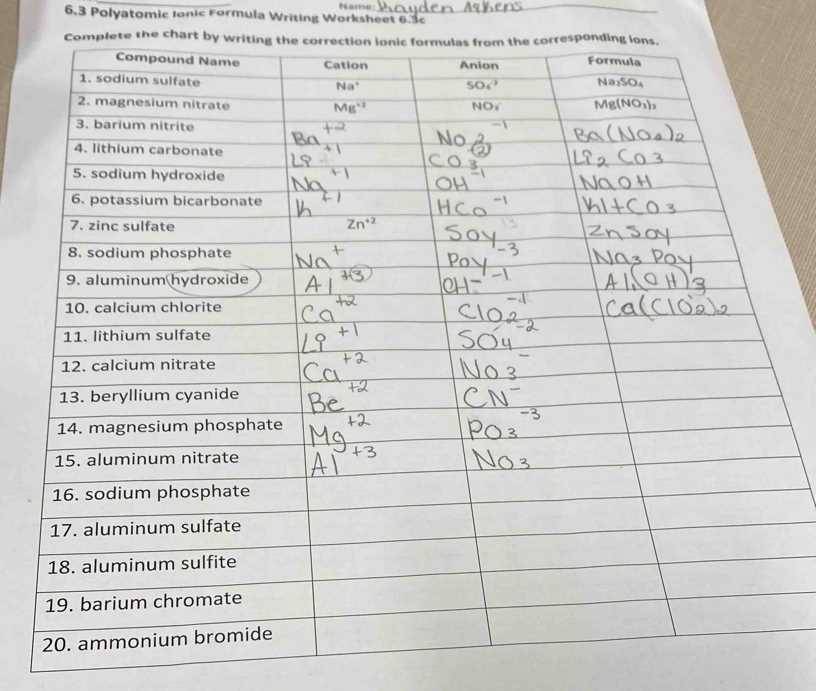
First, identify the charge of each particle involved. Begin with the cation, which typically has a positive charge, followed by the anion, which carries a negative charge. For example, sodium (Na) forms a +1 charge, while chloride (Cl) forms a -1 charge.
Next, balance the charges by using the simplest ratio of ions. If the charges are equal, one ion of each element will suffice. In cases where the charges differ, adjust the number of ions to ensure the overall compound is electrically neutral. For instance, calcium (Ca) with a +2 charge will need two chloride ions (Cl-) to balance out the charges.
Finally, write the formula by combining the appropriate symbols of the ions, ensuring that the subscript numbers reflect the ratio required to neutralize the charges. The result will be a stable chemical compound with no overall charge.