Complete Guide to Labeling Parts of an Animal Cell Worksheet
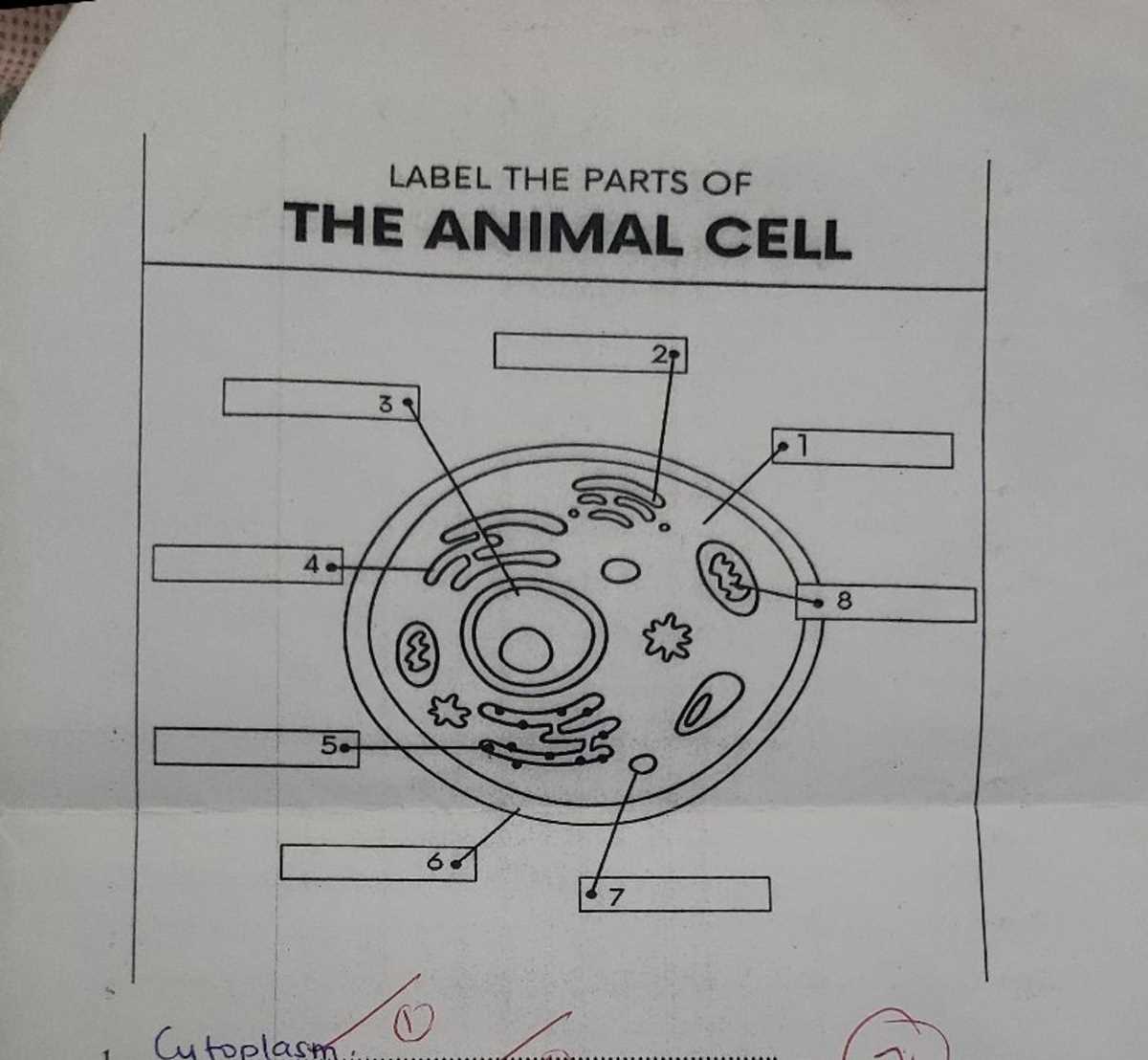
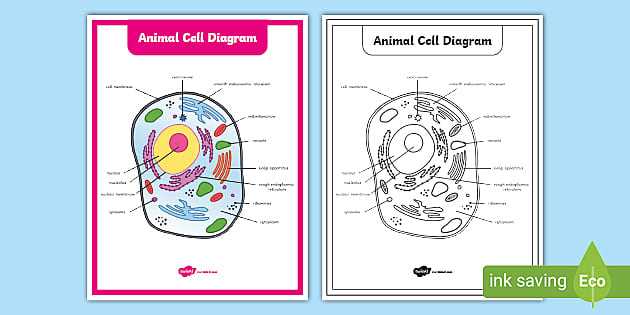
For anyone working with diagrams of cellular structures, it’s crucial to clearly identify each component. The different organelles and structures within a living cell serve distinct functions that allow the organism to grow, reproduce, and respond to the environment. Knowing what each part does will help you understand how life operates at the most basic level.
Start by examining the nucleus. This organelle controls the cell’s activities and houses the genetic material. Pay special attention to its role in gene expression and cell division. Understanding how it coordinates cellular functions is key to grasping more complex biological processes.
Next, consider the role of the mitochondria. These powerhouses generate the energy needed for cellular activities. Their involvement in metabolism and energy transfer is foundational to cell function. Take note of how they are involved in processes like ATP production.
Also, don’t forget about the plasma membrane, which acts as a selective barrier controlling what enters and exits the cell. It plays a critical role in maintaining cellular integrity and facilitating communication with other cells. Properly identifying this membrane is essential in any study of cellular biology.
Understanding the Key Components of a Cell
When working on identifying the structures within a cell diagram, it’s critical to pinpoint each component and understand its specific role. Below is a detailed guide to help you correctly identify each section and its function.
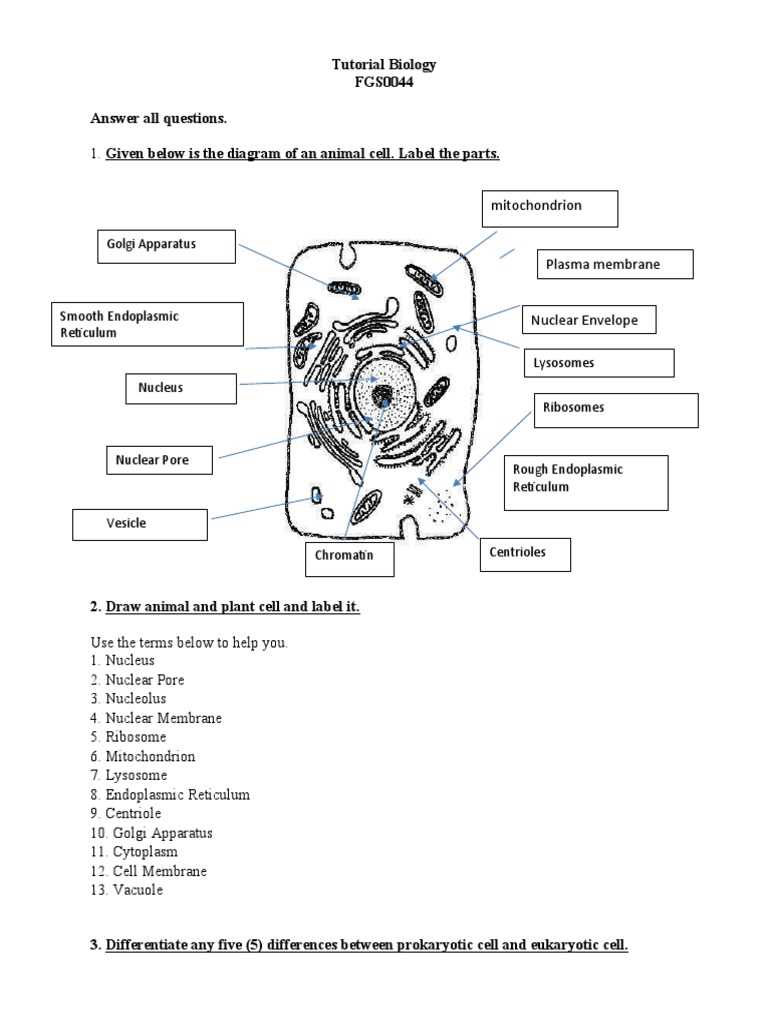
Nucleus: This central structure houses the genetic material and acts as the control center for cellular functions. It regulates activities like protein synthesis and cell division. Make sure to recognize its double membrane and nuclear pores.
Mitochondria: Often called the “powerhouses” of the cell, these organelles generate energy through cellular respiration. Look for the characteristic inner and outer membranes, with the inner membrane folded into cristae to increase surface area.
Plasma Membrane: The outer boundary of the cell that controls what enters and leaves. It’s a lipid bilayer with proteins embedded within. Pay attention to its semi-permeability and how it interacts with the environment.
Rough Endoplasmic Reticulum (ER): Covered with ribosomes, this organelle is involved in protein synthesis and processing. It’s crucial for the assembly of proteins that will be secreted from the cell or integrated into membranes.
Smooth Endoplasmic Reticulum: Lacking ribosomes, this part of the ER is involved in lipid synthesis, detoxification, and calcium ion storage. Its tubular appearance distinguishes it from the rough ER.
Golgi Apparatus: This organelle is responsible for modifying, sorting, and packaging proteins for secretion or delivery to other parts of the cell. It typically appears as a stack of membrane-bound sacs.
Lysosomes: These organelles contain digestive enzymes that break down waste material, old cell parts, and pathogens. They help maintain the cleanliness of the cellular environment.
Centrosomes: Involved in organizing microtubules during cell division, these are important for maintaining the structure of the cell and facilitating chromosome movement during mitosis.
Understanding the Structure of an Animal Cell
Each cell in an organism has a specific structure that supports its function. Key elements within a typical eukaryotic cell perform distinct roles that are critical to the survival and reproduction of the organism.
Membrane: The outermost layer serves as a barrier, controlling the flow of materials in and out. It is made of phospholipids and proteins, forming a flexible and semi-permeable barrier.
Nucleus: The control center of the cell contains genetic material (DNA) that guides the cell’s activities. This structure is surrounded by a double membrane with pores for material exchange.
Cytoplasm: The gel-like substance fills the interior of the cell, providing a medium where organelles are suspended. This is where many cellular processes take place.
Mitochondria: These organelles produce energy for the cell through cellular respiration. Mitochondria have a double membrane and their own DNA, making them semi-autonomous.
Endoplasmic Reticulum (ER): The ER is a network of membranes involved in protein synthesis and lipid metabolism. There are two types:
- Rough ER: Studded with ribosomes, it is responsible for synthesizing and processing proteins.
- Smooth ER: Lacks ribosomes and is involved in lipid synthesis, detoxification, and calcium storage.
Golgi Apparatus: This structure sorts, modifies, and packages proteins and lipids for transport either to the cell surface or to other parts of the cell.
Lysosomes: These organelles contain enzymes that break down waste materials, cellular debris, and foreign particles. They help in recycling materials within the cell.
Cytoskeleton: A network of protein filaments and microtubules that provide structural support, shape, and enable movement within the cell.
Identifying the Key Organelles in an Animal Cell
Nucleus: Acts as the control center, storing genetic information in the form of DNA. It regulates gene expression and coordinates cell activities, including growth and reproduction.
Mitochondria: Often referred to as the powerhouses of the cell, these organelles generate energy by converting glucose and oxygen into ATP, the cell’s main energy currency.
Ribosomes: Found in both rough endoplasmic reticulum and floating freely in the cytoplasm, ribosomes are responsible for protein synthesis, following instructions encoded in DNA.
Endoplasmic Reticulum (ER): This organelle is involved in protein and lipid synthesis. It consists of two types:
- Rough ER: Studded with ribosomes, it synthesizes proteins that are either secreted or integrated into membranes.
- Smooth ER: Lacks ribosomes, focusing on lipid production and detoxification processes.
Golgi Apparatus: Works as the sorting and packaging center, modifying proteins and lipids from the ER and directing them to their correct destination inside or outside the cell.
Lysosomes: Contain enzymes that break down waste materials and cellular debris. They play a role in the recycling of macromolecules and cellular maintenance.
Cytoskeleton: A network of filaments and microtubules that provides structure, stability, and helps with intracellular transport and cell division.
For more detailed information on these structures, visit NCBI’s article on cell organelles.
Role of Mitochondria in Cellular Energy Production
Mitochondria are responsible for generating the majority of a cell’s energy through a process called cellular respiration. This multi-step process occurs in the mitochondria’s inner membrane and involves converting glucose and oxygen into ATP (adenosine triphosphate), which is the cell’s primary energy carrier.
The process of cellular respiration can be divided into three main stages:
| Stage | Description |
|---|---|
| Glycolysis | Occurs in the cytoplasm, breaking down glucose into pyruvate, producing a small amount of ATP and NADH. |
| Krebs Cycle | Pyruvate enters the mitochondria, where it is further broken down, releasing energy stored in the form of high-energy electrons. This cycle produces ATP, NADH, and FADH2. |
| Electron Transport Chain (ETC) | High-energy electrons from NADH and FADH2 pass through protein complexes in the mitochondrial membrane, ultimately generating a large amount of ATP via oxidative phosphorylation. |
The mitochondria are often described as the “powerhouses” of the cell due to their ability to produce ATP, which powers many cellular activities, including muscle contractions, protein synthesis, and cell division. In addition to energy production, mitochondria are involved in regulating cell death (apoptosis) and maintaining cellular homeostasis.
How to Identify Cytoplasm and Its Significance
Start by locating the cytoplasm in a cellular diagram. It fills the space between the cell membrane and nucleus. The cytoplasm consists of a gel-like substance called cytosol, which suspends cellular components such as organelles, ribosomes, and enzymes.
The cytoplasm plays a key role in cellular functions:
- Support and Structure: It provides a medium for cellular organelles, helping them maintain their shape and position within the cell.
- Transport: Through the cytoplasm, materials such as proteins, lipids, and other molecules are transported from one organelle to another, supporting various metabolic processes.
- Biochemical Reactions: Many metabolic reactions, including glycolysis, occur in the cytoplasm, which is critical for energy production.
- Storage: It serves as a storage site for nutrients, ions, and other essential molecules that the cell needs to function.
Accurate identification of this area in diagrams helps understand its interaction with other organelles, as well as its role in maintaining cell life.
Understanding the Plasma Membrane and Its Function
Locate the plasma membrane in diagrams; it forms the outer boundary of the organism’s cells. This structure consists primarily of a phospholipid bilayer with embedded proteins, providing selective permeability.
Key functions of the plasma membrane include:
- Protection: It serves as a protective barrier, shielding internal components from harmful substances while maintaining the integrity of the cell.
- Transport: The membrane regulates the movement of ions, nutrients, and waste materials in and out of the cell, ensuring a balanced internal environment.
- Signal Reception: Embedded proteins act as receptors for various signaling molecules, allowing the cell to respond to external cues.
- Cell Communication: It facilitates interactions between adjacent cells, aiding in tissue formation and cellular coordination.
- Structural Support: The membrane connects to the cytoskeleton, providing structural support and helping maintain cell shape.
Understanding its structure and functions is crucial for comprehending how cells interact with their environment and maintain homeostasis.
Distinguishing Between Animal and Plant Cell Features
When comparing cells from different organisms, specific structural differences stand out. Here are the primary distinctions:
- Cell Wall: Plant cells have a rigid cell wall made of cellulose, providing structural support. Animal cells lack this feature, relying on the plasma membrane for shape and structure.
- Chloroplasts: Only plant cells contain chloroplasts, which are responsible for photosynthesis. Animal cells do not have chloroplasts and instead rely on other energy sources.
- Vacuoles: Plant cells typically contain a large central vacuole for storage and maintaining cell turgor pressure. Animal cells may have smaller vacuoles, if any.
- Shape: Plant cells tend to have a more regular, rectangular shape due to the cell wall, while animal cells are more irregular or rounded in shape.
- Centrioles: Animal cells contain centrioles that play a role in cell division. These are absent in most plant cells.
Understanding these differences helps in recognizing the unique roles each type of cell plays in an organism’s overall function.
Common Mistakes to Avoid When Labeling an Animal Cell
1. Confusing Mitochondria with Chloroplasts: Mitochondria are involved in energy production through cellular respiration, while chloroplasts are absent in most non-plant organisms.
2. Misidentifying the Nucleus: The nucleus contains genetic material and controls cellular activities. Ensure it’s not confused with other structures like the nucleolus, which resides within it.
3. Incorrectly Identifying Membranes: The plasma membrane should not be confused with the outer boundary of the cell, which can lead to errors in understanding how substances move in and out of cells.
4. Overlooking Centrioles: Centrioles are essential for cell division, present only in animal cells. Be sure not to mix them up with other microtubule-related structures.
5. Mixing Up Vacuoles and Vesicles: Vacuoles in animal cells are typically smaller than those found in plant cells. Vesicles, on the other hand, are temporary structures used for transport and storage.
6. Ignoring Golgi Apparatus Function: The Golgi apparatus is responsible for modifying and packaging proteins, not to be confused with the rough endoplasmic reticulum, which synthesizes proteins.