Chromosome Number Worksheet Solutions and Explanations
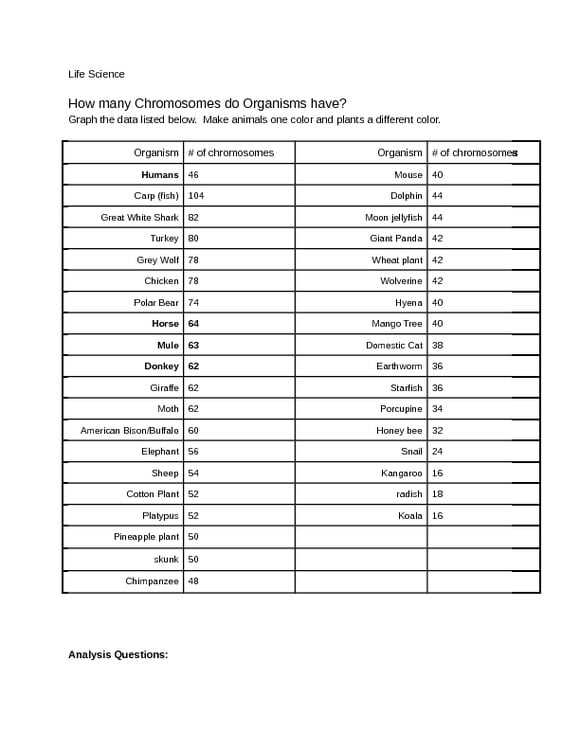
To solve exercises involving the calculation of cell chromosome counts, focus on identifying the diploid and haploid states. In diploid cells, the total number of chromosomes is always twice the haploid number. For example, in human cells, the diploid number is 46, while the haploid number is 23. Recognizing this relationship will guide you in identifying the correct solutions for related problems.
When completing these types of exercises, it is important to carefully analyze whether the problem is referencing a somatic (body) cell or a gamete (sex) cell. Somatic cells have the diploid count, while gametes have the haploid count. Pay attention to the specific language of the problem to determine the appropriate approach.
If you encounter complex problems, such as those involving mitosis or meiosis, remember to factor in how these processes affect chromosome distribution. In mitosis, the chromosome count remains the same in daughter cells, while meiosis results in the reduction of chromosome count by half. These principles are key to accurately solving exercises and ensuring the correct calculations.
Chromosome Number Worksheet Answer Key
To solve exercises that involve identifying the total chromosome count, it’s important to distinguish between different types of cells. For instance, somatic cells typically have a diploid count, while gametes only contain half of that number, or the haploid count. Understanding this distinction is critical when determining the correct answers for these types of problems.
When you encounter questions about mitosis or meiosis, remember that the former results in cells with the same chromosome count as the original, while meiosis reduces the count by half. In these cases, focus on identifying whether the cells involved are before or after these processes to calculate the chromosome numbers accurately.
If a problem involves multiple stages, such as a fertilization scenario, keep in mind that the union of gametes will restore the diploid number in the zygote. This principle is essential for solving questions related to the fertilization process and understanding how the total chromosome count is maintained across generations.
Understanding Chromosome Number and Its Importance
The total count of genetic material in an organism is key to understanding its biological processes. In most eukaryotic organisms, the cells are typically diploid, meaning they contain two sets of chromosomes–one from each parent. However, in gametes (sperm and eggs), this number is halved to ensure that the fusion of two gametes during fertilization restores the normal count in the offspring.
Knowing how the chromosome count is maintained through meiosis and fertilization is critical for understanding genetic inheritance. Meiosis reduces the chromosome count by half, ensuring genetic diversity, while fertilization restores the diploid state. This process is vital for the transmission of genetic information from one generation to the next.
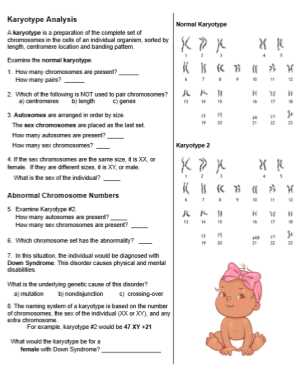
Understanding the accurate distribution of genetic material during cell division also plays a role in studying genetic disorders. Errors in chromosome separation can lead to conditions such as Down syndrome, where an individual has an extra copy of chromosome 21. Recognizing the normal and abnormal patterns in chromosome distribution is essential for diagnosing and understanding such genetic conditions.
Therefore, mastering the concept of chromosome count is not only fundamental for studying genetics, but it also aids in understanding reproduction, inheritance, and the molecular basis of diseases.
How to Approach a Chromosome Number Worksheet
Begin by reviewing the key concepts of cell division, including meiosis and fertilization. These processes are fundamental in determining the genetic composition of the offspring. Ensure that you understand how cells divide, how the chromosome count changes during meiosis, and how it is restored during fertilization.
Next, pay close attention to the terminology used in the exercise. For example, diploid refers to cells with two sets of chromosomes, while haploid refers to cells with a single set. Recognizing these terms will help you accurately assess the information provided in the problems.
As you work through each question, carefully analyze any diagrams or genetic charts. They can provide valuable visual clues about how the genetic material is distributed. Identify the starting number of chromosomes and how it is affected by the division processes. This will help you calculate the correct values for the daughter cells or gametes.
If the worksheet asks for identifying disorders related to chromosome count, focus on common conditions caused by errors in chromosome separation, such as Down syndrome or Turner syndrome. Understand the relationship between chromosome anomalies and the resulting conditions to apply this knowledge effectively.
Lastly, check your results by verifying each calculation step. Ensure that the correct terms are used and that the chromosome counts align with the biological processes described. Double-checking will help you avoid common mistakes and improve your understanding of these complex concepts.
Step-by-Step Guide for Solving Chromosome Number Problems
First, identify the cell type involved in the problem. Determine if it’s a somatic cell or a gamete, as this will dictate the initial count. Somatic cells are typically diploid, while gametes are haploid.
Next, determine the phase of cell division being described. If it’s mitosis, the chromosome count will remain the same throughout the process. In meiosis, however, the count is halved in the formation of gametes. Pay close attention to the specific steps outlined in the problem, as they can affect how the numbers change.
Now, count the chromosomes at the start. For example, if you are given a diploid number, remember that it represents the total chromosomes in a somatic cell. For meiosis, this number will be halved in the first division, and then each of the resulting cells will contain one set of chromosomes.
After identifying the number of chromosomes in the initial cell, calculate how the division process affects the daughter cells. In mitosis, the daughter cells will retain the same chromosome count as the parent. In meiosis, the chromosome count will be halved during the first division and remain constant during the second division.
For more complex problems, consider how the union of gametes during fertilization restores the original chromosome count. This step is crucial in understanding how the organism returns to a diploid state after reproduction.
Finally, check your results for consistency. If the problem asks for specific genetic outcomes or disorders, use your understanding of how chromosome abnormalities occur (such as in nondisjunction) to ensure your calculations match the expected outcomes.
Common Mistakes in Chromosome Number Calculations
A common mistake is misidentifying the type of cell involved. Confusing somatic cells with gametes can lead to incorrect calculations, especially when considering the effects of meiosis or fertilization. Ensure you know whether the cell is diploid or haploid before proceeding.
Another error is overlooking the phase of division. In meiosis, the chromosome count is halved during the first division but restored during fertilization. Failing to account for this can result in incorrect totals. Always note the phase being referenced in the problem.
Incorrectly applying the chromosome count during mitosis is also frequent. Mitosis results in daughter cells with the same chromosome count as the parent cell. Some mistakenly assume that mitosis also halves the chromosome count, which leads to a wrong solution.
Forgetting to account for crossover events or genetic recombination during meiosis can cause confusion in advanced problems. These processes can subtly affect the outcomes of genetic variation but do not directly alter the chromosome count.
Lastly, not properly checking for chromosome abnormalities, such as nondisjunction, may lead to inaccurate results. Nondisjunction occurs when chromosomes fail to separate correctly during cell division, affecting the expected chromosome count in daughter cells.
How to Calculate Diploid and Haploid Numbers
To calculate the diploid count, simply identify the total number of chromosomes in a somatic cell. This is the full set of chromosomes found in the nucleus of a body cell. The diploid count is typically the total chromosome count found in organisms that reproduce sexually.
For the haploid count, consider the number of chromosomes in a gamete, which is half of the diploid count. In species that reproduce sexually, gametes such as sperm or eggs carry a single set of chromosomes, representing the haploid count.
If the diploid count is provided, divide it by two to find the haploid count. For example, if an organism has 46 chromosomes in its somatic cells, the haploid count in its gametes will be 23.
Be aware that some organisms may have variations in these numbers due to specific genetic conditions or processes like nondisjunction. Always check for these possibilities when performing calculations.
Examples of Correct Chromosome Number Solutions
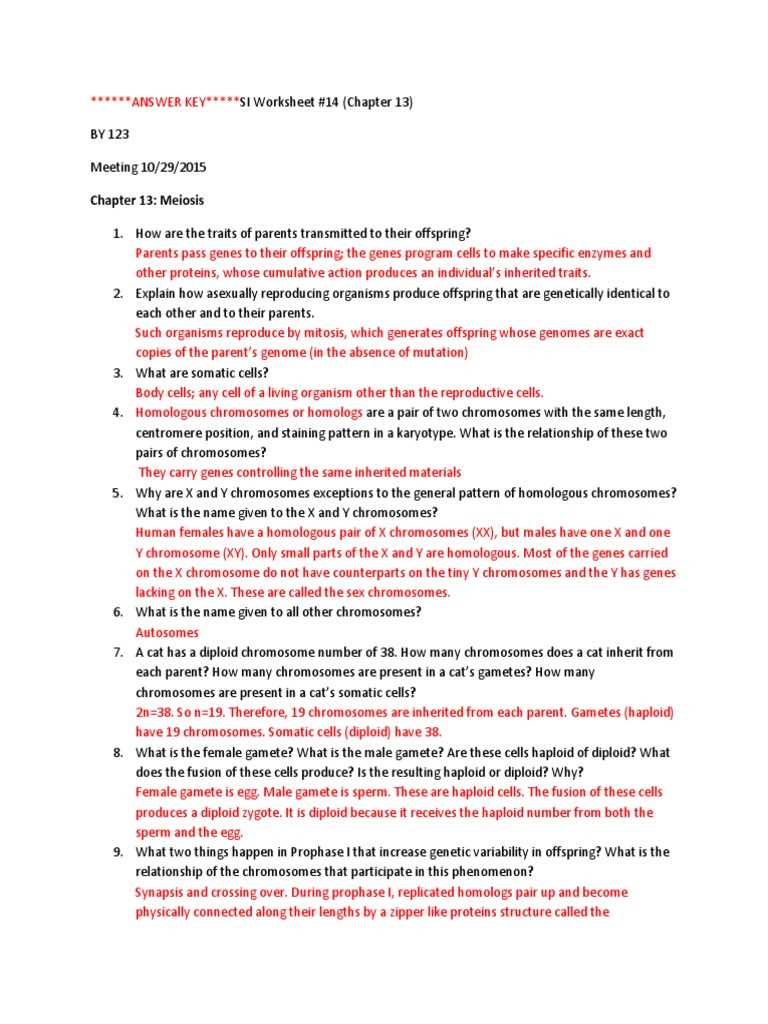
Below are examples of how to calculate the correct total for both diploid and haploid counts:
- Human cells: A typical human body cell contains 46 chromosomes. This is the diploid number. The haploid number, found in human gametes (sperm and eggs), is half of this, or 23 chromosomes.
- Fruit fly (Drosophila melanogaster): The diploid number for Drosophila is 8 chromosomes. Therefore, the haploid number in their gametes is 4 chromosomes.
- Rice plant (Oryza sativa): The diploid count for rice is 24 chromosomes. This results in a haploid number of 12 in its gametes.
For more detailed examples, including uncommon scenarios such as polyploidy or genetic mutations, visit resources like the Genetics Society of America for accurate and updated information.
Advanced Tips for Studying Chromosome Number Concepts
To deepen your understanding of the structure and function of genetic material, consider these advanced tips:
- Master Basic Terminology: Ensure you are comfortable with terms like “haploid,” “diploid,” “meiosis,” and “mitosis.” This foundation will make more complex topics, such as genetic variation and polyploidy, easier to grasp.
- Focus on Cellular Processes: Study the phases of cell division–particularly meiosis–where the halving of genetic material occurs. Understand how this leads to the formation of gametes and how this process maintains genetic stability across generations.
- Explore Polyploidy: Polyploidy, where organisms have more than two sets of chromosomes, can offer new insights into genetic evolution. Study examples of polyploid organisms, like certain plants and amphibians, to understand the implications of multiple sets of genetic material.
- Use Visual Aids: Diagrams of cell division and chromosome segregation can clarify difficult concepts. Practice labeling stages and chromosomes during both mitosis and meiosis to reinforce your learning.
- Review Genetic Mutations: Learn about mutations that can affect chromosome count, such as Down syndrome, Turner syndrome, and Klinefelter syndrome. Understanding these can show how errors in chromosome distribution affect development and health.
- Practice with Genetic Problems: Solve a variety of genetic problems that require you to calculate chromosome sets in different organisms. This will challenge you to apply your knowledge in real-world contexts and improve your analytical skills.
For further resources on this subject, consult educational platforms like Khan Academy’s Biology Section for free lessons and interactive materials.
Additional Resources for Learning About Chromosome Numbers
For a deeper understanding of genetic material, explore the following resources:
- Khan Academy – Biology: Offers detailed lessons on genetics, including topics like cell division and genetic variation. Great for beginners and advanced learners alike. Visit here.
- Coursera – Genetics and Evolution: A comprehensive course that covers the basics of genetics, including the mechanisms that control chromosome distribution. Explore more at Coursera.
- Nature Education – Scitable: Provides articles and videos on key topics in biology, such as meiosis and genetic disorders linked to chromosome irregularities. Check it out at Scitable by Nature Education.
- PubMed Central: Explore peer-reviewed scientific articles on chromosome structure, functions, and related disorders. Access resources at PubMed Central.
- YouTube – BioMan Biology: Features a series of videos explaining complex genetic processes, including how chromosome sets are inherited. Visit the channel at here.
Utilize these resources to enhance your understanding and mastery of genetic concepts, and practice solving problems to further solidify your knowledge.