Cell Organelles and Functions Worksheet Answers and Explanation
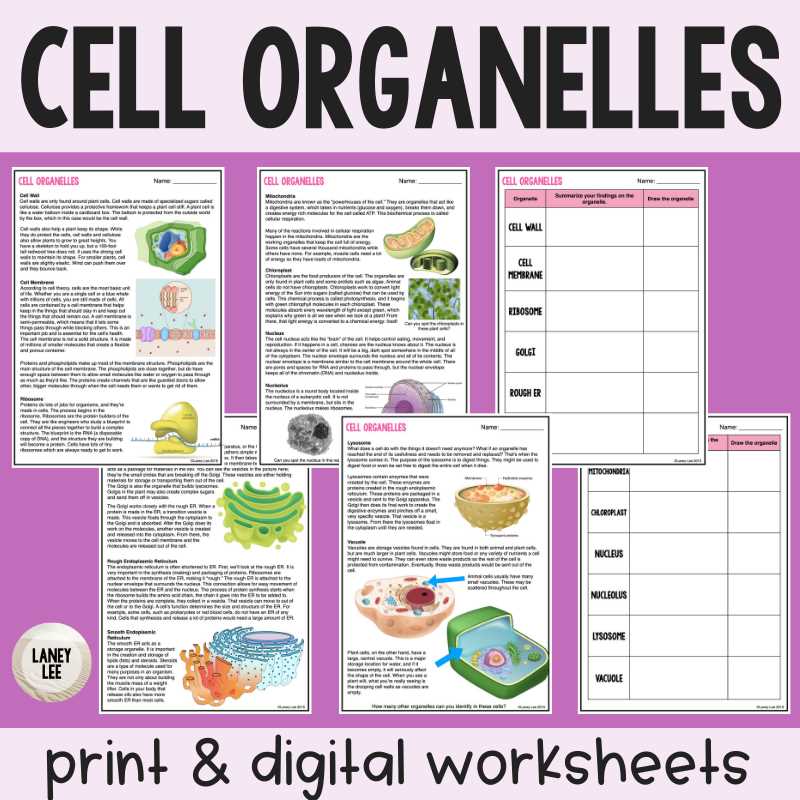
To understand the role of each component inside a cell, refer to detailed guides that explain how specific structures contribute to overall cellular activity. For example, the nucleus is responsible for storing genetic information and directing cell functions through gene expression. Without this central control, the cell cannot function properly.
The mitochondria generate energy by converting nutrients into ATP, which powers various processes within the cell. Their importance cannot be overstated, as they fuel both simple and complex activities. Similarly, ribosomes are crucial for assembling proteins, a task vital for cellular repair, growth, and communication.
Pay close attention to the endoplasmic reticulum, which aids in protein folding and lipid production. When combined with the Golgi apparatus, the two structures facilitate the modification, sorting, and transportation of proteins throughout the organism. Knowing these roles helps in answering questions related to cellular mechanics and physiology.
Cell Organelles and Their Functions Worksheet Answers Key
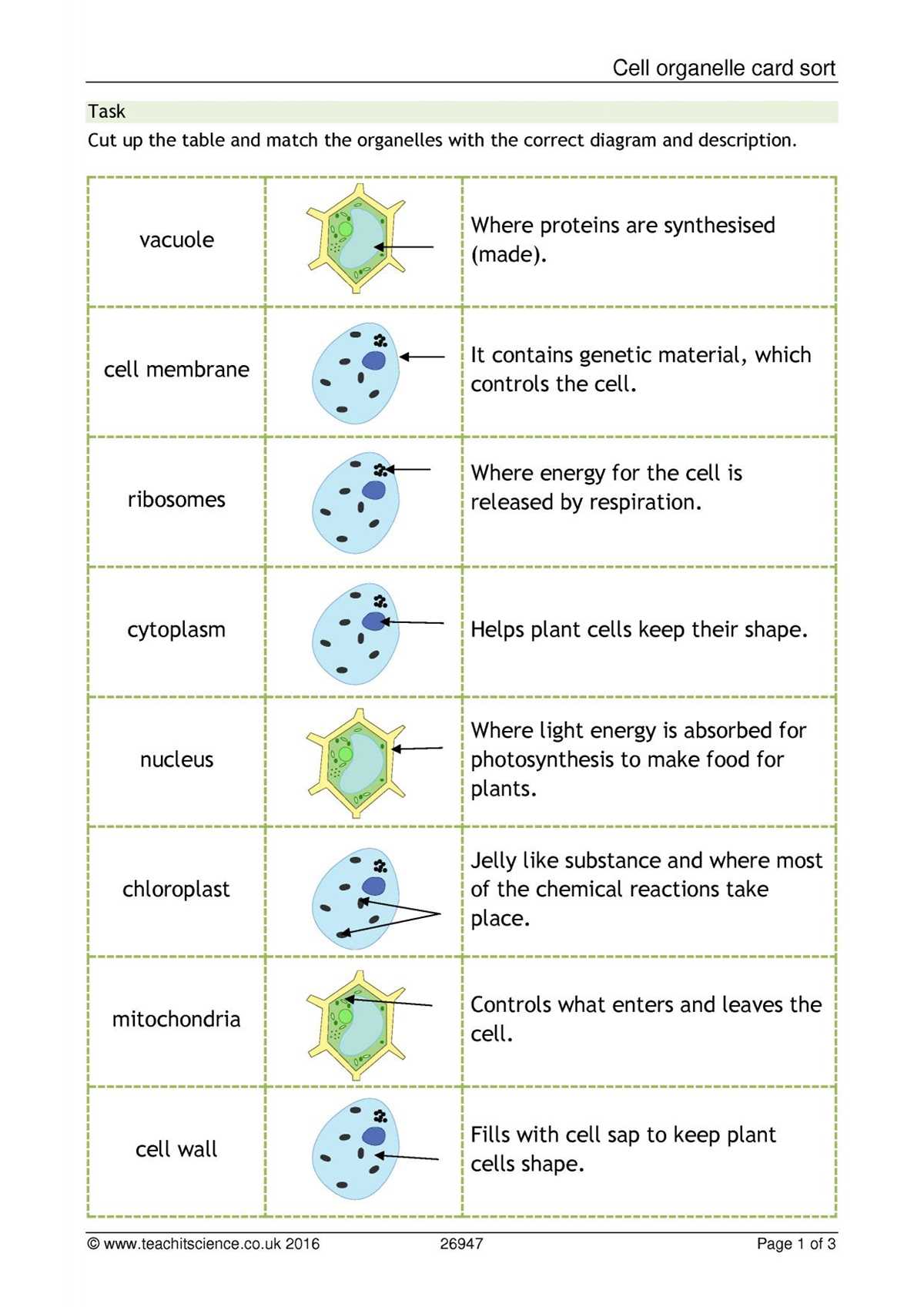
To correctly complete questions about cellular structures, it is important to first identify each part’s main role within the organism. Here’s a brief guide on the key components and their responsibilities:
- Nucleus: Acts as the command center of the cell, storing genetic material and regulating gene expression. It controls cell activities like growth and reproduction.
- Mitochondria: Known as the powerhouse of the cell, mitochondria generate energy in the form of ATP, which is required for nearly every cellular process.
- Ribosomes: These small structures are essential for protein synthesis. They read mRNA and translate it into proteins, which are necessary for the cell’s structure and functions.
- Endoplasmic Reticulum (ER): Divided into rough and smooth types, the rough ER assists in protein synthesis, while the smooth ER is involved in lipid production and detoxification.
- Golgi Apparatus: Works with the ER to modify, package, and distribute proteins and lipids to different parts of the cell or outside the cell.
- Lysosomes: These organelles contain digestive enzymes that break down waste materials, cellular debris, and foreign invaders, playing a key role in cell maintenance.
- Plasma Membrane: Acts as a barrier that regulates the entry and exit of materials in and out of the cell, maintaining homeostasis.
For more in-depth understanding, refer to Khan Academy, which offers detailed lessons and exercises on cellular components and their roles in cellular functions.
How to Identify Key Organelles in a Cell
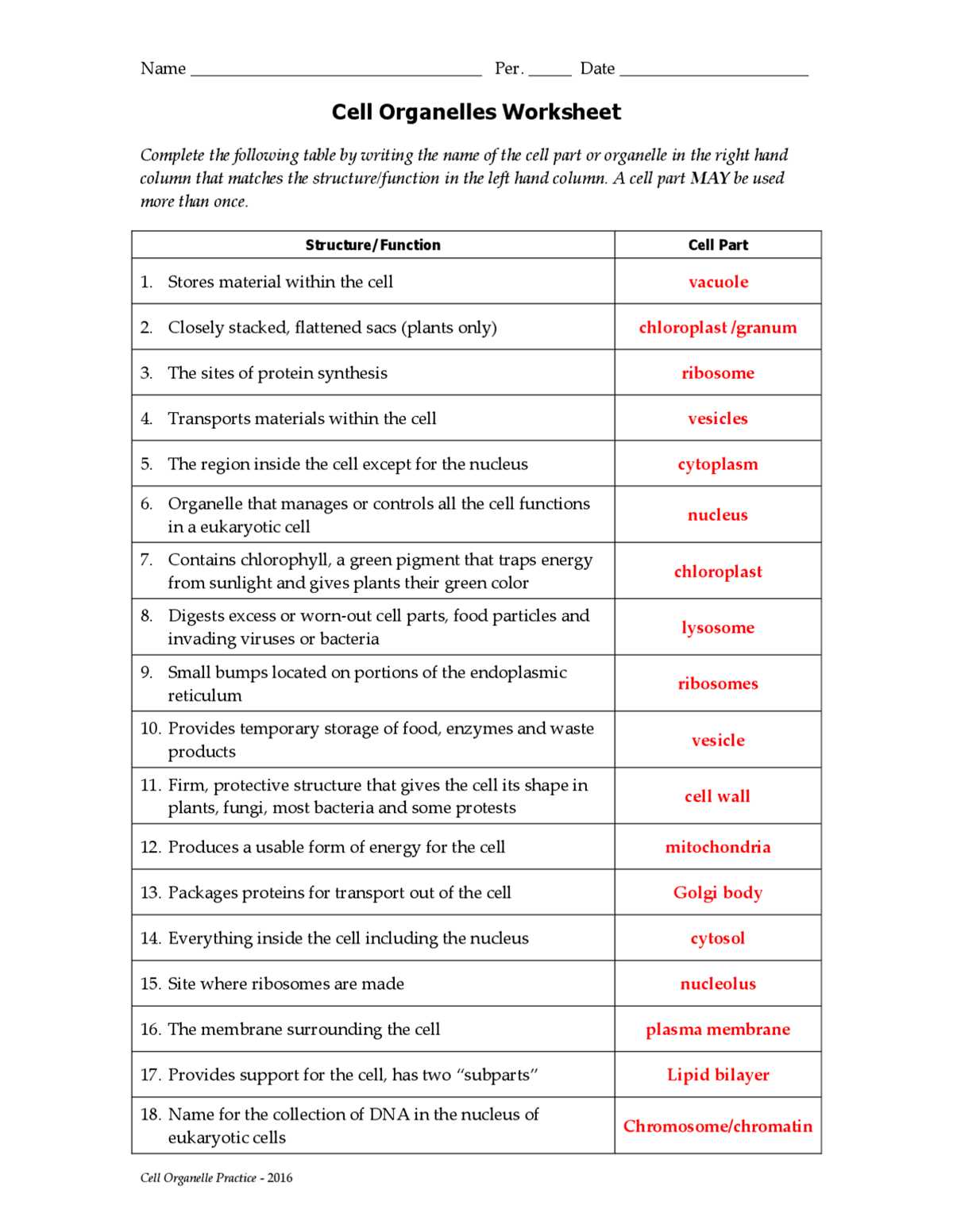
To identify the key components of a structure, observe its shape, location, and specific role. Use the following guide to match each part of the structure with its main function.
| Component | Key Feature | Role |
|---|---|---|
| Nucleus | Large, spherical, centrally located | Holds genetic material and controls cell activities |
| Mitochondria | Double membrane, inner membrane with folds | Produces energy (ATP) for cellular processes |
| Ribosomes | Small, round, often attached to rough ER or free in cytoplasm | Synthesizes proteins from mRNA |
| Endoplasmic Reticulum (ER) | Network of membranes, rough (with ribosomes) and smooth (without) | Produces and processes proteins (rough) and lipids (smooth) |
| Golgi Apparatus | Stack of membrane-bound sacs | Modifies, sorts, and packages proteins and lipids |
| Lysosomes | Small, spherical, membrane-bound | Breaks down waste materials and cellular debris |
| Plasma Membrane | Thin, flexible outer boundary | Regulates what enters and leaves the structure |
Refer to trusted resources like Khan Academy for visual aids and further information on identifying cellular components.
Detailed Functions of the Nucleus and its Role in Cells
The nucleus is a critical structure in maintaining the integrity and function of a living unit. It serves as the control center, containing the organism’s genetic material in the form of DNA. The nuclear membrane separates this material from the rest of the unit, providing a protective boundary.
One of the key responsibilities of the nucleus is the regulation of gene expression. It directs the synthesis of proteins by producing mRNA through a process called transcription. This mRNA is then used by ribosomes to synthesize proteins that carry out various activities in the organism.
Additionally, the nucleus plays a role in cell division. During mitosis, the genetic material within the nucleus is replicated and distributed to two daughter units, ensuring that each new unit receives an identical copy of the genetic code. This process is crucial for growth, repair, and reproduction.
The nucleolus, located inside the nucleus, is another critical component. It is responsible for the synthesis of ribosomal RNA (rRNA), which is a key element in the production of ribosomes. These ribosomes are then transported out of the nucleus to the rough endoplasmic reticulum, where protein synthesis occurs.
For more in-depth information, visit trusted educational sites such as Khan Academy, which provides clear explanations of the nucleus and its role in cellular processes.
Understanding Mitochondria and Their Energy Production Process
Mitochondria are responsible for producing the majority of energy within a unit. They generate adenosine triphosphate (ATP) through a process called cellular respiration, which occurs in multiple stages. The key stages include glycolysis, the citric acid cycle, and oxidative phosphorylation.
During glycolysis, glucose is broken down in the cytoplasm to produce pyruvate, which enters the mitochondria. In the citric acid cycle, pyruvate is further broken down to release high-energy electrons. These electrons are transferred to the electron transport chain, which takes place across the inner mitochondrial membrane.
As electrons move through the transport chain, a gradient is created that powers ATP production through chemiosmosis. Oxygen plays a critical role in this process, acting as the final electron acceptor, which allows the system to continue running efficiently.
Mitochondria also contain their own DNA, allowing them to replicate independently of the rest of the cell. This enables mitochondria to adjust to the energy demands of the organism, increasing or decreasing their number as needed.
For a more detailed understanding of mitochondrial energy production, refer to resources such as Khan Academy for visual aids and further information.
Roles of Ribosomes in Protein Synthesis and Function
Ribosomes are responsible for translating genetic information into proteins, a process known as translation. This occurs in two key stages: initiation and elongation.
During initiation, ribosomes attach to messenger RNA (mRNA), which carries the genetic code from the nucleus. The ribosome reads the sequence of codons on the mRNA to determine the order of amino acids, the building blocks of proteins. Transfer RNA (tRNA) molecules bring the appropriate amino acids to the ribosome, ensuring that each amino acid is added in the correct sequence.
In the elongation stage, the ribosome moves along the mRNA strand, linking amino acids together via peptide bonds to form a polypeptide chain. As this process continues, the growing chain of amino acids folds into a specific three-dimensional shape, becoming a functional protein.
Ribosomes are found either floating freely in the cytoplasm or attached to the endoplasmic reticulum. In both locations, they play a critical role in producing proteins for use within the organism or for export to other cells.
For more detailed information on how ribosomes work in protein production, check out educational sites such as Khan Academy.
How the Endoplasmic Reticulum Assists in Protein and Lipid Synthesis
The endoplasmic reticulum (ER) plays a crucial role in the synthesis of proteins and lipids, essential molecules for cell structure and function. The ER exists in two forms: rough and smooth, each with distinct roles in metabolic processes.
The rough ER is studded with ribosomes, which are responsible for synthesizing proteins. These proteins are either secreted from the cell, incorporated into the cell membrane, or sent to various organelles. The rough ER provides a scaffold for these ribosomes, ensuring that proteins are correctly folded and modified as they are synthesized.
Once proteins are synthesized, they are transported through the rough ER to the Golgi apparatus for further processing and packaging. This pathway is vital for producing proteins that will be secreted or embedded in membranes.
The smooth ER, in contrast, is not involved in protein synthesis. Instead, it is responsible for the synthesis of lipids, including phospholipids and steroids. These lipids are critical for membrane structure and function. Additionally, the smooth ER is involved in detoxification processes and storage of calcium ions.
Both types of ER are interconnected and collaborate in the production of proteins and lipids. By creating a network for protein folding and lipid production, the ER ensures the proper function of cells and supports essential processes like membrane maintenance and signal transduction.
For more in-depth explanations, refer to educational resources such as Khan Academy.
Exploring the Golgi Apparatus and its Role in Cellular Transport
The Golgi apparatus is responsible for modifying, sorting, and packaging proteins and lipids for transport to different destinations within or outside the cell. It functions as a central hub for processing molecules that were synthesized in the rough endoplasmic reticulum.
Proteins that are synthesized in the rough ER are transported to the Golgi apparatus in vesicles. Once inside, they undergo various modifications such as glycosylation, where carbohydrate chains are added. These modifications are crucial for determining the protein’s final structure and its specific functions.
The Golgi apparatus consists of flattened membranous sacs known as cisternae. It has two main faces: the cis face, where incoming vesicles from the ER arrive, and the trans face, where vesicles containing processed proteins and lipids are sent to their final destinations. This directionality ensures that proteins are correctly modified and dispatched to the appropriate cellular compartments or secreted outside the cell.
Additionally, the Golgi apparatus plays a key role in the synthesis of certain macromolecules like polysaccharides. It also helps in the formation of lysosomes, which are important for intracellular digestion and waste processing.
For more detailed information on the Golgi apparatus, refer to trusted educational resources such as Khan Academy.
What Does the Lysosome Do in Cellular Digestion and Waste Removal?
Lysosomes are responsible for breaking down waste materials and cellular debris. They contain enzymes that digest macromolecules, old organelles, and foreign substances, acting as the cell’s “clean-up crew.”
These organelles use hydrolytic enzymes to break down proteins, lipids, carbohydrates, and nucleic acids into their basic building blocks. The digestion process is essential for recycling cellular components and maintaining overall cellular health.
Key processes involving lysosomes include:
- Autophagy: The breakdown of damaged or obsolete organelles within the cell.
- Phagocytosis: The ingestion of foreign particles, such as bacteria or viruses, by the cell, which are then broken down by lysosomal enzymes.
- Endocytosis: The engulfing of extracellular material, which is transported to lysosomes for digestion.
The integrity of lysosomes is crucial for cellular waste management. Any dysfunction in lysosomal activity can lead to diseases, such as lysosomal storage disorders, where waste builds up inside the cell.
For additional insights on lysosomal roles in cells, you can visit Nature Scitable.
Understanding the Function of the Membrane in Transport and Protection
The membrane is critical for maintaining the structural integrity and selective permeability of the cell. It regulates the movement of substances into and out of the cellular environment, providing both protection and a controlled exchange of materials.
Key roles of the membrane include:
- Selective Permeability: The membrane allows certain molecules to pass while blocking others. Small, nonpolar molecules, such as oxygen, can pass through easily, whereas larger or charged molecules require specific transport mechanisms.
- Transport Proteins: Embedded proteins facilitate the movement of ions, nutrients, and waste products. Channels, carriers, and pumps help move materials by diffusion, active transport, or facilitated diffusion.
- Protection: The membrane acts as a barrier, protecting internal components from harmful substances and pathogens. It also helps prevent the loss of essential molecules like ions and water.
The fluid mosaic model explains the membrane’s dynamic structure, where lipids and proteins can move within the bilayer. This fluidity enables membrane flexibility and responsiveness to the cell’s needs.
Additionally, the membrane is involved in communication and signaling. Receptors on the membrane detect signals from the environment and trigger cellular responses, helping to coordinate processes such as immune defense and metabolism.
For a deeper understanding of membrane transport mechanisms, visit NCBI – National Institutes of Health.