Understanding the Antigone Family Tree and Character Relationships
To fully understand the intricate relationships in Sophocles’ play, it’s crucial to accurately trace the connections between characters. By using a detailed chart of related individuals, you can better grasp the dynamics of power, loyalty, and tragedy that define the narrative. This guide provides a step-by-step breakdown of how the family members are interrelated, highlighting key figures and their roles in the unfolding drama.
Start by focusing on the central characters and their direct relatives. This includes understanding the parental relationships, sibling connections, and the influence of earlier generations. Pay attention to how these family ties affect the decisions and motivations of each individual throughout the story. The more clearly you map these connections, the better your understanding of the deeper themes, such as fate, duty, and defiance, will become.
As you work through the chart, note the significant events that shape each relationship, such as marriages, deaths, and the impact of prophecies. Recognizing these events will clarify why certain characters act in ways that seem irrational or doomed. With this knowledge, you can approach the tragic elements of the story with greater insight and appreciation of the interconnectedness of the characters’ actions.
Antigone Family Tree Worksheet Answer Key
Use the following guide to check the relationships and roles of key characters in the story. This breakdown highlights the central figures and their connections, helping to clarify the plot and the complex web of familial obligations.
- Oedipus: Father of Antigone, Ismene, Polynices, and Eteocles. His tragic fate and the curse on his family set the stage for the events in the play.
- Jocasta: Mother of Antigone, Ismene, Polynices, and Eteocles. Married to Oedipus, her actions further complicate the family’s tragic fate.
- Antigone: Daughter of Oedipus and Jocasta, sister of Ismene, Polynices, and Eteocles. Her loyalty to her brother Polynices leads her to defy King Creon’s orders.
- Ismene: Sister of Antigone, daughter of Oedipus and Jocasta. She is more cautious than Antigone and tries to dissuade her from going against Creon.
- Polynices: Son of Oedipus and Jocasta, brother of Antigone, Ismene, and Eteocles. His conflict with his brother Eteocles and his subsequent death is central to the story.
- Eteocles: Son of Oedipus and Jocasta, brother of Antigone, Ismene, and Polynices. Fights Polynices over the throne and dies in battle.
- Creon: King of Thebes, uncle of Antigone and Ismene. He enforces the decree that Polynices should not be buried, leading to the central conflict with Antigone.
- Haemon: Son of Creon and Eurydice, fiancé of Antigone. His tragic death after attempting to stop his father’s punishment of Antigone adds to the family’s suffering.
By reviewing these relationships, students can gain a better understanding of how family dynamics, loyalty, and power struggles impact the tragic events that unfold. Use this guide to verify connections and roles within the narrative for deeper comprehension of the story’s themes and conflicts.
Understanding the Role of Oedipus in the Family Structure
Oedipus is the central figure whose actions and fate set the tragic course for the rest of the characters. As the father of Polynices, Eteocles, Antigone, and Ismene, his decisions heavily influence the family’s trajectory. His complex relationship with Jocasta and the fulfillment of the prophecy play pivotal roles in shaping the future of his descendants.
Oedipus’s tragic flaw, his inability to escape fate, becomes a defining characteristic in the narrative. His self-inflicted blindness and exile symbolize the family curse that will affect future generations. By marrying Jocasta, his mother, and fathering children with her, he unknowingly binds the family to a cycle of destruction, where each generation’s fate is intertwined with the sins of the previous one.
As the king of Thebes, Oedipus’s actions also impact the city’s political structure. His determination to find the truth leads to revelations that disrupt the balance in the kingdom. His children, born into this cursed lineage, must bear the consequences of his past actions, often against their will, creating a web of conflict that extends throughout the narrative.
In sum, Oedipus serves as the tragic root of his family’s struggles. His legacy casts a long shadow over his children’s lives, and the repercussions of his past decisions directly affect their relationships and fates. Understanding his role is key to interpreting the broader themes of fate, guilt, and generational curses in the narrative.
Identifying the Relationships Between Antigone, Ismene, and Their Siblings
Antigone and Ismene are the daughters of Oedipus and Jocasta, making them sisters. They have two brothers, Polynices and Eteocles, who are also the sons of Oedipus and Jocasta. Their family is marked by complex relationships, shaped by tragic events that affect their lives and destinies.
The two sisters, Antigone and Ismene, differ in their approaches to family duty. Antigone, the more defiant and bold sibling, seeks to honor her brother Polynices, despite King Creon’s decree against his burial. Ismene, on the other hand, represents obedience and caution, initially reluctant to defy the king’s orders.
Polynices and Eteocles, the brothers, share a contentious relationship, both fighting for the throne of Thebes. Their conflict leads to a tragic outcome, with both brothers dying in battle, which further entangles the fates of Antigone and Ismene. The sisters are caught in the aftermath of this battle, each dealing with the consequences of their brothers’ deaths in their own way.
The siblings’ relationships are also influenced by their parents’ actions, especially the curse that follows Oedipus and his descendants. This curse sets the stage for the tragic fate that befalls each family member, binding them together through both love and loss.
How to Trace the Connections Between Antigone and Her Parents
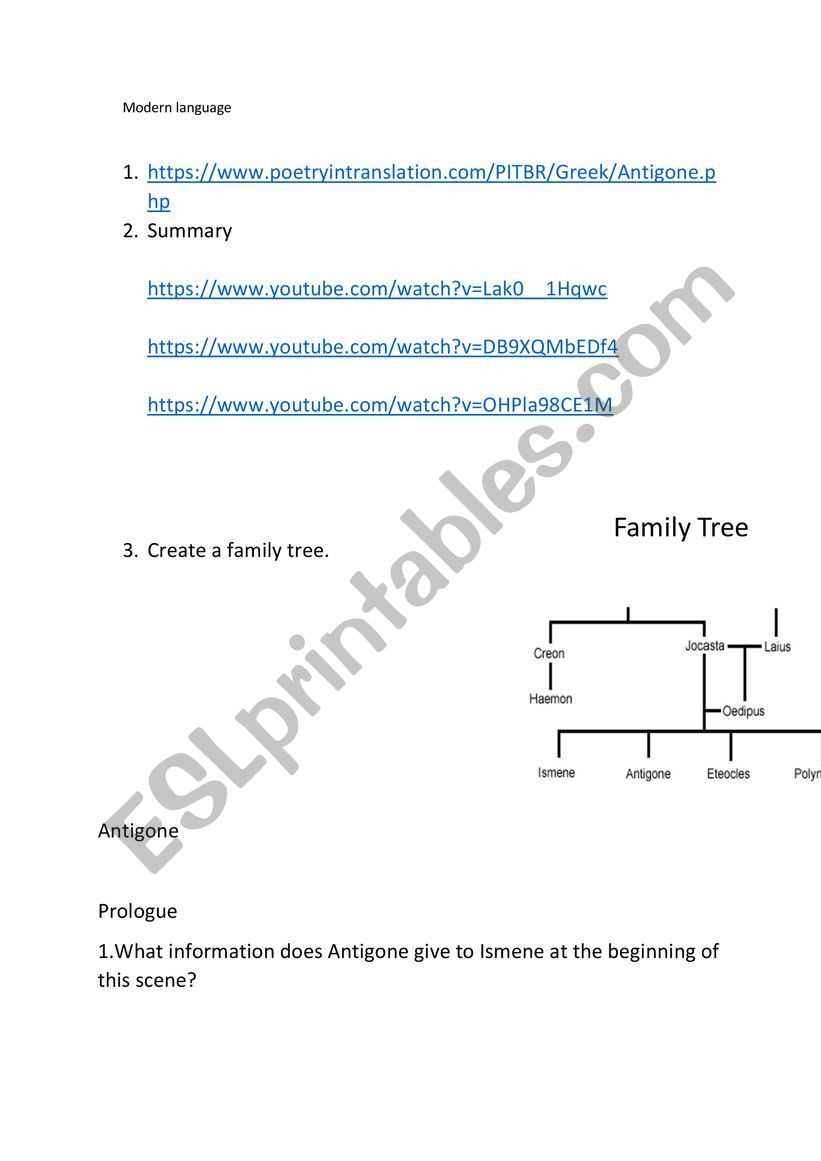
To trace the connections between Antigone and her parents, begin by identifying her father, Oedipus, and her mother, Jocasta. Oedipus, once king of Thebes, is known for unwittingly fulfilling a prophecy that led him to marry his mother, Jocasta, and kill his father, Laius. This tragic union resulted in the birth of their children, including Antigone.
Start by drawing the line of descent from Oedipus and Jocasta to their offspring. The children include Antigone, her sister Ismene, and her brothers Polynices and Eteocles. Each sibling’s fate is intertwined with their parents’ actions and the curse on Oedipus’ lineage, creating a complex web of relationships.
Next, understand the impact of the familial curse on Antigone’s life. The events surrounding Oedipus and Jocasta’s downfall, including the discovery of Oedipus’ true parentage and the subsequent consequences, deeply shape Antigone’s fate. Despite being raised in a royal family, Antigone’s life is defined by tragedy, as she faces the consequences of her father’s actions and the family’s cursed destiny.
In summary, tracing the connections requires understanding the tragic cycle of events that began with the parents, Oedipus and Jocasta, and how their fates inevitably led to the fates of their children, including Antigone. The relationships between them are defined by a tragic inheritance that shapes the lives and choices of each family member.
Explaining the Family Ties Between Eteocles and Polynices
Eteocles and Polynices are the sons of Oedipus and Jocasta, making them brothers. Their relationship is central to the tragic narrative of their lives, as both are heirs to the throne of Thebes. According to their father’s will, the brothers were to rule in alternating years. However, this agreement broke down, leading to a bitter conflict over the throne.
After Eteocles’ year as king, he refused to relinquish power to Polynices, resulting in a war between the two. This conflict culminated in both brothers killing each other in battle. Their deaths marked the tragic end of a cycle of familial violence, initiated by their father Oedipus’ curse. The brothers’ fates are intertwined, not only by their blood relation but also by the devastating consequences of their inherited family legacy.
To understand their relationship fully, it’s crucial to see how their actions were influenced by the curse on Oedipus’ lineage. The discord between the brothers was not just a political power struggle but also a reflection of the tragic inheritance they both faced. Despite being brothers, their rivalry ultimately led to mutual destruction.
Mapping the Influence of Laius and Jocasta on the Family Tree
Laius and Jocasta play a critical role in shaping the destiny of their descendants. Laius, as the king of Thebes, and Jocasta, his wife, are central figures in the tragic curse that haunts their bloodline. They are the parents of Oedipus, whose actions unknowingly fulfill a prophecy that leads to devastating consequences for the family.
The curse of Laius and Jocasta begins with a prophecy that their son would kill his father and marry his mother. To avoid this fate, Laius and Jocasta attempted to abandon Oedipus, but the prophecy was ultimately fulfilled. This tragic outcome sets the stage for the misfortunes of subsequent generations. The complex web of relationships initiated by Laius and Jocasta directly impacts their children, Oedipus, and his offspring.
Laius and Jocasta’s influence extends through the lives of their son, Oedipus, and his children. The tragic events that follow, such as Oedipus’ self-inflicted blindness and exile, and the familial conflicts between Oedipus’ sons, Eteocles and Polynices, highlight the destructive power of their legacy. Despite their attempts to break free of the prophecy, their actions ultimately contribute to the unraveling of the family’s fate.
Mapping their influence shows how their decisions and the curse they bear lead to a cycle of violence, tragedy, and inevitable downfall for each generation. This dark inheritance plays out in the lives of Oedipus, his children, and the larger Theban mythos, cementing Laius and Jocasta’s roles in the tragic chain of events. The weight of their choices and the curse they initiated shapes not only their own lives but the futures of those who follow them.
Visualizing the Impact of Tragic Events on Family Dynamics
The sequence of tragic occurrences that unfolds within a family has profound effects on interpersonal relationships. In the case of this narrative, the curse and misfortunes affect not only the individuals directly involved but also the broader social fabric. Tragedies such as the murder of a father by his own son and the complex relationships that follow lead to deep divisions, power struggles, and ultimately, a family torn apart.
The deaths, betrayals, and unresolved conflicts create an environment where family members are either drawn closer together or forced into isolation. The emotional and psychological toll of these events often drives actions that perpetuate further harm, amplifying the tragic cycle. Each generation is shaped by the actions of the previous one, often without escape from the consequences of those decisions.
Visualizing these dynamics through a structured diagram or chart can be an effective way to trace the cause and effect of key events on the relationships within the group. The downward spiral that begins with one tragic choice can be followed through each subsequent generation, showing how individual actions can amplify the suffering within a family.
Understanding these relationships through such a lens helps to clarify the powerful, often irreversible effects of tragic events. Resources like Encyclopedia Britannica provide comprehensive insights into the psychological and familial consequences of these classic tragedies. These accounts help connect the dots between personal decisions, family structure, and broader social impacts.
How to Use the Family Tree to Understand Key Themes in the Play
The connections between characters are fundamental to understanding the central themes in this dramatic work. By tracing the relationships between key figures, you can better appreciate themes like fate, loyalty, and the consequences of choices. The way these characters are linked reveals deeper truths about their motivations and struggles.
For example, the family connections highlight the recurring theme of inherited guilt and the curse that haunts each generation. Understanding how the actions of parents, such as those of Laius and Jocasta, affect their children helps illustrate the play’s exploration of fate versus free will. By mapping out these relationships, you can see how the characters are bound by family legacies that they cannot escape.
Additionally, examining the ties between siblings like Ismene and Antigone shows how loyalty to family can conflict with moral or societal duties. The tension between their loyalty to each other and to their individual beliefs reflects the larger theme of personal duty versus public responsibility.
Analyzing these connections also provides insight into the theme of power and its impact on relationships. Characters like Creon, who occupy positions of authority, are often shown to struggle with balancing personal and political responsibilities, revealing how power dynamics shape their decisions and actions.
Analyzing the Complex Family Relationships for Deeper Insight into the Play
Understanding the intricate web of relationships between characters reveals underlying themes and motivations. Each individual’s connection to another plays a significant role in their decisions and actions, offering crucial insight into their emotional and moral struggles.
The tension between characters like the siblings and their parents reflects deeper themes of loyalty, duty, and the weight of generational burdens. For instance, consider how the tragic outcomes of their family’s past affect their present actions and choices. These connections are not just casual bonds; they shape the characters’ identities and propel the plot forward.
- Inheritance of Guilt: The weight of past misdeeds by parents, such as the curse of Laius and Jocasta, directly influences the younger generation. The inevitability of their actions is explored through the lens of inherited responsibility and fate.
- Conflicting Loyalties: The complex dynamics between siblings like Ismene and Antigone show the tension between familial loyalty and moral duty. Their differing approaches to honoring their relatives versus following societal rules provide a powerful commentary on personal ethics.
- Power Struggles: Characters who hold authority, such as Creon, navigate personal and public responsibilities. Analyzing his relationships with his family, particularly with his son Haemon, exposes the consequences of power and its ability to strain familial bonds.
By carefully examining these relationships, you uncover the way personal choices are influenced by broader forces, such as tradition, family honor, and societal expectations. This deeper understanding of relationships adds richness to the interpretation of key moments in the drama and highlights the central theme of fate versus free will. The complexity of these connections emphasizes the internal and external conflicts that each character faces.