Complete Solutions for the Circle Review Worksheet
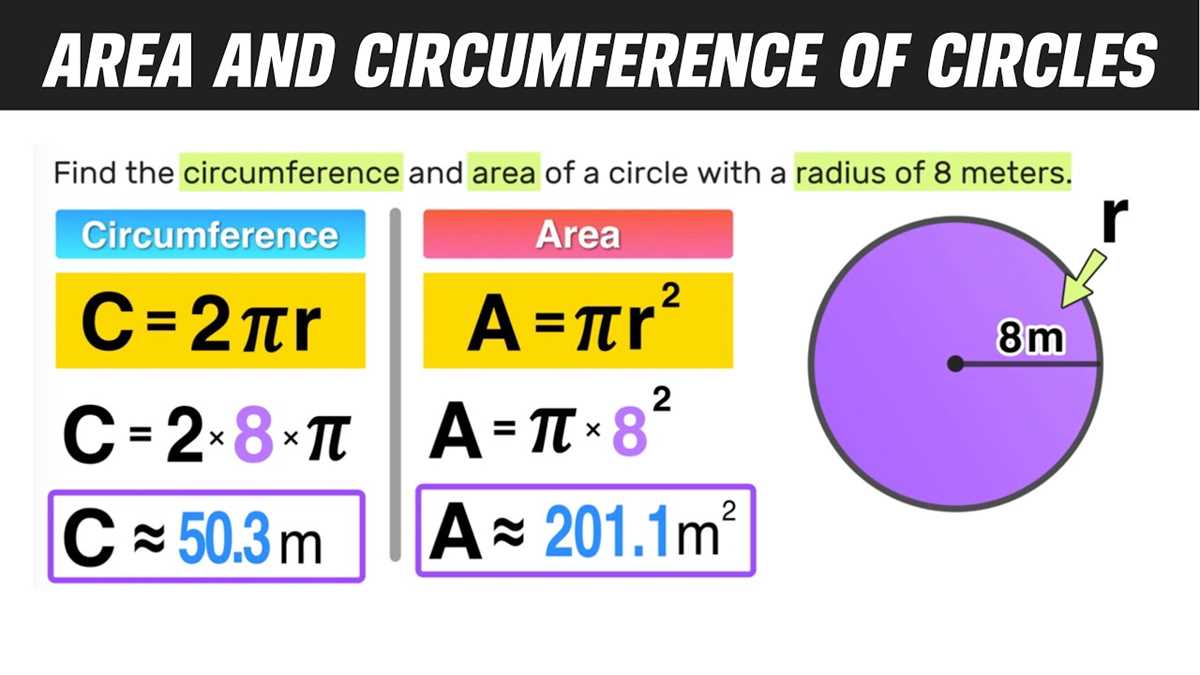
To master geometric calculations involving circular shapes, focus on key formulas and principles. Start by understanding the relationships between radius, diameter, circumference, and area. For example, the circumference of a circle is determined by the formula C = 2πr, where r is the radius. Similarly, the area is calculated using A = πr². These are fundamental for solving most circle-related problems.
Next, pay close attention to word problems that involve real-world applications, like finding the distance around a track or calculating the area of a circular garden. Applying the right formula based on the given information is critical. Practice with a variety of problems to strengthen your understanding and ensure accuracy in your solutions.
Lastly, ensure that each calculation is checked thoroughly. Mistakes often arise when handling decimal values or converting units. Double-check your results by verifying your calculations step-by-step. Using a reliable reference for answers can help spot errors and reinforce your learning.
Circle Geometry Problem Solutions
For the first problem, the formula for the circumference is C = 2πr. Given that the radius is 5 units, the circumference is approximately 31.42 units.
Next, for the area, use the formula A = πr². With a radius of 5 units, the area calculates to about 78.54 square units.
If the problem asks for the diameter, use the relationship d = 2r. For a radius of 5 units, the diameter is 10 units.
When solving for the arc length, use the formula s = θ/360 * 2πr, where θ is the central angle. If the angle is 90°, then the arc length with a radius of 5 units is 7.85 units.
In cases where you need to find the sector area, the formula is Area of sector = θ/360 * πr². For a 90° angle, the area of the sector is 19.63 square units with a radius of 5 units.
Lastly, always double-check your calculations for precision, especially when dealing with π and rounding decimal places. This ensures that your solutions remain accurate and reliable.
How to Approach Geometry Problems Involving Circular Shapes
Begin by identifying the key elements in the problem: the radius, diameter, and any angles involved. These are the main components used to calculate other aspects such as area, circumference, and arc length.
Use the correct formulas for each type of calculation:
- Circumference: C = 2πr, where r is the radius.
- Area: A = πr², again using the radius.
- Diameter: d = 2r, double the radius for the diameter.
- Arc Length: s = θ/360 * 2πr, where θ is the central angle in degrees.
- Sector Area: A = θ/360 * πr², where θ is the central angle in degrees.
Next, examine any given angles or sectors. For problems involving angles, remember that a full rotation of a circle is 360°. This can help you set up proportional relationships for calculating partial arc lengths or sector areas.
If there are multiple steps in the problem, break them down logically. For example, first calculate the radius, then use that value for further calculations like arc length or sector area.
Lastly, check that your units are consistent. Ensure that the radius or diameter is in the correct unit (e.g., centimeters, meters) and apply the same unit to the final results. If needed, convert between units to maintain consistency throughout the problem.
| Problem Type | Formula | Units |
|---|---|---|
| Circumference | C = 2πr | Units of length |
| Area | A = πr² | Square units |
| Diameter | d = 2r | Units of length |
| Arc Length | s = θ/360 * 2πr | Units of length |
| Sector Area | A = θ/360 * πr² | Square units |
Step-by-Step Guide for Solving Area and Circumference of a Circle
To solve problems involving area and perimeter of a circular shape, follow these steps:
- Identify the radius: The radius is the distance from the center to any point on the boundary. If the diameter is given, divide it by 2 to find the radius.
- Calculate the circumference: Use the formula C = 2πr, where r is the radius. If the diameter is given, use C = πd, where d is the diameter.
- Calculate the area: Use the formula A = πr². This will give you the space inside the circular boundary.
Check the units of measurement to ensure consistency. If the radius is given in centimeters, the final answers for both area and perimeter will be in centimeters. If needed, convert between units before solving.
Here’s a sample problem to apply the steps:
- Radius = 5 cm
- Circumference = C = 2πr = 2π(5) ≈ 31.42 cm
- Area = A = πr² = π(5)² ≈ 78.54 cm²
Now, you can apply the same approach to other problems, ensuring that you identify the key dimensions (radius or diameter) and use the correct formulas for each calculation.
Understanding Common Mistakes in Calculations Involving Circles
Several errors can arise when solving problems related to circular measurements. These mistakes can lead to inaccurate results if not addressed properly. Below are some common issues and how to avoid them:
- Confusing radius and diameter: Many learners confuse the radius with the diameter. The radius is half of the diameter, so using the wrong value for the radius or diameter will affect your results.
- Incorrect use of formulas: Ensure you use the correct formulas. For example, the formula for circumference is C = 2πr and for area, A = πr². Using incorrect formulas will give you wrong answers.
- Forgetting to square the radius: When calculating the area, make sure to square the radius. The common mistake is to multiply the radius by π instead of squaring it first.
- Misinterpreting units of measurement: Always double-check your units. If the radius is given in meters, your final answer for area will be in square meters, and for circumference in meters. Be cautious with unit conversions.
- Not using the correct value for π: Using an approximation for π that is too imprecise (such as 3.14) can lead to significant errors in your results. Use a more precise value like 3.14159 when necessary.
By being aware of these common mistakes and taking the necessary steps to correct them, you can improve your accuracy when working with circular measurements.
How to Interpret Circle Equations in Word Problems
Start by identifying the key elements in the problem. Look for references to radius, diameter, circumference, or area. These will guide you in forming the correct equation. If the word problem mentions the circumference, use the equation C = 2πr. If the area is mentioned, use A = πr².
Next, extract the given values from the problem. If the radius is given directly, substitute it into the formula. If the diameter is provided instead, remember to divide it by 2 to find the radius. Be careful with units – make sure all measurements are in the same unit before applying them to your equations.
If the problem provides the equation of a circle, such as (x – h)² + (y – k)² = r², recognize that h and k represent the center’s coordinates and r is the radius. You can use this information to interpret the location and size of the circle on a coordinate plane.
Always verify that the equation you form matches the problem’s context. For example, if the problem involves finding the distance around a circular track, focus on the circumference equation. If the problem asks for the space inside a circular pool, use the area equation.
By breaking down the problem, identifying the relevant formula, and properly substituting values, you can confidently solve word problems related to circular geometry.
Strategies for Using Formulas in Circle Geometry
Focus on mastering the key formulas for determining important properties such as area and perimeter. The most common formulas are:
- Area = πr²
- Circumference = 2πr
- Diameter = 2r
Identify which quantity is being asked in the problem. If you need the area, ensure you’re using the formula for area, not circumference. If the diameter is given, divide it by 2 to find the radius before using the area or circumference formulas.
Pay close attention to units. If the radius is given in centimeters and the question asks for the area in square meters, you must first convert the units appropriately before performing the calculation.
Break complex problems into smaller steps. For example, if a question involves multiple properties, start with one formula (e.g., find the radius) and then proceed to other formulas to determine the needed values.
When dealing with a word problem, extract the key pieces of information, such as radius, diameter, or coordinates. Translate these into the appropriate formulas to solve the problem systematically.
Practice applying these formulas regularly to build familiarity with different problem types and improve problem-solving speed.
Understanding Key Theorems Related to Circles
Study the Inscribed Angle Theorem, which states that the angle subtended by a chord at the center of a circle is twice any inscribed angle subtended by the same chord. This theorem is key in solving many geometry problems involving angles.
Familiarize yourself with the Central Angle Theorem, which indicates that the central angle subtended by a chord is equal to the angle formed at the center of the circle. This can help in determining both arc lengths and sector areas.
Understand the Tangent-Secant Theorem, which shows that the square of the length of the tangent drawn from an external point is equal to the product of the lengths of the secant segment and its external segment. This is important when working with external points and tangents.
Be aware of the Power of a Point Theorem, which relates the distance from a point outside a circle to the length of a secant segment and the length of the tangent segment from the same point. This theorem simplifies many complex geometric situations.
Grasp the concept of Arc Length and how to calculate it using the formula: Arc Length = (θ/360) * 2πr, where θ is the central angle in degrees and r is the radius. Understanding this is vital for calculating sections of a circle.
Finally, understand how Chord Properties work. The perpendicular from the center of a circle to a chord bisects the chord. This fact is useful in problems involving distances between points or the length of a chord.
How to Check Your Answers in a Circle Review Worksheet
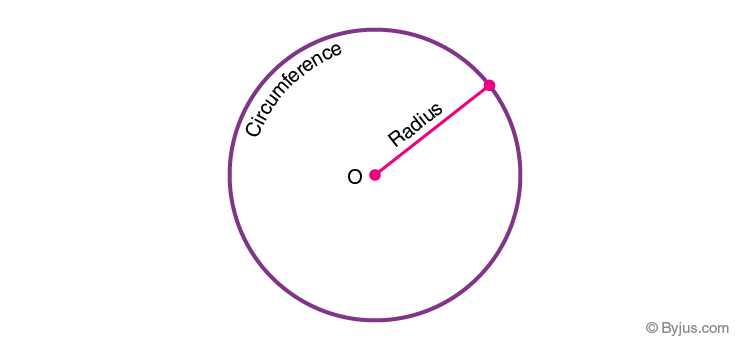
To verify your results, start by reviewing the problem’s given data. Double-check the values you used for radii, diameters, and angles. Ensure that you’ve applied the correct formulas for calculating areas, perimeters, and other properties. For example, use the formula for the area: A = πr² where r is the radius, and confirm your calculations with a calculator.
Next, compare your computed results with standard reference materials. If you’re unsure, visit reliable resources like the Khan Academy Geometry section, which provides step-by-step explanations and examples for geometric problems, including circle-related ones.
Additionally, check for consistency in your results. For example, if you’ve calculated the length of an arc or sector, ensure that it aligns with the angle measurement provided in the problem. If necessary, revise your steps to pinpoint any errors in logic or arithmetic.
Lastly, it’s helpful to cross-reference your answers with a peer or educator if available. Discussing your process and results often reveals overlooked mistakes or alternative approaches for problem-solving.
Practical Applications of Geometry in Real Life
Geometry plays a significant role in fields such as architecture and engineering, where circular shapes are frequently used in the design of structures like domes, arches, and tunnels. Calculating precise measurements for these structures requires an understanding of formulas for circumference, area, and sector lengths, ensuring stability and functionality in real-world designs.
In manufacturing, circular geometry is used in the production of gears, wheels, and other mechanical components. Engineers rely on the relationship between radius, diameter, and circumference to ensure that components fit together properly and operate smoothly. For example, determining the right size of a gear’s teeth involves applying the circumference formula to achieve the correct mechanical advantage.
Another practical application is in navigation. When calculating distances and plotting courses, particularly in aviation and maritime industries, the principles of circles are applied. This includes determining the shortest path between two points on the surface of a sphere (great circle distance) for flight routing or maritime navigation.
Sports fields and tracks also depend on geometry. For example, a standard running track uses circular arcs to create its oval shape. Athletes, coaches, and planners need to calculate the distances correctly to ensure fairness in competition and compliance with regulations.
In everyday life, people use circular geometry when measuring circular objects, such as determining the size of a pizza, round table, or clock face. Understanding the basic formulas helps individuals make accurate calculations for tasks ranging from buying materials to planning space layouts.