Cell Cycle Review Detailed Answer Guide
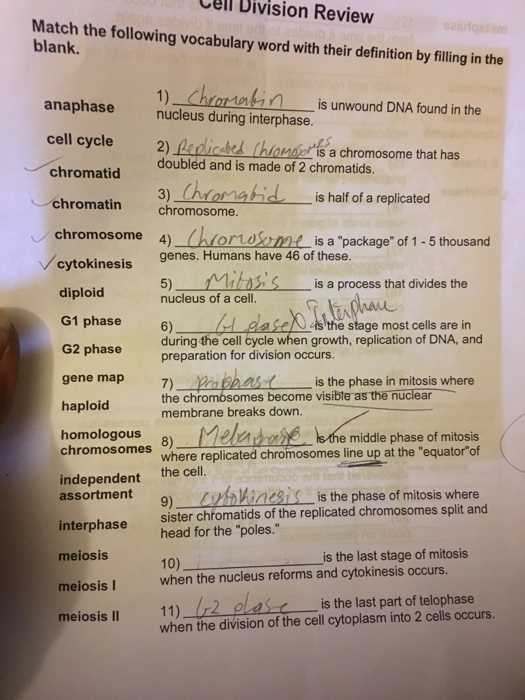
To effectively understand how living organisms grow and repair tissue, focus on the stages that precede division and ensure accurate DNA duplication. The process that prepares cells for division is complex and involves a series of precise steps. Start by mastering the key phases that each cell goes through to split into two functional cells.
The first step is ensuring that DNA is correctly copied and each new cell receives a full set of genetic material. Recognizing when and how cells prepare for division, through checkpoints and control mechanisms, is important in identifying any potential errors in the process. Pay attention to both the preparation stage and the actual division, where the cells physically separate to create new ones.
By focusing on each phase, understanding how cells repair or replace themselves becomes clearer. Additionally, mutations that disrupt this process can lead to uncontrolled growth, which is a key factor in the development of cancer. A strong grasp of how these stages work together lays the foundation for understanding genetic diseases and biological development.
Cell Cycle Review Guide
Focus on the key stages of cellular reproduction. The process begins with the interphase, where the cell prepares for division. In the first phase, the cell grows and synthesizes necessary proteins. Then, in the S phase, DNA is replicated to ensure that both resulting cells receive identical genetic material.
The next phase, G2, involves the final preparations before division, checking for any errors in DNA replication. Once the cell is fully prepared, it moves into mitosis, where the cell divides into two. Mitosis consists of several stages: prophase, metaphase, anaphase, and telophase, each with specific tasks to align chromosomes and ensure the correct division of the genetic material.
Once mitosis is complete, cytokinesis follows, where the cell’s cytoplasm divides, forming two new daughter cells. These cells each enter the interphase phase of their own cycle, ready to repeat the process. Ensure to note the checkpoints throughout the process, as they ensure proper cell function and prevent the development of abnormalities like cancer.
Understanding the Phases of the Cell Cycle
The process of cellular division is organized into distinct stages. The first major phase is interphase, which prepares the cell for division. Interphase itself is divided into three sub-stages:
- G1 phase: The cell grows and performs its normal functions. It also prepares for DNA replication.
- S phase: DNA replication occurs, ensuring that the cell will have a complete set of chromosomes for division.
- G2 phase: The cell continues to grow and checks for DNA errors before entering the division phase.
After interphase, the cell enters the mitotic phase, where division occurs:
- Prophase: Chromosomes condense, and the nuclear envelope begins to break down.
- Metaphase: Chromosomes align at the cell’s center, preparing for separation.
- Anaphase: Sister chromatids are pulled apart towards opposite ends of the cell.
- Telophase: The nuclear envelope reforms around each set of chromosomes, and the cell starts to split.
The final step is cytokinesis, where the cytoplasm divides, completing the formation of two daughter cells.
Key Events in Interphase
Interphase consists of three stages: G1, S, and G2, each playing a crucial role in preparing the cell for division. During the G1 phase, the cell grows and synthesizes proteins necessary for DNA replication. The cell also performs its normal functions, ensuring it has the resources required for division.
In the S phase, DNA replication occurs. Each chromosome is duplicated to ensure that both daughter cells will receive a complete set of genetic material. This is a vital step, as the accurate copying of DNA is necessary for the proper functioning of the new cells.
During the G2 phase, the cell continues to grow and prepares for the division process. It checks for any errors in the DNA and repairs them before proceeding to the mitotic phase. This final preparation ensures that the cell can divide correctly and produce two viable daughter cells.
How to Identify and Differentiate Mitosis Stages
To identify and differentiate the stages of mitosis, focus on the specific changes that occur within the nucleus and the overall cell structure. The stages are typically classified as prophase, metaphase, anaphase, and telophase, each marked by distinct features.
In prophase, the chromatin condenses into visible chromosomes, and the nuclear envelope begins to break down. The mitotic spindle, composed of microtubules, starts to form as the centrioles move to opposite poles of the cell.
During metaphase, chromosomes align at the cell’s equatorial plane, forming the metaphase plate. The spindle fibers attach to the centromeres of each chromosome, ensuring that each sister chromatid will be pulled apart evenly.
Anaphase is characterized by the separation of sister chromatids. The centromeres divide, and the spindle fibers pull the chromatids toward opposite poles of the cell, ensuring that each new cell will receive an identical set of chromosomes.
Finally, in telophase, the separated chromatids reach the poles, and new nuclear membranes begin to form around each set of chromosomes. The chromosomes de-condense back into chromatin, and the cell prepares for cytokinesis.
| Stage | Key Features |
|---|---|
| Prophase | Chromatin condenses, nuclear envelope dissolves, spindle fibers form |
| Metaphase | Chromosomes align at the metaphase plate, spindle fibers attach to centromeres |
| Anaphase | Sister chromatids are pulled apart to opposite poles |
| Telophase | Chromosomes de-condense, nuclear envelopes reform, cell begins to divide |
Role of Checkpoints in the Cell Cycle
Checkpoints serve as regulatory mechanisms that ensure proper progression through the different stages. These control points assess the cell’s readiness for the next phase, ensuring that errors are corrected before advancing. Without these checkpoints, cells could divide uncontrollably, leading to issues such as cancer.
There are several critical checkpoints throughout the division process. The G1 checkpoint ensures the cell has grown sufficiently and is ready for DNA replication. If the DNA is damaged or there are insufficient resources, the cell may enter a resting phase or undergo apoptosis.
The S checkpoint monitors the integrity of DNA during replication. If errors are detected, repair mechanisms are activated to correct the damage. If the damage is too severe, the cell will stop the process to prevent passing on mutations.
The G2 checkpoint occurs before mitosis, confirming that DNA replication is complete and that there are no DNA errors. If problems are found, the cell cycle is halted to allow for repairs.
Lastly, the metaphase checkpoint checks that all chromosomes are properly aligned on the metaphase plate, ensuring equal distribution to daughter cells. This prevents aneuploidy, where cells receive an incorrect number of chromosomes.
| Checkpoint | Function |
|---|---|
| G1 Checkpoint | Checks cell size, nutrients, and DNA integrity before proceeding to DNA replication |
| S Checkpoint | Monitors DNA replication for errors and ensures repairs are made before moving forward |
| G2 Checkpoint | Verifies completion of DNA replication and repairs any detected DNA damage |
| Metaphase Checkpoint | Ensures proper chromosome alignment before chromosome separation |
Importance of DNA Replication in Cell Division
DNA replication is a critical process that occurs before a cell divides. It ensures that each daughter cell receives an identical copy of the genetic material. Without accurate replication, genetic information could be lost or mutated, leading to malfunctioning or dysfunctional cells.
During replication, the DNA molecule unwinds and separates, allowing enzymes to synthesize two new complementary strands. This process happens in the S phase, where the genome is copied with high fidelity. The replication process involves several checkpoints to identify and repair any errors, thus minimizing the chance of mutations.
Inaccurate or incomplete replication can cause genetic instability, which may lead to diseases like cancer. The integrity of the replication process is vital for maintaining the stability of the genome and for ensuring proper cellular function across generations.
For more detailed information on DNA replication and its role in cell division, you can visit authoritative sources like Nature Education.
Common Mistakes in Recognizing Cell Cycle Phases
One of the most common errors in identifying phases is confusing the G1 and G2 phases. Both occur before and after DNA synthesis, respectively, but they are distinct in terms of their processes. G1 is primarily a growth phase where the cell prepares for DNA replication, while G2 involves preparation for mitosis, with the cell checking for any DNA damage before proceeding.
Another mistake is misidentifying metaphase and anaphase. During metaphase, chromosomes align at the center of the cell, while in anaphase, sister chromatids are pulled apart to opposite poles. The two phases may seem similar, but the key difference lies in the position and movement of the chromatids.
Failing to recognize interphase as a whole can also lead to confusion. Interphase includes G1, S, and G2 phases, but students often focus only on the S phase, where DNA is replicated. This oversight can cause misinterpretation of cell division stages as a whole.
Accurately distinguishing telophase from cytokinesis is also challenging. While telophase marks the end of mitosis with the reformation of nuclear membranes, cytokinesis is the final step that physically separates the cytoplasm into two distinct cells.
How Mutations Affect the Cell Cycle
Mutations in genes responsible for regulating progression through the various phases can lead to uncontrolled cell division. For example, mutations in tumor suppressor genes like p53 can prevent the cell from undergoing necessary checkpoints, allowing damaged DNA to replicate and resulting in cancerous growth.
Mutations in proto-oncogenes can cause them to become oncogenes, leading to a constant activation of cell division signals. This disrupts the normal regulatory mechanisms and can lead to excessive proliferation.
Another common mutation occurs in the genes that code for cyclins or cyclin-dependent kinases (CDKs), which are critical for the transition between phases. Mutations that affect these proteins can result in improper progression through the cell cycle, leading to issues like aneuploidy, where cells have an abnormal number of chromosomes.
Additionally, mutations that affect the spindle assembly checkpoint can prevent proper chromosome segregation during mitosis. This can lead to chromosomal instability, contributing to the development of various diseases, including cancer.
Practical Tips for Mastering Cell Cycle Concepts
To grasp the key stages, focus on understanding the distinct transitions between phases. Break down each stage–interphase, mitosis, and cytokinesis–into specific sub-stages like G1, S, G2, prophase, metaphase, anaphase, and telophase, and learn what occurs at each checkpoint.
Use diagrams and flowcharts to visualize the processes. Create a clear and simple diagram that highlights the sequence of events and the role of proteins like cyclins and CDKs at each phase.
Associate key events with mnemonic devices to help retain information. For example, remember the sequence of mitosis stages with the phrase “Pee More After Time” (Prophase, Metaphase, Anaphase, Telophase).
Focus on understanding the regulation mechanisms that ensure proper progression, such as checkpoints and the role of tumor suppressor genes. Familiarity with how errors in these systems lead to uncontrolled growth will deepen your understanding.
Practice with questions and quizzes regularly to test your understanding of the timing and sequence of the phases. Real-world examples of diseases caused by cycle disruptions, like cancer, can make abstract concepts more relatable and memorable.