Understanding the Properties of Atoms and the Periodic Table
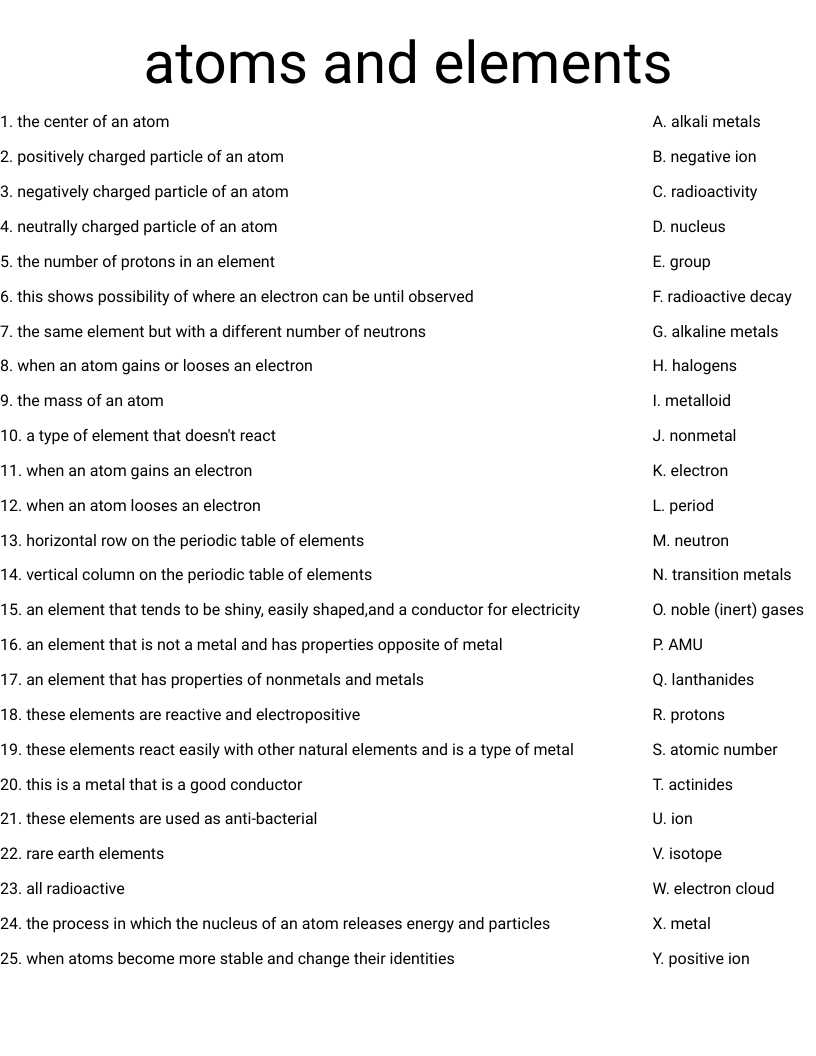
Begin by examining how atomic structure determines an element’s reactivity and behavior in compounds. Focus on the relationship between an element’s position on the chart and its atomic characteristics, such as size, mass, and electronegativity. Recognizing these trends is critical for understanding both periodicity and the classification of elements.
Next, review how the arrangement of electrons in shells influences chemical bonding. This factor plays a significant role in distinguishing between various types of elements, including metals, nonmetals, and metalloids. These classifications are reflected in their distinct chemical and physical characteristics, which can be predicted by their electron configurations.
Using this understanding, approach each element by its atomic number and mass to categorize it correctly. The periodic organization not only highlights similarities but also guides predictions about how elements will interact in chemical reactions. By mastering these key points, you can solve common problems related to element identification and their interactions in compounds with greater precision.
Properties of Atoms and the Periodic Table Answer Key
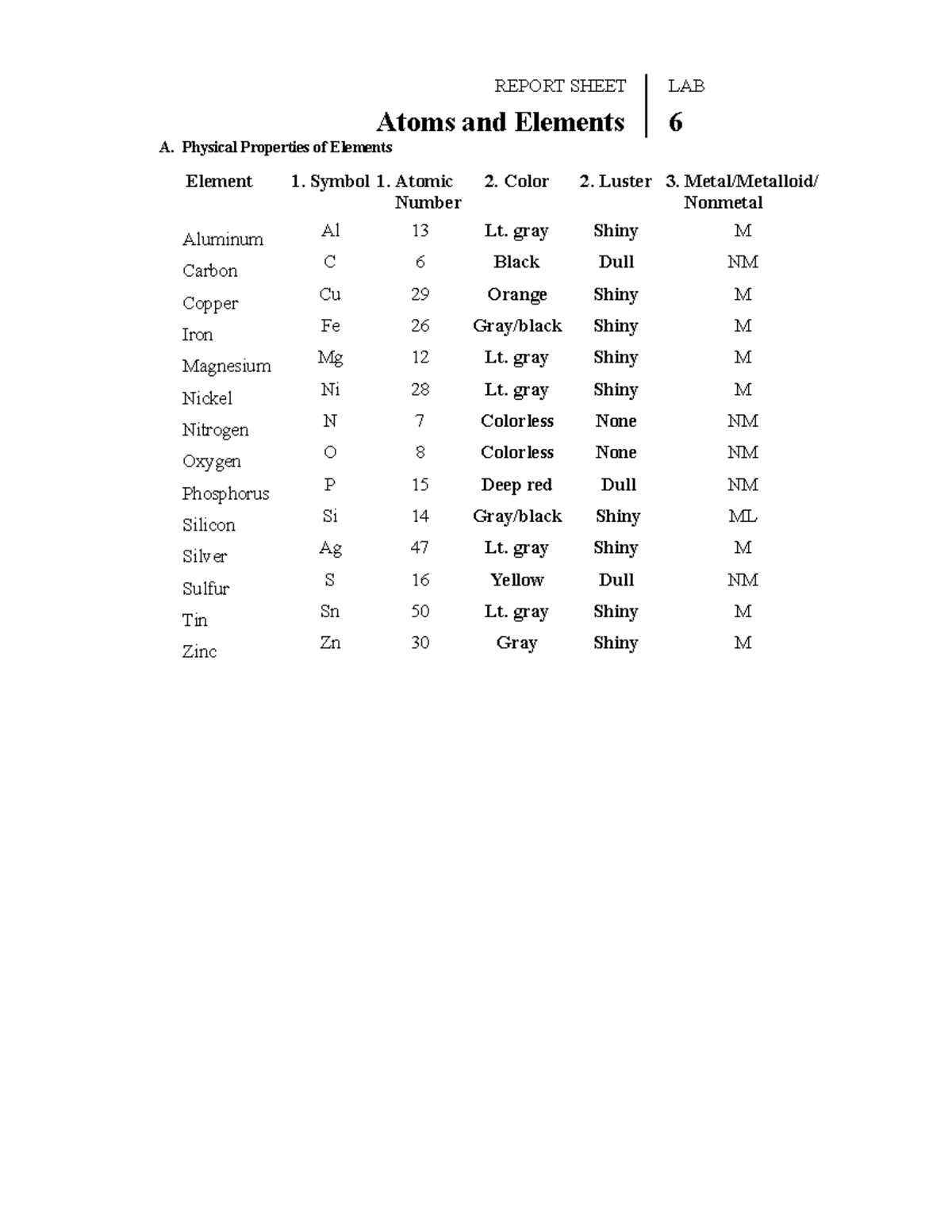
When analyzing elements, focus on their atomic number and electron configuration. These determine not only an element’s position but also its chemical behavior. Elements in the same group exhibit similar reactivity due to similar outer electron arrangements. For instance, alkali metals, located in Group 1, all have one electron in their outermost shell, making them highly reactive, especially with water.
Pay attention to trends in atomic radius. As you move down a group, atoms increase in size because additional electron shells are added. Conversely, as you move across a period, atoms generally decrease in size due to an increase in effective nuclear charge, which pulls electrons closer to the nucleus.
To further understand these relationships, consult trusted educational resources such as Chemistry World, where you can find in-depth explanations on atomic structure, periodic trends, and the role of electron configurations in determining the characteristics of elements.
How Atomic Structure Influences Element Properties
The number of protons in the nucleus of an element, known as its atomic number, directly determines its chemical behavior. This number defines the arrangement of electrons in specific energy levels, or shells. The distribution of these electrons, especially in the outermost shell, dictates how the element interacts with others. For example, elements with a full outer shell, like the noble gases, are chemically inert, while those with only one or two electrons in the outer shell, such as alkali metals, are highly reactive.
Electron configuration plays a significant role in an element’s reactivity. Elements with similar electron configurations tend to share chemical characteristics. For instance, elements in the same group of the table share the same number of valence electrons, which influences their reactivity. As you move across a period, the increasing nuclear charge pulls electrons closer, reducing atomic size and altering how elements bond with others.
Another factor is the shielding effect, which occurs when inner electrons partially block the attractive force of the nucleus on the outer electrons. This effect weakens as you move across a period, causing elements to become more reactive as their outer electrons are more easily influenced by external forces.
Understanding Trends in Atomic Size and Reactivity
Atomic size decreases across a period from left to right due to an increasing number of protons in the nucleus, which pulls electrons closer. As a result, the attraction between the positively charged nucleus and the negatively charged electrons becomes stronger, reducing the size of the atom. In contrast, as you move down a group, atomic size increases because additional electron shells are added, making the outer electrons farther from the nucleus.
Reactivity is closely related to atomic size. For metals, reactivity increases as the atomic size increases. This happens because larger atoms have outer electrons that are farther from the nucleus and are more easily lost. Conversely, for nonmetals, reactivity tends to increase as atomic size decreases. Smaller atoms can attract electrons more easily, making them more reactive in gaining electrons to form bonds.
In metals, the ease of electron loss correlates with lower ionization energy, which is the energy required to remove an electron. As you move across a period, ionization energy increases due to the stronger nuclear charge. For nonmetals, electronegativity, the ability to attract electrons, increases across a period as atoms become smaller and their effective nuclear charge increases.
Interpreting Groups and Periods
To understand the organization of elements, focus on two key features: groups (columns) and periods (rows). Elements in the same group share similar chemical characteristics because they have the same number of electrons in their outermost shell. For example, Group 1 elements, such as lithium and sodium, are alkali metals and exhibit high reactivity with water.
As you move across a period (row), the atomic number increases, and the properties of elements change. Across a period, elements transition from metals on the left, to metalloids, and then to nonmetals on the right. This change in properties is due to the increasing number of protons in the nucleus, which affects the element’s electron configuration and reactivity.
The first period contains hydrogen and helium, which have the simplest electron configurations. As you go down a group, elements become more reactive, especially for metals. For nonmetals, reactivity tends to decrease as you move down the group. Group 17 elements, like chlorine and fluorine, are highly reactive due to their electron configurations, but this reactivity diminishes as you go down the group.
Electron Configuration and Its Impact on Chemical Behavior
The arrangement of electrons in an element’s shells determines its reactivity and how it interacts with other substances. Elements with a full outer shell, like noble gases, are chemically stable and typically inert because they do not need to gain or lose electrons to achieve stability. Conversely, elements with one or more electrons in their outermost shell, such as alkali metals, are highly reactive as they seek to either gain or lose electrons to complete their outer shell.
For example, sodium (Na) has a single electron in its outermost shell. This makes it highly reactive and likely to lose that electron to form a positively charged ion (Na+). Similarly, chlorine (Cl), with seven electrons in its outer shell, readily gains an electron to achieve a stable configuration, forming a negatively charged ion (Cl-). The interaction between these two ions, sodium and chlorine, leads to the formation of sodium chloride (NaCl), a stable compound.
Transition metals have more complex electron configurations, which result in varying oxidation states. This variability allows them to form a wide range of compounds with different properties. Understanding electron configurations helps predict the behavior of elements in different chemical reactions, explaining why certain elements are more reactive than others or why they form specific compounds.
Classification of Elements: Metals, Nonmetals, and Metalloids
Elements are categorized into three main groups based on their physical and chemical properties: metals, nonmetals, and metalloids. Each group has distinct characteristics that influence their behavior in reactions and usage in various applications.
- Metals: These elements are typically good conductors of heat and electricity, possess a shiny appearance, and are malleable and ductile. Most metals are solid at room temperature, with mercury being a notable liquid exception. Examples include iron, copper, and gold. Metals are found on the left and center of the table.
- Nonmetals: Nonmetals are poor conductors of heat and electricity and tend to be brittle in solid form. They can be gases, liquids, or solids at room temperature. These elements are located on the right side of the table. Examples include oxygen, nitrogen, and sulfur. Nonmetals are crucial in various chemical processes and biological functions.
- Metalloids: Metalloids have properties intermediate between metals and nonmetals. They are semiconductors, which makes them essential in electronics. These elements often have a metallic luster but are brittle and break easily. Examples include silicon, arsenic, and boron. Metalloids are located along the boundary line between metals and nonmetals.
Understanding these classifications helps in predicting how different elements will react in chemical reactions and their potential uses in industries ranging from electronics to construction.
Role of Atomic Mass and Atomic Number in Identifying Elements
The atomic number is the fundamental property used to uniquely identify an element. It represents the number of protons in an element’s nucleus. Each element has a distinct atomic number, which determines its position in the table. For example, hydrogen has an atomic number of 1, while helium has an atomic number of 2.
Atomic mass, on the other hand, refers to the weighted average mass of an element’s isotopes. It is typically found below the element’s symbol on the table. While atomic number determines the element’s identity, atomic mass gives insight into the average number of nucleons (protons and neutrons) in the element’s isotopes.
To identify an element, knowing its atomic number is sufficient. However, understanding the atomic mass is important for calculating the element’s isotopic composition and its role in chemical reactions, especially in cases involving different isotopes of the same element.
How to Use the Periodic Table to Predict Chemical Bonds
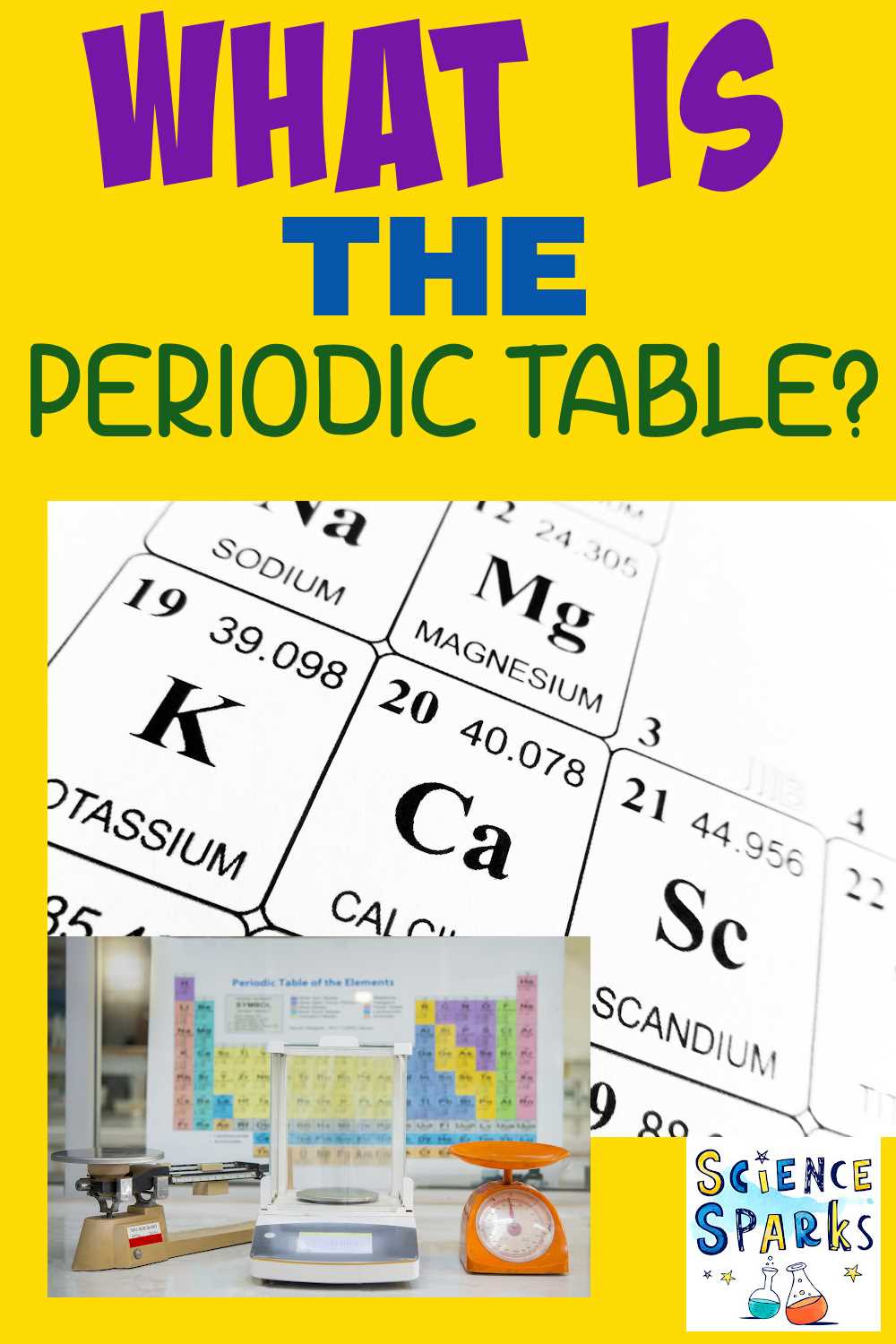
To predict how two elements will bond, focus on their electronegativity values and the number of electrons in their outermost shells. Elements in the same group tend to have similar bonding patterns due to similar electron configurations.
For ionic bonds, look for elements with a large difference in electronegativity, typically between metals and nonmetals. Metals, found on the left, tend to lose electrons, while nonmetals, found on the right, gain electrons. This creates a positive ion and a negative ion, which are held together by electrostatic forces.
Covalent bonds form between nonmetals with similar electronegativity values. These elements share electrons to complete their outer electron shells. Elements in groups 14-17 frequently form covalent bonds, such as in molecules like water (H2O) and carbon dioxide (CO2).
To predict bond types, check the element’s position on the chart. Elements in columns 1, 2, and 13 (metals) typically form ionic bonds with elements in columns 15-17 (nonmetals), while nonmetals in columns 14-17 often form covalent bonds with each other.
Common Errors to Avoid When Interpreting Atomic Properties
To avoid misunderstandings, be mindful of the following mistakes when interpreting element characteristics:
- Confusing Electron Configuration with Element Identity: Never assume that an element’s position directly determines all its characteristics. The full electron configuration, not just its group or period, impacts its behavior.
- Overlooking Ionization Energy Trends: Many incorrectly assume ionization energy always increases across a period. While it generally does, there are exceptions between certain elements, particularly due to electron shielding or sublevel stability.
- Assuming Atomic Radius Always Decreases Across a Period: While the atomic radius typically decreases as you move left to right, elements in the d-block or f-block may show inconsistencies due to their electron shielding effects.
- Misinterpreting Electronegativity for Reactivity: Higher electronegativity does not always mean higher reactivity. Reactivity is more complex, influenced by an element’s ability to gain or lose electrons, as well as its atomic size and ionization energy.
- Neglecting the Effect of Electron Shielding: Be aware that inner electrons can shield outer electrons from the full charge of the nucleus, particularly in larger elements, which can affect trends in ionization energy and atomic size.
By avoiding these errors, you can better understand how each element behaves and interacts in various chemical contexts.