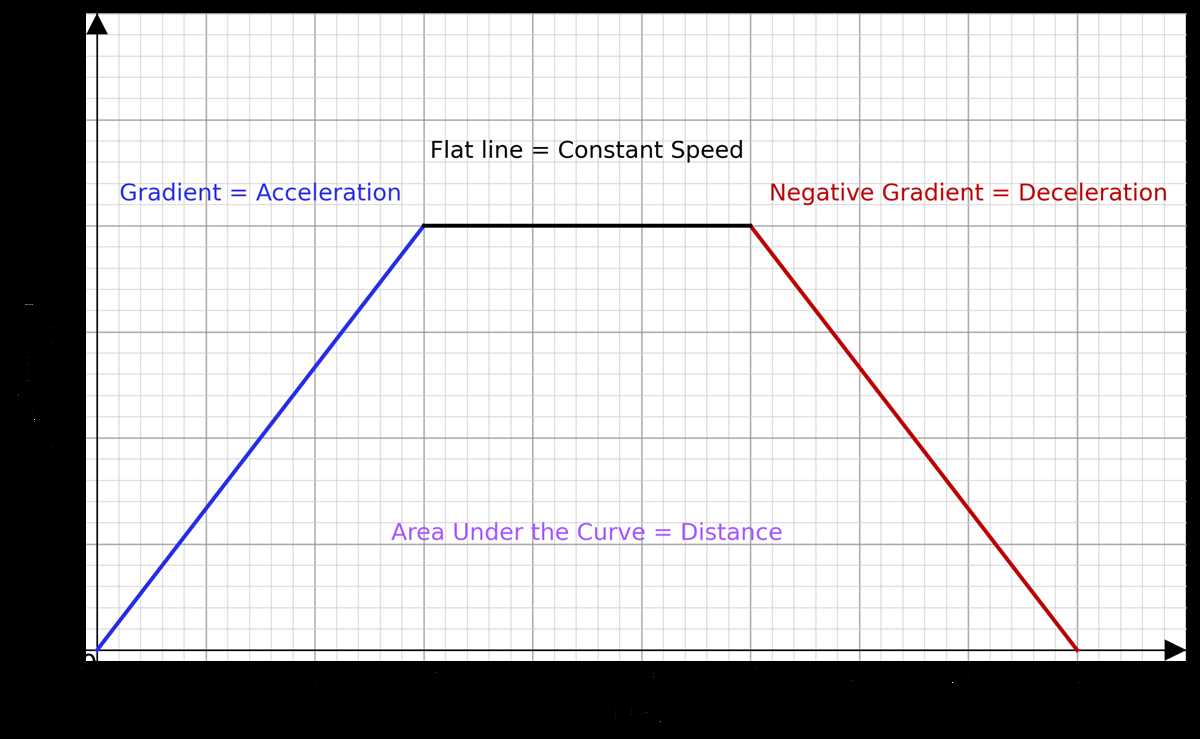
How to Interpret and Create Speed Time Graphs with Solutions
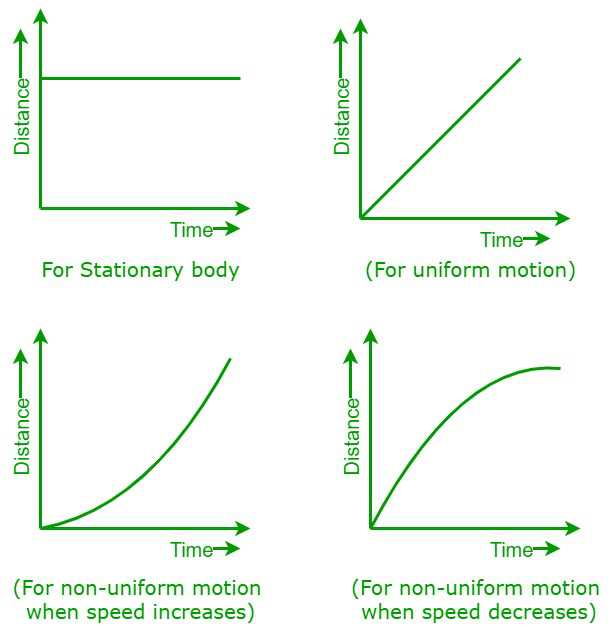
To effectively analyze motion, focus on the relationship between velocity and time. A horizontal line represents no change in speed, while a sloped line indicates acceleration or deceleration. In this approach, a steeper line indicates faster changes. Calculate the area under the line to determine the distance traveled.
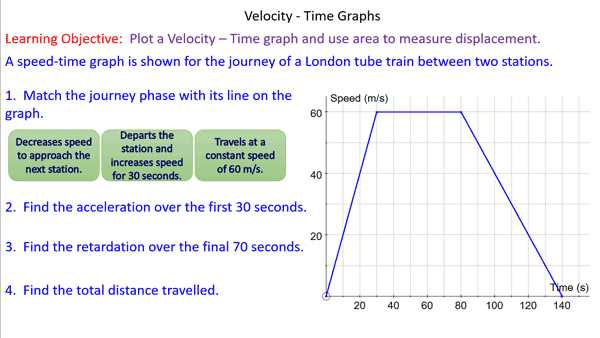
When constructing a graph, label both axes clearly: the horizontal axis for time and the vertical axis for velocity. For uniform motion, the graph will be a straight, horizontal line, while a constant increase in speed will produce a straight, upward sloping line. Understanding these basic concepts will allow for clear visual representation of motion.
Ensure to review calculations carefully, especially when determining distances. Use the formula for the area of a triangle or rectangle, depending on the type of motion. These techniques will provide clarity when analyzing various motion scenarios.