Federalism Classification Activity Solutions and Explanation
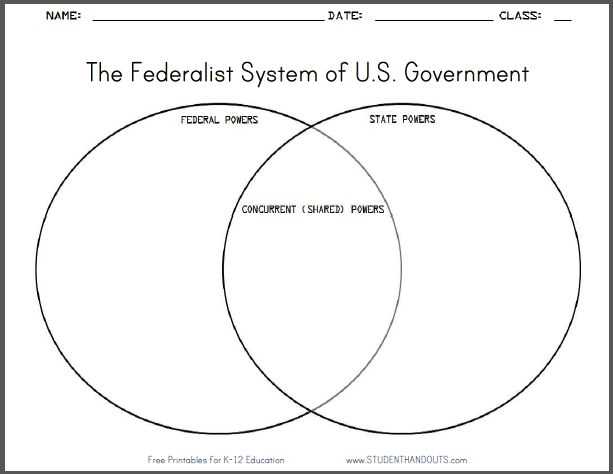
To succeed in sorting out powers between different levels of government, it’s critical to understand the specific responsibilities assigned to each. Begin by reviewing the Constitution’s provisions regarding national and state authority. Pay close attention to the distinctions between powers that are granted solely to the national government, those reserved for the states, and those shared by both.
One way to effectively approach these tasks is by identifying whether the power in question is explicitly granted by the Constitution or inferred through necessary and proper clauses. For example, examine the scope of powers like taxation, which are held by both levels of government, versus those like defense, which are typically national responsibilities.
Next, consider real-world examples of power distribution. Look at issues such as healthcare, education, and law enforcement to practice identifying whether these tasks are within state jurisdiction, federal jurisdiction, or under shared authority. By categorizing these examples, you’ll better understand how governmental roles overlap and complement each other.
Governmental Power Classification Solutions and Explanation
Start by categorizing powers as either exclusive to the national government, reserved for state governments, or shared between both. Here’s how to approach it:
- Exclusive National Powers: These include activities like regulating interstate commerce, issuing currency, and maintaining armed forces. These are powers only the federal government can exercise.
- Reserved State Powers: States handle tasks such as regulating education, local law enforcement, and conducting elections. These are powers granted to states under the Tenth Amendment.
- Concurrent Powers: Both levels of government share certain powers, such as taxing, borrowing money, and establishing courts. These are exercised simultaneously by national and state authorities.
Each power should be examined based on its constitutional origin and real-world implications. For example, federal authority over interstate commerce is explicitly granted in the Constitution, while state control over education is implied through the reserved powers clause.
To verify your classifications, cross-reference each example with the applicable constitutional article. Understanding these distinctions will help clarify the division of responsibilities between the two levels of government and provide insights into their interactions.
How to Identify Federal vs State Powers in Classification Activities
To properly identify which powers belong to the national or state governments, begin by examining the Constitution. Federal powers are those explicitly listed in the Constitution, while state powers are those not delegated to the national government and thus reserved to the states under the Tenth Amendment.
- Federal Powers: These include powers like regulating interstate commerce, coining money, conducting foreign affairs, and maintaining national defense. They are specifically granted to the national government by the Constitution.
- State Powers: States are responsible for matters such as public education, health and safety regulations, and conducting elections. These powers are reserved to the states as long as they are not prohibited by the Constitution.
- Shared Powers: Some powers are held by both levels of government, such as taxation, law enforcement, and the ability to borrow money. These are often referred to as concurrent powers and reflect areas where both governments have authority.
When classifying powers, focus on the level of government involved. If the action is related to national defense, foreign policy, or regulating interstate commerce, it’s a federal power. If it pertains to issues like local education, zoning laws, or health regulations, it’s likely a state power. Shared powers typically involve functions like taxation or enforcement of laws, where both levels can act independently or together.
Key Concepts for Classifying Powers in Federalism Exercises
Understanding the division of powers between the national and state governments is crucial for accurately classifying them in exercises. Begin by identifying whether the power is specifically granted to the national government, reserved to the states, or shared by both.
- Enumerated Powers: These are the powers granted explicitly to the national government by the Constitution. For example, regulating interstate commerce and providing national defense are enumerated powers.
- Reserved Powers: Powers not delegated to the national government or prohibited to the states are reserved for the states. Examples include setting local laws on education, marriage, and public health.
- Concurrent Powers: Some powers are shared by both levels of government, such as the authority to tax, borrow money, and enforce laws. These powers are exercised simultaneously by both national and state governments.
- Implied Powers: Powers that are not specifically listed but are necessary to carry out the enumerated powers. The national government can exercise these powers based on the Necessary and Proper Clause, such as the creation of a national bank.
- Prohibited Powers: These are powers that both the national and state governments are restricted from using. For instance, neither level can pass ex post facto laws or grant titles of nobility.
To classify powers accurately, focus on the language of the Constitution, the intent behind each power, and the context of its use. Distinguish between powers granted by the Constitution, those that belong exclusively to states, and those that both levels of government can exercise.
Common Mistakes in Federalism Classification and How to Avoid Them
When categorizing powers between the national and state governments, some common mistakes can hinder accuracy. These errors typically stem from misunderstanding the distinctions between different types of powers and misapplying constitutional principles. Below are some of the most frequent mistakes and how to avoid them:
- Confusing Enumerated and Implied Powers: Many people mix up powers explicitly granted by the Constitution with those that are implied. Always check whether the power is directly stated in the Constitution or if it is inferred to be necessary for carrying out the enumerated powers. For example, the creation of a national bank is an implied power based on the Necessary and Proper Clause.
- Assuming Reserved Powers Are Only Local: Reserved powers belong to the states, but this doesn’t mean they are limited to local concerns. For example, the regulation of schools and local elections are reserved powers, but they also cover important state-level activities that may not be immediately visible as local.
- Overlooking Concurrent Powers: Some powers, like the authority to tax, are shared by both national and state governments. Failing to recognize these concurrent powers can lead to incorrect classification. Always remember that some powers are exercised simultaneously at both levels of government.
- Ignoring Prohibited Powers: A common mistake is forgetting that both levels of government have powers that are prohibited, such as passing ex post facto laws or granting titles of nobility. These restrictions should always be taken into account when sorting powers.
- Misunderstanding the Impact of the Supremacy Clause: The Supremacy Clause gives national law precedence over conflicting state laws. Failing to consider this can lead to confusion when classifying powers that overlap in scope.
By carefully distinguishing between the different categories of powers and being mindful of the constitutional framework, you can avoid these common errors. It’s important to take your time and verify each power based on its constitutional basis and scope.
For additional resources, refer to the U.S. Constitution and authoritative legal texts such as The National Archives.
Step-by-Step Guide to Analyzing Federalism Examples
To accurately analyze examples of power distribution between national and state governments, follow these steps:
- Step 1: Identify the Type of Power: Determine whether the power in question is enumerated, implied, concurrent, or reserved. Check the Constitution for any explicit grants or necessary inferences.
- Step 2: Assess Constitutional Basis: Look for the constitutional foundation of the power. For enumerated powers, refer directly to Article I, Section 8. For implied powers, check the Necessary and Proper Clause (Elastic Clause).
- Step 3: Check for Prohibited Powers: Ensure that the power isn’t prohibited by the Constitution, such as the inability of states to coin money or the national government to tax exports.
- Step 4: Evaluate the Supremacy Clause: Analyze whether the exercise of power is influenced by the Supremacy Clause, where federal law takes precedence over conflicting state laws.
- Step 5: Examine Precedents: Review relevant court cases, such as those involving the scope of federal versus state powers, to understand how these powers have been interpreted historically.
- Step 6: Clarify Jurisdiction: Define whether the power belongs to one level of government or is shared. Recognize areas where both governments have authority, such as taxing and criminal law enforcement.
By systematically following these steps, you can effectively assess examples of governmental power allocation and ensure accurate classification.
Understanding Reserved, Concurrent, and Enumerated Powers
To classify governmental powers accurately, it’s crucial to understand the distinctions between reserved, concurrent, and enumerated powers. Here’s how to identify each one:
- Enumerated Powers: These are the specific powers granted to the national government by the Constitution. They are listed primarily in Article I, Section 8. Examples include the power to regulate interstate commerce, declare war, and maintain armed forces.
- Reserved Powers: These are powers that are not explicitly granted to the national government but are instead kept by the states. These are derived from the Tenth Amendment. Examples include regulating education, conducting elections, and establishing local governments.
- Concurrent Powers: These are powers that both the national and state governments share. They include the authority to tax, borrow money, and establish courts. These powers are exercised simultaneously by both levels of government.
By distinguishing these powers, you can classify different examples correctly and understand their constitutional basis.
How to Interpret Constitutional Provisions for Classification Tasks
To accurately interpret constitutional provisions for classification tasks, follow these key steps:
- Understand the Text: Read the specific section of the Constitution carefully. Identify the powers, responsibilities, or limits mentioned. Pay attention to the specific language used, as it often determines whether a power is granted to the national government, reserved for the states, or shared between both.
- Identify the Scope of the Power: Determine whether the provision grants authority to the national government (e.g., regulating commerce, issuing currency), limits state powers (e.g., prohibiting states from entering treaties), or gives both levels of government shared responsibilities (e.g., taxing citizens, enforcing laws).
- Reference Relevant Amendments: Consider how amendments, particularly the Tenth and Fourteenth, shape the interpretation of powers. For example, the Tenth Amendment reserves powers to the states that are not delegated to the national government.
- Look for Context: Examine the surrounding clauses in the document for context. A provision that seems broad on its own may have limitations or qualifications when read in the context of other related provisions.
- Consult Judicial Interpretations: Review landmark court cases that have clarified the scope of powers, such as those interpreting the Necessary and Proper Clause or the Commerce Clause. Court decisions often offer guidance on how to interpret specific provisions.
By following these steps, you can accurately classify constitutional powers and duties and make well-informed decisions in classification tasks.
Practical Tips for Using the Classification System in Federalism Exercises
To effectively use the system for categorizing powers in governance, follow these practical tips:
- Familiarize Yourself with Categories: Know the three main categories: powers granted to the national government, those reserved for states, and those shared by both. Understanding these will help you easily classify each power in the right group.
- Look for Keywords: Pay attention to specific terms such as “expressed,” “implied,” “reserved,” and “concurrent.” These words often signal the type of power being described and its proper classification.
- Use Clear Examples: Whenever possible, refer to real-world examples of powers. For instance, the ability to regulate interstate commerce is a national power, while the authority to issue licenses is typically a state power. These examples help solidify understanding.
- Refer to the Constitution: Always double-check provisions in the Constitution or related legal texts. The clear distinctions between national and state powers are outlined, and these documents are the primary source for classification tasks.
- Consult Court Decisions: Many classifications are influenced by judicial interpretations. Important cases like McCulloch v. Maryland or Gibbons v. Ogden help clarify the scope of certain powers. Use these precedents to guide your classifications.
- Practice with Scenarios: Work through different scenarios and classify powers based on the guidelines. This will help you apply your knowledge in a variety of contexts, making it easier during exercises.
- Double-Check for Ambiguity: If you’re unsure about a particular power, review related provisions or judicial interpretations. Powers can sometimes overlap, and understanding the intent behind a provision can clarify which category it falls into.
By applying these tips, you’ll be able to categorize powers with more precision, making the classification process smoother and more accurate.
How to Cross-check Your Work in Governmental Powers Exercises
To ensure the accuracy of your classification, follow these practical steps:
- Consult Legal Documents: Start by reviewing the Constitution and other legal sources. These documents define the scope of powers and clarify which are reserved for the national government, states, or shared.
- Review Key Court Cases: Court rulings such as McCulloch v. Maryland and Gibbons v. Ogden are vital for understanding the application of certain powers. Ensure your classifications align with these precedents.
- Use a Predefined List: Create or reference a list of common powers (e.g., regulating interstate commerce, issuing driver’s licenses) and check them against your exercise to make sure none are overlooked.
- Compare with Real-World Examples: Examples like the power to print money (national) versus issuing marriage licenses (state) can help confirm whether your classifications match common understanding.
- Identify Overlapping Powers: Many powers are shared between national and state governments. Confirm these areas, such as the ability to levy taxes, are correctly marked as concurrent.
- Request Peer Review: Have another person review your work. A second opinion can help identify any inconsistencies or errors in the categorization.
- Refer to Trusted Resources: Use authoritative references like the National Archives or educational websites to verify your work against reputable sources.
These steps will help you double-check your results and ensure they align with legal standards. Double-checking strengthens your understanding of the division of powers between the levels of government.