Solutions for Determining the Empirical Formula of a Hydrate
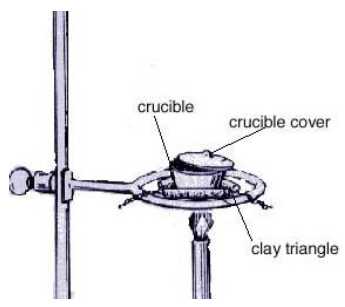
To determine the amount of water in a crystalline compound, first calculate the mass difference before and after heating. This will give you the mass of the water that was removed. Once you have the mass of the water and the anhydrous compound, use the molar mass of both substances to calculate the ratio of water to the compound.
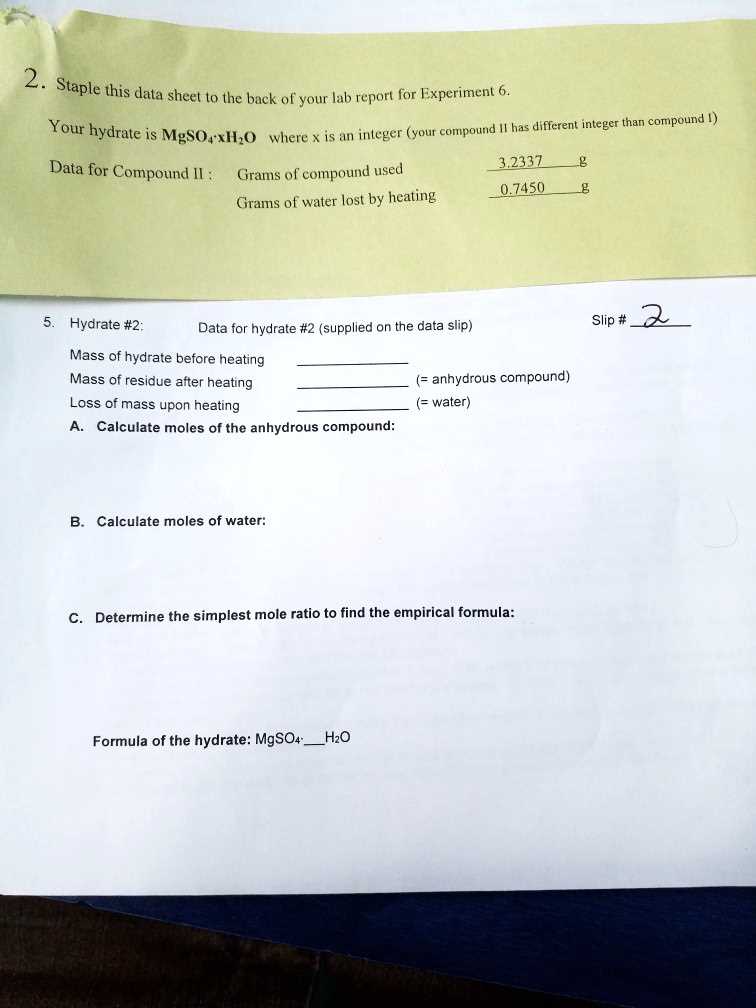
Divide the number of moles of water by the number of moles of the remaining substance. This ratio gives the number of water molecules bound to each unit of the solid. Keep in mind that precise measurements are crucial for accurate results, so ensure you are using a well-calibrated balance and that the heating process is done thoroughly to remove all the water.
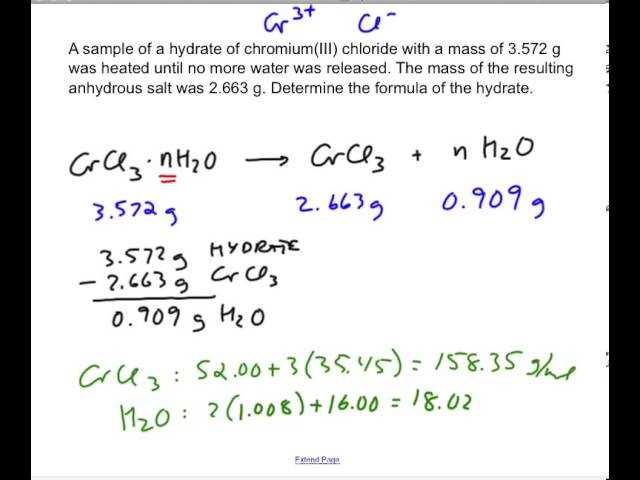
Check your results by comparing the calculated ratio to common values for similar substances. This will help you identify any errors in your procedure. Understanding the relationship between water and solids is key in many chemical processes, from industrial applications to laboratory experiments.