Understanding Basic Cooking Terms and Their Meanings
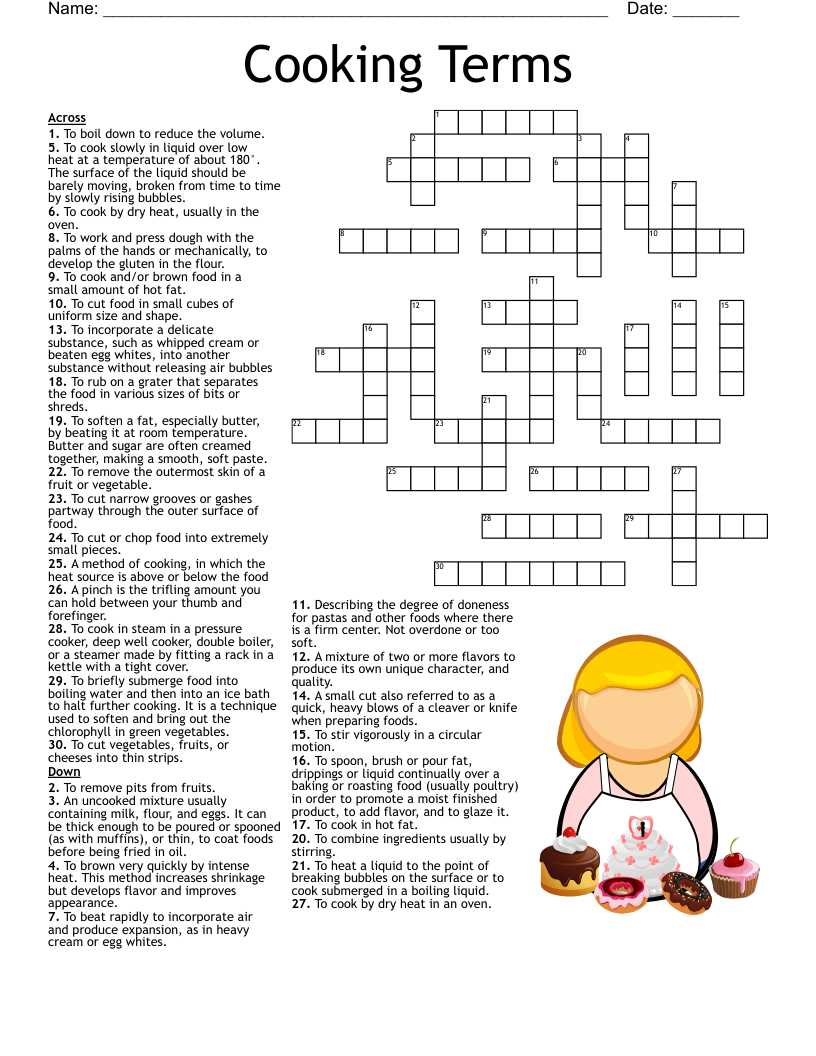
To master any recipe, knowing the language of the kitchen is a must. Understanding phrases like “chop,” “dice,” and “sauté” will not only make following instructions easier but will also improve your ability to experiment with new dishes. The clearer your grasp of these expressions, the smoother your cooking experience will be.
Familiarize yourself with terms that describe techniques, tools, and ingredient preparation. For example, “whisking” and “folding” are essential techniques for different textures, while “blanching” and “braising” help achieve distinct flavor profiles. Mastering these terms allows for more precise execution in the kitchen and opens the door to a wider variety of recipes.
In addition to cooking methods, understanding measurement terms like “teaspoon,” “cup,” and “pinch” ensures accuracy in ingredient proportions. These small but vital details make a significant difference in the outcome of your dish, especially in baking, where precision is key. The more comfortable you are with kitchen terminology, the more confidently you can tackle a recipe.
Common Kitchen Expressions and Their Definitions
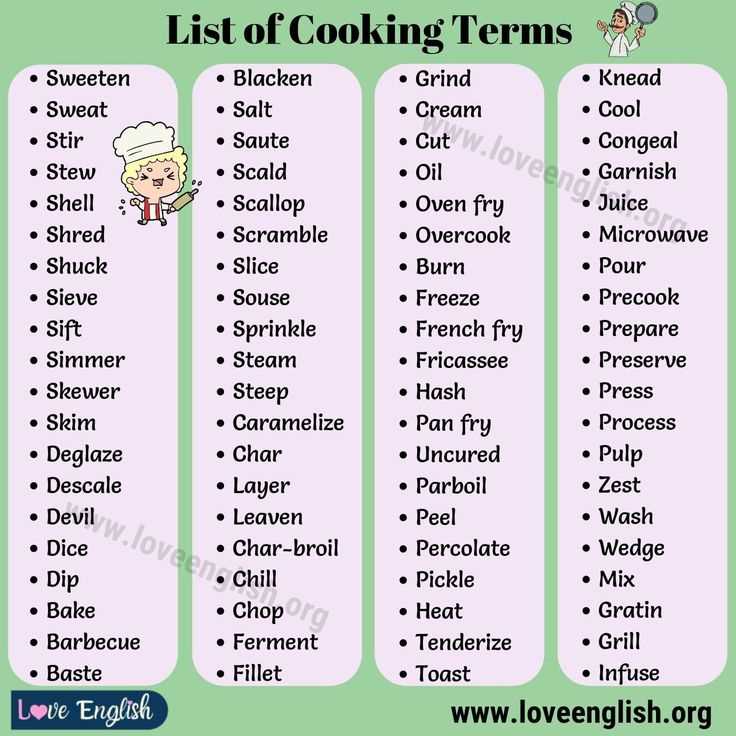
Understanding key culinary vocabulary is the first step to becoming more efficient in the kitchen. Below is a list of frequently used cooking expressions and their meanings:
- Chop: To cut food into pieces using a knife, typically in a rough, uneven manner.
- Dice: To cut food into small, uniform cubes, usually for even cooking.
- Simmer: To cook food gently in liquid just below boiling point, typically for longer periods.
- Sauté: To cook food quickly in a small amount of hot fat, often resulting in a browned exterior.
- Whisk: To beat or stir ingredients (especially liquids) quickly to incorporate air, often using a wire tool.
- Blanch: To briefly immerse food in boiling water or steam, then quickly cool it down in ice water.
- Fold: To gently mix ingredients together using a spoon or spatula, often in a motion that preserves air or delicate textures.
- Braise: To cook meat slowly in a small amount of liquid, typically in a covered pot over low heat.
Knowing these expressions will help you better follow recipes and understand the techniques that go into preparing a wide range of dishes. It’s also helpful to practice these methods to improve your overall kitchen skills.
Understanding Common Cooking Techniques and Their Definitions
Mastering different methods of food preparation allows for better control over texture and flavor. Here are some key techniques to know:
- Grilling: Cooking food over direct heat, often on a grate or grill, which imparts a smoky flavor and creates a seared exterior.
- Roasting: Cooking food in an oven using dry heat, typically at high temperatures to create a crisp, golden exterior.
- Steaming: Cooking food by placing it over boiling water, allowing the steam to gently cook the ingredients without direct contact with water.
- Poaching: Gently cooking food, usually eggs or fish, in simmering liquid just below boiling point to preserve moisture and tenderness.
- Frying: Cooking food in hot oil, either by deep frying (completely submerging the food) or shallow frying (using a small amount of oil). This method gives food a crispy texture.
- Blending: Combining ingredients until smooth, often using a blender or food processor, commonly for sauces, soups, or smoothies.
- Baking: Cooking food by surrounding it with dry heat in an oven, typically used for bread, pastries, and casseroles.
- Searing: Browning the surface of meat quickly at high heat to create a flavorful crust before cooking further.
By familiarizing yourself with these techniques, you can enhance both the quality of your dishes and your efficiency in the kitchen.
Key Vocabulary for Preparing Ingredients in the Kitchen
Understanding the correct terminology is crucial for effective ingredient preparation. Here are some common terms you’ll encounter:
- Chop: To cut food into smaller, often uniform pieces using a knife.
- Dice: To cut food into small, square pieces, typically less than 1/2 inch in size.
- Mince: To finely chop food into very small pieces, often used for garlic or herbs.
- Julienne: To cut vegetables or fruits into long, thin strips, similar to matchsticks.
- Slice: To cut food into thin, flat pieces, usually with a knife.
- Peel: To remove the outer skin or layer of fruits or vegetables, typically with a knife or peeler.
- Grate: To shred food into small pieces using a grater, commonly used for cheese or vegetables.
- Trim: To remove the inedible or unwanted parts of food, such as fat from meat or stems from vegetables.
- Crush: To press or grind food into smaller, often pulverized pieces, usually done with a tool like a garlic press or mortar and pestle.
- Whisk: To beat or stir food, especially liquids, to incorporate air and create a smooth texture.
Using these terms correctly helps streamline food prep and ensures consistency in your dishes.
Cooking Methods Explained: Roasting, Grilling, and Sautéing
Each method of heat application has a specific technique and produces distinct results. Here’s a breakdown of the three methods:
- Roasting: This method uses dry heat in an oven or on a spit. Food is exposed to high temperatures, which caramelizes the outer layer, creating a crisp texture. Roasting is ideal for meats, vegetables, and even fruits. The goal is to achieve a golden-brown exterior while keeping the inside tender. For best results, use a roasting pan to evenly distribute heat.
- Grilling: Grilling involves cooking food on a grill over direct heat, usually from charcoal or gas. This method adds a smoky flavor and a charred exterior. It’s perfect for meats, fish, and vegetables, and often results in a crisp surface with juicy interiors. Make sure to preheat the grill and oil the grates to prevent sticking.
- Sautéing: Sautéing is a quick-cooking method that uses a small amount of oil or butter in a pan over medium-high heat. The goal is to cook food rapidly, typically vegetables or thin cuts of meat, while keeping it tender and crisp. Stir frequently to ensure even cooking and prevent burning.
Each method has its own advantages, and understanding the technique ensures that your meals turn out as planned. For more in-depth information on these methods, visit reliable cooking resources like Cooking Light.
How to Read and Interpret Recipe Instructions
To follow recipe directions accurately, start by identifying the key components. Pay attention to the list of ingredients and their measurements. This will guide you in gathering the necessary items before you begin.
Next, focus on the preparation steps. Look for verbs that describe specific actions, such as “chop,” “whisk,” or “sear.” These terms outline the technique you need to use. Also, note any suggested temperatures or cooking times. These are crucial for achieving the right texture and flavor.
Watch for any tips or warnings in parentheses, such as “Do not overmix” or “Let rest for 10 minutes.” These are important to ensure the recipe’s success.
Lastly, understand any abbreviations used in the recipe. Common ones include “tbsp” for tablespoon, “tsp” for teaspoon, and “oz” for ounces. Familiarize yourself with these to avoid confusion while following the steps.
Measurement Terms in Cooking: Volume, Weight, and Temperature
Understanding the units used for measuring ingredients is key to precise results. Volume measurements, such as cups, tablespoons, and teaspoons, are typically used for liquids and dry ingredients like flour or sugar. Familiarize yourself with the equivalents to avoid errors:
| Unit | Equivalent |
|---|---|
| 1 cup | 8 fluid ounces (fl oz) |
| 1 tablespoon (tbsp) | 3 teaspoons (tsp) |
| 1 teaspoon (tsp) | 5 milliliters (ml) |
Weight measurements, including grams (g) and ounces (oz), are commonly used for ingredients like meat, produce, and dry goods. It’s important to use a kitchen scale for accuracy, especially when working with smaller quantities.
Temperature is also a critical factor in many recipes. Familiarize yourself with temperature conversions between Celsius and Fahrenheit for oven settings or boiling points. Common temperature points include:
| Temperature (°F) | Temperature (°C) |
|---|---|
| 350°F | 175°C |
| 400°F | 200°C |
| 212°F | 100°C |
Knowing these units and conversions allows you to follow recipes accurately and achieve the desired outcome. Always double-check measurements for consistency.
Essential Kitchen Tools and Their Functions
Every kitchen requires certain equipment to ensure smooth preparation of meals. A sharp chef’s knife is necessary for cutting, chopping, and slicing. A high-quality knife will make food prep faster and more precise.
Measuring cups and spoons are vital for accurate portions, especially when baking or following specific instructions. They help ensure the right balance of ingredients for optimal taste and texture.
Mixing bowls are used for combining ingredients. Having a set of various sizes, including a larger bowl for batters and smaller ones for mise en place, improves workflow.
Cutting boards protect your countertops and knives while providing a clean surface for chopping. Opt for sturdy materials like wood or plastic, which are easy to clean and maintain.
Frying pan and sauté pan are key for searing, sautéing, and pan-frying. A non-stick coating can simplify cleanup, but a stainless-steel pan is excellent for creating flavorful browning.
Colander is a must for draining pasta, vegetables, and fruits. A fine mesh version is ideal for washing grains or rinsing delicate items.
Whisk is indispensable for mixing liquids, emulsifying sauces, or beating eggs. Choose one with a sturdy handle for maximum control and comfort.
Blender is essential for making smoothies, soups, and sauces. A high-powered blender can handle a variety of tasks from pureeing to crushing ice.
Oven mitts protect your hands from burns when handling hot cookware. They should be thick enough to resist heat while maintaining flexibility for easy use.
Food Preparation and Cutting Techniques
Chop refers to cutting food into small pieces using a knife. This technique is common for vegetables, herbs, and meats. Aim for even sizes for uniform cooking.
Mince involves cutting ingredients into very fine pieces. Often used for garlic, onion, or fresh herbs, mincing helps release more flavor and ensures even distribution in dishes.
Dice is a more precise cutting method where ingredients are cut into small, uniform cubes. This technique is often used for fruits and vegetables like onions, potatoes, and carrots.
Julienne creates long, thin strips. This cutting style is common for carrots, zucchini, or bell peppers. Julienne pieces cook quickly and are often used in stir-fries or garnishes.
Slice refers to cutting food into thin, flat pieces. It’s often used for items like meat, bread, or tomatoes. The thickness of the slices can vary depending on the recipe.
Peel means to remove the outer skin of fruits or vegetables. Commonly done with potatoes, apples, or cucumbers, peeling makes the produce ready for further preparation.
Score involves making shallow cuts on the surface of ingredients, like meat or fruits. This technique helps in both aesthetic presentation and cooking by allowing flavors to penetrate.
Shred breaks food into fine pieces, typically using a grater or food processor. This method is used for cheese, cabbage for slaw, or carrots for salads.
Common Terminology for Baking and Pastry Making
Knead refers to the process of working dough with your hands to develop its gluten. This step is crucial for achieving a smooth and elastic dough texture in bread and pastries.
Proofing is the final rise of yeast dough before baking. During this time, the dough ferments and expands, allowing the yeast to produce gas, which makes the dough light and airy.
Roll Out involves flattening dough with a rolling pin to a desired thickness, often used for pie crusts, cookies, or pizza bases.
Fold is a gentle mixing technique used in baking to combine ingredients without deflating air bubbles. It’s commonly used when adding whipped cream or egg whites to a batter.
Whisk refers to beating ingredients rapidly to incorporate air, often used for egg whites, cream, or batter. A whisk is also used to mix dry ingredients evenly.
Grease involves coating a baking pan with butter, oil, or non-stick spray to prevent sticking. This is particularly important for cakes and other baked goods.
Glaze is a thin coating applied to pastries or baked goods to add shine or sweetness. It’s often made from sugar, water, or syrup.
Crimp refers to pinching the edges of pastry dough to seal it, usually done when making pies or tarts to prevent filling from spilling out during baking.