Africa Physical Features Chart for Geographic Study
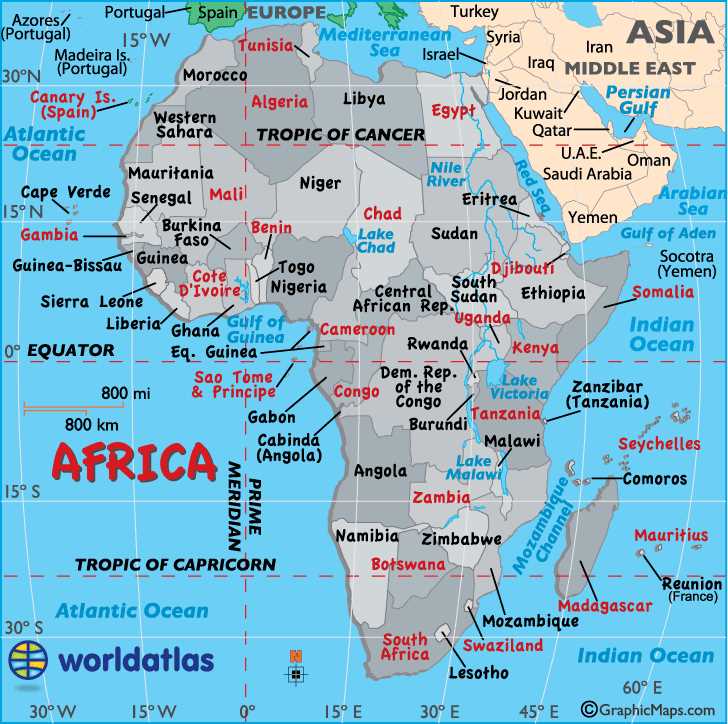
Recognizing the key landforms across the continent can be challenging without a structured approach. Understanding where major mountains, rivers, and deserts are located is vital for analyzing regional differences. Use this guide to locate the largest desert, the longest river, or the highest mountain range on the map.
Study the major water bodies carefully. The Nile River, for example, is the longest river in the world and flows through northeastern regions, impacting many nations. The Great Lakes, such as Lake Victoria, are situated in the east, while the Congo River basin plays a crucial role in central parts of the continent.
Pay close attention to plateaus and highlands. The Ethiopian Highlands and the African Rift Valley are prime examples. Understanding these geological formations will help you recognize the differences in terrain from north to south and east to west.
Consider the climate variations as they significantly affect the terrain. Deserts like the Sahara dominate much of the northern regions, while tropical rainforests are abundant in the central and western parts. These variations are marked on the map and can help with interpretation.
Africa Physical Features Chart Answer Key
Identify the major mountain ranges: The Atlas Mountains run through the northwest, with the Ethiopian Highlands forming a prominent feature in the east. The Great Rift Valley is a large, distinct crack in the earth’s surface stretching from the Red Sea down through eastern regions.
Locate the key rivers: The Nile is the longest river, flowing north through northeastern regions. The Congo River is significant in central parts, while the Niger River runs through the western areas. These bodies of water are vital for regional agriculture and transportation.
Recognize the largest deserts: The Sahara dominates the northern part, stretching across multiple countries. The Kalahari Desert covers much of the southern part, and the Namib Desert is found in the southwestern region, near the coast.
Understand the significance of the Great Lakes: Lake Victoria, the second-largest freshwater lake in the world, is located in the east. Other key lakes include Lake Tanganyika and Lake Malawi, both essential for local ecosystems and economies.
Highlight the coastal regions: The Mediterranean Sea borders the northern coast, while the Atlantic Ocean lies to the west and southwest. The Indian Ocean is located on the southeast coast, shaping the climate and trade routes in these areas.
Observe the plateaus: The southern part of the continent is dominated by plateaus, including the East African Plateau, which influences the distribution of species and human settlements. The southern plateaus are often dry and sparsely populated.
Note the tropical and subtropical zones: The central and western parts of the continent are dominated by tropical climates, with rainforests providing biodiversity hotspots. These regions are influenced by monsoons and other weather patterns.
Understand the influence of the equator: The equator passes through the center, influencing the climate across the continent, contributing to the tropical regions’ rainforests and the dry, desert areas farther north and south.
Identifying Major Mountains and Ranges in Africa
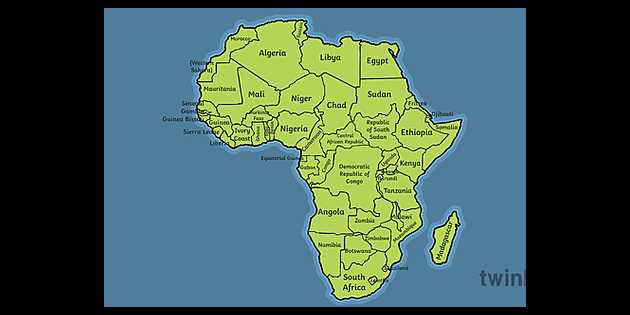
Atlas Mountains: Located in the northwest, the Atlas Mountains stretch across Morocco, Algeria, and Tunisia. This range is key for the region’s climate and is home to some of the highest peaks on the continent.
Drakensberg Mountains: The Drakensberg range runs along the eastern side of southern Africa. It is the highest mountain range in Southern Africa, with peaks such as Thabana Ntlenyana reaching over 3,400 meters.
Rwenzori Mountains: Positioned along the border between Uganda and the Democratic Republic of Congo, the Rwenzori range features snow-capped peaks and is known as the “Mountains of the Moon.” The highest point, Margherita Peak, reaches 5,109 meters.
Ethiopian Highlands: Located in the Horn of Africa, the Ethiopian Highlands form a large mountainous region that covers much of Ethiopia. The highlands are characterized by deep valleys and volcanic peaks, including Ras Dashen, the highest point in Ethiopia.
Mount Kenya: This is the second-highest peak on the continent, located in central Kenya. Mount Kenya rises to 5,199 meters and is a significant geographical and cultural landmark.
Mount Kilimanjaro: Situated in Tanzania, Mount Kilimanjaro is the tallest mountain in Africa, with an elevation of 5,895 meters. It is a dormant volcano and a major destination for climbers from around the world.
Virunga Mountains: The Virunga range spans the borders between Uganda, Rwanda, and the DRC. Known for its biodiversity, these mountains are home to the endangered mountain gorillas and contain several active volcanoes.
Simien Mountains: Found in northern Ethiopia, the Simien Mountains are known for their dramatic cliffs and deep gorges. The highest peak, Ras Dashen, is the highest in the country and provides breathtaking views of the surrounding areas.
Key Deserts Across the African Continent
Sahara Desert: The Sahara is the largest desert in the world, stretching across northern Africa. It spans several countries, including Algeria, Chad, Egypt, Libya, Mali, Mauritania, Morocco, Niger, Western Sahara, Sudan, and Tunisia. Known for its extreme heat and vast sand dunes, the Sahara is a defining feature of the region.
Kalahari Desert: Located in Southern Africa, the Kalahari is a large semi-arid sandy savanna. It covers parts of Botswana, Namibia, and South Africa. Unlike true deserts, the Kalahari has seasonal rains and supports a variety of plant and animal life.
Namib Desert: Situated along the Atlantic coast of Namibia, the Namib Desert is known for its towering sand dunes, some of which are the tallest in the world. The desert is home to unique wildlife adapted to its harsh environment, including oryx, springbok, and the desert-adapted elephants.
Chihuahuan Desert: Although it extends into the United States and Mexico, the Chihuahuan Desert also covers a significant part of northern Mexico and southwestern Texas. It is marked by arid conditions and diverse flora and fauna, with cacti and shrubs common in the area.
Libyan Desert: A part of the larger Sahara, the Libyan Desert lies in northeastern Africa, covering areas of Egypt and Libya. It is one of the driest and most desolate places on Earth, with little to no rainfall throughout the year.
Danakil Desert: Found in the northeastern part of the Horn of Africa, the Danakil Desert spans parts of Eritrea, Ethiopia, and Djibouti. Known for its extreme heat and colorful salt formations, it is one of the hottest places on the planet, often exceeding 50°C (122°F).
Thar Desert: Although primarily located in India and Pakistan, the Thar Desert also extends into northwestern regions of India, creating a vast arid zone. The desert is known for its salt marshes, sand dunes, and the sparse settlements of nomadic tribes.
Eastern Desert: The Eastern Desert of Egypt lies between the Nile River and the Red Sea. It features rugged mountain ranges and is sparsely populated, with limited vegetation and mineral resources.
For more detailed information on the desert regions, visit reliable sources such as National Geographic.
Understanding River Systems and Their Importance
Nile River: The longest river in the world, the Nile flows through northeastern regions and is crucial for agriculture and water supply. Its annual flooding enriched the soil, allowing for productive farming in an otherwise arid region. The river is vital for transport, energy generation through hydroelectric dams, and as a source of freshwater for millions of people.
Congo River: Flowing through Central Africa, the Congo is the second-longest river on the continent. Its basin is rich in biodiversity and mineral resources. The river plays an essential role in regional transportation and provides water to millions of people. Its deep waters and numerous tributaries are also critical for ecological balance in the Congo Basin.
Niger River: This river flows through West Africa, providing water to several countries including Nigeria, Niger, and Mali. It is a key source of irrigation for agriculture and a vital route for trade. The Niger River also supports diverse ecosystems and contributes significantly to the livelihoods of the people living along its banks.
Zambezi River: Known for the famous Victoria Falls, the Zambezi spans several countries in Southern Africa. It is an essential water source for agriculture, hydropower, and fishing industries. The river also plays a significant role in the development of the region’s economy through hydroelectric power generation at the Kariba Dam.
Originating in South Africa, the Limpopo River is an important waterway for agriculture and water supply. It flows through several countries, providing irrigation and supporting various industries. Despite its relatively small size compared to other major rivers, it still has a substantial role in local economies.
Orange River: This river runs through Southern Africa and serves as a natural border between South Africa and Namibia. Its water is used for irrigation, and it is a critical resource for agriculture, especially in the arid regions along its course. The Orange River also supports several local industries and settlements.
Importance of River Systems: Rivers in this region are integral to sustaining life, agriculture, and economies. They act as primary sources of drinking water, irrigation, and transport. Many rivers also offer fertile soil, enabling agricultural activity in otherwise dry areas. Their biodiversity supports both local ecosystems and regional economies. Furthermore, rivers provide power through hydroelectric plants, contributing to energy needs.
Mapping the Largest Lakes
Lake Victoria: Located in East Africa, Lake Victoria is the largest lake by surface area on the continent. Spanning approximately 68,800 square kilometers, it is bordered by three countries: Uganda, Kenya, and Tanzania. The lake is crucial for the local economies, providing water, fishery resources, and a major transportation route.
Lake Tanganyika: As the second-largest lake in Africa and the deepest on the continent, Lake Tanganyika extends over 32,900 square kilometers. It is shared by four countries: Tanzania, the Democratic Republic of the Congo (DRC), Burundi, and Rwanda. The lake is significant for its biodiversity and fisheries, supporting millions of people along its shores.
Lake Malawi: Covering about 30,000 square kilometers, Lake Malawi is situated between Malawi, Mozambique, and Tanzania. It is a vital water source for drinking and irrigation, and its rich aquatic life contributes significantly to the regional fishing industry. The lake is also a UNESCO World Heritage site, recognized for its diverse species of freshwater fish.
Lake Chad: Once one of the largest lakes in Africa, Lake Chad has shrunk drastically due to both natural and human-induced factors. Today, it spans approximately 1,500 square kilometers, a fraction of its size in the 1960s. Despite its reduced size, it remains a critical resource for the countries surrounding it: Chad, Cameroon, Nigeria, and Niger.
Lake Turkana: Located in Kenya, Lake Turkana is the world’s largest permanent desert lake. It covers about 6,405 square kilometers and is essential for the surrounding communities, providing water, fish, and supporting a variety of wildlife. The lake is fed by the Omo River from Ethiopia and has a unique ecological environment.
Lake Albert: Situated between Uganda and the DRC, Lake Albert has a surface area of 5,500 square kilometers. It is part of the Nile River basin and is crucial for local fishing industries. The lake is also known for its potential in oil exploration, with significant reserves discovered beneath its waters.
Lake Kivu: This lake, located on the border between Rwanda and the DRC, spans around 2,700 square kilometers. Lake Kivu is known for its high levels of dissolved methane gas, which could potentially be harnessed for energy production. The lake is a source of water, fish, and hydroelectric power for both countries.
Exploring Unique Plateaus and High Plains
The Ethiopian Highlands: Known as the “Roof of Africa,” this vast highland plateau spans across Ethiopia and Eritrea. The Ethiopian Highlands are characterized by rugged terrain, deep valleys, and towering peaks. The highest point, Ras Dashen, rises to 4,550 meters. The region plays a significant role in the climate and hydrology of the surrounding areas, acting as a source of major rivers such as the Blue Nile.
The Bantu Plateau: Stretching across southern Central Africa, this plateau is an elevated region found primarily in Cameroon, Gabon, and the Republic of Congo. It forms part of the Congo basin and has elevations ranging from 300 to 1,200 meters. The area is rich in biodiversity and home to tropical rainforests.
The Central Sahara Plateau: A vast plateau that forms the heart of the Sahara Desert, stretching across countries like Algeria, Mali, and Niger. It consists of stony and rocky surfaces, with many areas rising over 1,000 meters. This plateau experiences extreme temperature variations, from scorching heat during the day to freezing cold at night.
The Kalahari Plateau: Found in Southern Africa, this plateau extends through Botswana, Namibia, and South Africa. The Kalahari is a semi-arid sandy area, with large dunes and seasonal rainfall. The Kalahari Basin, part of this plateau, is home to diverse wildlife, including desert-adapted plants and animals.
| Plateau Name | Location | Elevation | Significance |
|---|---|---|---|
| The Ethiopian Highlands | Ethiopia, Eritrea | 4,550 meters (Ras Dashen) | Source of major rivers; biodiversity hotspot |
| The Bantu Plateau | Cameroon, Gabon, Republic of Congo | 300 – 1,200 meters | Rich tropical rainforest and high biodiversity |
| The Central Sahara Plateau | Algeria, Mali, Niger | 1,000 meters+ | Arid desert region with extreme temperature fluctuations |
| The Kalahari Plateau | Botswana, Namibia, South Africa | Variable (up to 1,200 meters) | Semi-arid environment with unique wildlife |
Significant Coastal Features and Oceanic Borders
The Mediterranean Coastline: Stretching along the northern edge of the continent, this coastline spans several countries, including Egypt, Libya, Tunisia, Algeria, and Morocco. The Mediterranean Sea forms the boundary, characterized by sandy beaches, rocky cliffs, and a mild climate. This coastline plays a key role in trade and cultural exchanges.
The Red Sea Coast: Found along the northeastern part, this border separates the continent from the Arabian Peninsula. The Red Sea is known for its clear waters, coral reefs, and important ports such as those in Egypt and Sudan. The region is a key waterway connecting to the Suez Canal.
The Atlantic Coastline: Encompassing the western boundary of the continent, the Atlantic Ocean washes the shores of countries like Senegal, Ivory Coast, Ghana, and Nigeria. This coastline is varied, with sandy beaches, rocky formations, and estuaries. It also hosts major ports like Lagos and Abidjan, vital for global commerce.
The Indian Ocean Coast: On the southeastern edge, this coastline includes countries like Somalia, Kenya, Tanzania, and Mozambique. The Indian Ocean is known for its warm waters and rich marine life, supporting both fishing industries and tourism. Coastal cities like Mombasa are crucial for regional trade.
The Horn of Africa: Located on the easternmost part of the continent, this area juts out into the Indian Ocean, with countries like Somalia, Ethiopia, and Djibouti. The coastline here is rugged and characterized by cliffs and deep bays. It is strategically important for shipping routes, especially around the Bab-el-Mandeb Strait.
- Countries Involved: Egypt, Tunisia, Libya, Algeria, Morocco
- Key Ocean: Mediterranean Sea
- Notable Features: Sandy beaches, rocky cliffs, major trade routes
- Countries Involved: Egypt, Sudan, Eritrea, Djibouti
- Key Ocean: Red Sea
- Notable Features: Coral reefs, vital shipping lanes, ports like Port Sudan
- Countries Involved: Senegal, Ghana, Ivory Coast, Nigeria
- Key Ocean: Atlantic Ocean
- Notable Features: Sandy beaches, major port cities like Lagos
- Countries Involved: Somalia, Kenya, Tanzania, Mozambique
- Key Ocean: Indian Ocean
- Notable Features: Warm waters, coral reefs, tourist hubs
How Climate Zones Affect Physical Geography
The variation in temperature, precipitation, and humidity across different climatic zones significantly shapes the landforms and ecosystems. In regions with high temperatures and low rainfall, such as desert zones, the terrain is characterized by vast sand dunes, rocky plateaus, and limited vegetation. These areas, like the Sahara, are marked by extreme aridity, influencing the formation of dry riverbeds and salt flats.
In contrast, tropical regions with abundant rainfall, such as rainforests and wetlands, support lush vegetation and diverse ecosystems. The constant rainfall and warm temperatures lead to the development of deep valleys, dense forests, and meandering rivers, which play a crucial role in shaping the topography of these areas.
The Mediterranean zones, with mild winters and dry summers, create a different set of landforms. These areas often feature rocky coastlines, fertile valleys, and mixed vegetation, which support agriculture. The moderate climate in these regions leads to the creation of unique ecosystems, such as chaparral, which affects soil types and vegetation patterns.
The savanna and steppe regions, characterized by seasonal rainfall and alternating dry periods, often lead to the formation of grasslands and scattered trees. These areas have fertile soil in places, with seasonal rivers and distinct wet and dry zones shaping the terrain. The variability in rainfall also leads to the development of different landforms like plateaus and river systems that are periodically affected by flooding and droughts.
Mountainous areas, influenced by cooler climates, are shaped by orographic forces where moist air rises, cools, and precipitates as rain or snow. This results in the formation of highland plateaus, deep valleys, and sharp peaks. These regions often experience dramatic shifts in temperature, leading to distinct vegetation zones based on altitude.
Using the Tool to Compare Landforms Across Regions
To effectively compare topographical characteristics, focus on specific elements such as elevation, terrain type, and climatic influence. Begin by identifying the major mountain ranges, plateaus, and river systems in each area. For example, in one region, you may find vast deserts with flat terrain, while another could be marked by highlands and deep valleys due to geological uplift.
Next, compare the climate zones and how they influence the landforms. Dry areas like deserts will feature sand dunes and rocky outcrops, while wetter regions will have extensive river networks, fertile plains, and forests. Pay close attention to how rainfall patterns affect erosion, soil types, and vegetation across different zones.
Consider the distribution of natural borders, such as oceans, seas, and lakes. Coastal areas typically show more dynamic landforms like cliffs, sandy beaches, and estuaries. In contrast, inland regions may feature plateaus, basins, or vast river valleys. The height and shape of these features can be used to assess regional differences in elevation and land usage.
By comparing these attributes across regions, the tool helps identify patterns in the distribution of natural resources and how geography affects human activities, such as agriculture, settlement, and transportation. It’s helpful to break down these comparisons by specific regions and types of landforms to see how each area’s physical characteristics interact with its environment.