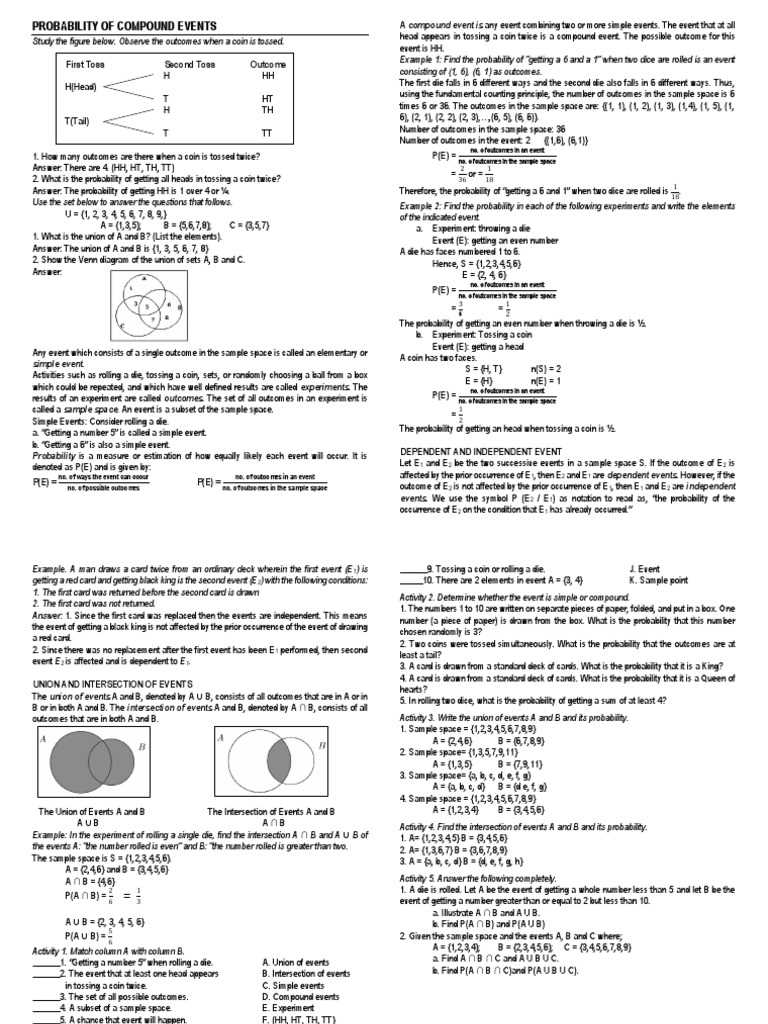
Math 10 Solutions for Probability Problems and Practice
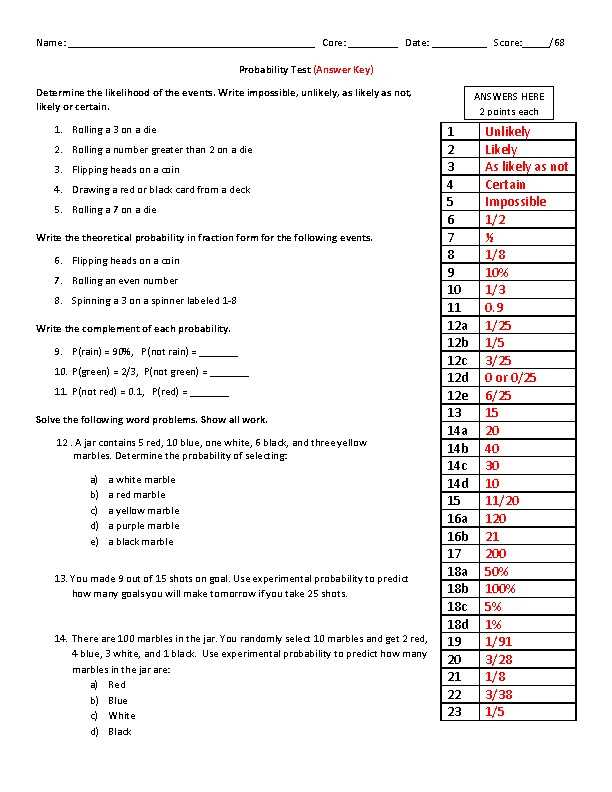
If you’re struggling with calculating the likelihood of various events, it’s important to break down each problem step by step. Begin by identifying the total number of possible outcomes and the number of favorable outcomes for the given scenario. This basic framework is key to understanding how likely an event is to occur.
For example, when asked to determine the chances of drawing a red card from a deck, first recognize that there are 52 cards total, with 26 red cards. The probability is then calculated as 26 out of 52, which simplifies to 1/2. Applying this method across various scenarios will help reinforce your understanding.
Additionally, pay attention to different problem types. Some will involve independent events, where the outcome of one event does not affect the next. Others may deal with dependent events, where the outcome of one influences subsequent events. Recognizing the type of event you’re working with is crucial in applying the correct formula.
These foundational principles, when applied correctly, allow you to confidently approach and solve more complex probability problems. Be sure to review each example thoroughly to ensure you’re following each step properly before applying it to different situations.