AP Environmental Science Energy Math Problem Solutions and Guide
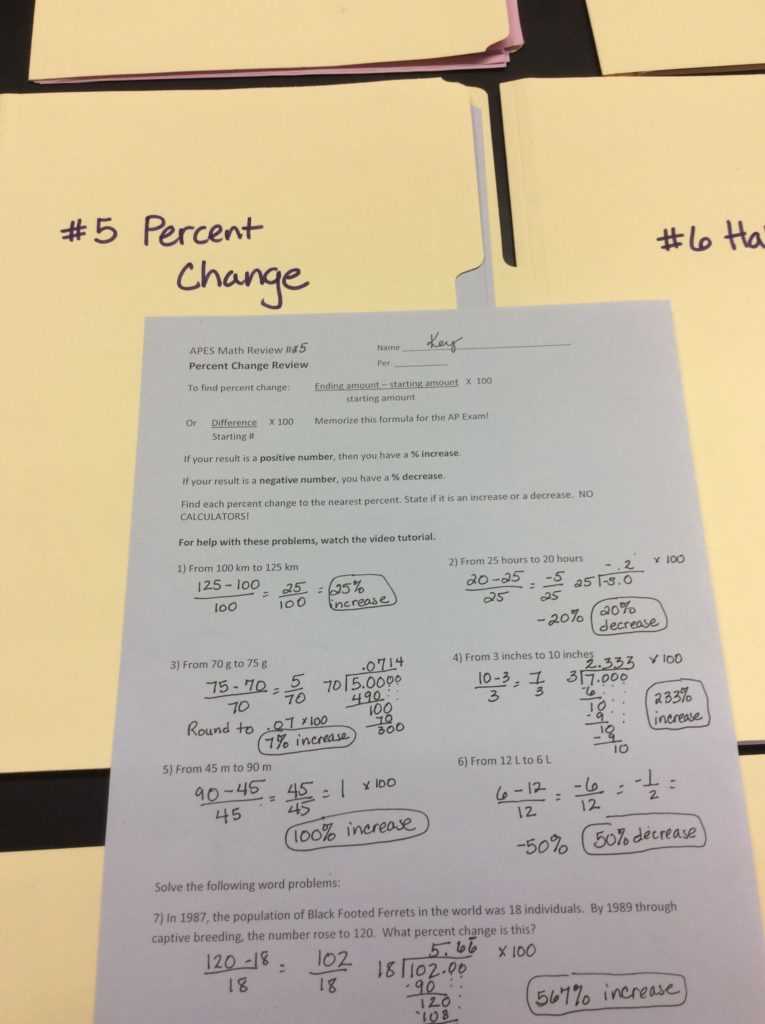
Mastering calculations related to natural resource use is crucial for the AP Environmental Science exam. Knowing how to determine energy consumption, efficiency, and the factors that influence these metrics will allow you to solve complex real-world issues. Practice solving these types of problems can help improve your speed and accuracy during the test.
Understanding the basic principles of energy conversion, consumption, and sustainability is necessary before attempting to solve problems. Focus on familiarizing yourself with units like joules, kilowatt-hours, and British thermal units (BTUs). This ensures that your calculations are consistent and relevant to the real world.
Pay attention to typical equations used in energy efficiency problems, such as power = energy / time, or energy = power × time. These formulas help streamline the problem-solving process and can be applied across various questions, including those related to resource use, sustainability, and the effects of energy production on the environment.
In this guide, we will walk through examples, offer practical tips for handling these types of calculations, and provide helpful strategies to ensure you’re prepared to handle any question on your AP exam.
AP Environmental Science Energy Calculation Solutions Guide
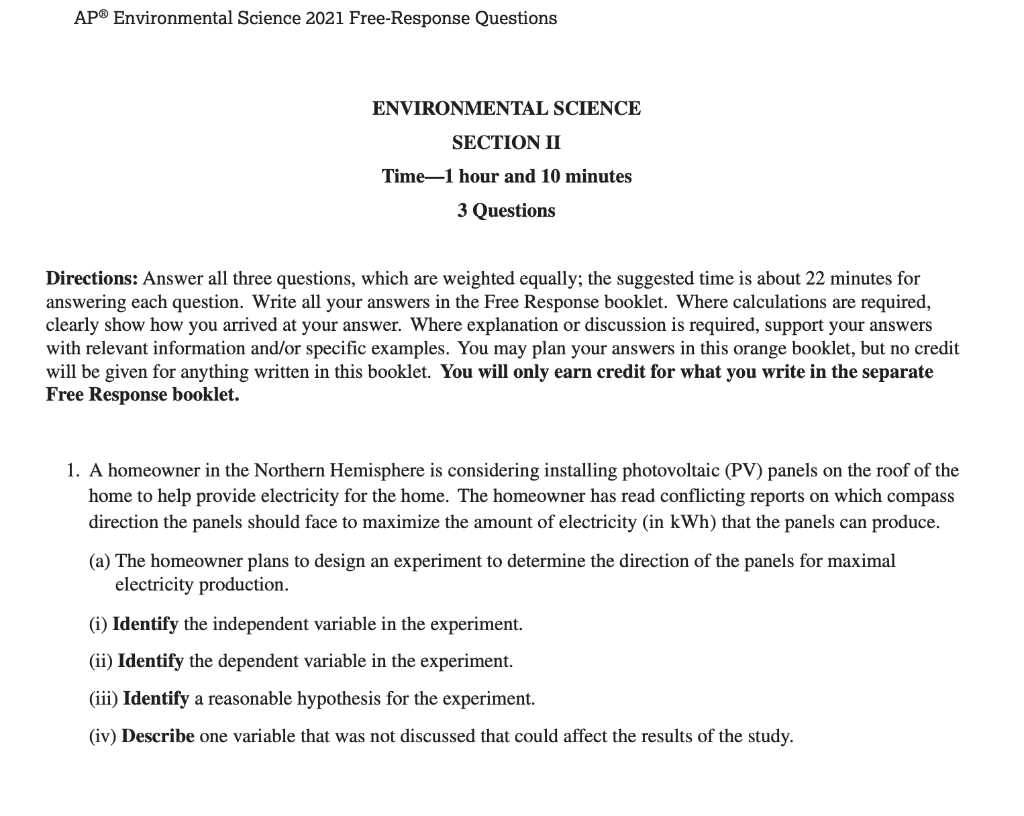
To solve typical energy-related questions, begin by ensuring a solid understanding of the conversion factors involved. For example, converting between joules and kilowatt-hours is a frequent task. Remember that 1 kilowatt-hour (kWh) equals 3.6 million joules. This is an important conversion when calculating energy consumption and efficiency.
When tasked with determining energy efficiency, use the formula: Efficiency (%) = (useful energy output / total energy input) × 100. Practice applying this formula to various scenarios, such as determining the effectiveness of a power plant or household appliances. Pay special attention to understanding the relationship between input and output energy.
Additionally, when calculating the impact of renewable and non-renewable resources on energy systems, understand the key differences in their energy returns. Non-renewable sources often have a higher energy return rate per unit of fuel but come with long-term environmental costs. In contrast, renewable resources like wind and solar energy may have a lower initial energy return, but they contribute to a more sustainable and eco-friendly system.
For real-world applications, it’s useful to practice solving problems related to calculating the environmental impact of different energy systems, considering factors like carbon emissions, resource depletion, and energy efficiency. These types of questions require applying several principles simultaneously, such as the laws of thermodynamics and the conservation of energy.
Keep track of your units throughout each calculation to avoid errors. Consistency in units is key to getting the correct result, whether you are converting power into work done or calculating emissions in tons of CO2. Use the correct SI units, and ensure you convert when necessary for accuracy.
By practicing these steps, you will improve your ability to handle complex energy-related questions quickly and accurately during your AP exam.
Understanding the Basic Concepts of Energy in Environmental Contexts
When exploring the role of power in natural systems, it’s important to first grasp the basic forms of energy: kinetic, potential, thermal, chemical, and electrical. These forms are all interconvertible and are crucial in understanding how systems operate and how they impact natural cycles.
One key concept is the law of conservation of mass and energy, which states that energy cannot be created or destroyed, only transformed. This means that any energy input into a system must eventually come out in some form, whether as work, heat, or waste. This principle helps in tracking and optimizing energy use in various systems, such as power generation or transportation.
The next concept involves understanding how different processes consume and release energy. For example, combustion processes, like those in cars or power plants, convert chemical energy stored in fuels into heat, which is then transformed into mechanical or electrical work. Understanding these transformations is crucial for analyzing the efficiency and sustainability of different systems.
Another important principle is the relationship between energy and matter. For instance, systems that rely on fossil fuels release stored chemical energy, which leads to the emission of greenhouse gases. In contrast, renewable systems like solar and wind power directly convert natural processes into usable power with minimal waste. Knowing the efficiencies and drawbacks of each system allows for better decision-making when choosing energy sources.
Finally, it is vital to comprehend the impact of human activities on the natural balance of power. The extraction and consumption of non-renewable resources, along with the associated pollution, disrupt natural cycles. Understanding this relationship can help design systems that minimize environmental damage while maximizing output.
How to Calculate Consumption in Different Scenarios
To determine the consumption in various situations, you need to use the formula:
Power (W) = Voltage (V) x Current (I)
Once you have the power, calculate the total consumption over time by multiplying power by the duration:
Consumption (Wh) = Power (W) x Time (h)
Here are a few practical examples:
- Household Appliances: For a refrigerator with a power rating of 150 W running for 24 hours, the consumption is: 150 W × 24 h = 3,600 Wh or 3.6 kWh.
- Heating System: For an electric heater rated at 2,000 W running for 5 hours: 2,000 W × 5 h = 10,000 Wh or 10 kWh.
- Lighting: For 10 light bulbs rated at 60 W each running for 6 hours: (10 × 60 W) × 6 h = 3,600 Wh or 3.6 kWh.
For devices using variable power levels, you must use the average power consumption over the time the device operates. Ensure you account for the device’s usage pattern to get an accurate estimate.
To track the environmental impact, you can multiply the total energy consumption by the carbon intensity factor of the electricity supply in your area. This provides a more comprehensive understanding of how much carbon dioxide is emitted per unit of power used.
Key Formulas for Solving Energy Calculations in AP Environmental Studies
To accurately solve calculations involving resource consumption, power usage, and system efficiency, you need to be familiar with several core equations. Below are the primary formulas that will help you in solving related tasks:
| Formula | Description |
|---|---|
| Power (P) = Voltage (V) × Current (I) | This equation calculates the power (measured in watts) consumed by a system when voltage and current are known. |
| Energy (E) = Power (P) × Time (t) | Determines the total energy consumed over a specific duration, usually measured in joules or watt-hours. |
| Efficiency (%) = (Useful Energy Output / Total Energy Input) × 100 | Calculates the efficiency of a system by comparing the useful energy extracted versus the total energy supplied. |
| Heat (Q) = Mass (m) × Specific Heat Capacity (c) × Temperature Change (ΔT) | Used to find the amount of heat required to change the temperature of a substance, often relevant in thermal energy problems. |
| Work (W) = Force (F) × Distance (d) | This formula calculates the work done when a force acts over a distance, relevant for understanding mechanical energy transfer. |
| Efficiency (η) = (Work Output / Work Input) × 100 | Measures the effectiveness of a system by comparing the work it produces to the work required to run it. |
Understanding how to apply these formulas is fundamental for solving energy-related calculations. They cover a wide range of scenarios and will be helpful for both theoretical questions and practical applications.
Step-by-Step Guide to Solving Common Energy Calculation Tasks
Follow this clear process to solve common calculation tasks involving power usage, resource consumption, and system performance.
- Identify the Given Variables: Carefully review the problem to identify the known quantities such as voltage, current, time, or mass.
- Select the Appropriate Formula: Choose the relevant formula based on the variables you have. For example, use Power = Voltage × Current for electrical systems or Energy = Power × Time for total energy consumed over time.
- Substitute the Known Values: Plug the known values into the chosen formula. For example, if the voltage is 120 V and the current is 5 A, substitute them into P = V × I to calculate power.
- Perform the Calculation: Carry out the necessary mathematical operations. If you are calculating energy, ensure that the time is in the correct unit (e.g., hours, seconds).
- Check Units: Ensure all units are consistent. For instance, if energy is measured in watt-hours (Wh), ensure the power is in watts (W) and time is in hours (h).
- Interpret the Results: After calculating, interpret the result based on the context of the problem. For example, a high power consumption value might indicate inefficient use of resources.
- Verify the Calculation: Double-check the steps to ensure there were no errors in the input or in the math.
By following these steps systematically, you can confidently solve typical calculations related to energy usage, ensuring accurate results for any related task.
Interpreting Data: How to Work with Energy Graphs and Charts
To effectively interpret energy-related graphs and charts, follow these key steps:
- Examine the Axes: Identify what each axis represents. The x-axis typically shows time, while the y-axis represents quantities such as power, consumption, or output. Check the units to ensure clarity in interpretation.
- Look for Trends: Observe whether the data increases, decreases, or remains constant over time. A rising line suggests growing consumption or output, while a decline could indicate efficiency improvements or a reduction in usage.
- Identify Peaks and Valleys: Notice the highest and lowest points in the graph. Peaks may indicate periods of maximum consumption or production, while valleys can highlight periods of reduced activity or efficiency.
- Analyze the Slope: The steepness of the line can show the rate of change. A sharp slope indicates a rapid change, while a shallow slope suggests a gradual increase or decrease.
- Compare Multiple Graphs: When analyzing multiple charts, compare the trends across them. For example, if you’re analyzing the output of different systems, look for patterns in their efficiency and performance over time.
- Pay Attention to Labels and Legends: Always check the labels, legends, and captions for additional context. They can provide crucial information on how data is represented and any significant variables or assumptions used.
- Look for Anomalies: Identify any data points that significantly deviate from the overall trend. These anomalies might represent outliers, system failures, or important shifts in behavior.
By following these guidelines, you can extract meaningful insights from graphs and charts, aiding in the analysis of power usage, consumption patterns, and overall system performance.
Common Mistakes to Avoid in Energy Calculation Exercises
Here are key mistakes to avoid when solving energy-related calculations:
- Incorrect Unit Conversion: Always check that units are consistent throughout your calculations. Converting from one unit to another (e.g., from joules to kilojoules) is common, but failing to do so can lead to incorrect results.
- Forgetting to Apply the Right Formula: Each calculation requires a specific formula. Using the wrong one, or omitting necessary variables, will yield inaccurate answers. Double-check that the formula corresponds to the scenario you’re solving.
- Misunderstanding Time Variables: Time is often a key factor in energy consumption calculations. Ensure you’re using the correct time interval (e.g., per minute, per hour) to avoid discrepancies in your final answer.
- Rounding Too Early: Avoid rounding intermediate results too early in the process. Doing so can introduce significant errors in your final result. Round only at the very end of your calculations.
- Ignoring Efficiency Factors: Many energy systems are not 100% efficient. Failing to include efficiency factors, such as energy loss in transmission, will lead to overestimations in energy output or savings.
- Overlooking Energy Storage Losses: In calculations involving energy storage, account for any potential losses during the storing and retrieval process. Overlooking this can result in inaccurate energy savings or usage predictions.
- Not Checking for Logical Consistency: Always verify that the calculated values make sense in the context. For example, if the results suggest an impossibly high energy consumption, double-check your input values and calculation steps.
By being mindful of these common errors, you can improve the accuracy of your calculations and better understand the energy data you’re working with.
For more detailed insights on energy calculations, visit the AP Environmental Science official site.
Real-World Applications of Energy Calculations in Sustainability
Energy calculations are critical in assessing the feasibility and impact of sustainability projects. Understanding these principles helps to optimize energy use, minimize waste, and design more efficient systems. Below are practical examples where these skills are applied:
- Renewable Energy Systems: Calculating the energy output of solar panels, wind turbines, or hydroelectric plants requires precise formulas. These calculations are essential for determining the size of installations needed to meet energy demand in specific areas.
- Building Energy Efficiency: In green building design, accurate calculations help assess energy needs for heating, cooling, and lighting. Properly estimating these values ensures that buildings are designed to consume the least amount of power while maintaining comfort.
- Carbon Footprint Analysis: Energy consumption is directly linked to carbon emissions. By calculating the energy usage of transportation systems, industrial operations, and households, it’s possible to estimate the carbon footprint and identify ways to reduce emissions.
- Smart Grid Management: Energy use data is crucial for developing and optimizing smart grids. By calculating peak demand and load distribution, these systems can adjust energy flow in real-time, reducing waste and improving efficiency.
- Water Treatment Plants: Energy is a major cost in water purification and treatment. Accurate energy assessments are necessary to ensure that water treatment facilities operate at optimal efficiency, reducing costs and environmental impact.
- Transportation Optimization: Calculating fuel efficiency in transportation helps reduce the environmental impact of logistics. By optimizing routes and fuel use, companies can save costs while lowering their carbon footprint.
- Waste-to-Energy Projects: In waste-to-energy plants, accurate calculations of energy conversion are necessary to ensure that the energy generated from waste materials is maximized, contributing to both power production and waste management.
By mastering these calculations, professionals can contribute to building more sustainable and energy-efficient systems across various industries.
Preparing for AP Energy Calculation Questions
To excel in energy-related questions, focus on understanding core concepts and applying formulas accurately. Begin by reviewing key formulas, such as those for calculating power, efficiency, and consumption. Practice applying these to different scenarios, such as calculating energy demand or the output of renewable systems.
- Understand Key Formulas: Master the formulas for calculating power (P = IV), work (W = Fd), and energy consumption (E = Pt). Familiarize yourself with unit conversions and the relationship between joules, watts, and kilowatt-hours.
- Practice Unit Conversions: Many questions involve converting units between joules, kilowatt-hours, or watts. Get comfortable with these conversions and practice using them in context to ensure accuracy in calculations.
- Work with Graphs and Data: You will likely encounter questions requiring interpretation of graphs. Practice extracting relevant data, such as slopes or areas under curves, and using them to perform necessary calculations.
- Focus on Real-World Scenarios: Apply your understanding of formulas to real-life situations, such as calculating energy savings in a building, the efficiency of transportation, or the energy produced by a wind turbine.
- Time Management: During the test, allocate time for each question. Ensure you understand what is being asked before applying any formulas. This will help avoid errors and ensure you answer all questions within the time limit.
- Review Past Exam Questions: Analyze previous test papers to identify recurring question types. Practice solving these problems to gain confidence and improve your speed and accuracy.
- Work on Problem-Solving Skills: For complex calculations, break down the problem into smaller, manageable steps. Double-check each step to ensure no calculation is skipped or incorrect.
With thorough preparation and a focus on applying formulas to real-world scenarios, you can confidently tackle energy-related calculations on the AP exam.