Frankenstein Study Guide Answer Key with Detailed Explanations
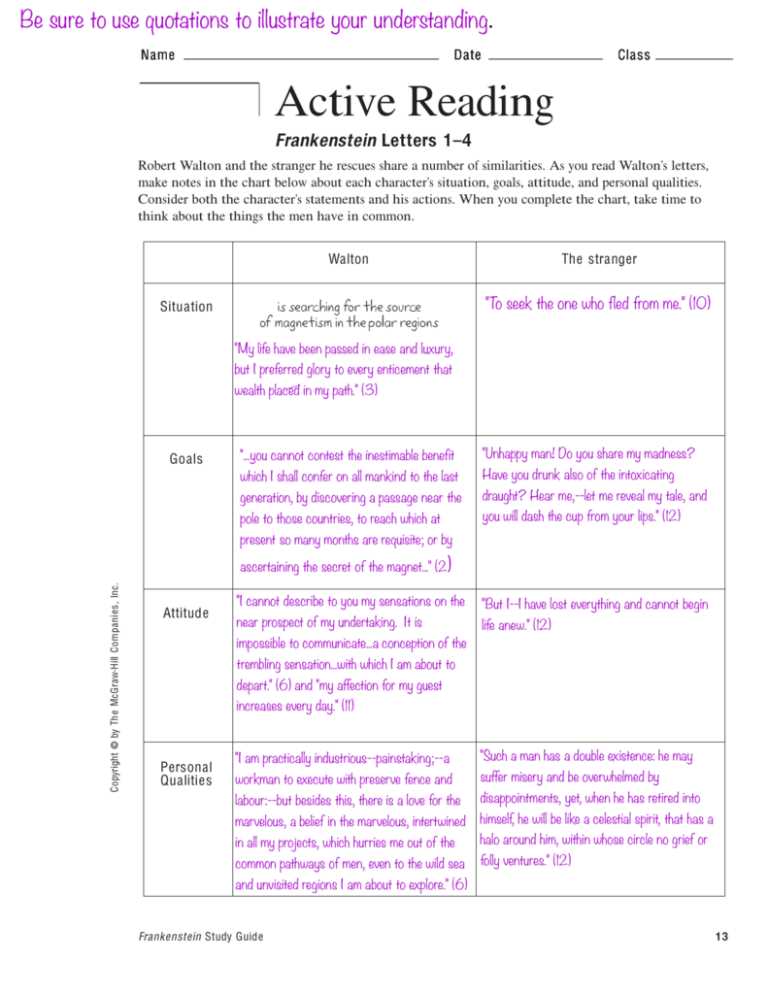
Focus on the central themes of ambition, isolation, and the quest for knowledge. Victor Frankenstein’s obsession with scientific discovery leads him to push ethical boundaries, ultimately creating a being he cannot control. Understanding this drive is key to interpreting his actions and the consequences that follow.
Pay close attention to the character arcs, particularly Victor’s evolving sense of guilt and responsibility. His decisions shape the tragic events, and understanding his motivations will clarify the moral undertones of the narrative. The monster, often misunderstood, offers a contrasting perspective on human nature and its flaws.
Review the most pivotal moments in the story, such as Victor’s first encounter with his creation. These scenes are crucial for grasping the developing relationship between creator and creation, and for exploring themes like revenge, fear, and responsibility.
The novel’s setting, shifting between remote areas and bustling cities, enhances the mood and reinforces key ideas about isolation. Pay attention to how the environment mirrors the characters’ emotional states, deepening the overall impact of the story.
Keep in mind the recurring motifs, such as light and darkness, that underscore the moral dilemmas. These symbolic elements can provide deeper understanding of characters’ inner turmoil and the consequences of unchecked ambition.
Frankenstein Critical Insights and Review
Victor’s ambition to master life itself drives him to take extreme measures. His creation, initially intended to be a triumph, becomes a symbol of his hubris. Examine Victor’s obsession with pushing scientific boundaries, which leads him to forsake moral considerations. Understanding his motivations is key to grasping the tragic consequences of his actions.
The monster represents the unintended consequences of unchecked creation. His evolution from innocence to vengeance is a direct result of abandonment and societal rejection. Focus on how his character shifts and how his experiences shape his interactions with Victor. His plea for understanding and the desire for companionship highlight key emotional conflicts in the narrative.
Look closely at the novel’s major turning points, such as when Victor is forced to confront his creation’s consequences. The scenes that revolve around Victor’s guilt and the monster’s pursuit of vengeance reveal the complex dynamic between creator and creation.
The settings play a crucial role in the novel’s atmosphere. The remote and desolate locations serve as metaphors for the emotional isolation of both Victor and the monster. Pay attention to how these physical spaces reflect the characters’ inner turmoil and intensify the themes of alienation and despair.
Motifs such as light and dark are prevalent throughout the story. These symbols not only underscore the moral ambiguity of the characters but also serve as metaphors for knowledge, life, and death. Identifying how these motifs are used will deepen your understanding of the novel’s philosophical undertones.
Analyzing the Main Themes in Frankenstein
One of the most prominent ideas in the novel is the destructive pursuit of unchecked ambition. Victor’s drive to master life disregards moral boundaries and leads to irreversible consequences. Examine how his obsession with creation blinds him to the ethical implications of his actions, resulting in tragedy for both himself and the monster.
Another significant theme is isolation. Victor’s withdrawal from family and friends, as well as the monster’s rejection by society, serve as critical factors in their eventual downfall. Pay attention to how isolation drives characters to act out of frustration and despair, deepening the sense of alienation and loss.
The theme of responsibility is explored through Victor’s neglect of his creation. After bringing the monster to life, he abandons it, refusing to take responsibility for his actions. This neglect leads to the creature’s suffering and eventual revenge. Reflect on how responsibility–or lack thereof–plays a central role in shaping the characters’ destinies.
Revenge is a key motivator for both Victor and the monster. As the creature seeks retribution for his suffering, Victor’s obsession with vengeance spirals out of control. Examine how the desire for revenge fuels their actions and contributes to the cycle of violence and tragedy in the narrative.
The struggle between nature and nurture is also explored. The monster begins as a blank slate, but his experiences with cruelty and rejection shape his violent tendencies. Contrast this with Victor’s upbringing, where his ambitions are nurtured but ultimately lead to his downfall. Reflect on how the novel questions whether an individual’s behavior is determined by nature or external influences.
| Theme | Key Element | Impact on Characters |
|---|---|---|
| Ambition | Victor’s quest to conquer life | Leads to creation of the monster and eventual tragedy |
| Isolation | Victor’s withdrawal and the monster’s rejection | Drives both characters to despair and violence |
| Responsibility | Victor’s abandonment of the monster | Leads to suffering and revenge |
| Revenge | Cycle of retaliation between Victor and the monster | Intensifies conflict and results in destruction |
| Nature vs. Nurture | The monster’s creation and subsequent treatment | Shapes his violent behavior and desire for revenge |
Understanding Victor Frankenstein’s Character Development
Victor’s character arc revolves around his ambition, which gradually transforms into guilt and despair. Early in the story, he is driven by a desire for glory and knowledge. He believes that creating life will elevate him, but this sense of superiority blinds him to the consequences of his actions. Focus on his single-minded pursuit of scientific discovery, which isolates him from his family and responsibilities.
As the plot progresses, Victor’s initial excitement turns to horror and regret. After giving life to his creation, he immediately rejects it, overwhelmed by the creature’s appearance. This rejection marks the beginning of his internal conflict. Examine how Victor’s inability to accept the responsibility for his creation contributes to his growing isolation and paranoia.
Throughout the story, Victor’s obsession with destroying his creation intensifies. His health deteriorates, and his personal relationships suffer as he becomes consumed with vengeance. Pay attention to how this obsession mirrors the monster’s own desire for retribution, creating a cycle of destruction that ultimately leads to Victor’s downfall.
Victor’s final moments reveal a shift in his character. In his pursuit of revenge, he loses sight of his original goals and is left with nothing but regret. His reflections on his life and mistakes serve as a cautionary tale about the dangers of unchecked ambition. Consider how his tragic end highlights the consequences of neglecting moral responsibility in the pursuit of personal glory.
The Role of the Monster in the Novel
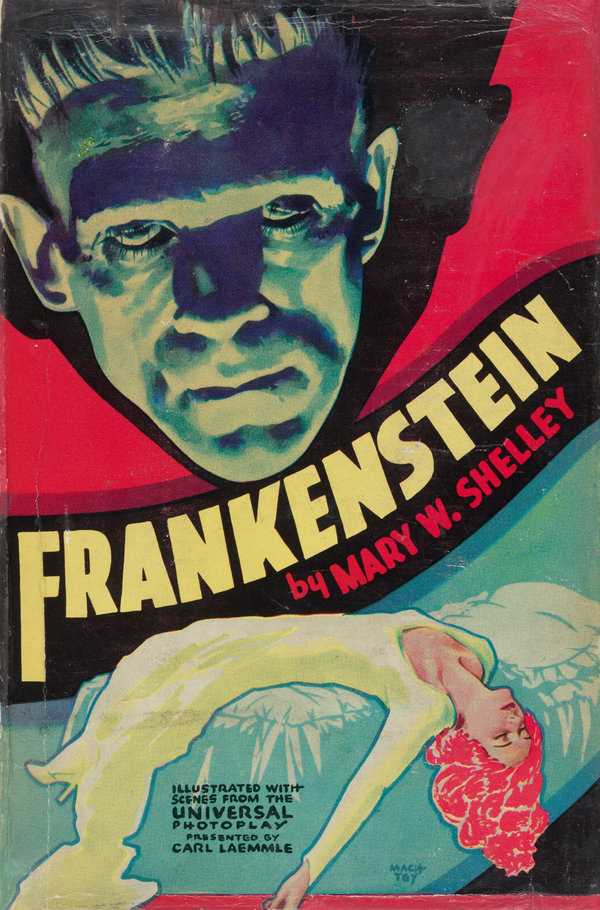
The monster serves as a complex character that challenges the boundaries between villain and victim. He is both a product of Victor’s ambition and a symbol of society’s rejection. His development throughout the novel is essential for understanding the themes of isolation, responsibility, and moral conflict.
At first, the monster is innocent and unaware of the cruelty around him. His initial experiences, particularly his interactions with humans, shape his transformation from a curious being into a vengeful one. Focus on the key moments when the monster seeks acceptance from Victor and others, only to be met with rejection. These moments drive his emotional evolution and highlight the impact of society’s judgment on individual identity.
Consider the monster’s education and growth. His self-awareness, gained through observing human behavior, contributes to his understanding of his own existence. However, his physical appearance leads to consistent rejection, which fosters his desire for vengeance against Victor. Reflect on how his isolation deepens his understanding of the human condition, and how this isolation mirrors Victor’s own emotional state.
The monster’s plea for a companion further complicates his character. His request for a female counterpart represents a desire for connection and compassion. However, Victor’s refusal to comply with this request intensifies the creature’s anger, ultimately driving him to violence. Explore how this demand underscores the theme of responsibility and the consequences of neglecting moral obligations.
- His initial innocence is overshadowed by his isolation and rejection.
- The monster’s education shapes his understanding of human nature and himself.
- His desire for companionship illustrates the fundamental need for acceptance and love.
- Rejection fuels his transformation into a vengeful being seeking retribution.
Throughout the story, the monster embodies the consequences of creation without consideration. He is both a reflection of Victor’s failure and a tragic figure in his own right. His actions, driven by pain and rejection, lead to irreversible consequences for both himself and Victor.
Key Symbols and Motifs in the Novel
One of the most prominent symbols in the story is light and dark. Light often represents knowledge, discovery, and the pursuit of scientific advancement, while darkness symbolizes ignorance, danger, and the unknown. Victor’s pursuit of knowledge is marked by moments of illumination, but these moments often lead him into darker paths of obsession and regret. Pay attention to scenes where Victor seeks enlightenment but is ultimately consumed by the consequences of his actions.
Another key motif is the recurring idea of creation and destruction. The monster itself symbolizes the double-edged nature of creation. While Victor’s ambition leads to the creation of life, it also leads to destruction, both physically and emotionally. Reflect on how this duality is represented in key moments, such as when Victor realizes the full extent of his creation’s consequences.
The motif of isolation is symbolized by both the settings and the emotional states of the characters. The cold, desolate landscapes–such as the Arctic setting at the novel’s conclusion–mirror the isolation felt by both Victor and the monster. Their physical separation from others amplifies their internal suffering and alienation. This isolation is key in understanding their emotional decline and the ultimate tragedy of the story.
The monster’s appearance itself is a symbol of human fears and societal rejection. His grotesque form not only reflects Victor’s failure to create life with care, but also serves as a visual representation of the fear of the “other” and the consequences of unchecked ambition. His physicality becomes a barrier between his desire for acceptance and the reality of his rejection.
- Light and Darkness: Represent knowledge, discovery, ignorance, and danger.
- Creation and Destruction: The dual nature of creation leading to both life and devastation.
- Isolation: Reflected in the settings and the emotional states of the characters.
- The Monster’s Appearance: Symbolizes fear, rejection, and Victor’s failure.
These symbols and motifs deepen the novel’s exploration of the human condition, highlighting the dangers of unchecked ambition, the consequences of isolation, and the complex nature of creation. Recognizing how these elements interweave throughout the story will enhance your understanding of the novel’s thematic core.
Important Quotes and Their Meanings
“I had worked hard for nearly two years, for the sole purpose of infusing life into an inanimate body.” – Victor
This quote reveals Victor’s obsession with his project and his singular focus on achieving scientific greatness, regardless of the moral implications. His dedication shows the dangerous extremes to which ambition can drive a person, often blinding them to the consequences of their actions.
“I am malicious because I am miserable. Am I not shunned and hated by all mankind?” – The Monster
The monster’s words reflect his deep sense of alienation and the painful realization that his existence has been marked by rejection. His malicious behavior is not born from an inherent evil, but from the mistreatment and neglect he experiences from Victor and society. This quote highlights the impact of cruelty and isolation on an individual’s psyche.
“You will repent, and it is in your power to do so.” – The Monster
Here, the monster warns Victor of the inevitable consequences of his actions. It is a direct challenge to Victor’s sense of responsibility and foreshadows the destructive path both characters are on. The monster is urging Victor to confront the results of his ambition and to accept accountability for what he has created.
“Nothing is so painful to the human mind as a great and sudden change.” – Victor
This quote illustrates Victor’s own internal conflict as he faces the consequences of his reckless creation. It shows how the overwhelming burden of guilt and responsibility can lead to intense emotional distress. It also reflects a broader theme in the novel: the consequences of seeking to defy natural boundaries.
“I had worked hard for nearly two years, for the sole purpose of infusing life into an inanimate body.” – Victor
This line underlines Victor’s obsessive nature and his single-minded ambition. His determination to succeed, without considering the moral cost, serves as a warning about the dangers of unchecked ambition.
- Victor’s Obsession: “I had worked hard for nearly two years…” – The extent of his ambition and single-mindedness.
- Monster’s Alienation: “I am malicious because I am miserable…” – How neglect and rejection shape the monster’s actions.
- Consequence of Creation: “You will repent…” – A warning to Victor about the irreversible consequences of his actions.
- Emotional Strain: “Nothing is so painful…” – Victor’s internal turmoil in the face of his creation.
These quotes not only reveal character motivations and emotions, but also underscore the novel’s deeper philosophical questions about responsibility, morality, and the consequences of human ambition.
Exploring the Setting of the Novel
The settings throughout the story play a key role in reflecting the inner turmoil of the characters, particularly Victor and the monster. The isolated, often harsh environments mirror their emotional states and heighten the sense of alienation and despair. Focus on the contrasts between the various locations, as they contribute significantly to the novel’s themes.
The Swiss Alps, where much of Victor’s early life and studies take place, are symbolic of both beauty and danger. These mountains, while majestic, are also places where Victor becomes consumed by his obsession with creating life. The natural world here serves as a backdrop for his ambition, yet it also foreshadows the destructive potential of his quest. Examine how this setting shifts from one of awe to one of terror as Victor’s creations spiral out of control.
The Arctic setting, at the novel’s conclusion, is another stark environment that underscores the theme of isolation. This desolate, frozen wasteland reflects Victor’s mental state as he chases the monster in a futile attempt to destroy it. The cold and emptiness of the Arctic mirror Victor’s emotional isolation and the futility of his obsessive pursuit of vengeance. Pay attention to how the setting enhances the final confrontation and brings the novel to its tragic conclusion.
The various domestic spaces, like the Frankenstein family home and the monster’s early experiences in the cabin, also reflect the stark contrasts between human warmth and cold rejection. Victor’s neglect and the monster’s abandonment are emphasized in these settings, showcasing the emotional gaps between characters. These spaces become stages for pivotal moments of realization and conflict.
- Swiss Alps: Symbolize both the beauty and danger of Victor’s ambition, shifting from awe to terror.
- Arctic Wasteland: Represents Victor’s emotional isolation and the futility of his obsessive quest for vengeance.
- Domestic Spaces: Contrast warmth and rejection, highlighting the emotional disconnect between characters.
The settings in the novel are not just physical locations; they reflect the characters’ internal struggles and the broader themes of isolation, ambition, and consequence. Each environment serves to deepen the reader’s understanding of the characters and their actions.
Discussion of Major Conflicts in the Story
The central conflict in the story is the struggle between Victor and his creation. Victor’s desire to play God leads him to create life, but once the creature comes to life, Victor is horrified and rejects it. This sets off a chain of events where the monster seeks revenge on Victor, ultimately leading to mutual destruction. Focus on how this conflict unfolds, especially how Victor’s refusal to take responsibility for his actions exacerbates the situation.
Another major conflict is the monster’s internal struggle with identity and acceptance. Initially innocent and seeking love, he is continually rejected by society because of his grotesque appearance. This rejection fuels his rage and desire for vengeance against Victor. Pay attention to how the monster’s journey highlights the consequences of societal rejection and the importance of companionship and understanding.
A third conflict arises between humanity and the dangers of unchecked scientific ambition. Victor’s pursuit of knowledge without considering the moral implications of his experiments leads to chaos and destruction. This conflict addresses the broader theme of ethics in science, where Victor’s unchecked desire for power and glory results in devastating consequences. Consider how Victor’s ambition blinds him to the responsibilities that come with creation.
Lastly, the conflict between nature and nurture plays a key role. The monster’s violent tendencies are shaped by his experiences, particularly the rejection and mistreatment he faces. His inherent nature, combined with the external factors of neglect and cruelty, drives his transformation from an innocent being to one driven by vengeance. Reflect on how the novel questions whether an individual’s behavior is determined by nature or shaped by external circumstances.
- Victor vs. the Monster: The creation of life leads to rejection, revenge, and mutual destruction.
- The Monster’s Struggle with Identity: Rejection from society fuels the monster’s rage and desire for vengeance.
- Humanity vs. Unchecked Ambition: The pursuit of knowledge without ethical consideration results in chaos.
- Nature vs. Nurture: The monster’s violence is shaped by both inherent qualities and societal rejection.
Each of these conflicts reveals deeper themes of responsibility, moral choices, and the consequences of human actions. They serve to drive the narrative forward and highlight the tragic outcomes of unchecked ambition and societal rejection.
How the Novel Relates to Modern Ethical Questions
The creation of life, without consideration of its consequences, raises fundamental ethical questions about human responsibility and scientific discovery. Victor’s ambition to create life parallels modern debates surrounding genetic engineering, artificial intelligence, and bioethics. In particular, the novel’s exploration of unchecked scientific ambition can be compared to the moral dilemmas faced by researchers and companies in fields like cloning, genetic modification, and AI development. Consider how the novel serves as a cautionary tale about the potential dangers of pursuing knowledge without addressing the broader social and ethical implications.
The issue of consent is another relevant ethical question raised by the story. Victor’s creation does not have a voice in its own creation and is abandoned without regard for its well-being. In modern contexts, this issue resonates in discussions about the ethics of artificial life and whether creators or organizations have a responsibility to their creations, particularly in the realm of AI and biotechnology. Examine how the monster’s suffering, as a result of being abandoned and rejected, reflects the ethical concerns over the treatment of entities created through modern technology.
Moreover, the themes of exclusion and societal rejection raise critical questions about how individuals or creations, once deemed “unnatural,” are treated by society. The monster, despite being created with the potential for good, is rejected purely based on his appearance and his origins. This parallels contemporary ethical issues regarding discrimination and the treatment of those who are marginalized or deemed “other.” Consider how the novel highlights the ethical need for compassion and inclusion in a world increasingly shaped by technological advancements.
For further insights into the ethical implications of modern science, you can explore reliable sources like the National Institutes of Health (NIH), which provides up-to-date discussions on bioethics and emerging technologies.