Chapter 7 Membrane Structure and Function Detailed Review
The fluid mosaic model describes the organization of biological layers, where lipids and proteins work in tandem to maintain a stable yet dynamic environment. The bilayer configuration allows selective permeability, crucial for nutrient uptake and waste removal. At the same time, embedded proteins facilitate communication and signaling between cells, ensuring proper response to external stimuli.
In this process, lipids serve as the structural foundation, providing flexibility and defining the overall shape of the cell. Proteins, on the other hand, are responsible for the transport of molecules, enzymatic activity, and the recognition of foreign substances. The interaction between these components is essential for maintaining homeostasis within the cell.
To fully grasp the complexity of these membranes, it is important to focus on the ways in which their structure influences cell behavior. Different transport mechanisms, including passive diffusion and active transport, regulate the movement of materials in and out of the cell, each governed by specific molecular features. By understanding the molecular components and their roles, one can appreciate how cellular membranes manage both internal and external factors.
Detailed Review of Cell Membrane Components and Their Roles
The lipid bilayer forms the core foundation of the cell’s protective boundary. It consists primarily of phospholipids with hydrophilic heads and hydrophobic tails, which allow the membrane to remain stable while providing flexibility. The hydrophobic nature of the inner region prevents unwanted water-soluble molecules from passing through, while hydrophilic regions interact with the aqueous environment.
Proteins embedded within the lipid bilayer are crucial for various processes. Integral proteins span the membrane, facilitating the transport of ions and molecules across the membrane. These transporters include channels, carriers, and pumps that are essential for maintaining cellular homeostasis. Peripheral proteins, on the other hand, are located on the membrane surface and play roles in signaling, enzyme activity, and cell recognition.
Carbohydrates are often attached to proteins or lipids on the extracellular surface of the membrane, forming glycoproteins and glycolipids. These carbohydrate chains are involved in cell-cell communication, recognition, and adhesion, which are important for immune responses and tissue formation.
For an in-depth understanding of the various transport mechanisms across the membrane, including passive and active transport, visit NCBI Bookshelf, a reliable source for further study on cell biology and membrane functions.
Understanding the Fluid Mosaic Model of Membrane Organization
The Fluid Mosaic Model explains how the components of the cell’s outer layer behave and interact with each other. It highlights the fluid nature of lipid bilayers and the dynamic positioning of proteins within them.
The lipid bilayer is composed mainly of phospholipids that arrange themselves with hydrophilic heads facing outward and hydrophobic tails inward. This configuration ensures the integrity of the structure while allowing for movement within the layer.
Proteins embedded within the lipid bilayer have specific roles in transport, signaling, and structural support. These proteins are either integral, spanning the membrane, or peripheral, associated with one side of the bilayer.
- Integral Proteins: These proteins extend across the bilayer and assist with the movement of molecules and ions through the membrane. They act as channels or carriers for substances that cannot diffuse directly through the lipid layer.
- Peripheral Proteins: Located on the inner or outer surfaces of the membrane, these proteins are involved in cell recognition, signaling, and the attachment to the cytoskeleton.
- Cholesterol: Cholesterol molecules help modulate the fluidity of the membrane, preventing it from becoming too rigid or too permeable.
The fluidity of the bilayer allows for the lateral movement of lipids and proteins, enabling the membrane to adapt to different environmental conditions and play a crucial role in cellular functions such as endocytosis and exocytosis.
Key Components of Biological Membranes: Lipids and Proteins
Lipids form the backbone of cellular barriers. Phospholipids, with their hydrophilic heads and hydrophobic tails, arrange themselves in a bilayer, creating a stable yet flexible foundation. The bilayer’s fluidity is crucial for membrane dynamics, allowing the movement of proteins and lipids within the layer.
There are two main classes of lipids involved in membrane composition:
- Phospholipids: These molecules have a hydrophilic head that faces the aqueous environment and hydrophobic tails that face each other in the interior of the bilayer, contributing to the membrane’s selective permeability.
- Cholesterol: Positioned within the bilayer, cholesterol modulates the fluidity of the membrane, making it less permeable to very small water-soluble molecules and stabilizing the structure at various temperatures.
Membrane proteins serve a variety of functions and are classified based on their relationship with the lipid bilayer:
- Integral Proteins: These proteins span the entire bilayer and facilitate the transport of molecules across the membrane. They are embedded within the membrane and play key roles in signaling and structural integrity.
- Peripheral Proteins: Attached to the exterior or interior surfaces of the membrane, peripheral proteins assist in signaling, cell recognition, and maintaining the membrane’s shape.
In summary, lipids form the structural framework of membranes, while proteins provide functionality related to transport, communication, and cellular interactions.
How Membrane Permeability Influences Cellular Transport
Cellular transport relies heavily on the permeability of the lipid bilayer. This permeability dictates the movement of ions, molecules, and other substances across the cellular boundary, and directly influences vital processes such as nutrient uptake, waste removal, and signal transduction.
Two main factors influence permeability:
- Lipid Composition: The types of lipids in the bilayer determine how easily substances pass through. For example, the presence of cholesterol can reduce permeability by packing phospholipids more tightly.
- Protein Channels and Transporters: Specific proteins embedded within the lipid bilayer act as channels or carriers, allowing selective passage of molecules that cannot diffuse through the hydrophobic lipid layer.
There are several types of transport processes affected by permeability:
- Passive Transport: This includes diffusion and osmosis, where substances move from areas of high concentration to low concentration without energy expenditure. The permeability of the membrane controls the rate of diffusion.
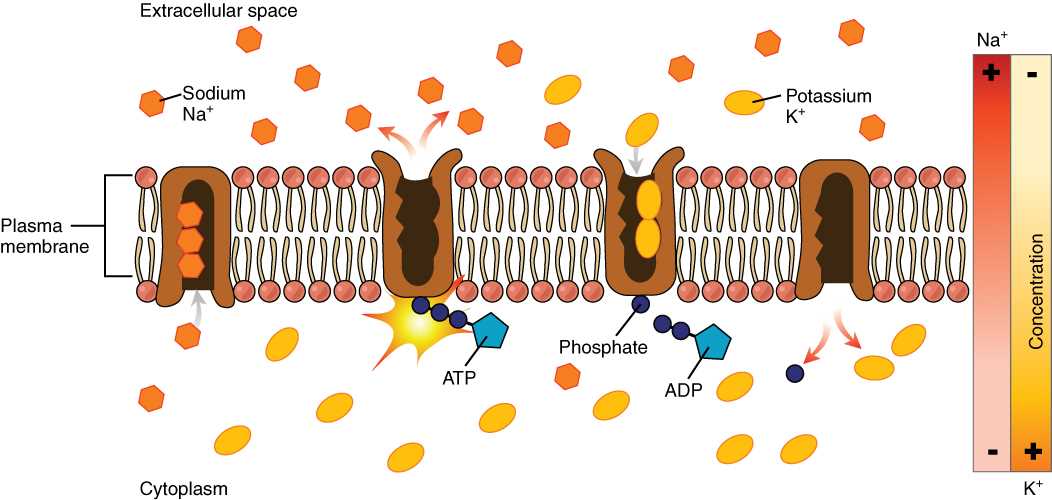
- Active Transport: Requires energy (ATP) to move substances against their concentration gradient. Protein pumps are key in facilitating this process, with membrane permeability impacting their function.
Changes in membrane permeability can alter the effectiveness of these transport processes. For instance, certain conditions like temperature shifts or chemical changes can increase fluidity, making the membrane more permeable to water and ions, while other factors like drugs or toxins can disrupt the function of transport proteins.
In summary, membrane permeability plays a critical role in controlling the efficiency of cellular transport, determining how well substances enter or exit the cell.
The Role of Membrane Proteins in Signal Transduction
Signal transduction is a process through which cells respond to external stimuli, and it largely depends on specific proteins embedded within the lipid layer. These proteins serve as key mediators for the transmission of signals from the outside environment to the cell’s interior.
The main types of proteins involved in signal transduction include:
- Receptor Proteins: These proteins bind to signaling molecules (ligands), such as hormones or neurotransmitters, triggering conformational changes that initiate intracellular signaling cascades. G-protein coupled receptors (GPCRs) and receptor tyrosine kinases (RTKs) are common examples.
- Channel Proteins: Upon receiving a signal, these proteins can open or close, allowing specific ions to enter or exit the cell, thereby influencing the cell’s electrical charge and other signaling pathways.
- Enzyme-linked Proteins: These proteins catalyze specific reactions in response to signaling, often altering the cell’s internal environment. Examples include protein kinases that phosphorylate other proteins, activating or inhibiting their functions.
Upon activation, these proteins trigger a series of intracellular events that can lead to changes in gene expression, enzyme activity, or ion channel behavior. For example:
- Activation of G-Proteins: Many receptors activate G-proteins, which then influence second messengers like cAMP or inositol trisphosphate (IP3) to propagate the signal.
- Phosphorylation Cascades: Receptor activation often results in a cascade of phosphorylation events, which amplify the signal and result in cellular responses such as growth, differentiation, or apoptosis.
Understanding how membrane proteins function in signal transduction is critical for developing targeted therapies, especially in cases where signaling pathways go awry, such as in cancer or neurological disorders.
Understanding the Mechanisms of Active and Passive Transport
Active and passive transport are two fundamental processes that control the movement of substances across cell barriers, each with distinct mechanisms and energy requirements.
Passive Transport does not require energy, relying instead on the natural movement of molecules from high to low concentration due to concentration gradients. The primary mechanisms include:
- Simple Diffusion: Molecules move directly through the lipid bilayer. Small, nonpolar molecules like oxygen and carbon dioxide pass freely.
- Facilitated Diffusion: Larger or polar molecules, like glucose or ions, require transport proteins to help them move across the barrier. These proteins may be channels or carriers that allow molecules to pass through the lipid bilayer.
- Osmosis: The diffusion of water across a semipermeable membrane, often involving aquaporins, is a key process in maintaining cellular homeostasis.
Active Transport requires energy, usually in the form of ATP, to move substances against their concentration gradient. This process allows cells to accumulate ions or other substances in areas of higher concentration, which is crucial for functions like nutrient uptake and waste removal. Key methods of active transport include:
- Primary Active Transport: Involves the direct use of energy to pump ions across a membrane. An example is the sodium-potassium pump (Na+/K+ ATPase), which actively transports sodium out and potassium into the cell.
- Secondary Active Transport: This relies on the gradient created by primary active transport. For example, the sodium-glucose symporter uses the sodium gradient to move glucose into the cell against its concentration gradient.
The coordination between passive and active transport ensures that cells maintain proper ionic balance, nutrient levels, and waste management. Understanding these processes is key to comprehending how cells interact with their environment and maintain homeostasis.
Membrane Potential and Its Impact on Cell Function
Membrane potential plays a critical role in regulating cellular processes, particularly in maintaining ion balance and facilitating communication within and between cells. It refers to the difference in charge across the cell’s boundary, created by the uneven distribution of ions on either side of the cell membrane.
Resting Potential is the baseline voltage across a cell’s membrane when the cell is not actively sending signals. It is typically negative, with the inside of the cell being more negative than the outside. This state is maintained primarily by the sodium-potassium pump, which actively pumps sodium ions out of the cell and potassium ions into the cell. This activity ensures that the concentrations of Na+ and K+ ions are different inside versus outside the cell, creating the electrical gradient.
Action Potential occurs when a cell, such as a neuron or muscle cell, receives a stimulus strong enough to change the membrane potential. This leads to rapid depolarization, where sodium ions rush into the cell, followed by repolarization, where potassium ions exit the cell. This transient change in voltage is crucial for transmitting electrical signals, enabling processes like nerve impulses and muscle contractions.
The resting potential is fundamental for the cell’s ability to respond to stimuli, while the action potential allows for rapid signaling. Both are vital for functions such as signal transmission, secretion of hormones, and muscle contraction. Changes in the membrane potential can disrupt cellular communication and lead to various disorders, such as cardiac arrhythmias or neurological conditions.
Endocytosis and Exocytosis: Processes of Membrane Recycling
Endocytosis and exocytosis are vital processes for the recycling and regulation of cellular boundaries. These mechanisms facilitate the movement of large molecules, particles, and fluids into and out of cells without the need for direct transport through the lipid bilayer.
Endocytosis involves the cell engulfing extracellular material, forming a vesicle that buds off from the surface. There are three major types: phagocytosis (cell eating), where large particles or microorganisms are engulfed, pinocytosis (cell drinking), which involves the uptake of extracellular fluids, and receptor-mediated endocytosis, where specific molecules are internalized through interaction with cell surface receptors. This process is essential for nutrient uptake, immune response, and the removal of extracellular debris.
Exocytosis is the reverse process, where substances enclosed in vesicles are expelled from the cell. This occurs when vesicles containing the cargo fuse with the plasma membrane, releasing their contents outside. This process is crucial for the secretion of hormones, neurotransmitters, enzymes, and waste products. Exocytosis also plays a key role in maintaining the integrity of the cell membrane by recycling components.
The continuous cycle of endocytosis and exocytosis ensures that cells maintain homeostasis, regulate their environment, and control the composition of their surface. It allows for the dynamic exchange of material between the cell and its surroundings, contributing to the proper functioning of tissues and organs.
How Membrane Structure Relates to Disease and Disorders
Alterations in the composition or organization of cellular boundaries can lead to a range of diseases and disorders. These changes often disrupt essential cellular functions such as communication, transport, and structural integrity, making them central to pathogenesis.
Genetic Disorders: Mutations in the genes encoding for membrane proteins can cause inherited conditions. For instance, cystic fibrosis is caused by mutations in the CFTR gene, leading to dysfunctional chloride ion channels. This impairs the regulation of salt and water in cells, contributing to thick mucus production and severe respiratory problems.
Neurodegenerative Diseases: In conditions such as Alzheimer’s and Parkinson’s diseases, abnormal protein accumulation and altered lipid composition in neuronal membranes contribute to cellular dysfunction. In Alzheimer’s, the accumulation of amyloid-beta plaques disrupts the integrity of cell membranes and impairs neuronal signaling.
Cardiovascular Conditions: Atherosclerosis, for example, involves the build-up of lipid deposits in the arterial walls. These deposits change the physical properties of the cell boundaries, leading to narrowed arteries and reduced blood flow, increasing the risk of heart attack or stroke.
Infectious Diseases: Many pathogens, including viruses, exploit changes in cellular boundaries to infect host cells. Viruses like HIV and influenza bind to specific surface proteins, gaining entry into cells. Disruptions in these proteins can lead to an inability to prevent or treat these infections.
Disruptions in cellular boundaries can also affect drug resistance. Changes in protein composition can lead to the failure of drugs that depend on specific receptors or transport proteins, making treatment less effective.
Understanding how alterations in cell boundary composition lead to disease is critical for developing therapies targeting these processes. Research continues to focus on restoring proper membrane integrity and function to treat and prevent a wide variety of conditions.