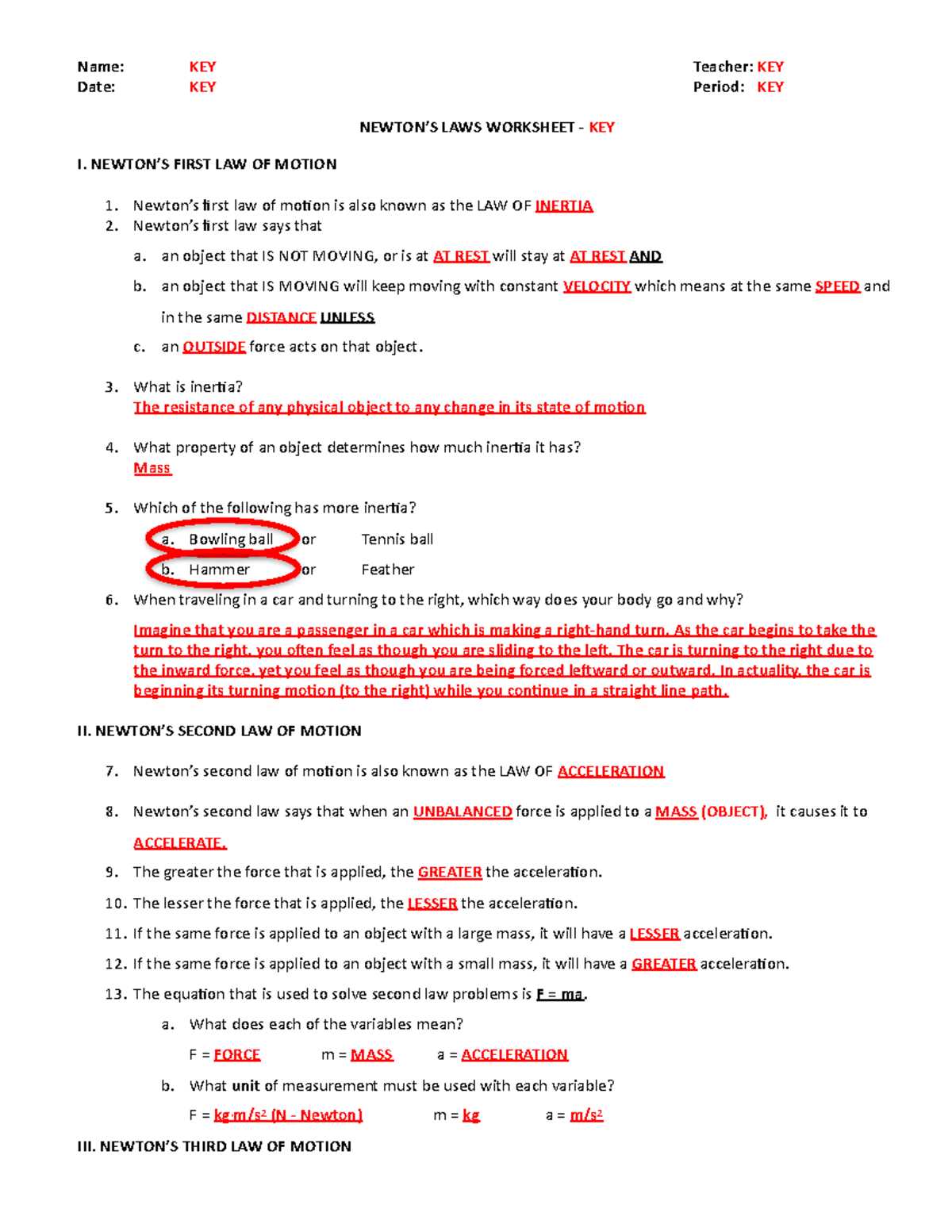
Overview of the Laws of Motion Solutions
Begin by identifying the fundamental relationship between force and motion. Focus on how an object’s velocity changes in response to applied force. Pay attention to the distinction between balanced and unbalanced forces, and how each affects the state of an object.
Analyze how mass influences acceleration. Heavier objects require more force to achieve the same change in motion compared to lighter ones. Use the equation F = ma to calculate the required force for a given mass and acceleration.
Review the role of inertia in motion. An object will resist changes in its state of motion unless acted upon by an external force. Understanding this principle is key to predicting how objects behave when forces are applied or removed.
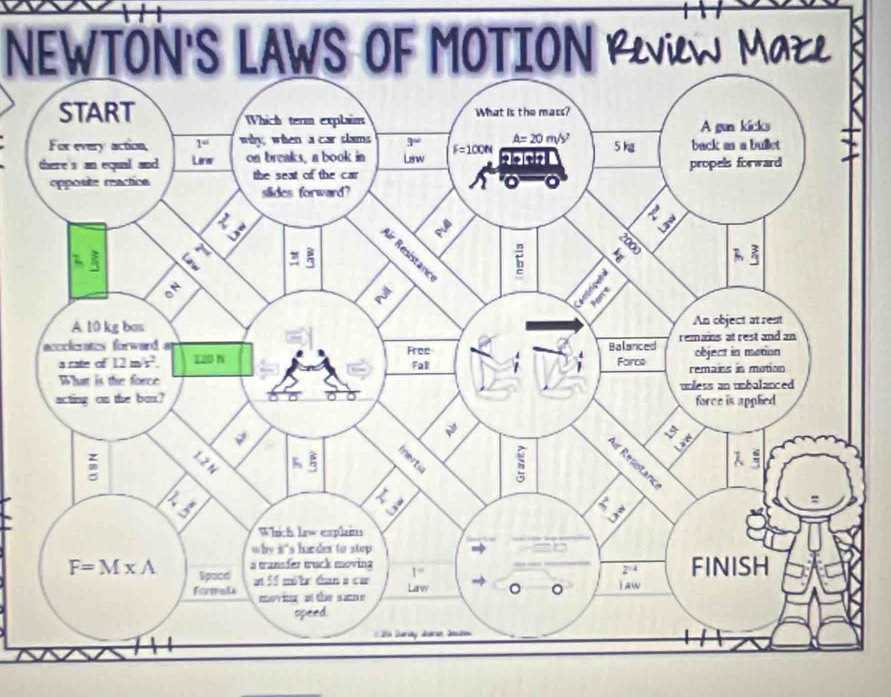
Understand the interaction between objects through action and reaction forces. For every force, there is an equal and opposite reaction. This is crucial when analyzing how two interacting bodies affect each other, especially in collisions or when two objects exert forces on one another.