Solar System Facts and Solutions for Learning
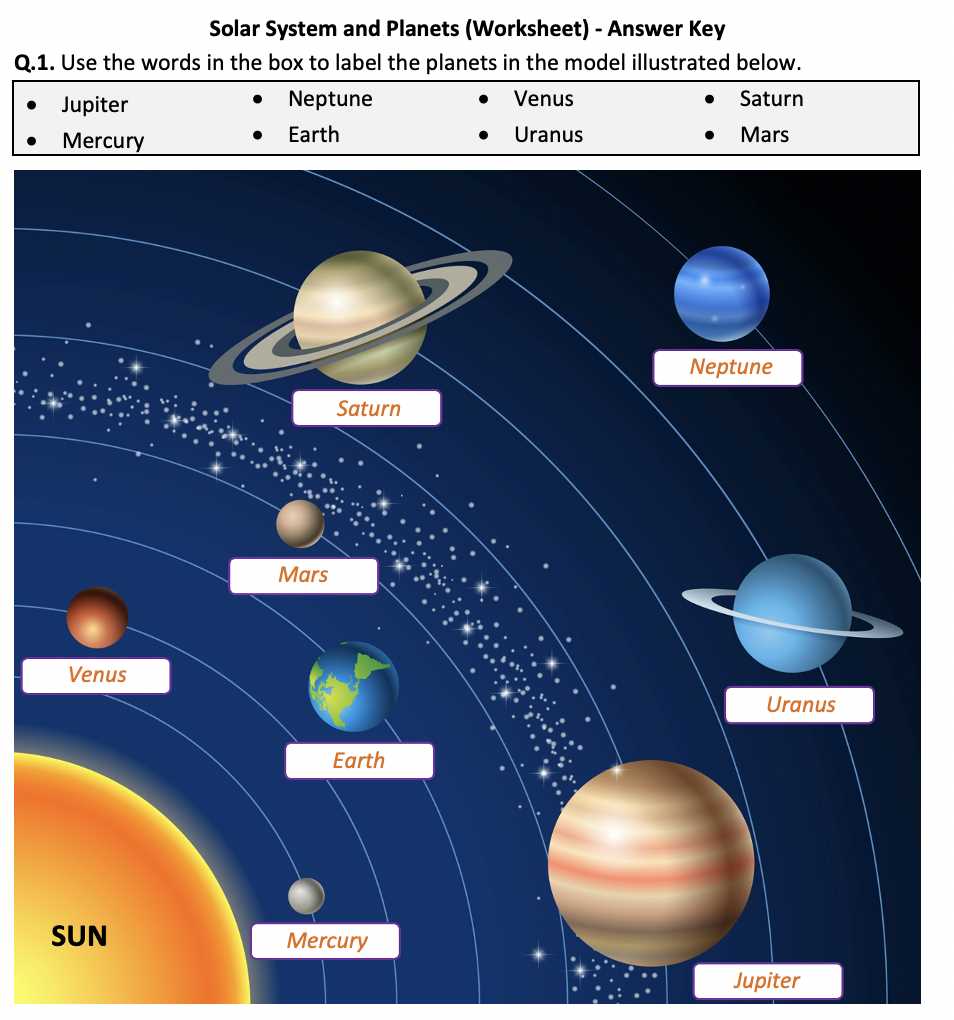
Focus on the planets’ characteristics: Begin by reviewing key details about each planet in our celestial neighborhood. Remember that each one has distinct attributes such as size, atmosphere, distance from the sun, and surface features. For instance, Mercury is the closest planet to the sun and has extreme temperature variations, while Jupiter is the largest with its signature storm, the Great Red Spot.
Pay attention to the order and grouping: Memorize the order of the planets from closest to furthest from the sun: Mercury, Venus, Earth, Mars, Jupiter, Saturn, Uranus, and Neptune. Group planets by their characteristics–terrestrial (rocky) planets such as Earth and Mars, and gas giants like Jupiter and Saturn.
Explore moons and other objects: Don’t forget the moons of various planets, like Earth’s Moon or Jupiter’s Ganymede, the largest moon in our solar system. Also, consider dwarf planets like Pluto and the Kuiper Belt objects, which are often part of discussions regarding our celestial system.