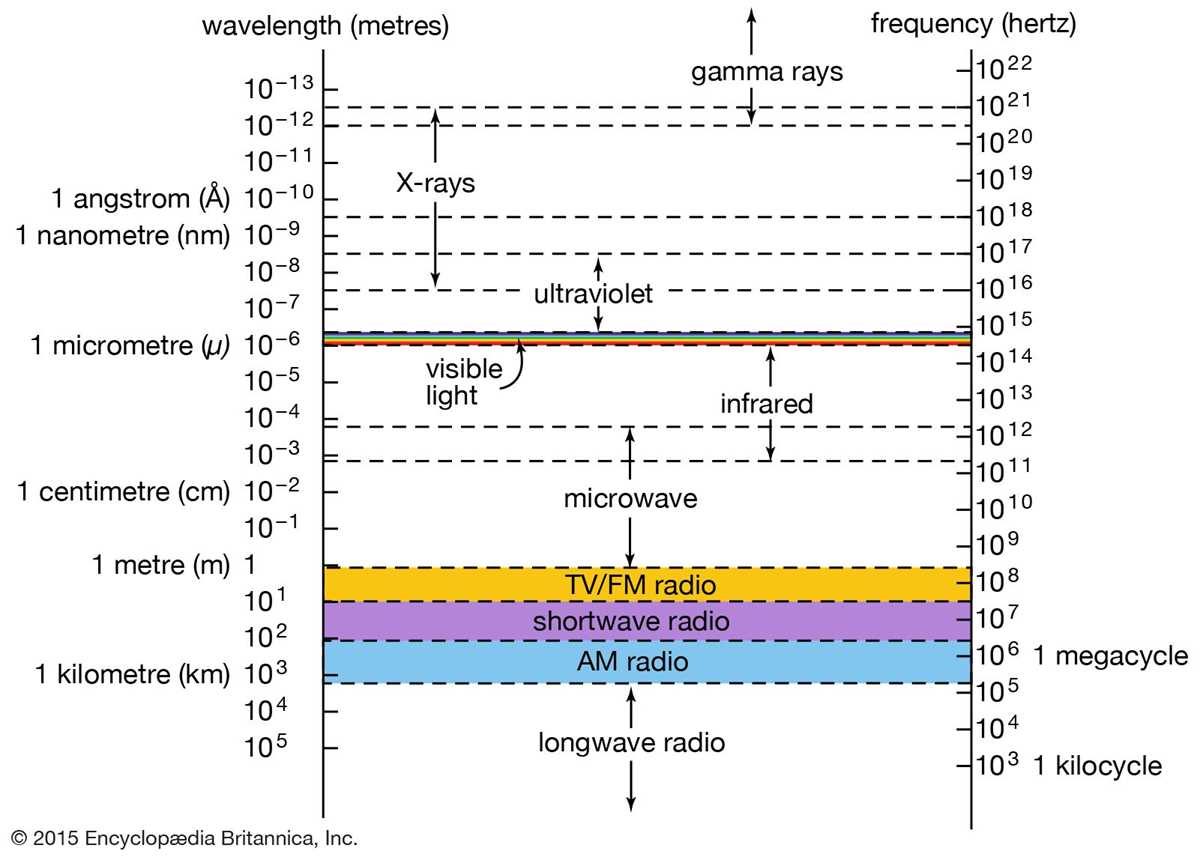
Review of the Light EM Spectrum and Solutions
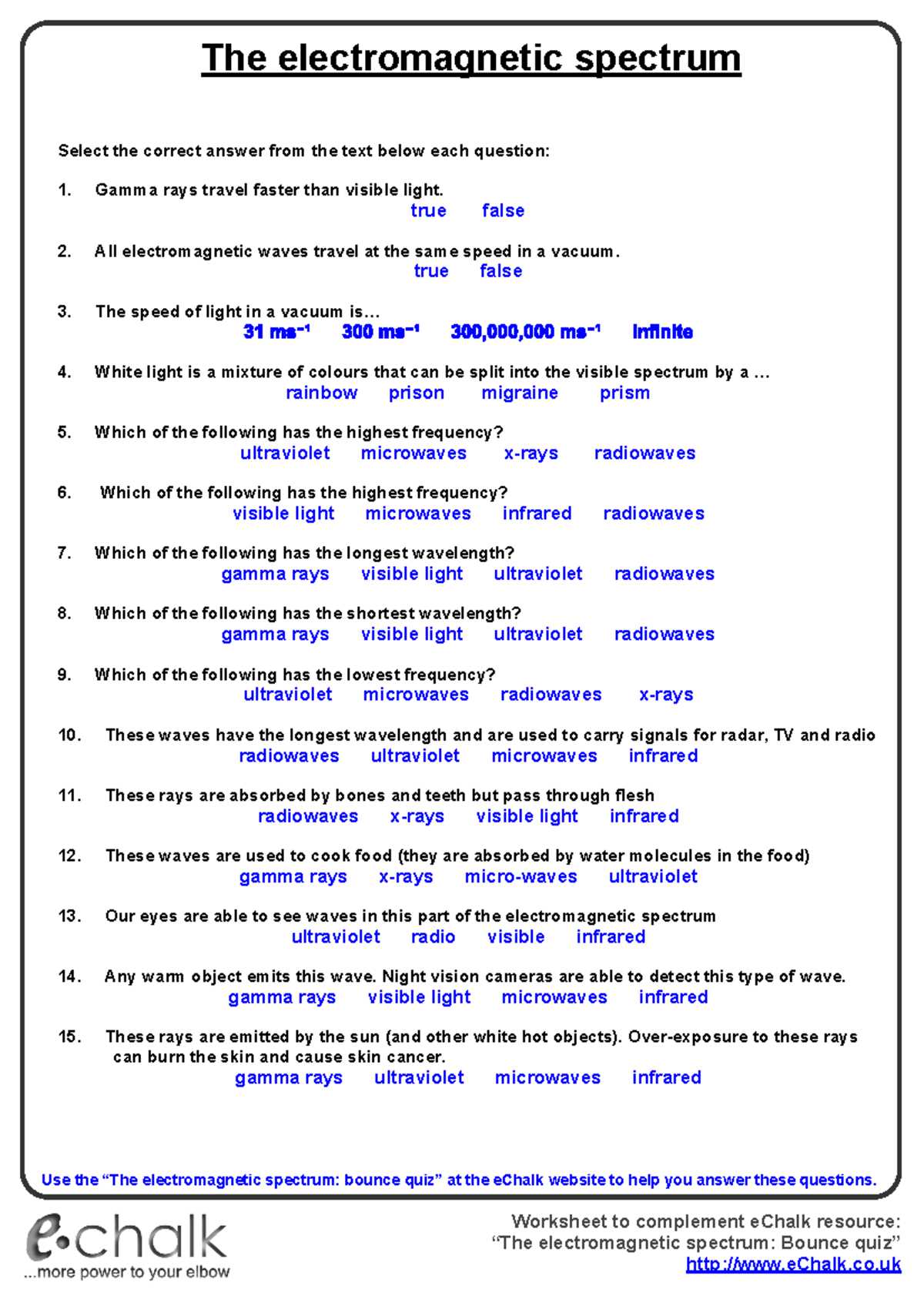
To analyze electromagnetic radiation, focus on key properties such as wavelength, frequency, and energy. These factors determine the behavior of waves across different regions. For instance, shorter wavelengths correspond to higher frequencies and greater energy, while longer wavelengths have lower frequencies and energy. Familiarize yourself with the formula E = h * f, where E is energy, h is Planck’s constant, and f is frequency. This is vital for understanding wave interactions with matter.
Next, focus on the organization of radiation types from radio waves to gamma rays. Each type has its own range of wavelengths and frequencies, which impact how they interact with various materials. Understanding these differences helps in fields like telecommunications, medical imaging, and astronomy.
To solve problems effectively, practice calculating frequency and energy values based on wavelength. Additionally, ensure you understand the relationships between different types of radiation, such as how ultraviolet waves have shorter wavelengths and higher energy than visible light. This knowledge is crucial for both theoretical studies and practical applications.