Understanding Relative Age Dating Methods and Techniques
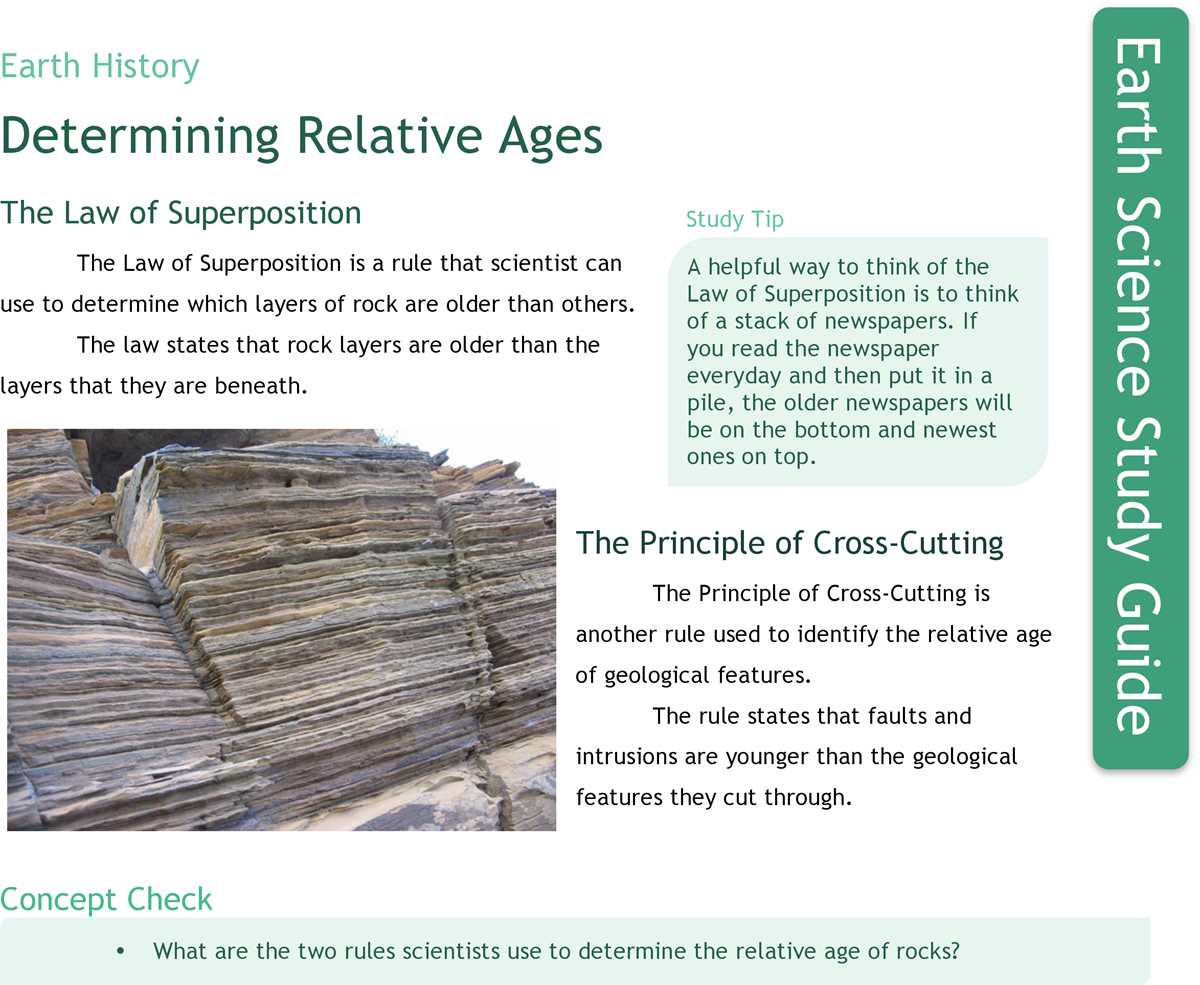
Start by identifying the different layers in rock formations to determine the sequence of events. This process helps in constructing a timeline of geological events. The key to successful analysis is recognizing patterns and applying established principles such as superposition, where older layers are found beneath younger ones. Knowing how to interpret these sequences is critical in understanding Earth’s history.
One effective strategy is to examine fossils within rock layers. Fossils can act as indicators of the relative time period in which the rock formed. In many cases, index fossils are used to define specific intervals of geologic time. These fossils are widespread, but only exist for a limited period, making them useful for correlating rocks of the same age across different regions.
When working with stratigraphy, always consider the principles of lateral continuity. This concept suggests that layers of sediment extend laterally until they thin out or encounter a barrier. By applying this principle, geologists can extend their understanding of the formation and age of distant rock layers, even if they are not immediately visible.