Writing and Graphing Inequalities Answer Key with Step-by-Step Solutions
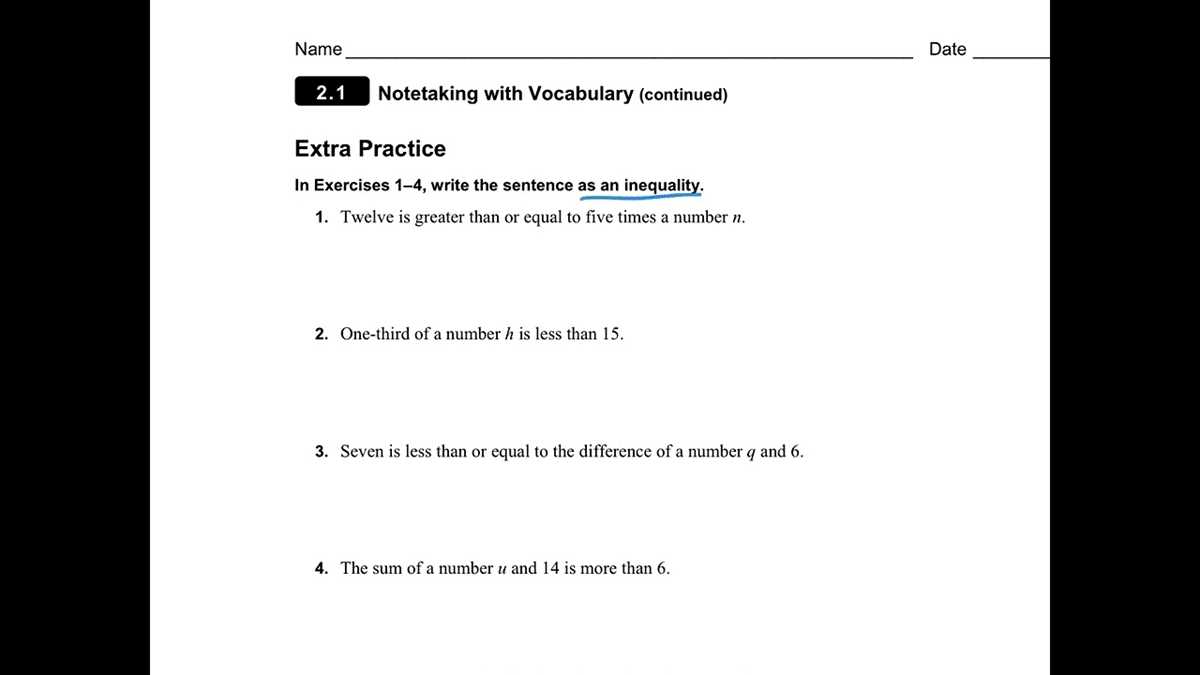
To begin, always identify the inequality symbol and the direction it represents. If you have something like “x
Next, isolate the variable on one side. If the expression is “2x + 3 ≤ 7,” subtract 3 from both sides to get “2x ≤ 4” and then divide by 2 to find “x ≤ 2.” This makes it easier to understand the range of solutions. Make sure to consider whether the variable is in a form that needs simplification or factoring to proceed.
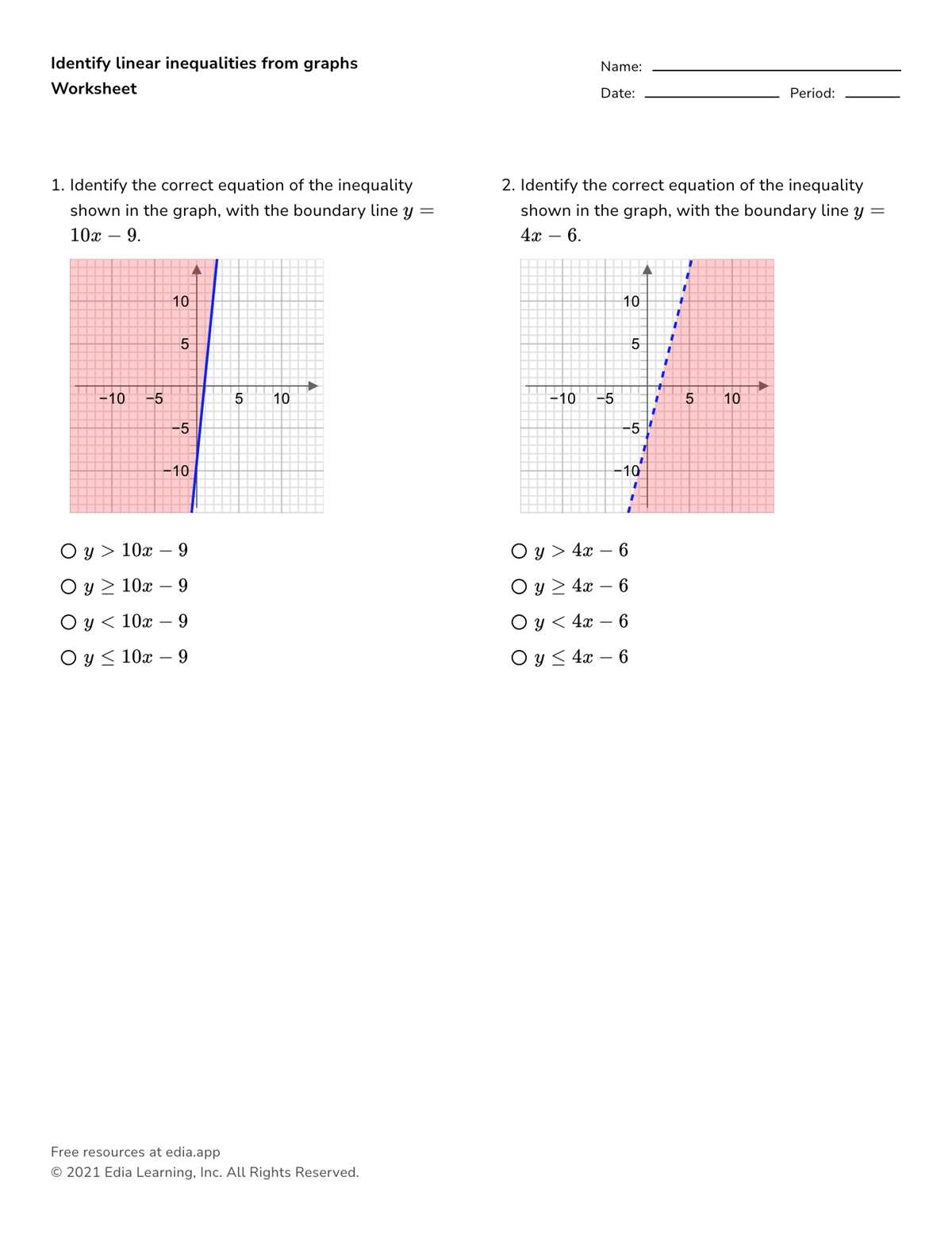
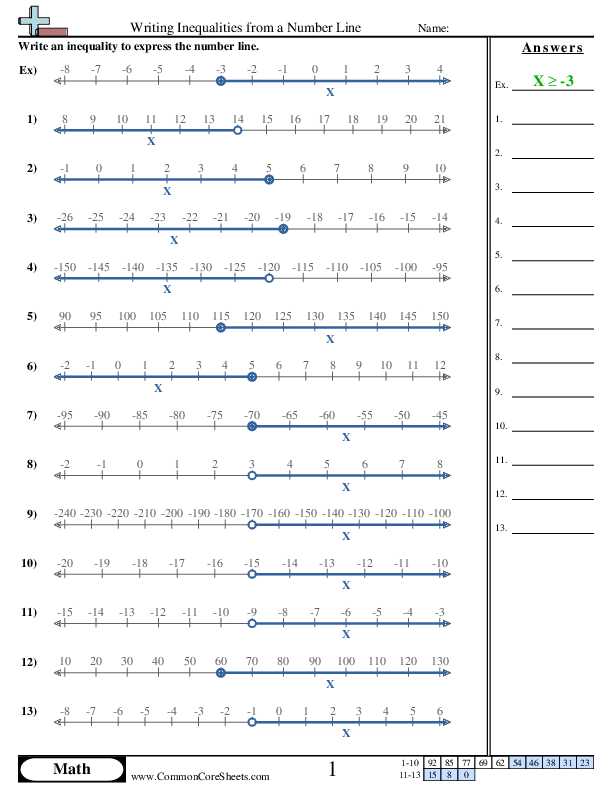
After solving, graph the solution set on a number line. Open or closed circles are used to represent whether a boundary value is included in the solution. A closed circle (filled in) means the number is part of the solution (for ≤ or ≥), while an open circle (unfilled) means the number is excluded (for ).
When dealing with compound statements, such as “x > 3 and x
Finally, review your work: Double-check your steps for accuracy, ensuring that each manipulation of the expression or graphing choice reflects the correct operation. Proper verification is critical in avoiding common errors like sign mistakes or incorrect boundary conditions.