Beowulf Viewing Guide with Detailed Answers and Analysis
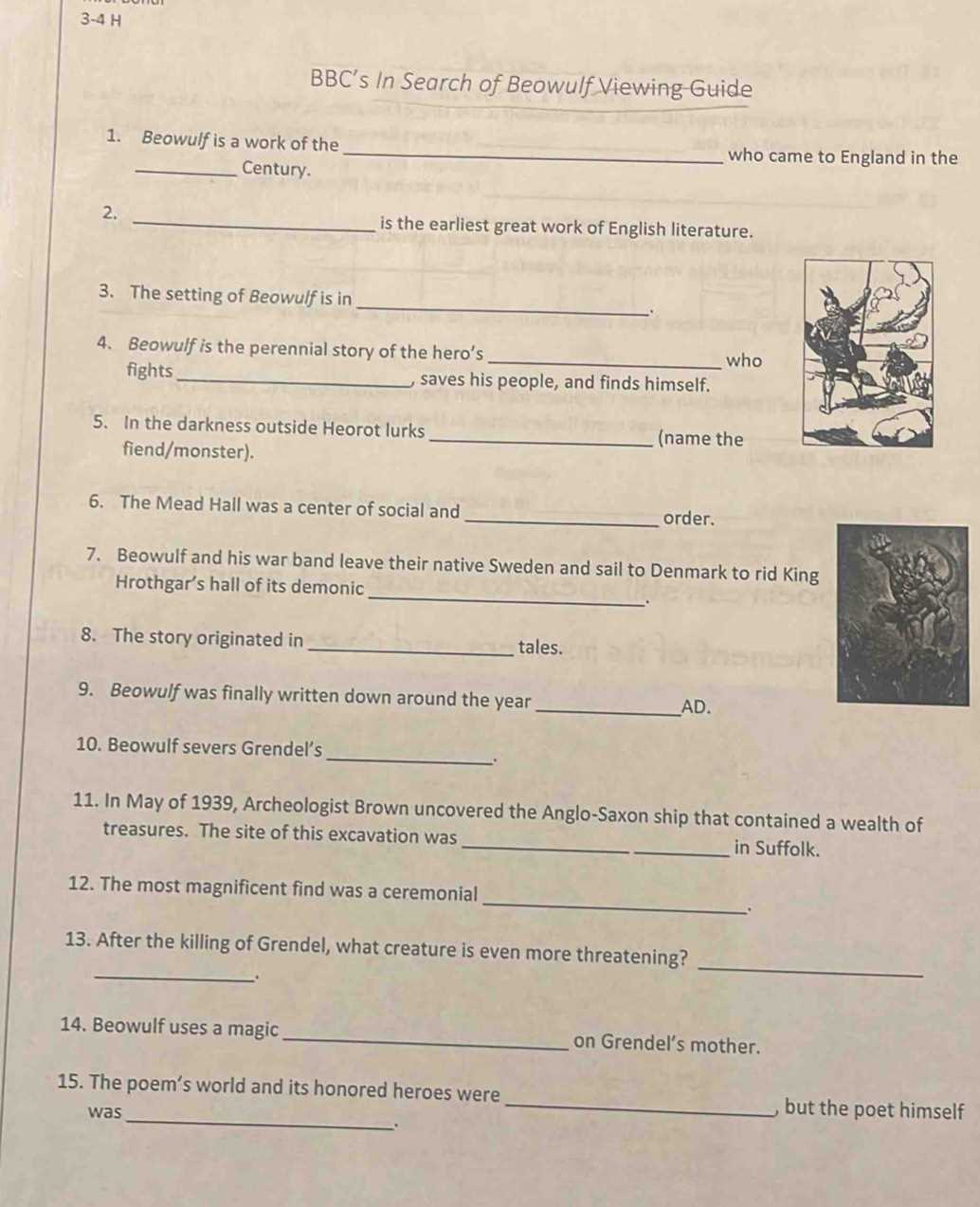
Focus on identifying the key characters in the film adaptation. Pay particular attention to the protagonist’s journey, including his relationships with the antagonists, such as Grendel, Grendel’s mother, and the dragon. Recognizing the heroes and villains helps to understand the narrative’s core and the character arcs.
Track how themes like heroism, fate, and mortality are visualized. These themes are central to the original text and are often highlighted through specific scenes or interactions in the movie. Understanding how the director portrays these elements provides deeper insight into the storyline’s broader messages.
Take note of the symbolic elements introduced in the film, such as the recurring motifs of blood, water, and fire. Each of these symbols enhances the understanding of the moral and philosophical undertones of the story. Keep track of how these motifs shift throughout the film to signal changes in the plot or character development.
Identify major conflicts and how they are represented visually. This includes both internal and external struggles that the protagonist faces. Consider how action scenes correlate with emotional or ethical dilemmas, which helps to connect the narrative’s symbolic power to its cinematic representation.
By focusing on these aspects, you can better understand how the director adapts the material to screen. Whether through visual effects, character design, or setting, the film transforms the original text into a new experience while maintaining key elements of the epic’s timeless narrative.
In-Depth Analysis of Key Scenes and Characters
Begin by examining the protagonist’s introduction. Focus on his heroic qualities and motivations, especially his desire to prove his strength. Pay attention to how this is portrayed in early scenes, such as his arrival at the kingdom and his willingness to confront Grendel.
Observe the development of the relationship between the hero and the antagonists. Specifically, watch how Grendel’s attack is depicted. Take note of the film’s visual effects and how they intensify the monster’s menacing presence. Notice the contrast between the hero’s calm demeanor and the monster’s primal aggression.
The interaction with Grendel’s mother provides insight into the protagonist’s internal conflict. Watch how the hero’s bravery is tested in this encounter. Consider the symbolic nature of the underwater setting and its connection to the themes of darkness, evil, and the unconscious mind.
Another key scene is the final confrontation with the dragon. Pay close attention to how the hero’s aging and mortality are emphasized through his physical limitations. This moment contrasts with his earlier victories, highlighting the inevitable nature of death and the fleeting nature of heroism.
Finally, evaluate how the themes of fate and destiny are portrayed throughout the narrative. Reflect on the significance of the protagonist’s actions, not just for personal glory, but as part of a larger cosmic order. This can be seen in the way the hero embraces his fate, regardless of the consequences.
Understanding the Key Characters in the Epic
Focus on the protagonist, who represents the ideal hero in the story. Examine his motivation for confronting monstrous enemies and how his strength and courage define him as a leader. His role as a warrior is not just for personal glory, but also for the protection of others.
Next, analyze Grendel, the antagonist, who embodies evil and chaos. Note his isolation and envy towards the human world. His attacks are driven by a deep resentment of humanity’s joy and social harmony, which he cannot be a part of. Observe the contrast between his destructive nature and the hero’s virtues.
Grendel’s mother adds complexity to the theme of vengeance. Unlike her son, she is driven by a more primal desire to protect her offspring, though her methods mirror his own. Watch for her symbolic role in the narrative as a representation of revenge and maternal instinct.
The dragon is another significant figure, representing greed and the destructive power of hoarding wealth. His final battle with the hero serves as a poignant reflection on the hero’s mortality. Pay attention to how the dragon’s death symbolizes the closing of an era for the protagonist.
Lastly, the character of Hrothgar, the king, serves as a mentor to the hero. He reflects wisdom and experience, offering advice on leadership, pride, and the inevitability of time. Study his role as a counterpoint to the protagonist’s youthful vigor, showing how age and wisdom bring a different perspective on heroism.
How to Analyze Beowulf’s Themes in the Movie
Focus on the central theme of heroism. Track the protagonist’s journey from a young warrior eager to prove his worth, to an older figure confronting his mortality. Pay attention to how his actions reflect the values of courage, loyalty, and honor.
Examine the theme of good versus evil. Observe how the antagonist characters–Grendel, his mother, and the dragon–embody pure evil, while the hero represents the forces of good. Look for moments that highlight the moral choices characters make, particularly in battle and leadership.
Consider the exploration of fate and destiny. The film portrays the hero’s struggle with the concept of fate, where his courage often seems to defy the predestined outcome of his battles. This tension reveals how characters navigate the idea of fate influencing their lives and choices.
Analyze the role of revenge in the narrative. Throughout the story, vengeance motivates several characters, especially Grendel’s mother. Pay attention to how revenge drives actions, and how it ultimately leads to cycles of violence that are difficult to break.
Reflect on the theme of mortality and legacy. The protagonist’s awareness of his eventual death shapes many of his decisions. The movie highlights his quest not only for victory but also for a lasting legacy, an important reflection of how cultures view the connection between life, death, and remembrance.
Identifying Symbolism and Motifs in Beowulf’s Story
One of the central symbols in the story is the hero’s armor. It represents both the physical protection that shields the protagonist from danger and the moral armor that protects his honor and reputation. When the armor is lost or damaged, it signifies a loss of strength or a challenge to the hero’s character.
Light and darkness are recurring motifs throughout the narrative. Light often represents goodness, purity, and the divine, while darkness is associated with evil, chaos, and destruction. The contrast is most evident in the battles with the creatures–Grendel, his mother, and the dragon–who emerge from dark, underwater lairs.
The motif of water is also key, symbolizing both life and death. The waters represent a boundary between the known and the unknown, often marking the passage from one phase of life to another. The hero’s underwater battle with Grendel’s mother, for instance, reflects the journey into the unknown and the need to face one’s fears.
Additionally, the sword is a recurring symbol. Weapons in the story are often imbued with greater meaning than mere tools of battle. The swords–like Hrunting and Nægling–symbolize the connection between the past and the present. They are tools of destiny and often hold symbolic power beyond their material strength.
To better understand these symbols and motifs, you can refer to academic sources like The Poetry Foundation for additional insights into the cultural and literary significance of these themes in Anglo-Saxon literature.
Breaking Down the Major Conflicts in Beowulf
The central conflict in the story revolves around the hero’s battle against three monstrous enemies: Grendel, Grendel’s mother, and the dragon. These creatures represent various forms of evil and chaos, each one posing a unique challenge to the protagonist.
Grendel symbolizes the first major obstacle, embodying pure malevolence. His attacks on the kingdom of the Danes highlight a conflict between civilization and barbarism. Grendel’s terror forces the people into a state of fear, prompting the hero’s intervention. The conflict with Grendel is not just physical; it represents the battle between light and darkness, good and evil.
The second conflict arises when the hero faces Grendel’s mother. Unlike Grendel, who attacks out of a desire for destruction, his mother seeks vengeance for her son’s death. This shift from a purely destructive force to one driven by personal grief deepens the moral complexity of the narrative. The battle in the dark waters of her lair emphasizes the theme of facing the unknown and the depths of human struggle.
The final confrontation with the dragon marks the culmination of the hero’s journey and symbolizes the inevitable clash with death. Unlike his previous victories, this fight is not just about defeating an external enemy but also confronting mortality and the passing of time. The dragon represents a force that even the mightiest hero cannot overcome indefinitely, signaling the tragic reality of human limitations.
These conflicts are not merely physical; they reflect the inner struggles of the characters and the values of their culture. Each battle represents a challenge to the hero’s honor, strength, and legacy, and they ultimately point to the fragility of life and the inevitability of death.
How the Visual Adaptation of Beowulf Enhances the Narrative
The visual representation of this ancient tale significantly intensifies the emotional impact and narrative depth. By utilizing modern film techniques, the adaptation brings the epic battles, vast landscapes, and supernatural elements to life in a way that written text alone cannot fully achieve.
Key scenes, such as the confrontations with the monsters, are visually heightened through special effects. The grotesque appearance of Grendel and his mother, as well as the imposing dragon, are brought to the screen in a way that heightens their threat and embodies the terror that the characters feel. This visual aspect creates an immediate connection between the audience and the danger, allowing viewers to experience the tension and intensity firsthand.
The dark, ominous settings, like the underwater lair of Grendel’s mother, are visually captivating and represent the unknown and the forces of evil. The use of shadow, contrast, and eerie lighting in these scenes emphasizes the danger the characters face and the isolation of their struggle. These visual elements make the mythical world tangible, adding layers of meaning to the original text.
Moreover, the portrayal of the hero’s journey is enhanced through the use of cinematography. The epic scale of the landscapes, from the majestic mead halls to the desolate wilderness, reflects the vastness of the hero’s world and the monumental nature of his quests. The camera work allows viewers to feel the immensity of the settings, adding to the mythic quality of the narrative.
By combining visual effects, lighting, and cinematography, the adaptation not only tells the story but amplifies its themes–honor, courage, fate, and the inevitability of death. The visual language allows for deeper exploration of these themes, giving the audience a richer understanding of the narrative’s emotional and philosophical weight.
Key Moments in Beowulf’s Hero’s Journey Explained
The hero’s departure is marked by his decision to leave his homeland and venture into foreign territory to confront unknown threats. This act of leaving represents a transition from the ordinary world to a world filled with challenges and dangers.
The first major conflict arises with the battle against Grendel. This moment signifies the hero’s crossing of the threshold into a realm where his strength and courage are put to the ultimate test. Defeating the monster without weapons shows his commitment to a heroic code of honor.
After overcoming Grendel, the hero faces a greater challenge–the monstrous mother. This battle represents the next stage of his transformation, where he moves from confronting physical threats to dealing with deeper, more symbolic forces, like vengeance and justice.
The descent into the underwater lair is another pivotal moment in the hero’s journey. It symbolizes the hero’s willingness to face not just external threats, but also the darker aspects of himself and the world. The confrontation with the mother is a test of his resolve and capacity for endurance.
The final battle with the dragon brings the hero full circle. As an older, wiser man, he faces a foe that threatens his kingdom. This moment reflects the hero’s acceptance of his mortality, as well as the inevitable end that all heroes face. It also marks the culmination of his transformation, where his deeds and sacrifices define his legacy.
These moments, spread throughout the narrative, highlight the various stages of growth and personal transformation, from initial hesitation to the acceptance of one’s fate. They embody the universal journey of struggle, triumph, and ultimate sacrifice that characterizes the classic hero’s path.
Understanding the Role of the Supernatural in Beowulf
The supernatural plays a significant role in the narrative, influencing the hero’s journey and shaping the challenges he faces. From the monstrous creatures to magical elements, the presence of supernatural forces is not just a backdrop but a key aspect of the story’s structure.
Grendel and his mother embody primal, otherworldly threats that transcend human experience. Their monstrous nature connects them to dark, supernatural forces, often seen as embodiments of chaos or evil. Their ability to withstand normal weapons and their near-mythical strength heighten their threat to the kingdom, representing a challenge beyond human capabilities.
The hero’s strength and his eventual victory over these creatures indicate that the boundaries between the natural and supernatural are fluid. The forces that seem unbeatable at first are eventually overcome, suggesting a world where the human hero’s courage and will can triumph over dark, supernatural power.
The dragon, the final adversary, also introduces a supernatural element that signifies an existential threat not just to the hero, but to the entire kingdom. Its treasure hoard, guarded fiercely, represents the allure of greed and the corrupting influence of wealth, which in the story are shown to have supernatural effects–both corrupting and destructively powerful.
These supernatural encounters are symbolic of deeper themes such as fate, the inevitability of death, and the struggle between good and evil. They give the narrative its mythic qualities, underscoring the hero’s journey as one that deals with forces beyond the natural world, emphasizing the hero’s role as both a physical and symbolic figure in the ongoing battle between order and chaos.
How to Connect Beowulf’s Movie Representation with the Text
To bridge the gap between the movie adaptation and the original text, focus on key scenes and themes. Compare how the film interprets major events, such as the battle with Grendel, and note any alterations to the narrative. Examine the portrayal of the hero, especially how his motivations and actions differ between the written work and the cinematic version.
Consider how the movie’s visual elements enhance or change the depiction of supernatural forces. While the text presents these as symbols of chaos, the film often relies on visual effects to emphasize their otherworldliness. Identify specific moments where this difference in medium either strengthens or detracts from the thematic depth of the original text.
Next, look at the relationships between characters. In the film, some interactions are either added or modified for dramatic effect, which might alter the dynamics between figures like the hero and his adversaries. Compare these changes with the original text to understand how the film prioritizes certain character traits or themes over others.
Lastly, analyze the film’s ending. Often, cinematic adaptations condense or modify endings to provide closure in a more concise manner. Assess how the movie’s conclusion reflects or deviates from the text’s portrayal of fate, heroism, and death. This will help you see where the film keeps the core themes intact or where creative liberties were taken.