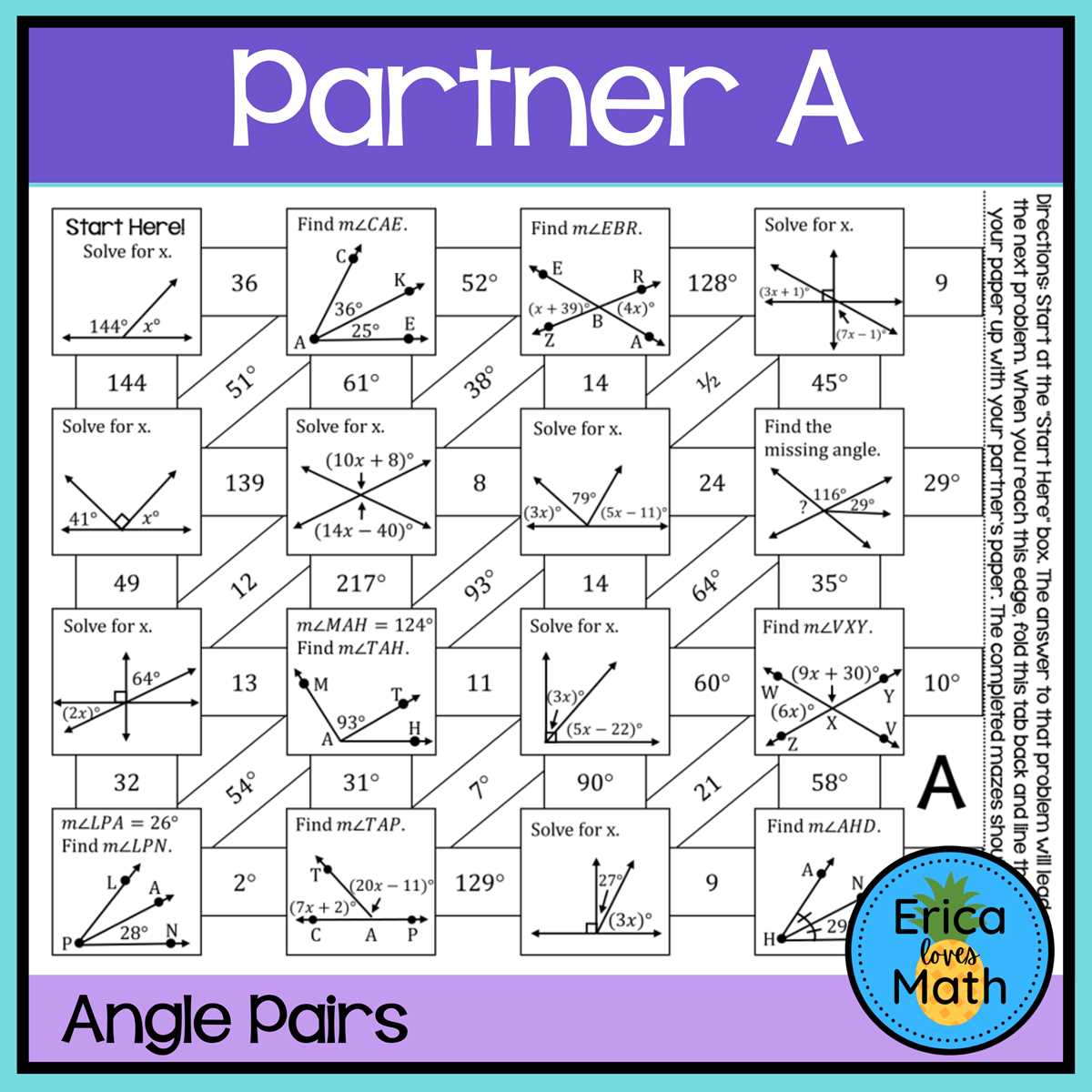
Solution Guide for Algebra Angle Relationship Puzzle
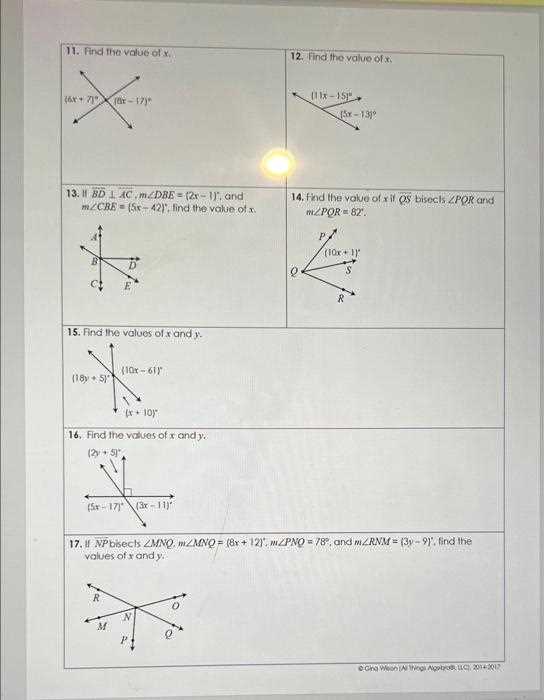
To solve problems involving angles formed by intersecting lines, start by identifying key angle types like complementary, supplementary, vertical, and corresponding angles. Recognizing these relationships will allow you to apply basic geometric principles effectively.
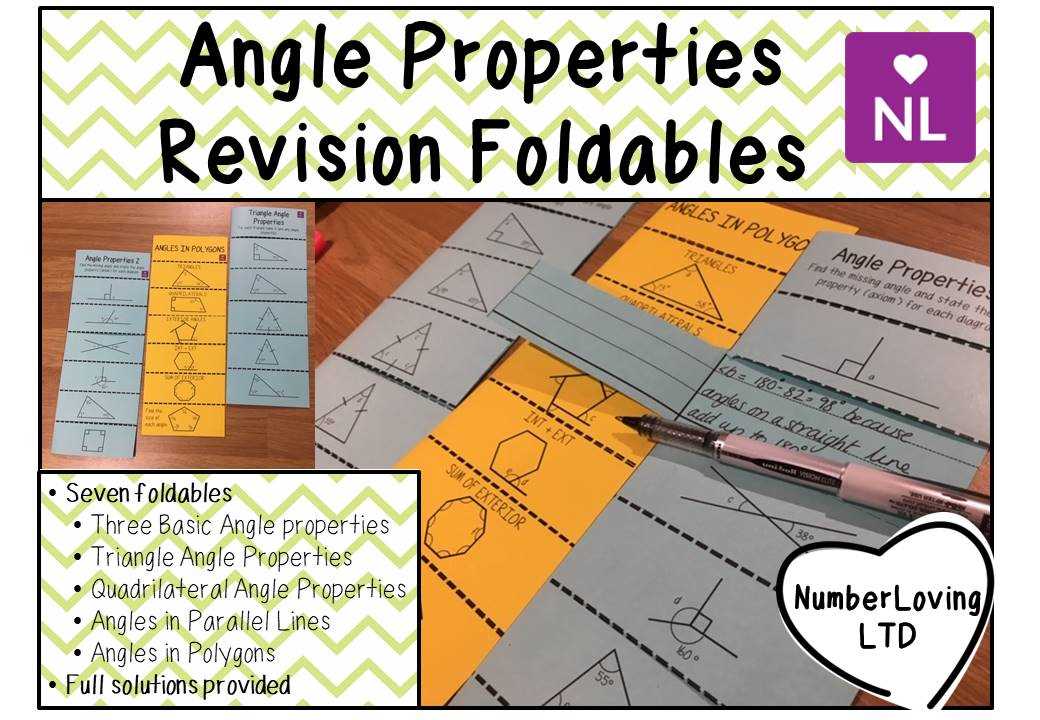
For instance, if two lines intersect, vertical angles are congruent, meaning they have equal measures. Complementary angles add up to 90 degrees, while supplementary angles total 180 degrees. These simple rules will guide you through most basic angle calculations.
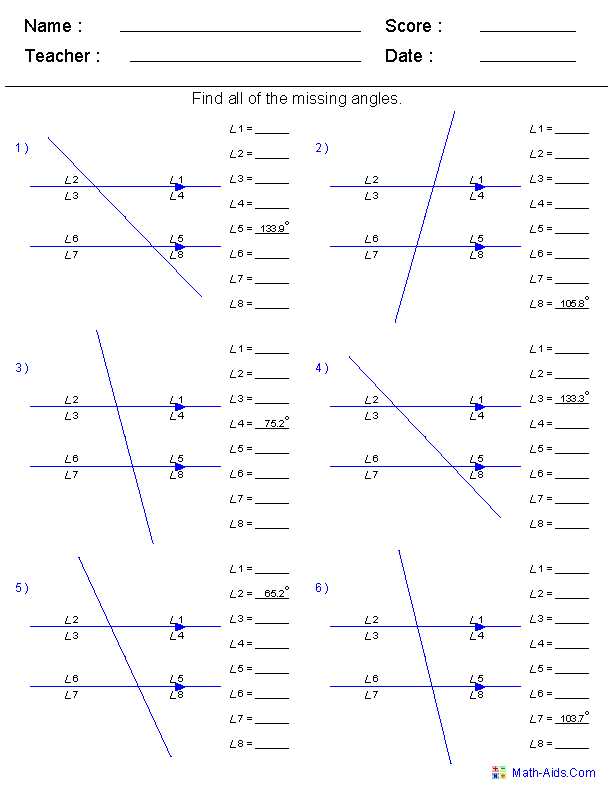
In problems where multiple lines or transversals are involved, labeling the angles clearly can help simplify the process. Once labeled, applying the rules of parallel lines and corresponding angles will lead to faster solutions. Always double-check that your angle sums align with known geometric formulas.