Algebra 1 Unit 2 Solutions and Step by Step Explanations
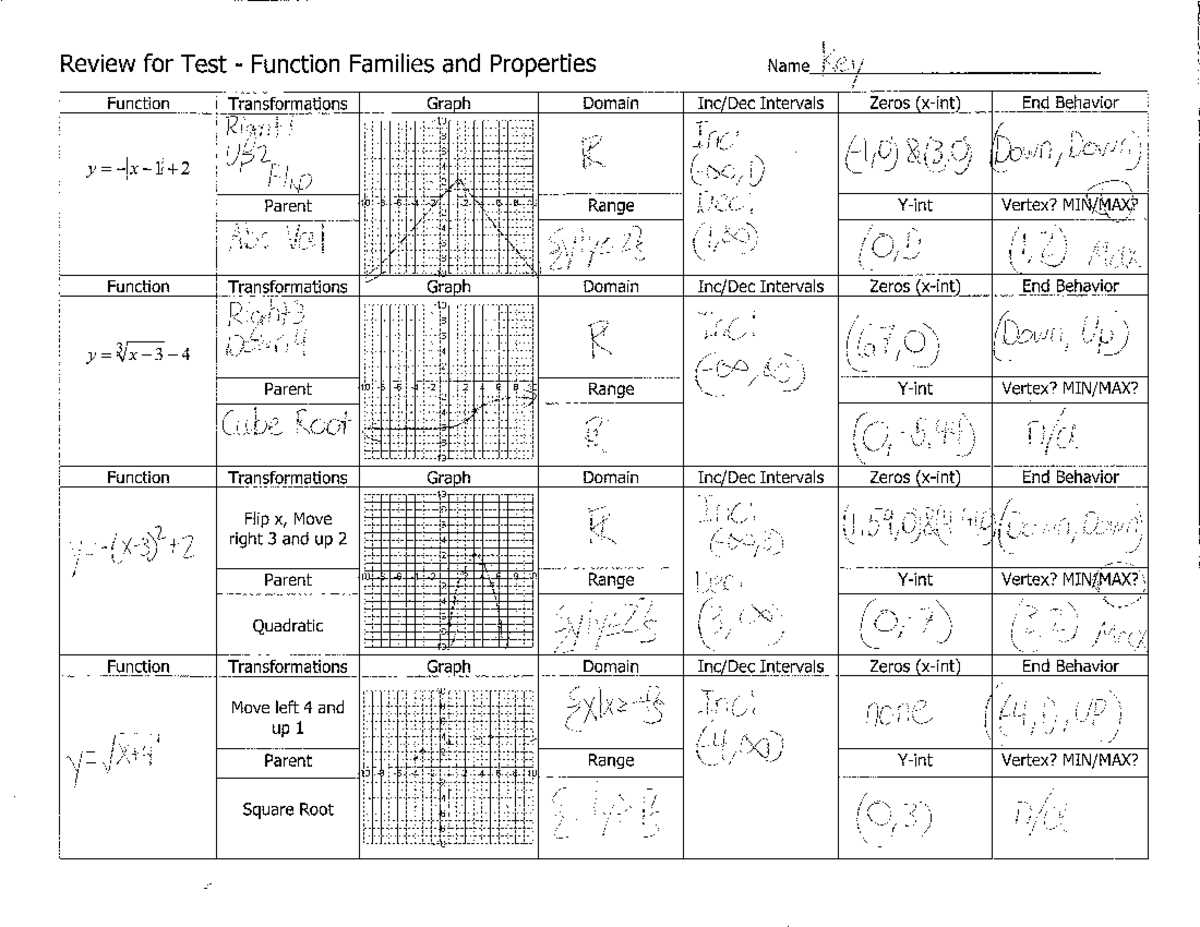
To solve linear equations accurately, begin by isolating the variable on one side. This technique will allow you to simplify the equation and identify the correct solution. Ensure each step follows proper order: start with eliminating parentheses, combine like terms, and then apply inverse operations to isolate the variable.
When working with graphing, pay close attention to the slope and y-intercept. The slope determines the steepness of the line, and the y-intercept tells you where the line crosses the y-axis. By accurately plotting these points, you can visualize the relationship between the variables and verify your solutions.
If you encounter a system of equations, one useful approach is substitution. By solving one equation for a variable and substituting that expression into the second equation, you can find the solution. Make sure to check the solution by plugging it back into the original equations to confirm accuracy.
Lastly, practice solving word problems by translating the given situation into a mathematical expression. Carefully define variables and create equations based on the problem description. Work through the problem step by step, and always double-check the final solution for correctness.
Solving Linear Equations and Graphing Techniques
To solve linear equations, begin by isolating the variable. Start by removing any parentheses, combining like terms, and simplifying both sides of the equation. Next, apply inverse operations to isolate the variable. For example, in the equation 2x + 4 = 12, subtract 4 from both sides to get 2x = 8, then divide both sides by 2 to get x = 4.
Graphing these equations requires plotting the points determined by the equation’s slope and y-intercept. For the equation y = 2x + 3, the slope is 2 and the y-intercept is 3. Begin by plotting the point (0, 3) on the graph, then use the slope to find the next point. Since the slope is 2, for each unit you move to the right, move 2 units up. Plot the next point and draw a straight line through the points.
Solving Systems of Equations Using Substitution and Elimination
For systems of equations, you can use substitution or elimination methods to find the solution. In the substitution method, solve one equation for a variable and substitute that value into the other equation. For example, if you have the system:
x + y = 10
x - y = 4
First, solve the second equation for x: x = y + 4. Then substitute this into the first equation:
(y + 4) + y = 10
2y + 4 = 10
2y = 6
y = 3
Now substitute y = 3 back into the equation x = y + 4 to find x = 7. The solution is (7, 3).
Understanding Word Problems and Translating to Equations
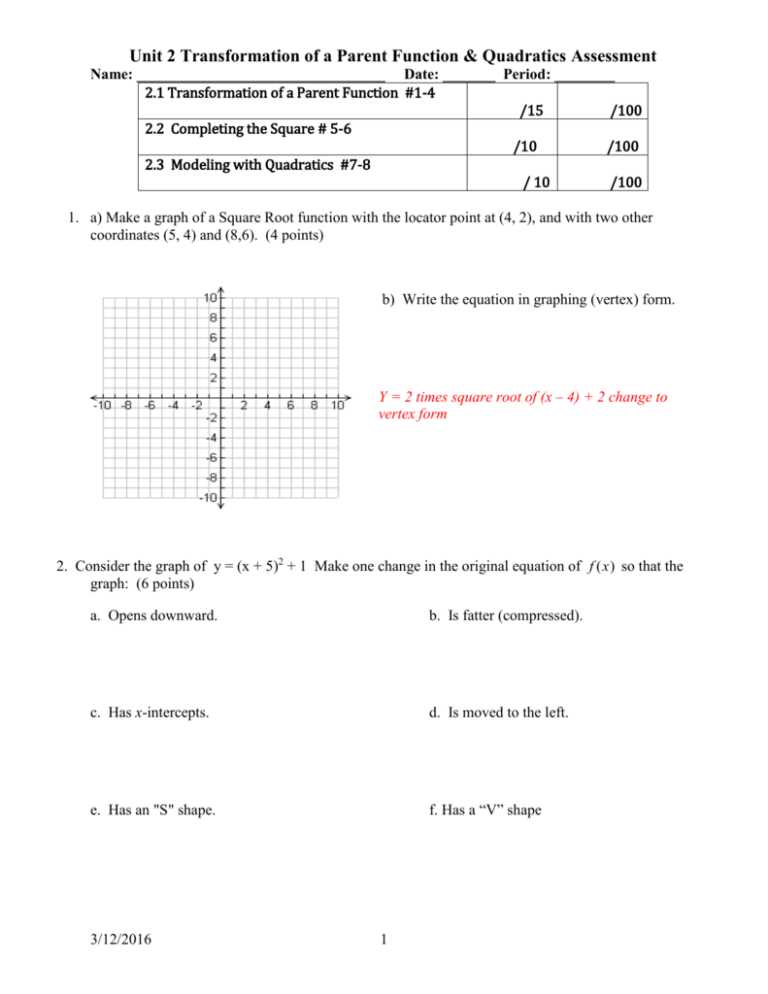
When solving word problems, the key is to translate the given information into mathematical expressions. For example, if a problem says, “The sum of a number and 5 is 12,” translate it to the equation x + 5 = 12. Then solve for x to find the value of the number:
x + 5 = 12
x = 7
For more complex word problems, break down the information step by step. Identify the unknowns, define the variables, and write equations that represent the relationships described in the problem. Then, solve as you would for a typical algebraic equation.
Graphing Systems of Equations
Graphing a system of equations involves plotting the lines represented by each equation on the same graph. For instance, given the system:
y = 2x + 1
y = -x + 4
Plot both lines on a graph. The point where they intersect is the solution to the system. For the above equations, the lines intersect at (1, 3), so the solution is x = 1 and y = 3.
Identifying and Solving Special Cases
Sometimes, systems of equations will have special cases. If the lines are parallel, there is no solution. If the lines overlap, there are infinitely many solutions. For example, if you have the system:
x + y = 5
2x + 2y = 10
The second equation is just a multiple of the first, meaning the lines are the same. In this case, the system has infinitely many solutions, since any point on the line is a solution.
Using Inequalities in Equations
Inequalities are similar to equations but use symbols like greater than (>) and less than (
-2x + 4 > 10 -2x > 6 xChecking Your Work with Substitution and Graphing
Once you have solved an equation or system, always check your work. You can substitute your solution back into the original equation to ensure it satisfies the equation. Alternatively, you can graph the equation or system to visually confirm that the solution is correct.
Additional Resources for Practice and Understanding
For more practice and explanations, visit reliable educational platforms such as Khan Academy for interactive lessons and exercises on linear equations and systems. This will provide additional support as you build a deeper understanding of solving and graphing equations.
How to Solve Linear Equations in Unit 2
To solve a linear equation, the goal is to isolate the variable on one side of the equation. Start by simplifying both sides: combine like terms and eliminate any parentheses. For example, in the equation 3x + 5 = 14, subtract 5 from both sides to get 3x = 9. Then, divide both sides by 3 to isolate x = 3.
If the equation involves fractions, multiply both sides by the denominator to eliminate the fraction. For example, in the equation 1/2x = 4, multiply both sides by 2 to get x = 8.
If the equation has variables on both sides, start by moving all the variable terms to one side of the equation and constant terms to the other side. For example, in 5x + 2 = 3x - 6, subtract 3x from both sides to get 2x + 2 = -6. Then subtract 2 from both sides to get 2x = -8, and finally divide by 2 to get x = -4.
In some cases, you may need to apply the distributive property to remove parentheses. For example, in 2(x + 3) = 14, distribute the 2 to get 2x + 6 = 14, then proceed with the usual steps of isolating the variable.
Always check your solution by substituting the value of the variable back into the original equation to ensure it satisfies both sides.
Understanding the Concept of Slopes and Intercepts
The slope of a line represents how steep the line is. It is calculated as the ratio of the vertical change to the horizontal change between two points on the line. In the formula y = mx + b, m is the slope. To calculate the slope, use the formula:
- m = (y2 – y1) / (x2 – x1)
Where (x1, y1) and (x2, y2) are two points on the line. The slope tells you whether the line rises (positive slope) or falls (negative slope) as it moves from left to right.
The intercept is the point where the line crosses the axis. There are two types of intercepts: the y-intercept and the x-intercept. The y-intercept is where the line crosses the y-axis, and it is represented by b in the equation y = mx + b. The x-intercept is where the line crosses the x-axis, and it is found by setting y = 0 and solving for x.
For example, for the equation y = 2x + 3, the slope is 2, and the y-intercept is 3. To find the x-intercept, set y = 0: 0 = 2x + 3, which simplifies to x = -3/2.
Steps to Solve Systems of Equations
To solve a system of equations, follow these steps:
- Identify the system of equations: A system consists of two or more equations with the same variables. For example:
x + y = 6
2x - y = 3
In this case, the variables are x and y, and you need to find their values that satisfy both equations.
- Choose a method to solve the system: You can solve systems using substitution, elimination, or graphing. Each method has its strengths depending on the situation.
Substitution Method:
– Solve one equation for one variable.
– Substitute the expression into the other equation.
– Solve for the remaining variable.
– Substitute back to find the first variable.
For the example above, solve the first equation for y: y = 6 – x. Then substitute this into the second equation:
2x - (6 - x) = 3
Now solve for x:
2x - 6 + x = 3
3x = 9
x = 3
Now substitute x = 3 into y = 6 – x to find y:
y = 6 - 3
y = 3
The solution is x = 3 and y = 3.
- Verify your solution: Substitute the values of x and y into both original equations to confirm they satisfy both.
For this system:
x + y = 6 ⟶ 3 + 3 = 6 (True)
2x - y = 3 ⟶ 2(3) - 3 = 3 (True)
The solution is correct. Both equations are satisfied by x = 3 and y = 3.
- Consider other methods for verification: If you used substitution, try using elimination or graphing to confirm the solution is consistent.
Common Mistakes When Solving Linear Inequalities
One common mistake is forgetting to reverse the inequality sign when multiplying or dividing by a negative number. For example, in the inequality:
-3x > 9
If you divide both sides by -3, the inequality should flip, becoming:
xFailure to reverse the inequality sign leads to an incorrect solution.
Another mistake occurs when dealing with inequalities that involve fractions. It’s easy to forget to multiply both the numerator and the denominator by the same value when clearing fractions. For example:
1/2x - 3To eliminate the fraction, multiply through by 2:
x - 6Neglecting to multiply both parts by 2 results in incorrect simplification.
In addition, misinterpreting the graph of the solution can lead to errors. Remember that open circles represent strict inequalities (e.g., < or >), while closed circles represent non-strict inequalities (e.g., ≤ or ≥).
Lastly, not checking the solution by substituting back into the original inequality can lead to overlooking errors. Always substitute your final solution back to ensure it satisfies the inequality.
Using Graphing to Find Solutions to Equations
Graphing is an effective method to find solutions to equations, especially when dealing with linear relationships. Begin by rearranging the equation into slope-intercept form (y = mx + b), where m represents the slope and b is the y-intercept. This form makes it easy to plot the equation on a coordinate plane.
To graph the equation, start by plotting the y-intercept on the y-axis. Then, use the slope to determine the next points. The slope m is written as a fraction (rise over run), indicating how much to move up/down and left/right from each point. For example, a slope of 2/3 means rise 2 units up and run 3 units to the right.
After plotting at least two points, draw a straight line through them. The solution to the equation will be all the points along the line, which represent the values of x and y that satisfy the equation.
If solving a system of equations, graph both equations on the same set of axes. The point where the two lines intersect is the solution to the system. If the lines are parallel, there is no solution. If the lines coincide, there are infinitely many solutions.
Graphing provides a visual representation of solutions and can help you quickly verify whether your results are correct.
How to Check Your Solutions in Unit 2
To verify the accuracy of your solutions, follow these steps:
- Substitute the values of x and y back into the original equation. This ensures that both sides of the equation are equal.
- For linear equations, check if the points lie on the graph. If your solution is correct, it should match the corresponding point on the line.
- If solving a system, substitute the values into both equations. The solution should satisfy both equations simultaneously.
- For inequalities, test your solution by picking a point that satisfies the inequality. The result should make the inequality true.
- Use inverse operations to double-check your steps. Reversing the order of operations can reveal any errors made during simplification.
By following these methods, you can be confident that your solutions are correct and consistent with the equations.
Tips for Mastering Word Problems in Unit 2
To solve word problems efficiently, follow these steps:
- Read carefully: Break down the problem by identifying key information such as variables, constants, and relationships.
- Define variables: Assign a letter (e.g., x) to represent unknowns. This simplifies the problem and helps to translate it into an equation.
- Set up the equation: Translate the relationships from the problem into a mathematical equation. Pay attention to phrases like “more than,” “less than,” and “total,” which indicate operations.
- Show your work: Step through each part of the equation, and don’t skip any steps. This ensures accuracy and makes it easier to spot mistakes.
- Check units: If the problem involves measurements, ensure that all units match and that conversions are done correctly.
- Double-check: Once you find a solution, substitute it back into the problem to ensure it makes sense within the context of the word problem.
By following these steps, you can increase accuracy and reduce errors when solving word problems in math.
Resources for Extra Practice on Unit 2 Topics
To strengthen your understanding of the concepts in this section, try using the following resources:
- Khan Academy: Offers detailed lessons and practice exercises on solving equations, slopes, and intercepts. Visit Khan Academy Math.
- IXL Learning: Provides targeted practice problems for a range of math topics. Access it at IXL.
- Wolfram Alpha: Use this tool to check your solutions and explore step-by-step solutions. Visit Wolfram Alpha.
- Mathway: A problem solver that offers detailed steps for equations and inequalities. Check it out at Mathway.
- Paul’s Online Math Notes: This website offers comprehensive notes and practice problems with solutions. Visit Paul’s Math Notes.
These resources offer various formats, from video tutorials to interactive problem-solving tools, helping you gain mastery in solving equations, inequalities, and more.