Understanding Cell Structure and Function with Detailed Solutions
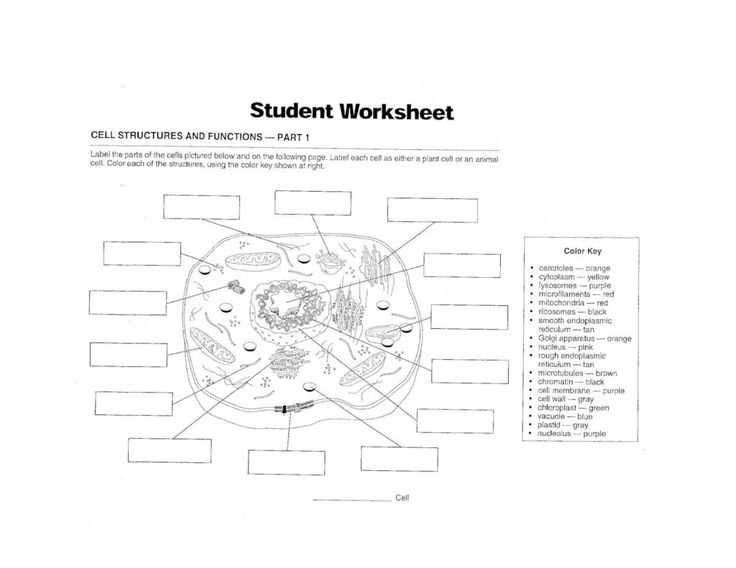
Understanding the components of living organisms is critical for mastering biological sciences. Begin by identifying key parts that make up the fundamental unit of life. Each part of the organism plays a distinct role that contributes to its overall health and function. For example, the membrane controls what enters and exits, while the nucleus stores and regulates genetic material.
After recognizing the basic components, focus on how each of these elements interacts within the biological system. Mitochondria generate energy, ribosomes synthesize proteins, and the endoplasmic reticulum is involved in the transport of molecules. A deep understanding of these processes is crucial for solving complex problems related to biology.
By applying these concepts to practical examples, you will gain a clearer picture of how cellular activities occur on a molecular level. These activities are interconnected, and even small changes in one component can significantly affect the overall organism’s health and functioning. Mastering these principles will serve as a solid foundation for further exploration into more advanced topics.
Understanding Cellular Components and Their Roles with Detailed Solutions
Focus on the role of the membrane, which separates the interior of the organism from the external environment. It is responsible for regulating the movement of substances in and out, maintaining homeostasis. The phospholipid bilayer structure allows selective permeability, ensuring that only specific molecules can cross.
The nucleus is the control center. It houses the genetic material in the form of DNA and is the site where transcription occurs, resulting in messenger RNA that guides protein synthesis. The nuclear envelope protects the nucleus, while nuclear pores regulate the exchange of materials between the nucleus and the cytoplasm.
Consider the mitochondria, which generate ATP through cellular respiration. They are often referred to as the powerhouse of the cell due to their role in energy production. Their double membrane structure maximizes the efficiency of energy production by creating an internal compartmentalized environment.
The rough endoplasmic reticulum is responsible for protein synthesis. It is studded with ribosomes, which carry out translation of mRNA into proteins. After synthesis, proteins are transported to the Golgi apparatus for further modification and sorting.
In the cytoplasm, the cytoskeleton provides structural support and facilitates intracellular transport. Composed of microtubules, intermediate filaments, and microfilaments, it helps maintain the cell’s shape and enables movement of organelles within the cell.
To solidify understanding, solving practice problems that involve identifying and explaining the roles of these components will deepen your knowledge. For example, identify the effect of a malfunctioning mitochondrion on cellular processes or the consequences of a defective membrane protein in transporting ions. These types of problems will help you connect theoretical knowledge to real-world applications.
Identifying Key Components of a Cell’s Composition
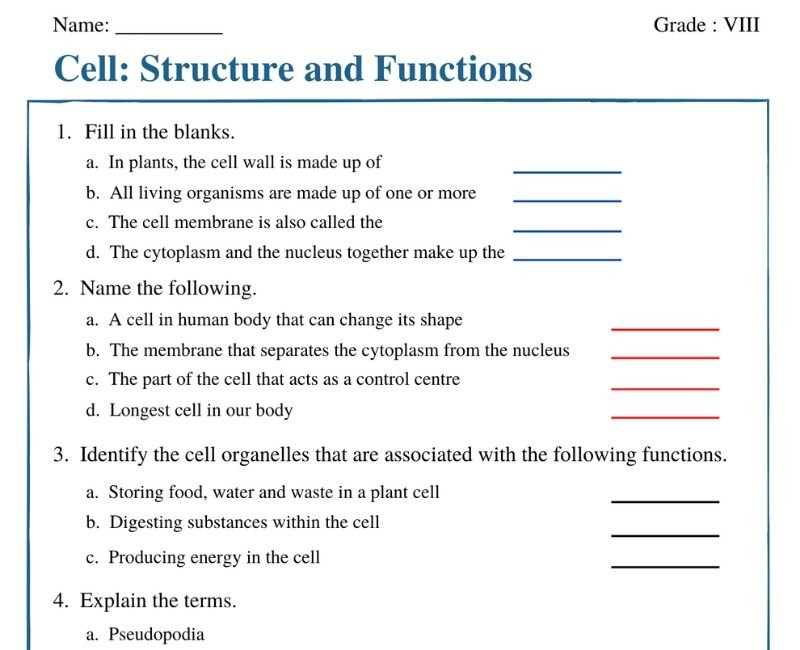
The membrane is the first barrier between the internal environment and the external world. It regulates which molecules enter and exit, maintaining the internal balance of the organism. Understanding its selective permeability is crucial for studying cellular processes.
The nucleus, often referred to as the control center, contains the genetic material and governs cellular activities like growth and reproduction. It coordinates gene expression and directs protein synthesis through messenger RNA.
Mitochondria are involved in energy production. These organelles generate ATP via cellular respiration, providing the cell with energy for various functions. Their double-membrane design supports this high-efficiency process.
Ribosomes are the protein factories. They decode messenger RNA to assemble amino acids into proteins, which are essential for various cellular tasks. Ribosomes can be free-floating or attached to the rough endoplasmic reticulum.
The endoplasmic reticulum (ER) is split into two types: rough and smooth. The rough ER assists in protein synthesis, while the smooth ER helps with lipid synthesis and detoxification. Both are interconnected with the nuclear envelope.
Organizing these components into a functional unit requires understanding their interactions. For example, after proteins are synthesized by ribosomes, they move to the Golgi apparatus for modification, packaging, and transport to the appropriate cellular location.
To truly grasp the role of each organelle, it is beneficial to study diagrams that show their relative positions and connections. Practice with visual aids and diagrams will deepen your understanding of their functions within the organism.
Functions of the Nucleus in Cellular Activities
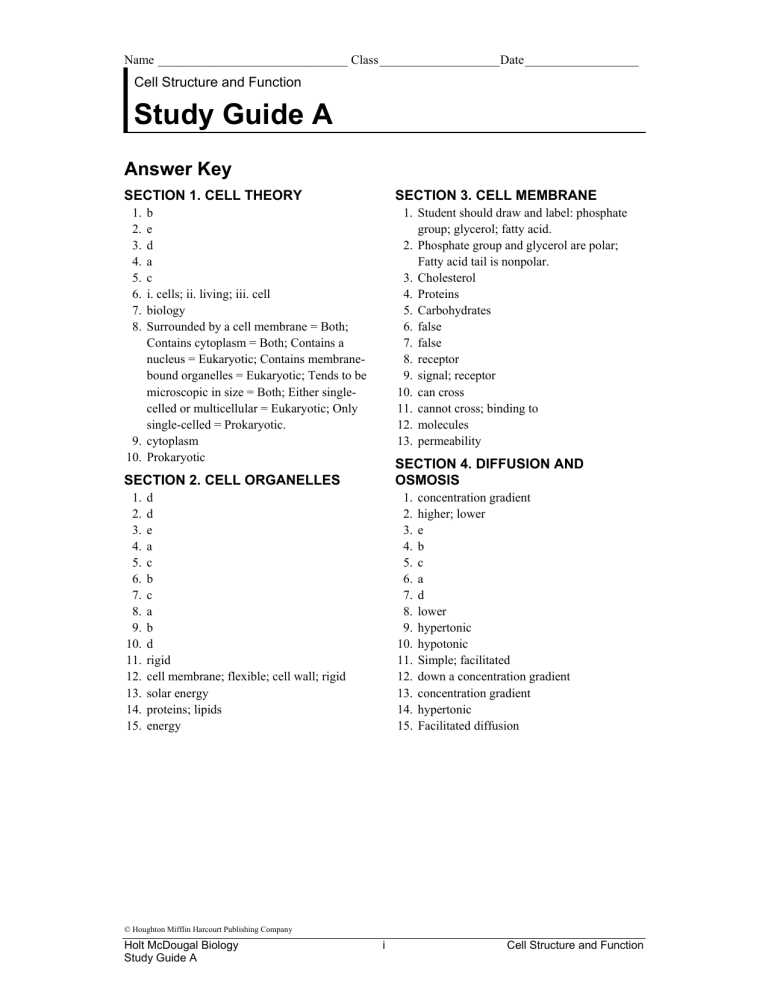
The nucleus serves as the command center, controlling the cell’s activities through the regulation of gene expression. It houses the genetic material, which provides the instructions for protein synthesis and overall cell function.
DNA replication occurs within the nucleus during cell division, ensuring that genetic information is accurately passed on to daughter cells. This process is vital for growth, repair, and reproduction of the organism.
Transcription of DNA into messenger RNA (mRNA) happens in the nucleus. The mRNA is then transported to the cytoplasm where it guides protein synthesis at the ribosomes. This makes the nucleus key in determining the types of proteins produced within the cell.
The nucleus also plays a role in regulating cellular responses to environmental changes. By controlling the expression of certain genes, it helps the cell adapt to stress, manage energy production, and coordinate cellular repair mechanisms.
Additionally, the nuclear envelope, a double membrane structure, separates the nucleus from the rest of the cell. It contains nuclear pores that regulate the movement of molecules, such as mRNA and ribosomal subunits, between the nucleus and cytoplasm.
For optimal cell function, the nucleus needs to maintain the integrity of the genetic material. This is achieved through various repair mechanisms that fix DNA damage, ensuring proper cellular activities and minimizing the risk of mutations.
How Mitochondria Power the Cell: A Close Look
Mitochondria are the primary energy-producing organelles within a cell. They generate adenosine triphosphate (ATP), the energy currency used by all cellular processes. This energy production occurs through a process known as cellular respiration, which takes place in the inner mitochondrial membrane.
During cellular respiration, mitochondria convert glucose and oxygen into ATP, carbon dioxide, and water. This process occurs in multiple stages: glycolysis, the citric acid cycle, and oxidative phosphorylation. Each step plays a critical role in breaking down nutrients to release usable energy.
The inner membrane of mitochondria contains the electron transport chain, which creates a proton gradient used to generate ATP. The ATP synthase enzyme uses this gradient to produce ATP through a mechanism called chemiosmosis. This is the cell’s main energy supply for all of its functions, including growth, repair, and transport.
In addition to energy production, mitochondria are involved in regulating cellular metabolism, apoptosis (programmed cell death), and maintaining cellular calcium balance. They also play a role in signaling pathways that control cell survival and differentiation.
Another interesting feature of mitochondria is their own DNA, which is separate from the DNA found in the nucleus. This mitochondrial DNA allows them to reproduce independently and produce some of their own proteins, contributing to their unique role in cellular activities.
For a deeper dive into how mitochondria work and their vital role in cellular activities, refer to reliable sources like the National Institutes of Health (NIH) here.
Understanding the Role of Ribosomes in Protein Synthesis
Ribosomes are the molecular machines responsible for assembling proteins within a cell. These structures translate genetic information from messenger RNA (mRNA) into polypeptide chains during protein synthesis. Ribosomes are found either floating freely in the cytoplasm or attached to the rough endoplasmic reticulum (ER), which is why this organelle is referred to as rough ER.
Protein synthesis occurs in two major stages: transcription and translation. During transcription, DNA is used to create mRNA, which carries the genetic code from the nucleus to the cytoplasm. Once mRNA reaches the ribosome, translation begins, where the ribosome reads the mRNA sequence in sets of three nucleotides (codons) and assembles the corresponding amino acids into a growing protein chain.
The ribosome consists of two subunits: a large subunit and a small subunit. The small subunit reads the mRNA, while the large subunit facilitates the binding of amino acids to form the protein chain. Transfer RNA (tRNA) molecules bring specific amino acids to the ribosome, matching their anticodons with the codons on the mRNA strand. The ribosome then links these amino acids together, forming a polypeptide chain.
After the protein chain is synthesized, it may undergo further modifications and folding to become fully functional. Ribosomes play a critical role in this process, ensuring that proteins are produced according to the genetic instructions, which are essential for the proper functioning of the organism.
The Importance of the Endoplasmic Reticulum in Transport
The endoplasmic reticulum (ER) plays a key role in the intracellular movement of molecules. It serves as a transport network, facilitating the movement of proteins and lipids throughout the cell. There are two types of ER: rough ER, which is studded with ribosomes, and smooth ER, which lacks ribosomes. Both contribute to different aspects of cellular transport.
The rough ER is primarily involved in the synthesis and transport of proteins. Ribosomes on its surface produce proteins, which are then transported through the ER to other parts of the cell, such as the Golgi apparatus, for further modification and distribution. This process ensures that proteins reach their correct locations, whether inside or outside the cell.
The smooth ER, on the other hand, is responsible for lipid synthesis and the detoxification of harmful substances. It also plays a role in the transport of these lipids within the cell and to other areas where they are needed. Both types of ER are interconnected, creating a continuous network that ensures the efficient movement of molecules necessary for the cell’s function.
Overall, the ER is vital for maintaining the cell’s internal environment by facilitating the transport of essential molecules, thereby ensuring the proper functioning of cellular processes.
Examining the Golgi Apparatus and its Secretory Functions
The Golgi apparatus plays a central role in modifying, sorting, and packaging proteins and lipids for secretion or delivery to other organelles. Once synthesized in the rough endoplasmic reticulum, proteins are transported to the Golgi apparatus for further processing. Here, enzymes add carbohydrate groups to proteins, a process known as glycosylation, which is crucial for protein stability and function.
The Golgi apparatus is composed of stacked membrane-bound sacs, called cisternae, which work together to modify proteins and lipids. It is structured in a polarity, with a “cis” face receiving newly synthesized molecules and a “trans” face responsible for packaging and shipping them to their destination. This functional organization ensures the proper trafficking and secretion of molecules throughout the cell.
Once processed, proteins and lipids are packaged into vesicles that bud off from the trans face of the Golgi. These vesicles can either fuse with the plasma membrane to release contents outside the cell or be directed to other compartments, such as lysosomes or the endoplasmic reticulum. The secretory pathway is vital for maintaining cellular functions, from the transport of hormones to the regulation of enzyme activities.
In summary, the Golgi apparatus acts as the cell’s packaging and distribution center, ensuring that molecules are correctly modified and directed to their appropriate locations for optimal cellular activity.
How the Membrane Controls Substance Movement
The membrane regulates the movement of substances through selective permeability. Its structure, consisting of a phospholipid bilayer with embedded proteins, acts as a barrier that allows only specific molecules to pass while blocking others. This selective permeability is crucial for maintaining homeostasis within the organism.
Transport occurs in two main forms: passive and active. Passive transport does not require energy and includes processes such as diffusion, osmosis, and facilitated diffusion. Molecules move from areas of high concentration to low concentration through membrane proteins or directly through the lipid bilayer. This process ensures that essential substances, like oxygen and carbon dioxide, can diffuse freely across the membrane.
In contrast, active transport requires energy to move molecules against their concentration gradient. This is facilitated by membrane pumps, such as the sodium-potassium pump, which maintains ion balance and is vital for cellular functions like nerve transmission and muscle contraction.
Endocytosis and exocytosis are two additional processes that involve the movement of large molecules or particles. In endocytosis, the membrane engulfs materials, bringing them into the cell, while exocytosis releases substances from the cell by merging vesicles with the plasma membrane.
Overall, the selective nature of the membrane ensures that the right substances enter and exit the cell, enabling the cell to maintain its internal environment while interacting with its surroundings.
Differences Between Prokaryotic and Eukaryotic Cells
Prokaryotic cells lack a nucleus and membrane-bound organelles. Their genetic material is located in a nucleoid region, not enclosed within a membrane. In contrast, eukaryotic cells have a defined nucleus that houses the cell’s DNA and is separated from the cytoplasm by a nuclear membrane.
Prokaryotes are generally smaller, simpler in structure, and include organisms like bacteria and archaea. Eukaryotes, which include plants, animals, fungi, and protists, are larger and more complex, featuring multiple organelles such as mitochondria, the Golgi apparatus, and endoplasmic reticulum, each specialized for specific cellular tasks.
Another key difference is in cellular division. Prokaryotic cells divide through binary fission, a simpler process where the cell splits into two identical daughter cells. Eukaryotic cells undergo mitosis or meiosis, involving more complex stages and mechanisms for ensuring genetic material is accurately distributed.
While prokaryotic cells have a single circular chromosome, eukaryotic cells contain linear chromosomes within the nucleus. Additionally, prokaryotes often have smaller ribosomes, while eukaryotic ribosomes are larger and more intricate.
In summary, prokaryotic cells are structurally simpler with no internal compartmentalization, whereas eukaryotic cells are more complex with specialized compartments, allowing for greater metabolic flexibility and organization.