Complete Answer Key for Calculating Particles in the Nucleus
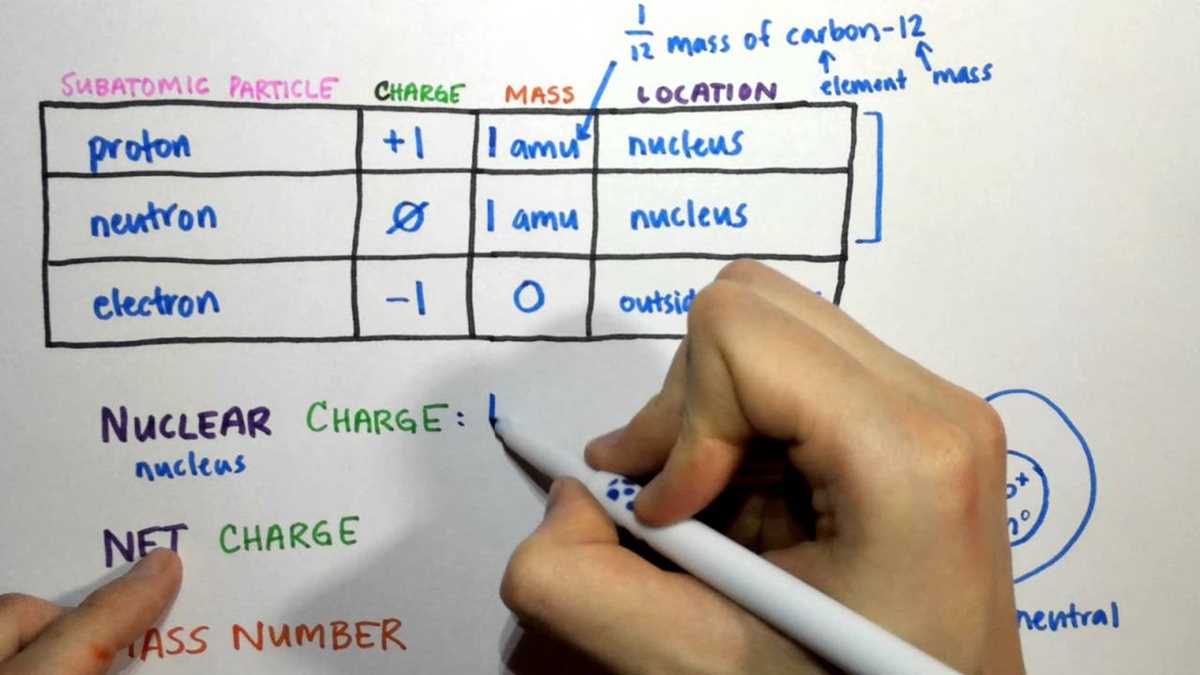
To determine the number of protons, neutrons, and electrons in an atom, start by identifying the atomic number, which corresponds to the number of protons. The atomic number will give you the exact count of positively charged particles in the core. For an atom in its neutral state, the number of electrons is equal to the number of protons.
Next, use the mass number (the sum of protons and neutrons) to find the number of neutrons. Subtract the atomic number from the mass number to arrive at the neutron count: Neutrons = Mass number – Atomic number.
If you are working with isotopes, note the difference in neutrons between variants of the same element. Isotopes have identical proton counts but different neutron counts. Understanding this will help in distinguishing between them based on their mass numbers.
For example, if the atomic number of carbon is 6, and the mass number of a particular isotope is 14, the neutron count will be 8 (14 – 6 = 8). Knowing this formula ensures accuracy in understanding atomic structure and behavior in various chemical contexts.
By following these steps, you can effectively determine all key components of an atom’s composition with ease. This approach is applicable across a wide range of elements and isotopes, providing the foundation for solving related problems in nuclear physics.
How to Determine Atomic Structure from Atomic Number and Mass Number
To determine the number of protons in an atom, use the atomic number. This value, typically found on the periodic table, directly represents the count of positively charged particles in the center of the atom. For example, the atomic number of oxygen is 8, meaning it has 8 protons in its core.
To find the number of neutrons, subtract the atomic number from the atomic mass number: Neutrons = Mass number – Atomic number. The mass number is the total of protons and neutrons in the nucleus. If an atom has a mass number of 16 and an atomic number of 8, the number of neutrons would be 8 (16 – 8 = 8).
In cases where isotopes are involved, the atomic number remains the same, but the mass number changes. Isotopes of the same element have identical proton counts but vary in neutron count. This difference affects the atomic mass but not the chemical properties.
To calculate the number of electrons in a neutral atom, simply match the electron count to the proton count. Since protons and electrons balance out the charge in a neutral atom, the number of electrons will equal the atomic number.
These steps will help in accurately identifying the structure of atoms, whether for simple elements or more complex isotopes. Always check for neutrality or ionization, as charged atoms (ions) will differ in their electron count, requiring further adjustments to the calculations.
Identifying the Number of Protons in an Atom
To determine the number of protons in an atom, refer to its atomic number, which is displayed on the periodic table. This number indicates the total count of positively charged particles within the atom’s core. For example, the atomic number of carbon is 6, meaning it contains 6 protons.
If you’re given an element symbol or atomic number, you can immediately identify the number of protons. For instance, if you have sodium (Na) with an atomic number of 11, it has 11 protons.
Keep in mind that the atomic number remains constant across all isotopes of an element. Whether the atom is a standard or an isotope, the proton count does not change.
Understanding proton count is fundamental for distinguishing between different elements, as no two elements share the same atomic number. This consistency in proton count allows for the identification of elements on the periodic table.
Determining the Number of Neutrons in the Nucleus
To find the number of neutrons in an atom, subtract the atomic number from the mass number. The atomic number indicates the number of protons, and the mass number represents the total count of protons and neutrons in the core. Use this formula: Neutrons = Mass number – Atomic number.
For example, an atom of chlorine has a mass number of 35 and an atomic number of 17. To determine the neutron count: 35 – 17 = 18 neutrons.
This method works for both stable elements and isotopes. Isotopes of an element have the same number of protons but differ in neutron count, which affects the mass number.
In cases of ions, the number of neutrons is not influenced by changes in electron count. The mass number still reflects the total of protons and neutrons, while the electron count determines the charge state.
Understanding Atomic Mass and Its Relation to Particle Count
Atomic mass is the weighted average mass of all naturally occurring isotopes of an element. It is closely related to the sum of protons and neutrons in the atomic core. To estimate atomic mass, add the number of protons and neutrons, keeping in mind that protons and neutrons each contribute roughly 1 atomic mass unit (amu).
While atomic number gives the exact count of protons, atomic mass incorporates both protons and neutrons. For example, carbon has an atomic number of 6 and an atomic mass of 12.01 amu, which reflects the average mass of carbon isotopes, considering their relative abundance.
For more accurate calculations, consider the individual masses of protons and neutrons. Protons have a mass of approximately 1.007 amu, and neutrons have a mass of about 1.008 amu. However, the small difference in their masses doesn’t significantly affect the atomic mass in most cases.
To determine the total number of nucleons (protons + neutrons), subtract the atomic number from the mass number. This gives the number of neutrons, which helps refine your understanding of the element’s atomic mass.
- Mass number = Protons + Neutrons
- Atomic mass ≈ (Protons * 1.007 amu) + (Neutrons * 1.008 amu)
Atomic mass is crucial for identifying isotopes and understanding atomic structure, as it reflects the overall composition of nucleons within an atom.
How to Use the Periodic Table for Particle Calculations
To find the number of protons in an atom, locate the atomic number of the element on the periodic table. This number corresponds directly to the number of protons. For example, oxygen has an atomic number of 8, so it has 8 protons.
Next, to determine the number of neutrons, subtract the atomic number from the mass number. The mass number is usually listed below the element symbol. For instance, carbon has a mass number of 12, and its atomic number is 6. Thus, the number of neutrons is 12 – 6 = 6.
The periodic table also provides important information for identifying isotopes. Different isotopes of the same element will have the same atomic number but different mass numbers, resulting in varying neutron counts. For example, carbon-12 and carbon-14 have the same number of protons but different neutron counts due to their differing mass numbers.
For ions, the periodic table will give the atomic number, but you’ll need to account for the charge of the atom when determining electron count. A neutral atom has the same number of electrons as protons, but for charged atoms, adjust the electron count based on the ion’s charge.
By using the periodic table, you can easily extract key values needed for determining atomic structure and solve problems related to atomic composition.
Calculating the Total Number of Particles in Isotopes
To find the total number of nucleons (protons + neutrons) in an isotope, start with the isotope’s mass number. This value represents the sum of protons and neutrons. For example, the isotope carbon-14 has a mass number of 14, which means it has 14 total nucleons.
For an isotope, the number of protons is equal to the atomic number, which remains constant for all isotopes of the same element. Carbon, for instance, has an atomic number of 6, so it has 6 protons. To find the neutron count, subtract the atomic number from the mass number: Neutrons = Mass number – Atomic number. For carbon-14, this gives: 14 – 6 = 8 neutrons.
The total number of particles in the isotope is the sum of protons and neutrons. In this case, carbon-14 has 6 protons and 8 neutrons, giving a total of 14 nucleons.
Repeat this process for any isotope by using the atomic number to determine protons and the mass number to determine the total number of nucleons. This method works for all isotopes, whether stable or radioactive.
Applying the Mass Number to Find Particle Distribution
The mass number of an atom is the sum of protons and neutrons in its core. To determine the distribution of nucleons, subtract the atomic number (number of protons) from the mass number. The result gives the number of neutrons. For example, for an isotope of nitrogen with a mass number of 14 and an atomic number of 7, the number of neutrons is 14 – 7 = 7.
Once you have the number of protons and neutrons, you can confirm the total number of nucleons in the core. This method applies to all elements and isotopes. Remember, while the number of protons defines the element, the number of neutrons can vary across different isotopes of the same element, affecting their mass numbers.
For further details on isotopes and particle distributions, you can refer to the Atomic Archive, which provides comprehensive resources on atomic structure and nuclear physics.
Handling Atomic Symbols in Nucleus Calculations
Atomic symbols represent elements in shorthand, and they provide key information about an atom’s structure. The atomic symbol consists of the element’s symbol (one or two letters) and is usually accompanied by the atomic number and mass number.
To use atomic symbols in calculations, refer to the atomic number (Z), which indicates the number of protons in the core. The mass number (A) is listed as a superscript, indicating the total number of protons and neutrons. The following table demonstrates the format:
| Element Symbol | Atomic Number (Z) | Mass Number (A) | Protons | Neutrons |
|---|---|---|---|---|
| Carbon (C) | 6 | 12 | 6 | 6 |
| Carbon-14 (C) | 6 | 14 | 6 | 8 |
| Oxygen (O) | 8 | 16 | 8 | 8 |
In the table, carbon-12 (C) has 6 protons and 6 neutrons, while the isotope carbon-14 (C) has 6 protons and 8 neutrons. These values can be extracted directly from the atomic symbol by using the atomic number and mass number.
For each element, using these symbols allows you to easily identify protons and neutrons. Remember that the atomic number gives you protons, and the difference between mass number and atomic number gives neutrons.
Tips for Solving Nuclear Physics Problems Accurately
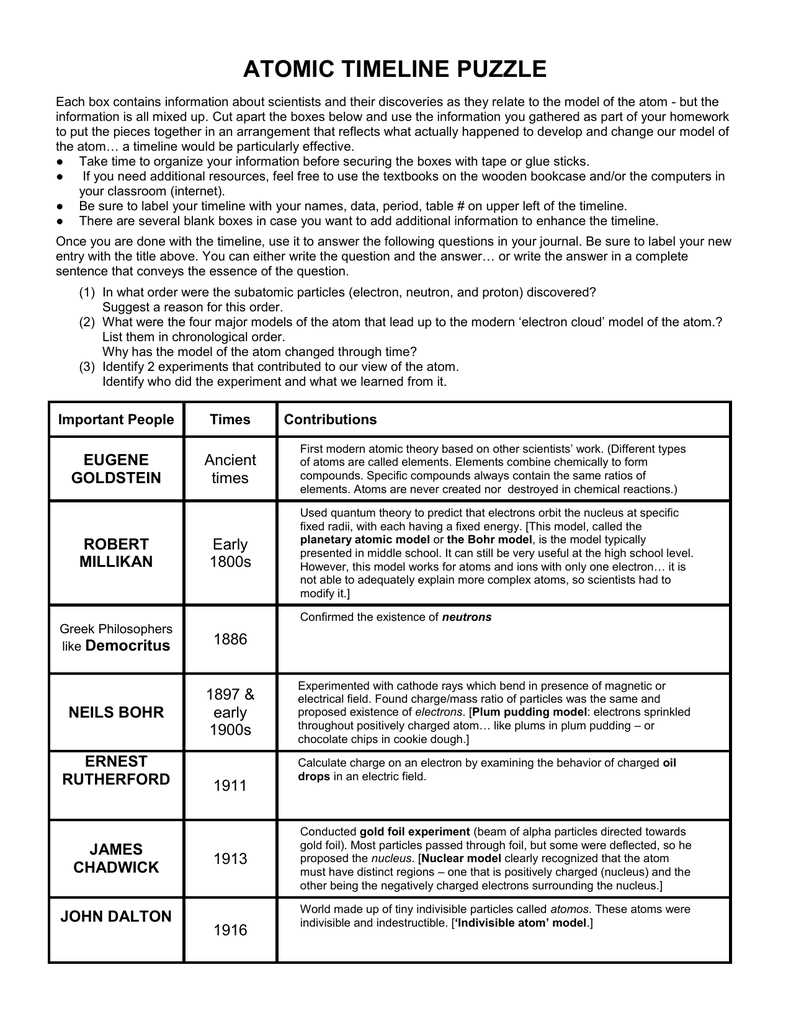
To solve problems related to atomic structure, follow these practical tips:
- Check Atomic Number and Mass Number: Always start by identifying the atomic number (Z) and mass number (A) for the element or isotope. These values are critical for determining the number of protons and neutrons.
- Use Accurate Formulas: To find neutrons, subtract the atomic number from the mass number: Neutrons = Mass number – Atomic number. For electron count, in a neutral atom, it’s equal to the number of protons.
- Understand Isotopes: Isotopes of the same element have identical proton counts but different neutron counts. Focus on the mass number for the correct neutron count.
- Pay Attention to Ionization: If working with ions, remember that the number of electrons will change based on the charge. A positive charge means fewer electrons, and a negative charge means more.
- Double-Check Units: Ensure that mass numbers, atomic numbers, and proton/neutron counts are in the correct context. The mass number is a whole number, while atomic mass may be a decimal based on isotope distribution.
- Work Step-by-Step: Break down complex problems into smaller steps. First, find protons, then neutrons, and finally electrons (if necessary). This ensures accuracy and reduces mistakes.
- Verify Using Periodic Table: Cross-check values against the periodic table, especially for atomic number and common isotopic mass numbers.
By following these steps, you can ensure accuracy and efficiency in solving atomic structure problems.