Relative Dating Activity Worksheet Answers and Explanations
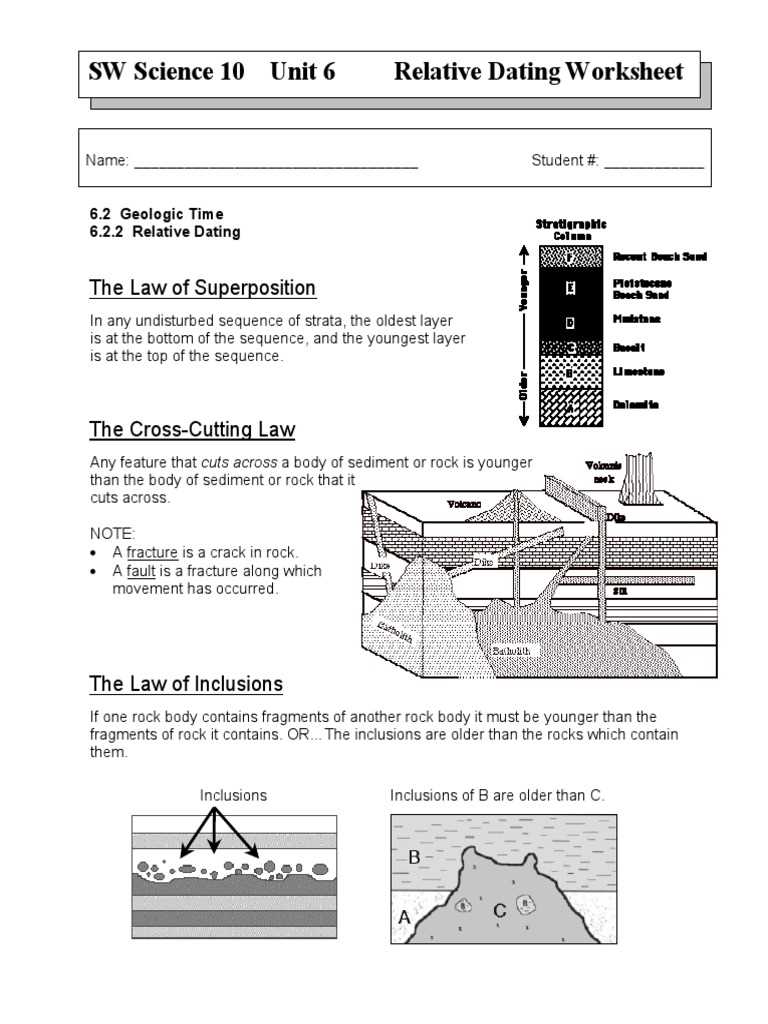
To solve problems involving rock layer analysis, focus on the principles of stratigraphy, superposition, and cross-cutting relationships. The oldest layers are typically at the bottom unless disturbed, and fossils can help identify the relative age of rocks. Begin by determining the sequence in which events occurred, based on their position in the layers.
Look for the key concepts such as the principle of uniformitarianism, which suggests that the processes we observe today also occurred in the past. This principle is vital for interpreting geological formations and understanding the history recorded in rock strata.
By carefully analyzing the relationships between rock layers, you’ll be able to create a timeline of events. Pay close attention to the patterns in the strata, as they provide important clues about the sequence of formation. Fossils, volcanic layers, and faults are all key indicators to guide your conclusions.
Analyzing Geological Strata and Determining Sequence
To accurately assess the chronological order of rock layers, first identify the layers’ positions. The principle of superposition tells you that the lower layers are older than those above. When examining a sequence of layers, the deepest layer represents the oldest, while the uppermost layer is the youngest.
Next, apply the principle of cross-cutting relationships. If a fault or intrusion cuts through a sequence of layers, it must be younger than the layers it affects. This is key for determining the relative ages of geological features that intersect one another.
To refine your analysis, include fossil correlations. Index fossils found in various layers can serve as reliable markers for dating strata, helping to establish a more precise timeline. Fossils from specific time periods can be matched across different locations, supporting the dating of rock layers.
Finally, use the principle of original horizontality. Layers are deposited in horizontal or nearly horizontal layers. If they appear tilted or folded, they were disturbed after deposition, offering further insights into the geological history and sequence of events.
Understanding the Basics of Geological Age Determination
To determine the age of rocks and fossils in a sequence, it’s critical to follow the principle of superposition: the oldest layers are at the bottom, with newer layers placed above. This principle provides a foundational framework for understanding the chronological order of events in Earth’s history.
Another crucial principle is cross-cutting relationships. If a geological feature, such as a fault or igneous intrusion, cuts through other layers, it must be younger than the layers it intersects. This rule helps establish a clearer timeline of geological processes and disturbances.
When analyzing rock formations, the principle of lateral continuity is useful. Layers of rock are typically continuous and extend across vast areas unless interrupted by a physical barrier or other geological event. Identifying such layers can allow geologists to make more accurate assumptions about the environment at the time of deposition.
For a deeper understanding, fossil correlation is often employed. By matching the same fossils found in different rock layers, geologists can correlate the ages of various strata, providing a clearer view of historical timelines.
For more detailed information on this subject, visit the U.S. Geological Survey (USGS).
How to Interpret Geological Layers in Dating Exercises
To interpret geological layers accurately, always start by applying the principle of superposition. The lower layers are typically older than those above them unless affected by significant geological disturbances. Recognize that the more deeply a layer is situated, the more likely it is to be ancient, offering a clear sequence for analysis.
Next, assess any disturbances, such as faults or intrusions. If a rock formation has been cut by a fault or contains an intrusion, these features must be younger than the layers they disrupt. This can help in establishing the relative ages of geological formations and events.
Use lateral continuity to determine the extent of layers. A layer that extends horizontally across large areas is likely to be the same age, regardless of where it is found. This principle helps when identifying correlating layers in different locations.
Look for fossil markers. Fossils are a powerful tool for correlating layers of the same age. By matching fossils found in different formations, you can refine the relative dating process, especially when direct analysis of rock layers isn’t possible.
When interpreting geological sequences, make sure to use a combination of these principles to build a coherent timeline of the rock formations and events. This approach ensures a more accurate and reliable understanding of geological history.
Common Mistakes in Relative Dating and How to Avoid Them
One common mistake is assuming that deeper layers are always older. While the principle of superposition generally holds, this can be disrupted by faults or intrusions, making it crucial to evaluate geological disturbances before concluding the age of a layer.
Another error is neglecting to consider the effects of erosion. Layers that appear to be missing may not actually be absent; they could have been eroded away. Always look for signs of erosion or weathering before assuming a missing layer represents a gap in time.
Failing to use fossil correlation properly can lead to incorrect conclusions about the relative ages of layers. Fossils provide valuable clues, but they must be accurately identified and correctly correlated across different formations. Make sure to check the fossil record thoroughly to confirm the age relationships.
Misinterpreting cross-cutting relationships is another common mistake. If one geological feature cuts across another, the feature that has been cut is older. Don’t confuse the chronological order of events by overlooking this principle. Always analyze the sequence of geological features in a clear and systematic way.
Lastly, be cautious when comparing layers from different regions. Lateral continuity suggests that layers in one area may extend to other regions, but this doesn’t always hold true if the layers have been altered by local geological processes. Always double-check connections between formations before assuming they’re the same age.
Using Stratigraphy to Determine the Age of Rocks
Stratigraphy is a key method in determining the age of rocks based on the layers in which they are found. This technique relies on the principle of superposition, which states that in undisturbed sequences, older rocks are found deeper than younger ones.
To effectively use stratigraphy, follow these steps:
- Examine the Layer Sequence: Identify the layers of sedimentary rock, as the order and relative position of these layers provide clues about their chronological sequence.
- Look for Fossil Evidence: Fossils, known as index fossils, can be used to correlate layers of the same age across different locations. The presence of the same fossils in distinct layers helps establish their relative age.
- Analyze Cross-Cutting Relationships: If one layer of rock cuts through another, the layer being cut is older. This principle is crucial in interpreting the sequence of geological events.
While stratigraphy provides a strong framework for determining relative ages, it is important to verify the results with additional techniques like radiometric dating for absolute age determination. Ensure that you carefully evaluate geological structures like faults or intrusions that may complicate the interpretation of the rock layers.
Key Principles of Relative Dating: Superposition and Faunal Succession
The principle of superposition is fundamental in determining the age of rocks. It states that in undisturbed sequences of sedimentary rocks, the youngest layers are at the top, while the oldest layers are at the bottom. This order allows geologists to determine a relative chronology by examining the sequence of rock layers.
The principle of faunal succession is another important concept. It asserts that the types of fossils found within a specific rock layer succeed each other in a predictable order over time. By studying fossil assemblages, geologists can correlate layers of similar age across different locations, establishing a timeline of biological evolution.
When applying these principles, it is important to consider factors such as folding, faulting, and intrusion, which can disrupt the order of layers. Always verify findings with other methods, such as cross-cutting relationships, to avoid misinterpretation.
How to Identify Index Fossils in Dating Worksheets
To identify index fossils in exercises, focus on these key characteristics: the fossil should be geographically widespread, limited to a short time span, and easily identifiable by unique features. These fossils are crucial for correlating rock layers across different regions.
Start by examining the size, shape, and structure of the fossils. Common index fossils include trilobites, ammonites, and brachiopods, as they lived in specific time intervals. Compare the fossil’s traits with known species databases or guides to verify its identification.
Once identified, use the fossil’s age range to help establish the relative ages of rock layers in your activity. Pay attention to surrounding layers, as some fossils may appear in multiple layers or regions, assisting in cross-referencing time periods and environments.
Interpreting Cross-Cutting Relationships in Stratigraphy

When analyzing geological layers, focus on the principle of cross-cutting relationships: a feature that cuts across other rock layers is younger than the layers it disrupts. This rule helps determine the relative chronology of formations.
Begin by identifying features like faults, intrusions, or erosion surfaces that intersect existing layers. These features must be examined carefully to understand their position relative to the surrounding strata. Always remember that the feature cutting through the layers is considered the most recent event in the region’s history.
To apply this principle, create a timeline based on the sequence of geological events. For instance, if an igneous intrusion cuts through a series of sedimentary rocks, the intrusion is younger than the rock layers it crosses. This approach allows you to establish a clearer sequence of events in the rock record.
Accurate interpretation of cross-cutting relationships is essential in building a coherent stratigraphic profile. Regularly verify the cutting relationships by considering other dating techniques like fossil correlation and radiometric data.
Step-by-Step Guide to Solving Stratigraphy Problems
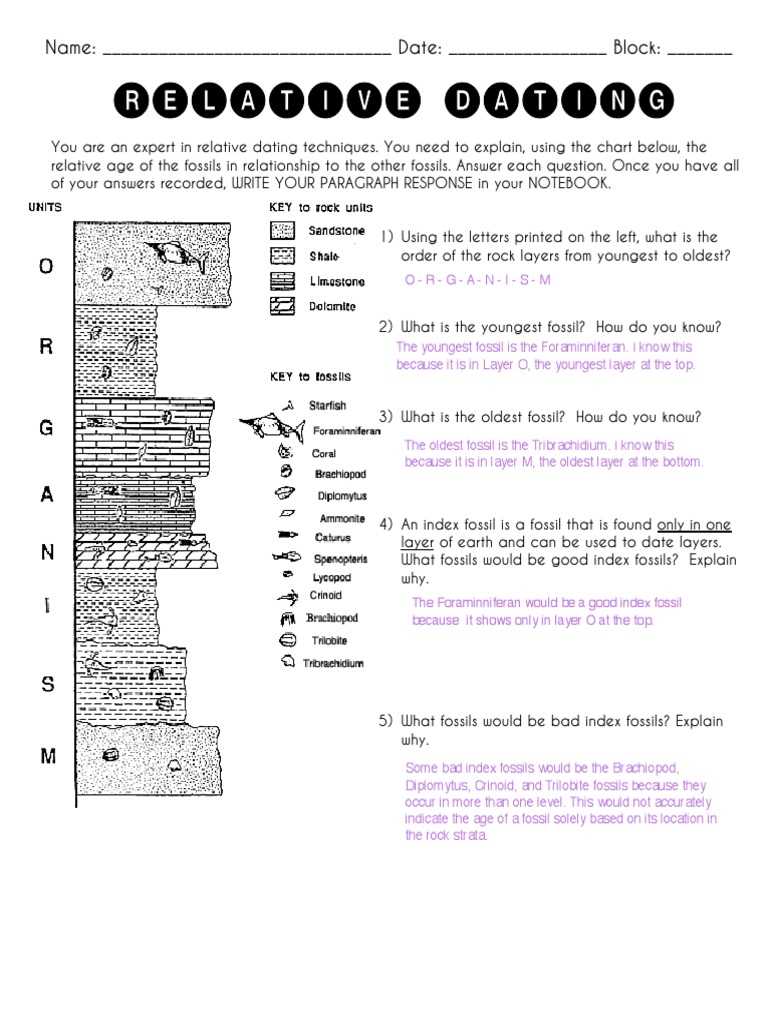
Begin by examining all the geological layers in the problem. Identify key features such as sedimentary layers, faults, and intrusions. Label each layer clearly based on its position and type.
Next, apply the law of superposition: the lowest layer is the oldest, and the layers above it are progressively younger. This will help you establish a basic timeline for the formation of the rock layers.
Look for any cross-cutting features, such as faults or intrusions. These features are younger than the layers they cut across, so place them on the timeline after the affected layers.
Identify any fossils or index fossils present in the layers. Use their known age range to help further refine the chronological order of the layers. Fossils can provide additional context for determining the relative age of the rocks.
After establishing the sequence of layers, check for consistency across all features. Double-check the relationships between layers, faults, and fossils to confirm that the timeline aligns properly.
Finally, construct a clear stratigraphic column or diagram that shows the relationships between all the elements. Ensure that your interpretation is logically consistent and follows the principles of stratigraphy.