Counting Atoms Worksheet 1 Solutions and Step-by-Step Guide
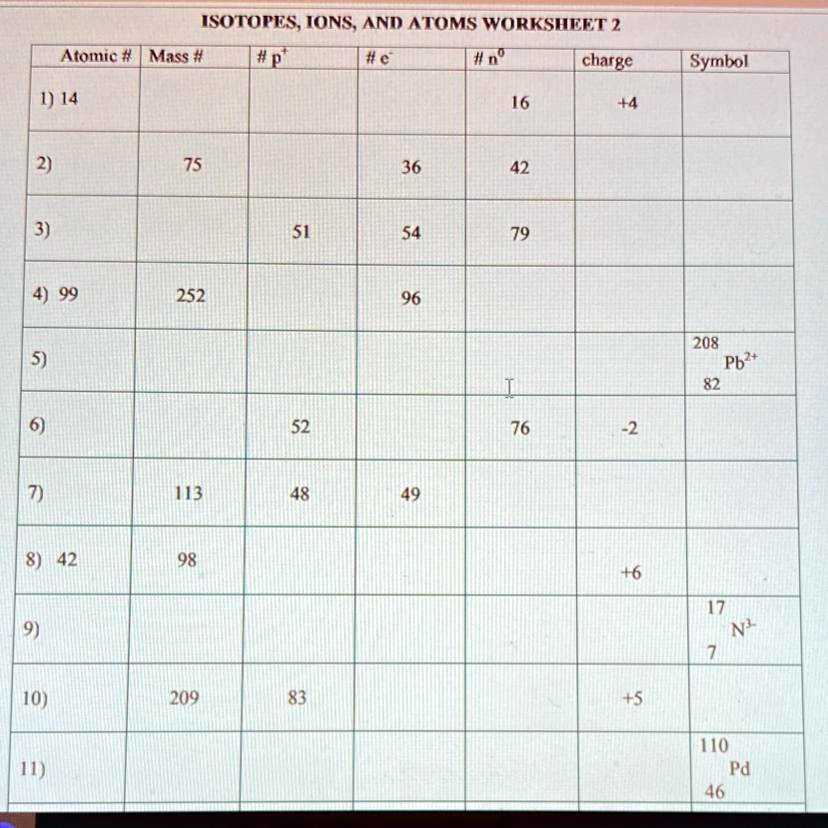
Start by identifying each element in the molecular formula and noting the subscript numbers. These subscripts represent how many atoms of each element are present in the compound. For example, in H₂O, the subscript 2 means there are two hydrogen atoms for every oxygen atom.
Next, carefully consider how to handle elements within polyatomic groups. These groups may have a specific subscript that applies to the entire molecule, meaning you must multiply that subscript by the number of atoms in the group. For instance, in Na₂SO₄, the sulfate ion (SO₄) contains four oxygen atoms, but the subscript 2 outside the parentheses means there are two sodium atoms and the four oxygen atoms remain unchanged.
Be mindful of the need to apply these principles to more complex chemical reactions or combinations. Using a systematic approach helps ensure all elements are counted accurately. Once you have a solid understanding of the basic rules, you’ll find it easier to tackle advanced problems that involve balancing or stoichiometric calculations.
Solving Molecular Quantity Problems: Step-by-Step Solutions
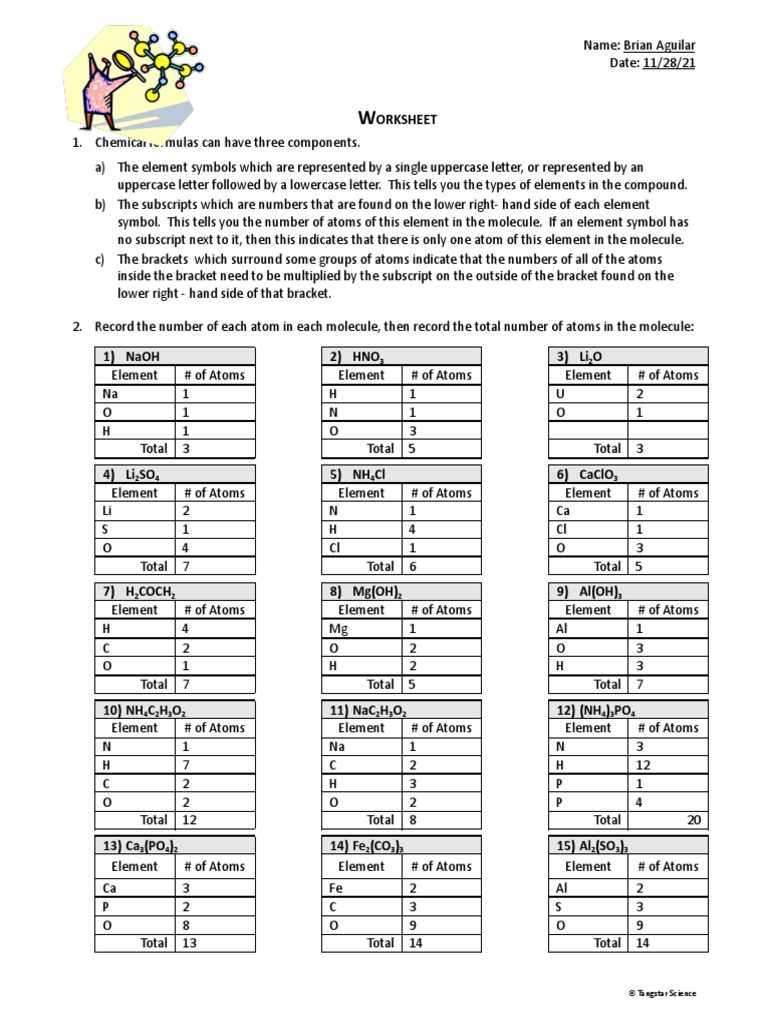
To determine the number of elements in a compound, break down the molecular formula into its parts. The subscript directly after an element indicates how many atoms of that element are present. For example, in H₂O, the “2” means there are two hydrogen atoms.
Follow these steps for each compound:
- Identify the elements: List all the chemical symbols in the formula.
- Note the subscripts: Subscripts show how many atoms of each element exist in the molecule. A subscript of 1 is understood even if it’s not written.
- Account for parentheses: If a group of atoms is in parentheses with a subscript outside, multiply the subscript by each atom in the group. For example, in (NH₄)₂SO₄, there are 2 nitrogen atoms, 8 hydrogen atoms, 1 sulfur atom, and 4 oxygen atoms.
Use the following table for a quick reference:
| Compound | Elements | Atom Count |
|---|---|---|
| H₂O | Hydrogen, Oxygen | 2 Hydrogen, 1 Oxygen |
| Na₂SO₄ | Sodium, Sulfur, Oxygen | 2 Sodium, 1 Sulfur, 4 Oxygen |
| (NH₄)₂SO₄ | Nitrogen, Hydrogen, Sulfur, Oxygen | 2 Nitrogen, 8 Hydrogen, 1 Sulfur, 4 Oxygen |
By carefully applying these steps, you can accurately count the number of atoms in any given molecular formula.
How to Determine the Number of Elements in a Chemical Formula
To identify the number of elements in a molecular formula, follow these steps:
- Step 1: Identify the Chemical Symbols – Each element in the formula is represented by its symbol (e.g., H for Hydrogen, O for Oxygen). Make a list of all unique elements in the compound.
- Step 2: Look for Subscripts – A subscript next to an element indicates how many atoms of that element are present. If no subscript is shown, it is implied that there is only one atom of that element.
- Step 3: Handle Parentheses – If a group of elements is enclosed in parentheses, multiply the subscript outside the parentheses by each subscript inside. For example, in (NH₄)₂SO₄, the “2” outside the parentheses means there are two nitrogen atoms and eight hydrogen atoms.
- Step 4: Total the Atoms – After identifying the individual counts, sum them for each element to determine the total number of atoms. For example, in H₂SO₄, there are 2 hydrogen atoms, 1 sulfur atom, and 4 oxygen atoms.
Example Calculation:
- Na₂CO₃ (Sodium Carbonate)
- Sodium (Na): 2 atoms
- Carbon (C): 1 atom
- Oxygen (O): 3 atoms
- C₆H₁₂O₆ (Glucose)
- Carbon (C): 6 atoms
- Hydrogen (H): 12 atoms
- Oxygen (O): 6 atoms
By following these steps, you can accurately determine the number of each element in any given molecular formula.
Understanding Atomic Notation for Identifying Elemental Quantities
Atomic notation is a concise method to represent the structure of elements and compounds. It includes essential information such as the element’s symbol, atomic number, and mass number. This notation is critical for determining the number of subatomic particles (protons, neutrons, and electrons) in an atom, which in turn helps when counting specific elements in compounds.
Basic Atomic Notation Components:
- Element Symbol: A one- or two-letter abbreviation for an element (e.g., H for Hydrogen, O for Oxygen).
- Atomic Number (Z): The number of protons in an atom’s nucleus, which determines the element’s identity. It is often written as a subscript on the left side of the symbol (e.g., ₁H for hydrogen).
- Mass Number (A): The total number of protons and neutrons in the nucleus, represented as a superscript on the left side of the element symbol (e.g., ₁₀B for boron with 5 protons and 5 neutrons).
Example: The atomic notation ₁₀B means the element boron (B) with 5 protons and 5 neutrons. The atomic number is 5, and the mass number is 10. If a subscript is not shown, it is implied that the number is 1, as with hydrogen (H).
To identify the number of each type of particle in an atom:
- Protons: Equal to the atomic number (Z).
- Neutrons: Mass number (A) minus atomic number (Z).
- Electrons: In a neutral atom, the number of electrons equals the number of protons.
Example for Carbon-12: The notation ₆₁²C indicates carbon with 6 protons and 6 neutrons, for a total of 12 in the nucleus. In a neutral atom, the number of electrons is also 6.
For more detailed information, visit reputable sources like ChemBlink or refer to the PubChem database for further examples and applications.
Step-by-Step Process to Calculate Elemental Quantities in Chemical Compounds
To determine the number of specific elements in a compound, follow this clear process:
- Identify the chemical formula: Examine the formula to identify the symbols of the elements involved (e.g., NaCl, H₂O, CO₂).
- Note the subscripts: The numbers written after each element indicate the number of atoms of that element in the compound. For example, in H₂O, the subscript “2” indicates two hydrogen atoms.
- Apply the distributive property: If the compound has parentheses with a subscript outside, multiply the subscript of the element inside the parentheses by the subscript outside. For example, in Ca(NO₃)₂, the subscript “2” applies to both nitrogen and oxygen, so there are 2 nitrogen atoms and 6 oxygen atoms.
- Sum the atoms of each element: In a compound with more than one element, add the individual contributions from each part. For example, in C₆H₁₂O₆ (glucose), the total number of carbon atoms is 6, hydrogen atoms is 12, and oxygen atoms is 6.
- Account for multiple molecules: If the problem asks for the total number of atoms in multiple molecules, multiply the number of atoms in one molecule by the number of molecules. For instance, 2 molecules of H₂O contain 4 hydrogen atoms and 2 oxygen atoms (2 × 2 = 4 hydrogen atoms and 2 × 1 = 2 oxygen atoms).
By following these steps, you can efficiently calculate the number of atoms of each element in any given compound.
Tips for Handling Polyatomic Ions in Atom Counting
When dealing with polyatomic ions, it’s important to follow these specific steps for accurate calculations:
- Understand the ion’s composition: Polyatomic ions are groups of atoms that act as a single unit. For example, in sulfate (SO₄²⁻), there are 1 sulfur atom and 4 oxygen atoms in each ion.
- Apply the subscript outside parentheses: If a polyatomic ion is enclosed in parentheses with a subscript, multiply the subscript outside by each element within the parentheses. For instance, in Ca(NO₃)₂, there are 2 nitrogen atoms and 6 oxygen atoms from the two nitrate ions.
- Account for the charge: While the charge on the ion affects its overall behavior in a compound, it does not impact the number of atoms in the polyatomic ion. Focus on the atoms when counting.
- Consider multiple ions: If a molecule contains more than one polyatomic ion, ensure that you multiply the number of atoms by the number of ions. For example, in 2 molecules of Na₂SO₄, there are 2 sulfur atoms and 8 oxygen atoms in total.
- Clarify the ionic context: Sometimes polyatomic ions form salts with metal ions. These ions still follow the same counting rules, but the metal’s atomic count must also be included. For example, in magnesium sulfate (MgSO₄), count 1 magnesium atom, 1 sulfur atom, and 4 oxygen atoms.
By following these tips, you can easily handle polyatomic ions and ensure accurate calculations of the elements within chemical formulas.
How to Count Atoms in Molecular Formulas
To determine the number of elements in a molecular formula, follow these steps:
- Identify each element: Look at the chemical formula and list the symbols of each element present. For example, in H₂O, identify hydrogen (H) and oxygen (O).
- Note the subscripts: Subscripts indicate how many atoms of an element are in the molecule. In CO₂, the “2” indicates 2 oxygen atoms.
- Multiply when parentheses are involved: If an element is in parentheses with a subscript outside, multiply the subscript by each element inside the parentheses. For example, in (NH₄)₂SO₄, there are 2 nitrogen atoms and 8 hydrogen atoms.
- Count individual atoms in polyatomic groups: For molecules with polyatomic ions or groups, like Na₂SO₄, count each element within the group and multiply by the number of groups. In this case, there are 2 sodium atoms, 1 sulfur atom, and 4 oxygen atoms.
- Sum the total: Add up all the atoms of each element in the formula to find the total count. For example, in C₆H₁₂O₆, there are 6 carbon atoms, 12 hydrogen atoms, and 6 oxygen atoms.
By following these steps, you can easily determine the number of atoms for any given molecular formula.
Common Mistakes in Atom Counting and How to Avoid Them
1. Forgetting to multiply subscripts outside parentheses: When a group of elements is enclosed in parentheses with a subscript outside, multiply the subscript by each element inside. For example, in (NH₄)₂SO₄, the nitrogen is multiplied by 2, resulting in 2 nitrogen atoms.
2. Miscounting polyatomic ions: Polyatomic ions like sulfate (SO₄²⁻) or nitrate (NO₃⁻) must be treated as a single unit. If the formula has a coefficient in front of the ion, multiply the number of atoms in the ion by the coefficient. For instance, Na₂SO₄ means there are 2 sodium atoms, 1 sulfur atom, and 4 oxygen atoms.
3. Incorrectly counting elements with no subscript: If an element does not have a subscript, it’s understood to have only one atom. For example, in H₂O, there are 2 hydrogen atoms and 1 oxygen atom. The lack of a subscript for oxygen doesn’t mean there are zero oxygen atoms.
4. Overlooking hydrogen atoms: Hydrogen atoms are often overlooked because they are written without a subscript in many formulas. For example, in CH₄, the formula explicitly shows 4 hydrogen atoms, but if you miss this, the count will be wrong.
5. Misunderstanding the role of coefficients: Coefficients outside a chemical formula apply to all elements within that formula. For example, 2H₂O means 2 molecules of water, or 4 hydrogen atoms and 2 oxygen atoms in total.
To avoid these mistakes, carefully check each part of the molecular formula, account for subscripts and coefficients, and always double-check polyatomic groups and their multipliers.
Using the Periodic Table to Assist with Counting Atoms
1. Identifying Atomic Number: The atomic number of an element, found at the top of each element’s box on the periodic table, indicates the number of protons in the nucleus, which also equals the number of electrons in a neutral atom. This is helpful for understanding the structure of each element in a compound.
2. Determining the Element’s Mass: The atomic mass, listed below the element symbol, provides the weighted average mass of an atom of that element. While not directly related to counting, knowing the atomic mass can help when calculating the total mass of a compound.
3. Using Group and Period Trends: Elements in the same group (column) have similar chemical properties and often share common valence electron configurations, which can guide you when counting elements with similar bonding patterns in molecules.
4. Recognizing Isotopes: Different isotopes of an element have the same number of protons but different numbers of neutrons. If you’re working with isotopes in a molecule, the number of atoms may vary depending on the isotope used.
5. Understanding Electron Configuration: The arrangement of electrons in an atom helps predict how atoms bond and interact with other atoms in compounds. This is especially useful when considering complex molecules or polyatomic ions.
6. Referencing Element Symbols: Each element has a unique symbol on the periodic table, which is used in chemical formulas. Knowing these symbols is key when translating a molecular formula into the number of constituent elements.
Examples of Atom Counting in Different Chemical Reactions
1. Combustion Reaction:
- Consider the combustion of methane: CH4 + 2O2 → CO2 + 2H2O.
- In this reaction, methane (CH4) reacts with oxygen (O2) to produce carbon dioxide (CO2) and water (H2O). By balancing the equation, you can ensure the same number of each type of element appears on both sides.
2. Synthesis Reaction:
- In the reaction between nitrogen and hydrogen to form ammonia: N2 + 3H2 → 2NH3.
- Here, two nitrogen molecules combine with six hydrogen molecules to form two ammonia molecules. Atom counting reveals that nitrogen and hydrogen atoms are conserved throughout the reaction.
3. Decomposition Reaction:
- Consider the decomposition of calcium carbonate: CaCO3 → CaO + CO2.
- In this reaction, calcium carbonate breaks down into calcium oxide and carbon dioxide. By ensuring that the number of calcium (Ca), carbon (C), and oxygen (O) atoms are balanced on both sides, the reaction can be properly represented.
4. Double Displacement Reaction:
- In a reaction between barium chloride and sodium sulfate: BaCl2 + Na2SO4 → BaSO4 + 2NaCl.
- Here, the barium (Ba) and sodium (Na) exchange their partners, forming barium sulfate (BaSO4) and sodium chloride (NaCl). Atom counting is crucial to ensure the proper stoichiometry for each element.
5. Redox Reaction:
- In the reaction between zinc and copper sulfate: Zn + CuSO4 → ZnSO4 + Cu.
- In this case, zinc (Zn) replaces copper (Cu) in the sulfate compound. Atom counting shows that zinc and copper atoms are conserved, but they change places in the process.