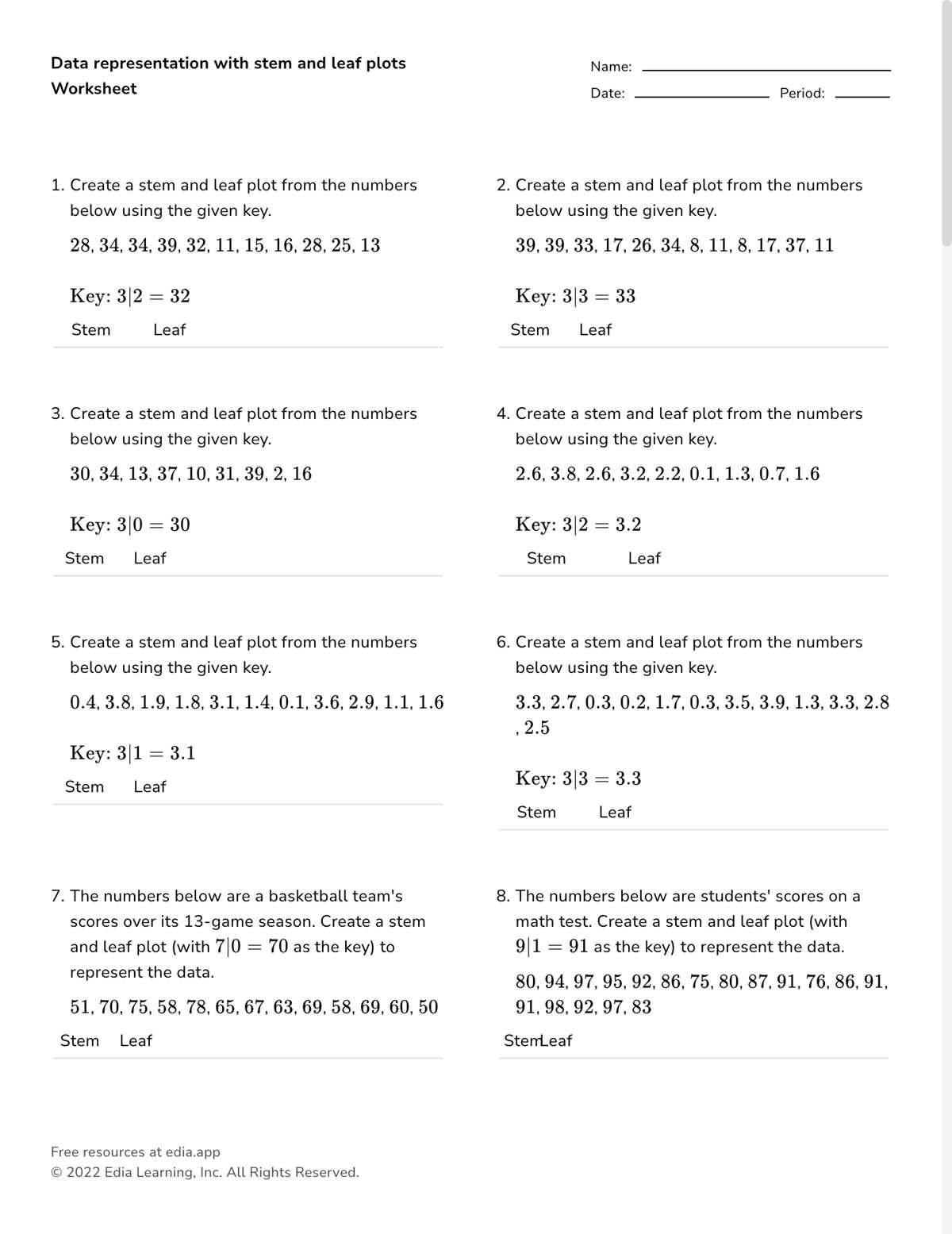
2.5 Worksheet Solutions for IQR and Identifying Outliers
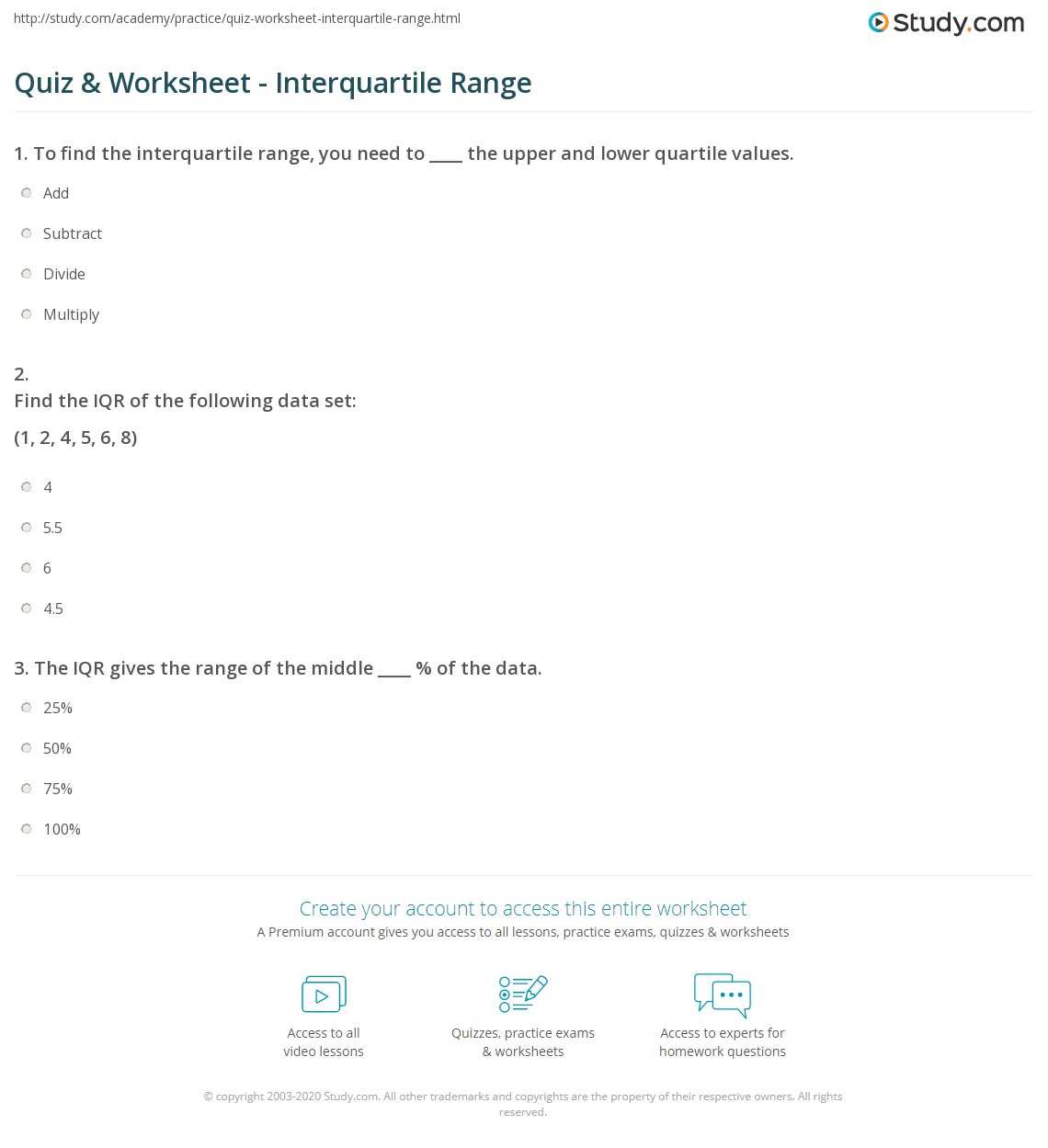
Begin by calculating the interquartile range (IQR) for the data set. The IQR is the difference between the third quartile (Q3) and the first quartile (Q1). Use the formula: IQR = Q3 – Q1. Once the IQR is determined, you can find the boundaries for identifying unusual values or extreme points within the data set.
Next, calculate the lower and upper boundaries to find values outside the typical range. Multiply the IQR by 1.5 and subtract it from Q1 to determine the lower boundary. Similarly, add the same value to Q3 to find the upper boundary. Any data points below the lower boundary or above the upper boundary are considered potential outliers.
Verify the results by reviewing the data. If any values fall outside the calculated range, mark them as unusual or extreme. These values are typically more variable than the majority of the data and may indicate something noteworthy in the set.