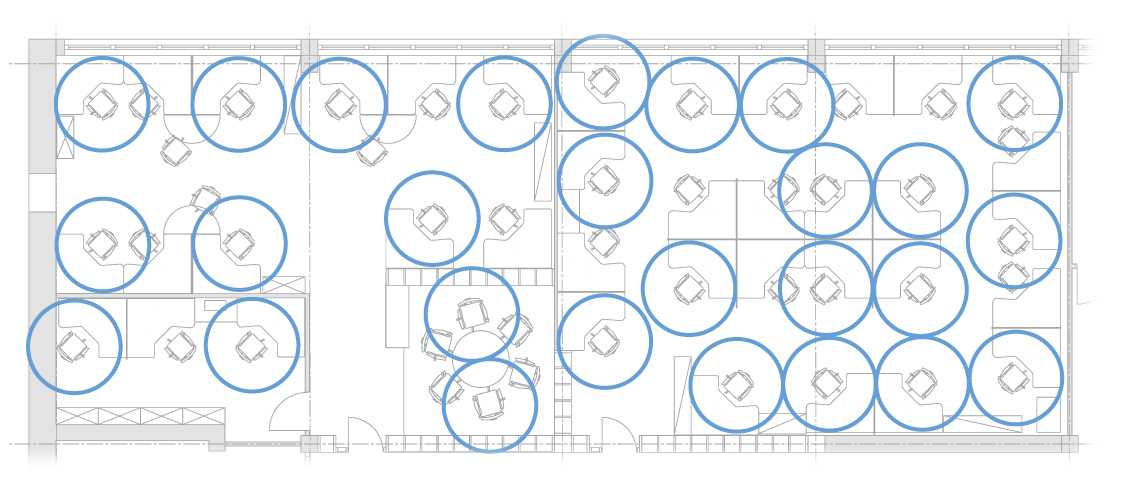
Mathematics Behind Social Distancing Calculations
To determine the appropriate amount of space between individuals, consider the factors that contribute to the spread of airborne particles. The primary calculation involves the speed at which droplets travel and the distance they can travel before settling. A simple formula can help estimate the necessary space to reduce transmission risk effectively.
Start by calculating the time it takes for respiratory droplets to fall to the ground, based on their size and the environment’s air circulation. This gives an approximation of how far apart individuals should be to avoid close contact with airborne particles. In general, the larger the droplets, the less distance they travel, but smaller particles can stay suspended in the air longer, requiring greater spacing.
To calculate the spacing: Measure the velocity of exhaled air and adjust for environmental conditions like wind or air conditioning. Use this data to refine distance guidelines, ensuring they are tailored to specific settings such as indoor gatherings or crowded outdoor spaces. Understanding these principles helps ensure the safety and well-being of individuals during public health concerns.