Solutions for Mixed Naming Ionic Covalent Compounds and Acids
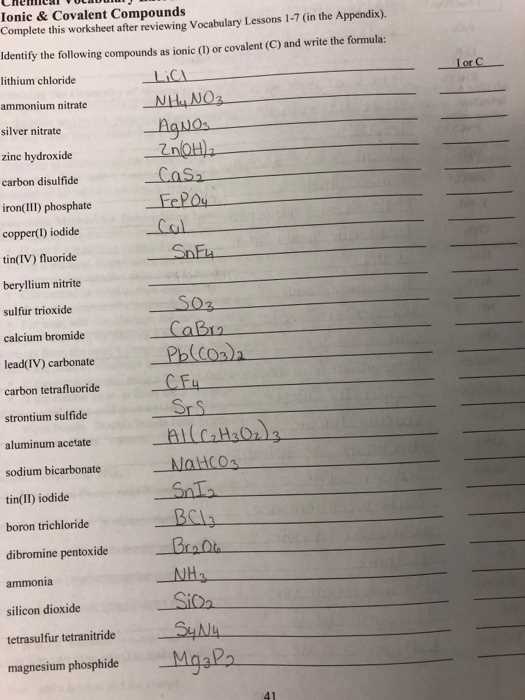
Start by focusing on how to identify the type of compound based on its structure. For compounds formed between a metal and a non-metal, the naming process follows a simple set of rules. First, identify the metal’s name and then the non-metal with its ending changed to “-ide”. For example, sodium chloride or magnesium oxide.
For compounds that involve non-metals only, the process is a bit more complex. These require prefixes to indicate the number of atoms present in each element. Familiarize yourself with these prefixes, such as mono-, di-, tri-, and so on, to properly name these molecules. An example would be dinitrogen tetroxide, where “di-” refers to two nitrogen atoms and “tetra-” refers to four oxygen atoms.
When naming acids, the rules differ slightly. For acids that do not contain oxygen, use the prefix “hydro-” and the suffix “-ic”, like in hydrochloric acid. For those that do contain oxygen, focus on the polyatomic ion involved. If the ion ends in “-ate,” the acid will end in “-ic,” and if it ends in “-ite,” the acid will end in “-ous.”