Understanding the Differences Between Ser and Estar in Spanish
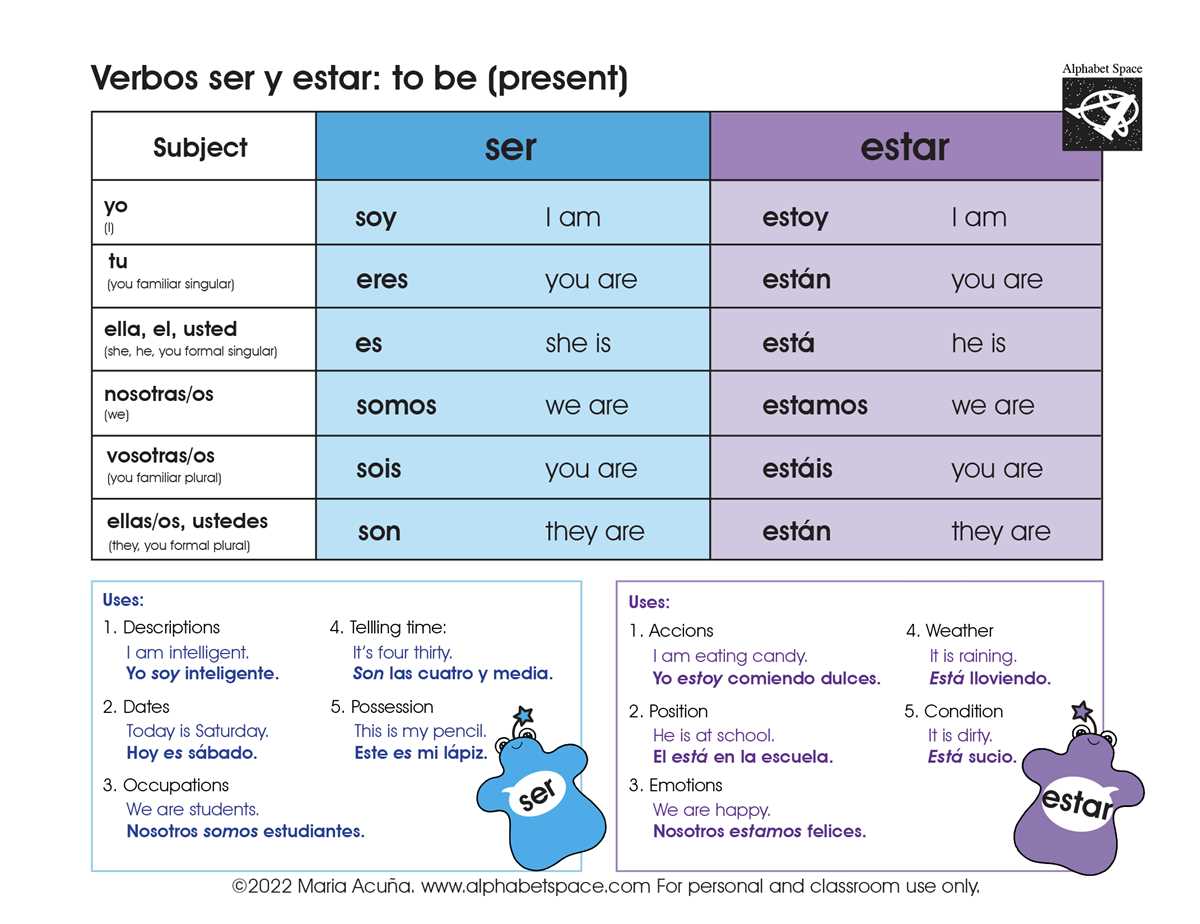
To master the Spanish language, it is crucial to differentiate between two verbs that often confuse learners: “ser” and “estar.” These verbs both translate to “to be” in English, but they are used in different contexts. Understanding the subtleties of each will help you communicate more accurately and fluently.
When expressing permanent characteristics or identity, “ser” is the preferred verb. It is used to describe traits that are seen as stable or unchanging, such as someone’s profession, nationality, or physical features. On the other hand, “estar” is used to convey temporary states or conditions, like emotions, locations, or situations that may change over time.
In this article, we will explore the correct usage of these verbs in various scenarios, provide practical examples, and address common mistakes learners make. By mastering these distinctions, you will improve your understanding of Spanish grammar and increase your confidence in speaking and writing.
Understanding the Differences Between Ser and Estar in Spanish
The distinction between the two verbs that both translate to “to be” in English–”ser” and “estar”–is one of the most challenging aspects of Spanish grammar. Each verb has a specific use depending on the context, and mastering their differences is key to becoming fluent in the language.
Use “ser” to describe permanent, unchanging qualities such as identity, origin, professions, and inherent characteristics. For example, when stating someone’s nationality, profession, or physical attributes, “ser” is required. For instance: Él es médico (He is a doctor) or Ella es de España (She is from Spain).
On the other hand, “estar” is used for temporary states, conditions, and locations. It conveys ideas that are subject to change or describe something occurring at a specific moment in time. For instance: Está cansado (He is tired) or Estamos en casa (We are at home).
These distinctions are fundamental for accurate communication in Spanish. For further understanding and detailed examples, you can refer to resources like SpanishDict, which provides a comprehensive guide on the topic.
When to Use Ser: Key Situations and Examples
Use “ser” to describe permanent or inherent characteristics. This includes:
- Identity: Describing who someone is or what something is. Example: Ella es profesora (She is a teacher).
- Origin or nationality: When indicating where someone is from. Example: Somos de México (We are from Mexico).
- Profession: For stating someone’s occupation or role. Example: Juan es ingeniero (Juan is an engineer).
- Time and dates: Describing hours, days, months, and years. Example: Hoy es lunes (Today is Monday).
- Material or composition: When specifying what something is made of. Example: La mesa es de madera (The table is made of wood).
These are fundamental situations where “ser” should be used. For example, when talking about someone’s nationality or a person’s inherent qualities, you will always use this verb. These contexts emphasize a state or characteristic that is generally unchanging.
When to Use Estar: Key Situations and Examples
Use “estar” to describe temporary states or conditions. This includes:
- Physical condition or appearance: When describing how someone feels or looks at a particular moment. Example: Estoy cansado (I am tired).
- Emotional state: For temporary emotional conditions. Example: Estás feliz (You are happy).
- Location: Indicating where someone or something is at a specific time. Example: La tienda está cerca (The store is near).
- Present progressive actions: To describe actions happening right now. Example: Estamos estudiando (We are studying).
- Results of actions: For describing the state resulting from a previous action. Example: La puerta está cerrada (The door is closed).
These are situations where “estar” is used to convey temporary, changeable conditions or locations. When describing ongoing actions or conditions that are subject to change, this verb should be employed.
Comparison of Ser and Estar in Describing Permanent vs. Temporary States
To distinguish between permanent and temporary states, it’s important to choose the right verb. The verb “ser” is used for permanent or inherent characteristics, while “estar” is used for temporary or changeable states.
- Permanent States: Use “ser” to describe characteristics that do not change over time. These include:
- Identity and origin: Example: Ella es profesora (She is a teacher).
- Physical or personality traits: Example: Él es alto (He is tall).
- Time and dates: Example: Hoy es lunes (Today is Monday).
- Temporary States: Use “estar” for conditions that are subject to change. These include:
- Emotional states: Example: Estoy triste (I am sad).
- Physical conditions: Example: Está enfermo (He is sick).
- Ongoing actions: Example: Estamos estudiando (We are studying).
Understanding the distinction between “ser” and “estar” is key to correctly describing both permanent characteristics and temporary conditions in Spanish. This helps ensure that your language reflects the intended meaning accurately.
Using Ser and Estar with Adjectives: A Detailed Guide
Adjectives in Spanish often change their meaning depending on whether they are used with “ser” or “estar.” Understanding how to apply these verbs to adjectives is crucial for accurate communication.
- Using “Ser” with Adjectives: “Ser” is used for describing permanent, inherent characteristics or qualities that are unlikely to change. These include:
- Personality traits: Example: Ella es amable (She is kind).
- Physical attributes: Example: Él es alto (He is tall).
- Nationalities or professions: Example: Somos ingenieros (We are engineers).
- Using “Estar” with Adjectives: “Estar” is used with adjectives to describe temporary conditions, emotions, or states. These include:
- Temporary physical or emotional states: Example: Está cansado (He is tired).
- Ongoing conditions: Example: La sopa está caliente (The soup is hot).
- Location-based states: Example: El libro está en la mesa (The book is on the table).
When using adjectives, the choice between “ser” and “estar” reflects the distinction between permanent characteristics and temporary states. This distinction helps clarify whether the trait is inherent or subject to change.
Common Mistakes with Ser and Estar and How to Avoid Them
One common mistake is using “ser” when referring to temporary states. This verb is used for permanent traits, so avoid saying “Estoy alto” (I am tall) when describing someone’s height. Instead, say “Soy alto” (I am tall), since height is a permanent characteristic.
Another frequent error occurs with emotions. Since feelings are temporary, using “ser” to describe them is incorrect. For example, “Soy feliz” (I am happy) should be “Estoy feliz” (I am happy) to reflect the temporary nature of emotions.
Additionally, some learners mistakenly use “estar” for professions. “Soy profesor” (I am a teacher) is the correct expression for a permanent occupation. Using “estoy” would be incorrect because a profession is not a temporary state.
To avoid confusion, always assess whether the trait or state you are describing is permanent or temporary. For permanent attributes or identities, use “ser.” For temporary conditions, locations, or emotions, use “estar.”
Practical Examples of Ser and Estar in Everyday Conversations
When introducing yourself, say “Soy María” (I am María) because your name is a permanent aspect of your identity. Similarly, when stating where you are from, use “Soy de España” (I am from Spain), as nationality is permanent.
For talking about someone’s temporary state, use “Estoy cansado” (I am tired). Tiredness is temporary, so “estar” is the appropriate choice. Another example is “Estoy enfermo” (I am sick), where illness is a temporary condition.
For describing location, use “estoy” as well. For instance, “Estoy en casa” (I am at home) or “Estamos en el parque” (We are at the park). The verb “ser” would be incorrect here, since locations are considered temporary or changeable.
When giving a description that’s subject to change, like a person’s mood, use “estar.” For example, “Estoy feliz” (I am happy) or “Está nervioso” (He is nervous). Emotions are transient, so they align with “estar.”
How Context Influences the Choice Between Ser and Estar
The context of a sentence determines whether to use “ser” or “estar” based on the permanence or temporality of the situation. For example, when describing an occupation or nationality, “ser” is used because these attributes are permanent: “Soy profesor” (I am a teacher), “Soy mexicano” (I am Mexican).
In contrast, when discussing a temporary state, like a feeling or location, “estar” is required. For instance, “Estoy cansado” (I am tired) or “Estoy en casa” (I am at home) refers to temporary states or changing conditions, making “estar” the appropriate choice.
Additionally, the difference between describing characteristics that define the subject and those that describe transient conditions is key. “Ser” is used for inherent qualities, such as “Ella es amable” (She is kind), while “estar” is used for temporary qualities, as in “Ella está cansada” (She is tired).
Exercises and Activities for Mastering Ser and Estar
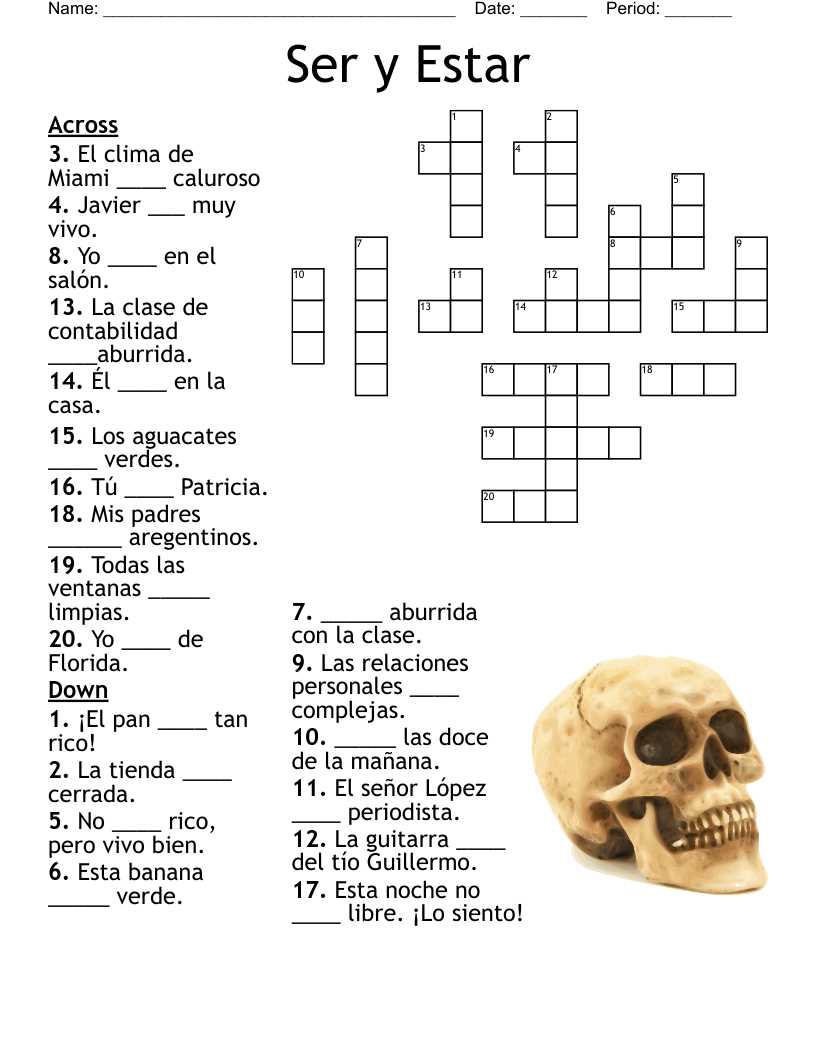
One effective way to practice is through sentence completion exercises. Write sentences with blanks and ask students to fill in the appropriate verb based on the context. For example:
- ___ en la oficina. (I am at the office.)
- ___ muy feliz hoy. (I am very happy today.)
Another useful activity is role-playing. Create scenarios where students must decide whether to use a permanent or temporary state. For example, one student could describe their occupation (using “ser”), and another could describe how they are feeling at the moment (using “estar”).
Additionally, having students create short dialogues that showcase both verbs in context helps solidify their understanding. For example:
- Person A: ¿Cómo estás hoy?
- Person B: Estoy cansado, pero soy feliz.
For self-assessment, you can create quizzes that focus on distinguishing between the uses of each verb. Provide a mix of statements that require either verb, and ask students to identify or correct mistakes.