Step-by-Step Solutions for Circuit Analysis Problems
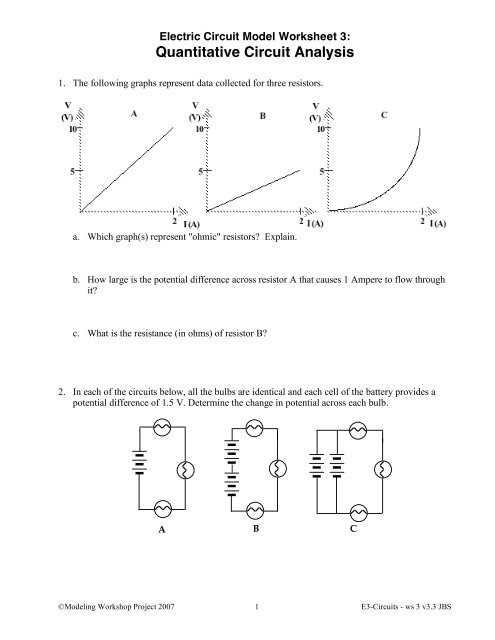
Double-checking calculations and understanding the logic behind each step is key to mastering electrical network problems. The solutions provided below guide you through common circuit configurations, helping to reinforce your knowledge and identify any potential mistakes. Approach each question by applying fundamental rules, such as Ohm’s law, and methods like mesh analysis and node voltage to simplify complex networks. In addition to solving for unknown values, understanding how to validate results ensures accuracy in the application of these techniques.
For effective problem-solving, remember to always break down the circuit into smaller, more manageable parts. Start by focusing on series and parallel elements before moving on to more advanced techniques. This structured approach not only streamlines the process but also helps identify key relationships between components such as resistors, capacitors, and voltage sources. As you progress, cross-check your results with different methods to verify that all conditions are met.
Use this guide to refine your problem-solving skills. Practice with a variety of examples to develop a deeper understanding of how components interact within the network. The process of verifying each step and ensuring consistency between different solution methods will reinforce your mastery of electrical systems and improve your ability to solve more complex problems in the future.
Circuit Problem Solutions Guide
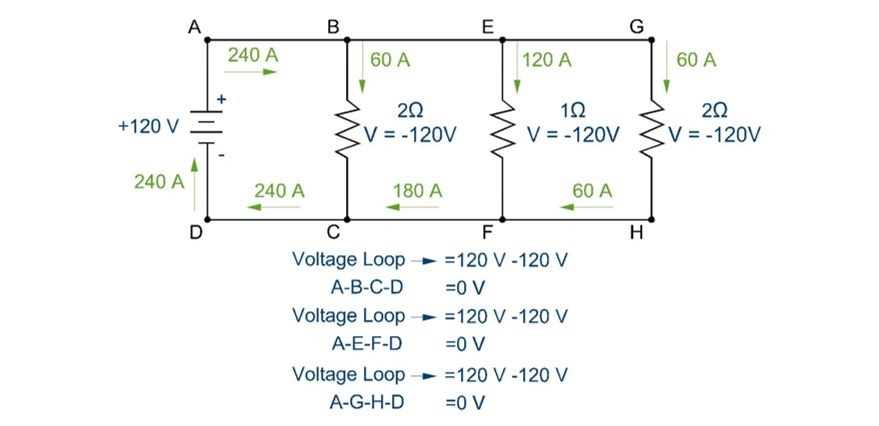
To verify your solutions, break down the network into individual components such as resistors, capacitors, and voltage sources. Apply Ohm’s law and Kirchhoff’s laws as the foundation for all calculations. Focus on isolating each section of the network and solving for the unknowns step by step. Once you have calculated the total resistance or current in any given loop, cross-reference your results using mesh or nodal analysis as appropriate.
Check consistency at each step of the solution. After calculating the individual components, ensure that the sum of the voltages or currents aligns with Kirchhoff’s voltage and current laws. Always recheck your intermediate values to ensure accuracy. If you encounter any discrepancies, revisit the calculations and consider alternative approaches to solve the network.
| Step | Action | Example Formula |
|---|---|---|
| 1 | Identify and simplify series and parallel connections | R_total = R1 + R2 (for series) |
| 2 | Apply Ohm’s law for each loop or node | V = IR |
| 3 | Use Kirchhoff’s Current Law (KCL) for node analysis | ΣI = 0 (at a junction) |
| 4 | Check final results against known values | ΣV = 0 (for closed loops) |
After completing the solution, double-check your work by verifying that the calculated values adhere to the laws of conservation of energy and charge. Consistent results across different methods indicate a correct solution. Additionally, always test the solution by plugging the final values back into the original network to ensure all conditions are satisfied.
Understanding Circuit Diagrams and Notation
Recognize common symbols used in electrical diagrams: Resistors are represented by a zigzag line, capacitors by two parallel lines, and inductors by coils. Voltage sources are shown as a circle with a “+” and “-” sign indicating polarity.
Familiarize yourself with connections: Components can be connected in series or parallel. In a series connection, components share a single path for current flow. In a parallel connection, components have separate paths for the current.
Understand the notation for current and voltage: Current is typically denoted as “I” and flows through the components. Voltage is represented as “V” and is defined across two points in the network. It’s crucial to keep track of the polarity when analyzing potential differences across components.
- Voltage Source: A source of electrical potential, represented by a circle with a “+” and “-” symbol inside.
- Resistor: A component that resists the flow of current, symbolized by a zigzag line.
- Capacitor: A component that stores energy in an electric field, represented by two parallel lines.
- Inductor: A coil of wire that resists changes in current, symbolized by a coil or spiral shape.
Pay attention to the flow of current: Follow the direction of the current in the diagram. It’s typically marked with an arrow to indicate flow. For analysis, remember that current always flows from the positive terminal of the voltage source to the negative terminal.
Use the proper convention for power flow: Power is calculated using the formula P = VI. The sign convention matters: when the current enters the positive terminal of a component, it’s delivering power; if it enters the negative terminal, it’s absorbing power.
How to Apply Ohm’s Law in Circuit Analysis
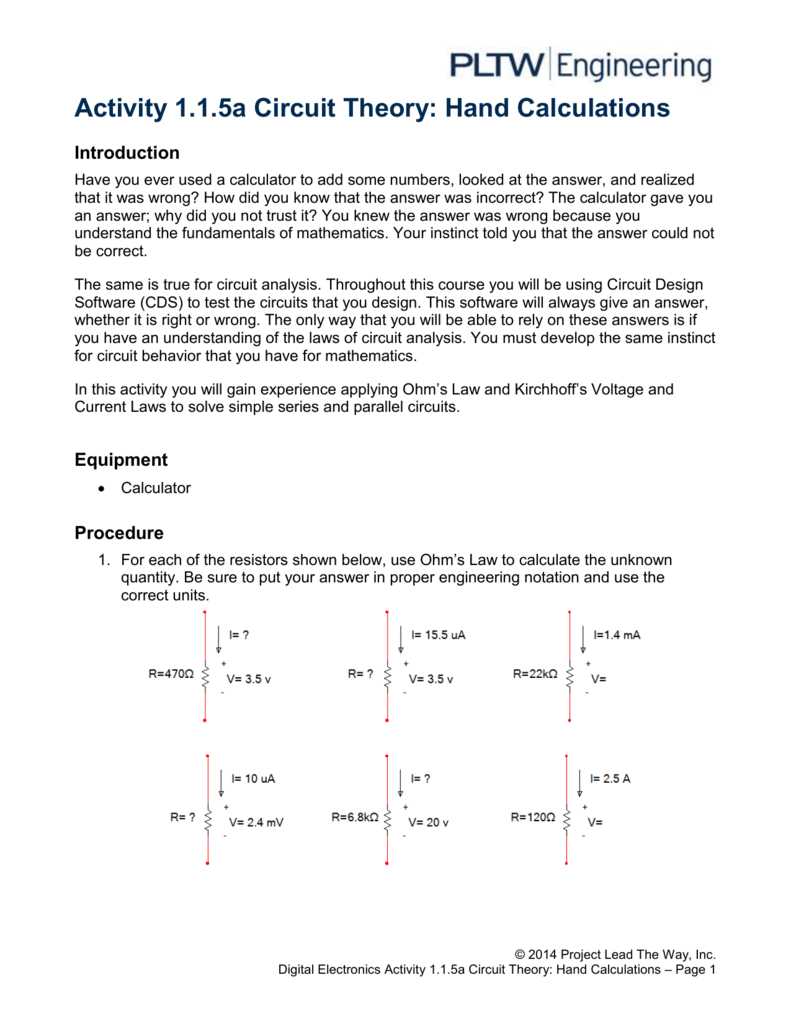
Identify the given values: Start by identifying the known values in the problem, such as voltage (V), current (I), and resistance (R). If any of these values are missing, use Ohm’s Law to calculate them.
Use the Ohm’s Law formula: Ohm’s Law is expressed as V = IR, where:
- V is the voltage (in volts),
- I is the current (in amperes), and
- R is the resistance (in ohms).
Substitute the known values into this formula to find the unknown quantity. If you need to solve for current, rearrange the equation to I = V/R, and if solving for resistance, use R = V/I.
Check units: Ensure that all values are in the correct units before calculating. For example, if resistance is given in kiloohms (kΩ), convert it to ohms (Ω) for consistency in the formula.
Apply the law to series and parallel circuits: In series circuits, the current is the same across all components, while the voltage divides. In parallel circuits, the voltage remains constant across each branch, and the current divides based on resistance.
Double-check your results: Once you’ve calculated the missing value, review the problem to ensure that all values are accounted for and consistent with the physical behavior of the system.
Solving Series and Parallel Circuit Problems
Series Circuit: In a series arrangement, the current is the same throughout all components. To find the total resistance, sum up all individual resistances:
- Rtotal = R1 + R2 + … + Rn
Use Ohm’s Law (V = IR) to calculate the total voltage drop across the circuit. The voltage divides across the components proportionally to their resistances.
Parallel Circuit: In a parallel configuration, the voltage is the same across all components. To calculate the total resistance, use the following formula:
- 1/Rtotal = 1/R1 + 1/R2 + … + 1/Rn
The current divides among the branches according to the inverse of their resistances. Use Ohm’s Law to calculate the current through each branch.
Steps for Solving Problems: For both types of circuits:
- Identify the arrangement (series or parallel) of components.
- Calculate the total resistance using the appropriate formula.
- Apply Ohm’s Law to find the total voltage or current.
- Distribute the calculated values to individual components (voltage in series, current in parallel).
Check for Mixed Circuits: If a circuit contains both series and parallel sections, break it down into smaller parts. Solve each part individually, then combine the results.
Step-by-Step Approach to Mesh Analysis
1. Label the Mesh Currents: Assign a current to each independent loop in the network. Typically, use clockwise or counterclockwise direction for consistency. Label the currents as I1, I2, etc.
2. Apply Kirchhoff’s Voltage Law (KVL): Write the voltage equation for each loop. For each loop, sum the voltage drops (including resistors, voltage sources) and set it equal to zero. The voltage drop across resistors is calculated as V = IR, where I is the current and R is the resistance.
3. Express the Resistor Relations: In the mesh equation, express each resistor’s voltage drop in terms of mesh currents. For shared resistors between two loops, the voltage drop will depend on the difference in the mesh currents. For example, if two currents, I1 and I2, pass through a resistor R, the voltage is (I1 – I2)R.
4. Set Up the System of Equations: For each loop, repeat KVL to form one equation per mesh. You will have as many equations as there are independent loops.
5. Solve the System of Equations: Solve the simultaneous equations using substitution, elimination, or matrix methods to find the mesh currents. If the system involves more than two equations, consider using matrix methods (like Gaussian elimination or Cramer’s rule).
6. Calculate Other Quantities: Once the mesh currents are found, use Ohm’s Law (V = IR) to find other quantities such as the voltage across components or current through individual elements in the network.
7. Double Check the Results: Ensure that all calculated values make sense within the context of the problem. Verify by checking that the power supplied equals the power dissipated in the network.
Using Node Voltage Method for Circuit Solutions
1. Identify All Nodes: Label all junction points where two or more components connect. Choose one node as the reference node (ground), assigning it a voltage of 0V. Label the remaining nodes with unknown voltages, such as V1, V2, etc.
2. Apply Kirchhoff’s Current Law (KCL): For each non-reference node, apply KCL by summing the currents leaving or entering the node and setting the sum equal to zero. The current through a resistor is given by Ohm’s Law: I = (Vi – Vj) / R, where Vi and Vj are node voltages, and R is the resistance.
3. Express Current Equations: For each node, write the current terms in terms of the node voltages and resistances. If two nodes are connected by a resistor, the current through that resistor depends on the voltage difference between the nodes and the resistance.
4. Set Up the System of Equations: After writing KCL equations for all nodes, you will have a system of simultaneous linear equations. The number of equations should match the number of unknown node voltages.
5. Solve the Equations: Solve the system of equations using matrix methods, substitution, or elimination. Techniques such as Gaussian elimination or Cramer’s rule can be applied to find the node voltages.
6. Calculate Currents and Voltages: Once the node voltages are known, use them to calculate the current through each element using Ohm’s Law. You can also calculate voltage drops across individual components by subtracting node voltages at each end of the component.
7. Verify Your Solution: Double-check that all calculated currents and voltages satisfy the original KCL equations. Ensure that power calculations are consistent with the power supplied and dissipated in the network.
Power Calculations in Electrical Circuits
1. Power Formula: To calculate power in a resistor or load, use the formula P = VI, where P is power, V is voltage, and I is current. This equation is applicable when the voltage and current are known for the component.
2. Ohm’s Law Application: If only one quantity (either voltage or current) is unknown, use Ohm’s Law (V = IR) to find it. Once you have both the voltage and current, you can calculate power using the formula P = I²R or P = V² / R.
3. Power in AC Circuits: In alternating current (AC) circuits, use the formula P = VI cos(ϕ), where ϕ is the phase angle between the current and voltage waveforms. This accounts for the power factor, which represents the real power used in the circuit.
4. Total Power in Series and Parallel Connections: In a series connection, total power is the sum of the power dissipated by each component. In parallel circuits, the total power can be found by summing the individual powers of each branch.
5. Reactive Power: In AC circuits with inductance or capacitance, reactive power (Q) also exists. It is given by Q = VI sin(ϕ), where ϕ is the phase angle between the voltage and current. Reactive power does not perform any real work but affects the total power in the system.
6. Power Factor: The power factor (pf) is the ratio of real power to apparent power and is given by pf = cos(ϕ). A power factor closer to 1 indicates efficient energy usage. A lower power factor means higher losses and less efficient operation.
7. Calculating Total Power Loss: To determine total power loss in resistive components, use P = I²R. For each resistor or load in the network, compute the individual power loss, and sum them up to find the total power dissipated as heat or waste energy.
8. Efficiency of Power Transfer: To evaluate the efficiency of power transfer, divide the real power delivered to the load by the total power supplied to the system. This helps in determining how much energy is being converted to useful work and how much is wasted.
Identifying Common Mistakes in Electrical Problems
1. Incorrectly Applying Ohm’s Law: A frequent mistake is misapplying Ohm’s Law, especially when calculating voltage, current, or resistance. Ensure the correct values are used for each variable and double-check unit conversions before proceeding.
2. Failing to Account for Parallel and Series Resistor Combinations: In complex networks, failing to correctly combine resistors in series and parallel leads to inaccurate results. Remember that resistors in series add up directly, while for parallel combinations, the reciprocal sum applies.
3. Confusing Voltage and Current Dividers: In networks involving voltage and current dividers, it’s easy to confuse the formulas or mistakenly apply them to the wrong configuration. Ensure you’re using the correct equations for voltage and current distribution depending on series or parallel setups.
4. Ignoring Power Losses: Often, power losses in resistive elements are overlooked, which affects the accuracy of calculations. Always check for energy dissipation in each component and consider the efficiency of the system.
5. Misunderstanding Phase Angles in AC Circuits: In alternating current systems, errors often arise from not accounting for phase differences between current and voltage. These phase angles significantly impact power calculations, particularly when dealing with reactance or impedance.
6. Overlooking Grounding and Short Circuits: A common error is neglecting to check for proper grounding or potential short circuits, which can distort results. Always verify the correct connections to ensure the system’s integrity.
7. Incorrect Use of Kirchhoff’s Laws: Mistakes occur when applying Kirchhoff’s Voltage and Current Laws (KVL and KCL). It’s vital to carefully track the direction of currents and the sign conventions for voltages to avoid errors in the setup of equations.
8. Failing to Simplify the Network: Not simplifying complex networks before solving can lead to mistakes. Break down large systems into smaller, manageable parts by using simplification techniques like combining resistances or applying symmetry before solving.
For further detailed guidelines, refer to resources like Khan Academy’s Electrical Engineering section.
Resources for Improving Electrical Problem-Solving Skills
1. Online Courses and Tutorials: Websites like Coursera and edX offer specialized courses on electrical systems and related topics. These platforms provide structured learning paths from beginner to advanced levels, which help in mastering problem-solving techniques.
2. Textbooks and Reference Books: Books like “The Art of Electronics” by Paul Horowitz and Winfield Hill, and “Introduction to Electric Circuits” by Richard C. Dorf are excellent resources. They offer in-depth explanations, examples, and exercises to strengthen your understanding.
3. Simulation Software: Tools such as Falstad Circuit Simulator and Tinkercad Circuits provide hands-on practice with real-time circuit modeling. Using simulation software helps you visualize and test concepts without needing physical components.
4. Practice Problems and Exercises: Websites like Khan Academy and Physics Classroom offer free exercises and challenges that help you apply theoretical knowledge to solve practical problems.
5. YouTube Channels: Channels like EEVblog and All About Circuits provide visual explanations of complex electrical concepts and problem-solving techniques. These videos often include real-world examples that clarify abstract topics.
6. Discussion Forums and Communities: Online forums like EEVblog Forum and Reddit’s Electronics Community offer valuable insights from experts and peers. Engaging in discussions can help resolve doubts and improve troubleshooting skills.
7. University Websites and Open Courseware: Many universities offer free course materials. The Massachusetts Institute of Technology (MIT) OpenCourseWare and Stanford University provide lecture notes, assignments, and exams for self-paced learning.
8. Problem-Solving Apps: Apps like Electrical Engineering App offer on-the-go solutions and explanations for a wide variety of electrical problems. These apps can be a great tool for practice and quick reference.