Inelastic Collision Solutions and Explanations
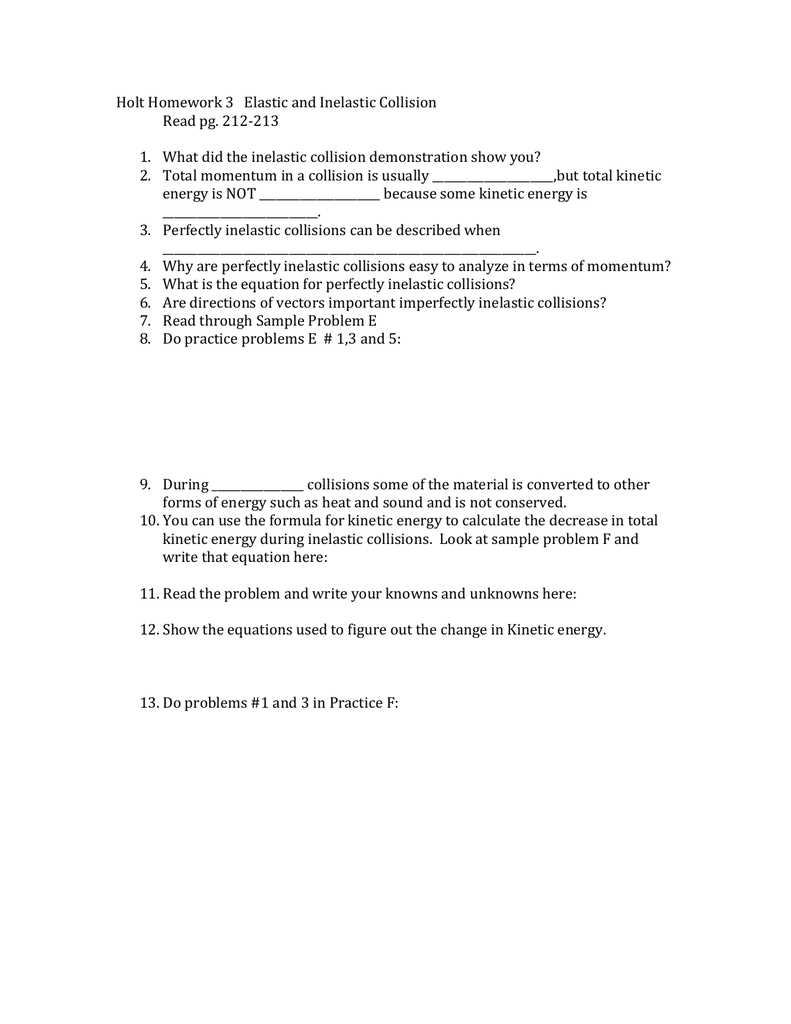
Review the key principles of energy transfer in systems where momentum is conserved, but kinetic energy is not. These scenarios typically involve objects that stick together or deform upon impact, like two cars colliding and moving as a single unit after the crash.
The problem-solving approach for such events requires understanding how to apply conservation of momentum and the formula for kinetic energy. Start by calculating the total momentum before the interaction, ensuring that the direction and magnitude of each object’s velocity are considered. Then, focus on the system’s post-collision motion to identify how energy is redistributed.
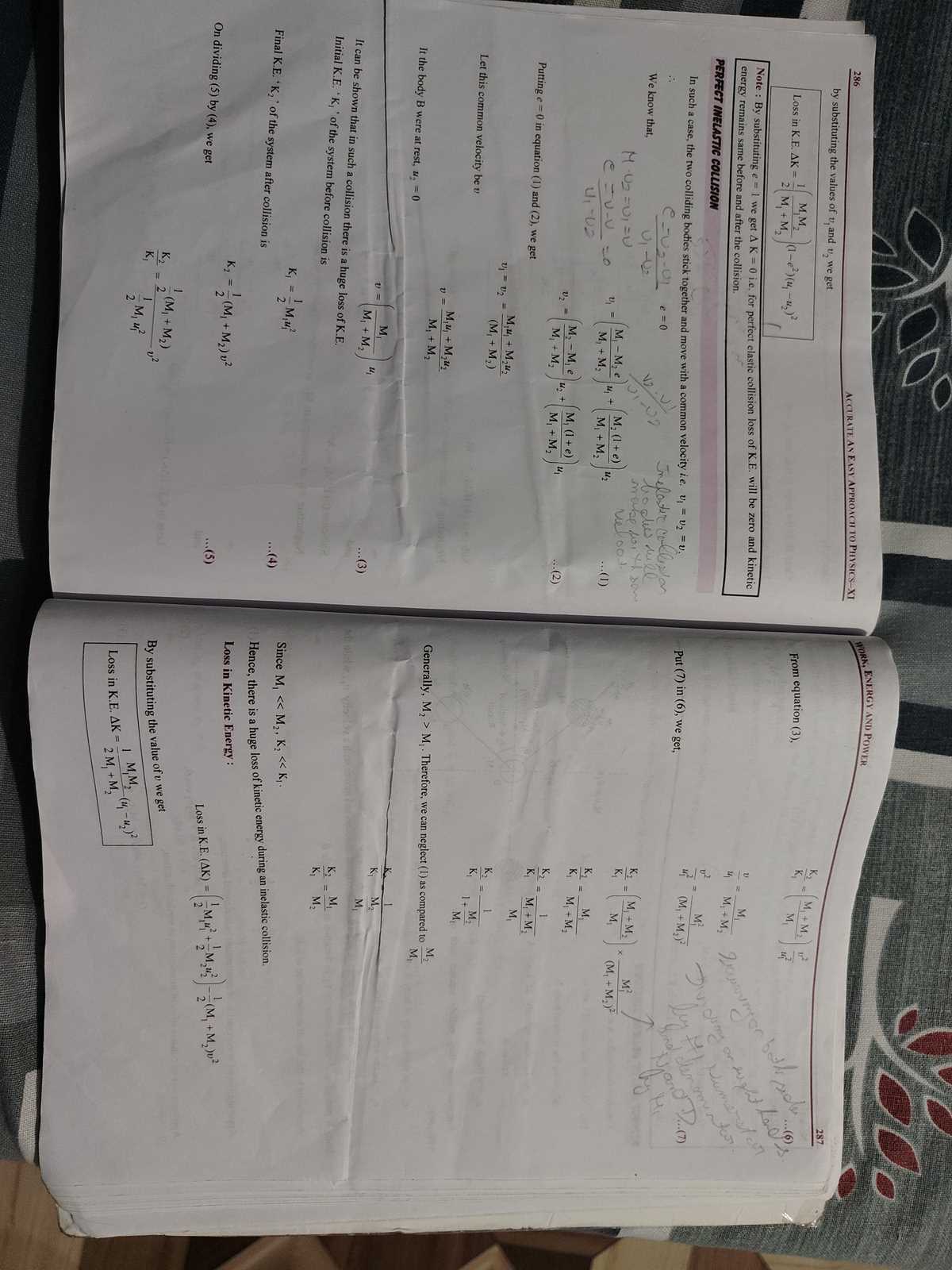
For example, after two objects collide inelastically, the total momentum remains constant, but the energy is dissipated through heat, sound, or deformation, making the total mechanical energy less than before the impact. Use the given masses and velocities to apply the momentum conservation equation accurately.
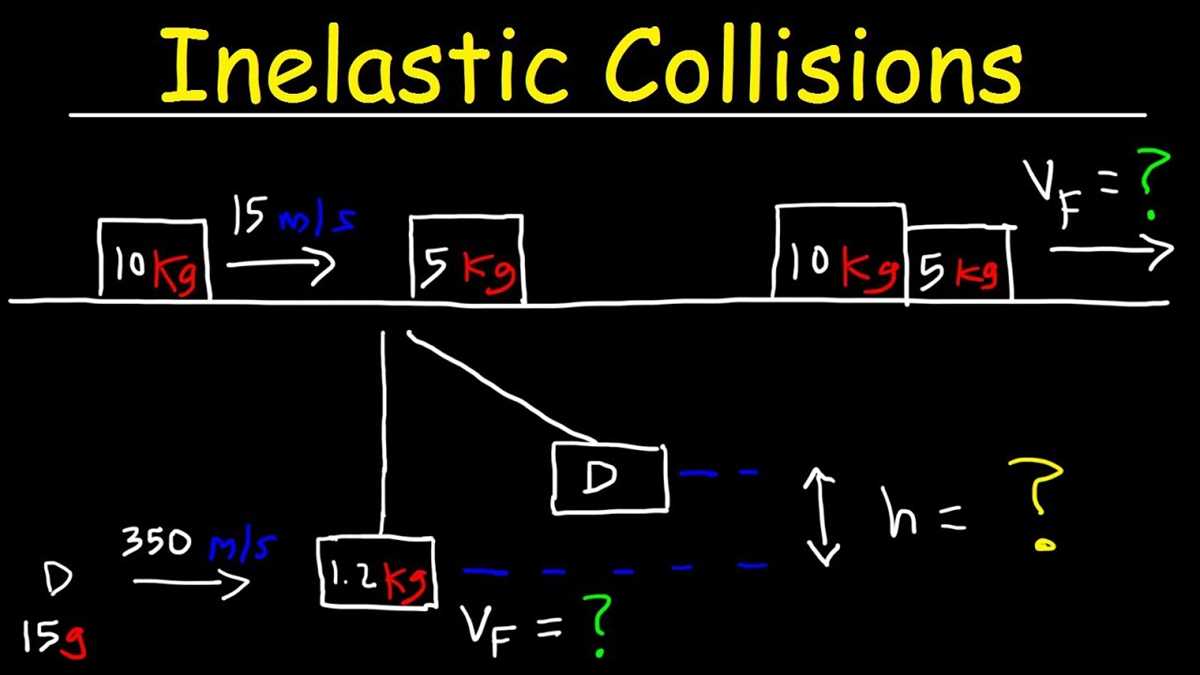
In solving these problems, it’s crucial to recognize the importance of correctly interpreting velocity directions, unit conversions, and whether additional external forces are present. Applying these principles step by step will lead you to the right solution.