Complete Answer Key for The Most Dangerous Game with Detailed Explanations
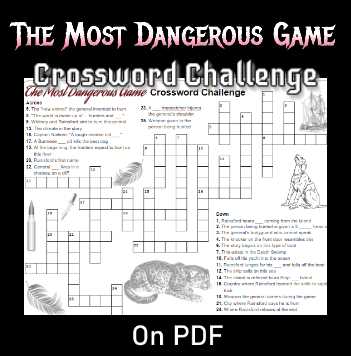
Begin by focusing on the pivotal moments within Connell’s narrative. Pay attention to how Rainsford’s encounter with General Zaroff develops the central conflict. The first meeting sets the tone, as both men are driven by their contrasting values: one seeking survival, the other seeking dominance. Recognize the turning point when the hunter becomes the hunted, shifting the power dynamic between the characters.
Examine the relationship between the protagonist and antagonist. Both characters showcase a clear psychological evolution–Rainsford moves from confident hunter to desperate prey, while Zaroff’s motivations reveal a deeper, unsettling perspective on sport and life. Understanding this transformation is crucial to interpreting the moral dilemmas the story presents.
Explore the symbolism behind the island setting. The isolated location enhances the tension and mirrors the struggle for survival that the characters face. Its harsh, unpredictable environment is more than a backdrop; it serves as a tool to highlight the brutal nature of the competition between Rainsford and Zaroff. Additionally, consider how the dense jungle plays a role in creating the sense of danger and entrapment that both characters must navigate.
Study the thematic elements that underscore the story. Survival, ethical boundaries, and human nature are explored through the actions and decisions of the characters. These themes prompt critical questions: What defines a fair fight? At what point does survival justify the means? Such dilemmas challenge readers to reconsider the limits of morality under extreme circumstances.
Analysis of Key Plot Points in Richard Connell’s Story
Review key events to grasp the core structure of Connell’s narrative. The first significant moment is Rainsford’s arrival on the island and his introduction to General Zaroff. Pay close attention to the conversation between them, where Zaroff reveals his twisted version of hunting and the rules of the deadly game. This marks the beginning of the main conflict.
Next, observe the moment when Rainsford realizes he has become the prey. This shift in perspective is a turning point that drives the narrative forward. The struggle between predator and hunted forms the foundation of the tension in the plot. Key actions, such as Rainsford’s decision to fight back with his survival tactics, highlight his transformation from a confident hunter to a desperate survivor.
One of the most critical moments occurs when Rainsford uses his knowledge of hunting to outwit Zaroff. The traps he sets–such as the Malay mancatcher and the Burmese tiger pit–demonstrate his resourcefulness and willingness to survive at all costs. These actions contribute to the ultimate resolution of the conflict.
- Rainsford’s first confrontation with Zaroff: Understand the significance of their first meeting and how it sets the moral and thematic tone of the story.
- The turning point when Rainsford becomes the prey: Recognize how this shift in perspective forces Rainsford to rethink his beliefs about survival and hunting.
- The traps set by Rainsford: Analyze how Rainsford’s use of his hunting knowledge leads to his escape and challenges Zaroff’s superiority.
- Rainsford’s final confrontation: Look at how the final showdown resolves the central conflict and offers commentary on human nature and survival.
By analyzing these moments, you’ll gain a deeper understanding of the narrative’s structure and the thematic exploration of morality, survival, and the blurred lines between hunter and hunted. Each pivotal scene serves to drive home the story’s larger message about human instincts and ethical boundaries.
Key Plot Events and Their Significance in Richard Connell’s Story
Rainsford’s arrival at the island is the first pivotal event that sets the tone. This moment introduces the reader to the isolated, ominous setting and to General Zaroff, whose obsession with hunting humans is soon revealed. The conversation between the two sets up a conflict based on differing values regarding sport, life, and morality.
Another significant event occurs when Rainsford is thrust into the role of the prey. This marks a sharp turn in the story, where the confident hunter becomes vulnerable. This shift forces Rainsford to reevaluate his skills and mindset as he navigates the treacherous environment in an effort to survive.
The traps that Rainsford sets throughout the island, including the Malay mancatcher and the Burmese tiger pit, demonstrate his growing understanding of survival under extreme pressure. Each trap represents not just a physical challenge but a psychological one, as Rainsford begins to think like the hunted, using his previous knowledge of hunting to turn the tables on his pursuer.
The final confrontation between Rainsford and Zaroff is crucial in resolving the story’s central conflict. Here, Rainsford’s survival instincts culminate in a final act of confrontation, where he manages to outwit Zaroff, ultimately asserting his dominance over the hunter. This event forces the reader to confront questions about morality, power, and survival.
- Rainsford’s arrival and meeting with Zaroff: Sets up the moral and philosophical conflict between hunter and hunted.
- Rainsford becomes the prey: Marks the shift in the protagonist’s role and tests his ability to survive.
- The traps Rainsford sets: Highlights his resourcefulness and knowledge as he adapts to the role of prey.
- Final confrontation: Resolves the conflict and raises deeper questions about survival instincts and morality.
Character Analysis: Rainsford and Zaroff
Rainsford is initially introduced as a confident, skilled hunter who dismisses the feelings of his prey. His view of hunting as a sport is shaped by his experience and success, showing him as someone who values skill, control, and superiority. However, his perception is challenged when he becomes the hunted. As he faces the terror and vulnerability of being pursued, Rainsford’s character shifts from a detached predator to a desperate survivor. His adaptability and ingenuity in creating traps reflect his growing understanding of the struggle for life in its rawest form.
General Zaroff, in contrast, is a man driven by an insatiable need for excitement. As a former soldier, he sees hunting as a way to maintain his sense of dominance and power. Zaroff’s philosophy on life is distorted by his belief in the superiority of the strong, which justifies his decision to hunt humans for sport. His arrogance and twisted view of civilization are evident in his interactions with Rainsford, treating their encounter as a mere game rather than a battle for survival. Zaroff’s overconfidence ultimately leads to his downfall, as he underestimates Rainsford’s resourcefulness and will to survive.
- Rainsford’s transformation: His shift from confident hunter to prey highlights his vulnerability and adaptability.
- Zaroff’s philosophy: Driven by a belief in the superiority of the strong, his actions reveal his twisted view of morality and human life.
- Contrasting values: Rainsford’s growing empathy contrasts with Zaroff’s indifference, showing the ethical divide between them.
- Final encounter: The confrontation between Rainsford and Zaroff symbolizes the clash between survival instincts and twisted ideals of sport.
Understanding the Themes of Survival and Morality
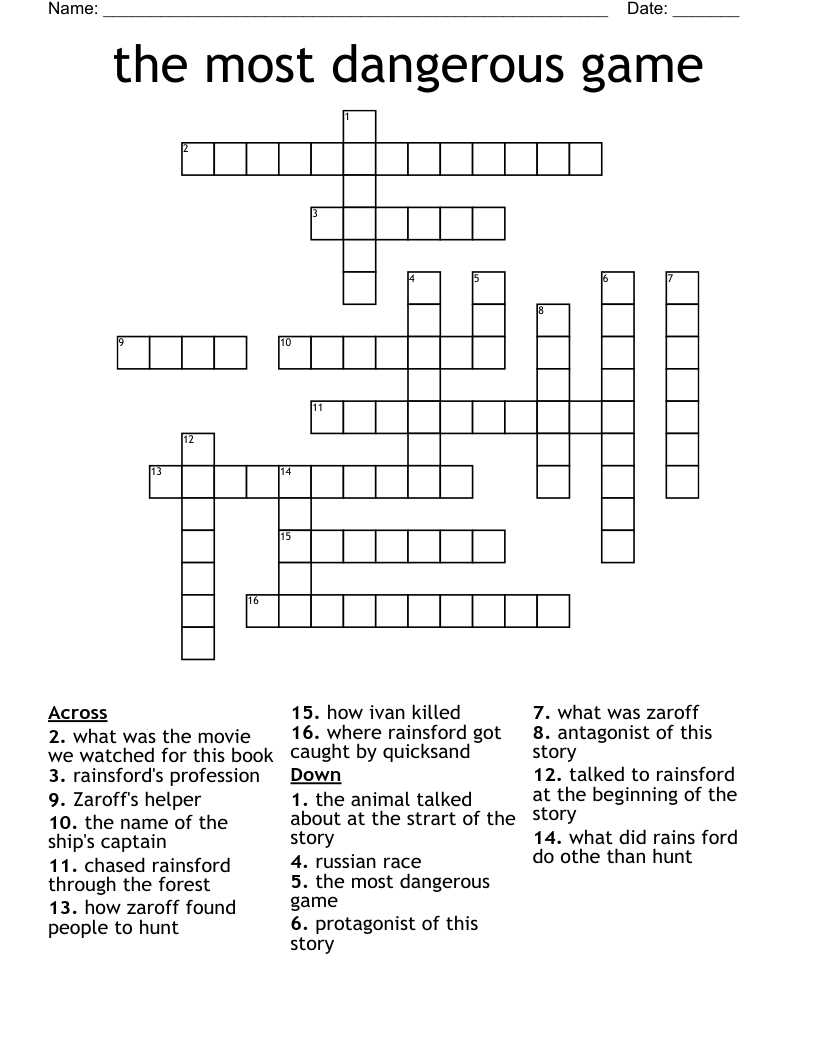
The central theme of survival is explored through Rainsford’s transition from confident hunter to desperate prey. His initial belief in the superiority of hunters is shattered as he faces the reality of being hunted. The story highlights how survival instincts take precedence over all other concerns when faced with life-or-death situations. Rainsford’s resourcefulness and will to live are tested as he creates traps and adapts to his environment. His struggle underscores the primal nature of survival, where ethics and values are often pushed aside in favor of preserving one’s life.
Morality, on the other hand, is questioned through the contrasting philosophies of Rainsford and Zaroff. Zaroff justifies his actions by claiming that the strong have the right to dominate the weak. His twisted sense of morality leads him to view human life as expendable in the pursuit of his own entertainment. In contrast, Rainsford begins to develop a deeper understanding of the value of life as he experiences the fear of being hunted. The story forces readers to reflect on the ethical boundaries of survival and the consequences of viewing life through a purely utilitarian lens.
- Survival instincts: Rainsford’s actions, from setting traps to using his hunting knowledge, show the primal need to stay alive at all costs.
- Morality and ethics: Zaroff’s view of hunting as a sport raises questions about the limits of morality, while Rainsford’s transformation reveals a shift in his ethical beliefs.
- Human nature: The conflict between Rainsford and Zaroff illustrates the tension between civilization and savagery, with each character representing different aspects of human nature.
- The cost of survival: The story demonstrates that survival often comes with moral compromises, forcing characters to choose between ethics and life.
Important Symbols in Richard Connell’s Story Explained
The island itself is a crucial symbol. It represents isolation and entrapment. The lush, remote location amplifies the danger that both Rainsford and Zaroff face. The island is cut off from civilization, underscoring the theme of survival in a harsh, lawless environment where normal societal rules do not apply.
The “hunt” is another significant symbol. While Zaroff sees it as a form of sport and entertainment, it represents much more. The hunt serves as a metaphor for the darker aspects of human nature, highlighting the thrill of power and dominance. For Rainsford, it shifts from a sport to a terrifying struggle for survival, showing how the nature of the hunt changes when the roles are reversed.
Rainsford’s transformation is also symbolized by his change in perspective. Early in the story, he dismisses the feelings of prey, but as he becomes hunted, his view of life and morality shifts. His evolution from hunter to hunted symbolizes the vulnerability that exists within all humans, regardless of their perceived strength or superiority.
Lastly, Zaroff’s mansion symbolizes his twisted sense of control and superiority. It is lavish, imposing, and disconnected from the rest of the island, much like Zaroff’s view of himself as a superior being. The mansion is a symbol of his detachment from the suffering he causes, showcasing his cold, calculating personality.
- The island: Represents isolation, lawlessness, and entrapment, highlighting the theme of survival in extreme conditions.
- The hunt: Symbolizes power, dominance, and the darker aspects of human nature, showing the blurred lines between predator and prey.
- Rainsford’s transformation: Represents the vulnerability of all humans and the shift in perspective when the hunter becomes the hunted.
- Zaroff’s mansion: Symbolizes his twisted sense of superiority and detachment from morality.
For more detailed analysis of the story’s themes and symbols, visit SparkNotes, a trusted source for literary breakdowns and interpretations.
Questions on the Ending of Richard Connell’s Story
Rainsford’s final victory over Zaroff raises key questions. Did Rainsford truly kill Zaroff, or is his fate left ambiguous? The story’s closing lines suggest Rainsford’s triumph, but the uncertainty surrounding Zaroff’s fate invites multiple interpretations. This open-ended conclusion forces readers to confront the reality of Rainsford’s actions and the morality behind them.
Another question to consider is Rainsford’s transformation. From confident hunter to prey, his character shifts throughout the story. By the time he confronts Zaroff, Rainsford has undergone a profound change. Does this victory reflect a moral shift in Rainsford? Has he become like Zaroff, adopting the same brutal survival instincts, or does his triumph signify the preservation of his humanity under extreme pressure?
Finally, examine the larger implications of Rainsford’s actions. Does his decision to kill Zaroff suggest that survival at all costs justifies any moral compromise? Rainsford’s ultimate choice raises the ethical dilemma of whether it is right to kill in self-defense or whether it transforms the killer into something less than human. The ending leaves the reader questioning the true cost of survival and what it means to maintain one’s humanity in a fight for life.
- Did Rainsford kill Zaroff? The story’s ambiguous ending raises questions about Zaroff’s fate and whether Rainsford’s victory is definitive.
- How has Rainsford changed? Does his final action signify that he has become like Zaroff, or does it reflect a necessary step for survival?
- What are the moral consequences of Rainsford’s survival? The ending prompts readers to consider the ethical implications of Rainsford’s choices and their impact on his character.
Rainsford’s Transformation Throughout the Story
Rainsford’s evolution is central to understanding the narrative’s core themes. At the start, he is a confident and detached hunter, focused solely on the thrill of the chase and dismissive of the prey’s perspective. This mindset is challenged when he finds himself stranded on the island, quickly realizing that he is now the one being hunted. His transformation begins as he shifts from a hunter to a desperate survivor.
Throughout the story, Rainsford’s response to the changing circumstances highlights his adaptability. Initially, he relies on his hunting skills to survive, setting traps and using his knowledge of animals to outsmart Zaroff. However, as the story progresses, he begins to understand the true nature of fear and the vulnerability that prey experiences. This shift in perspective marks his internal change from a callous predator to a more reflective individual, aware of his own mortality.
In the final confrontation with Zaroff, Rainsford’s actions suggest that he has fully embraced the survival instinct. The battle is not just physical but moral, as Rainsford must reconcile his past views on hunting with the brutal reality he now faces. His victory over Zaroff suggests a loss of innocence, as he becomes a mirror image of the man he once opposed. Whether or not this transformation is complete, Rainsford’s final decision signifies the profound impact his experience has had on him.
| Stage of Transformation | Rainsford’s Character | Key Actions/Events |
|---|---|---|
| Beginning | Confident, detached hunter | Dismisses the perspective of prey, focused on the thrill of the chase |
| Middle | Desperate survivor | Relies on hunting skills to evade Zaroff, creates traps, experiences fear |
| End | Reflective and hardened survivor | Confronts Zaroff, defeats him, and questions his own morality |
How The Setting Affects the Story’s Conflict
The island plays a crucial role in escalating the conflict within the story. Its isolation from the outside world removes any escape or help for Rainsford, forcing him into a battle for survival. The dense, treacherous jungle and the constant threat of being hunted create a pressure cooker environment where every action, every decision, carries life-or-death consequences. The setting strips away the comfort of civilization, highlighting the primal instincts that emerge when one is pushed to the brink.
The setting also amplifies the psychological aspect of the conflict. Zaroff’s mansion, with its lavish, almost surreal atmosphere, contrasts sharply with the dangerous wilds surrounding it. This stark contrast underscores the warped sense of normality Zaroff has created, where he feels justified in hunting humans for sport. For Rainsford, the mansion symbolizes both a temporary reprieve and a reminder of his perilous situation, where survival becomes the only goal. The island’s geography, with its hidden dangers, mirrors the internal struggle Rainsford faces as he shifts from hunter to prey.
Additionally, the island’s unpredictability forces Rainsford to adapt quickly, testing his intelligence and resourcefulness. The constant movement between different environments–dense forest, cliffs, and the coastline–prevents Rainsford from finding permanent safety, thus heightening the tension. The setting is not just a backdrop, but an active participant that shapes the unfolding conflict, making every step a potential life-or-death decision.
Common Misinterpretations of Richard Connell’s Story
One common misconception is that the story is solely about a thrilling hunt. While the external conflict between Rainsford and Zaroff is central, the deeper themes of morality, survival, and human nature are often overlooked. Many readers focus only on the action, missing the psychological and ethical underpinnings of the narrative.
Another misinterpretation is assuming that Rainsford’s character remains static. Some readers believe that he is simply a victim of circumstances, but Rainsford undergoes a significant transformation. His initial confidence as a hunter evolves into a more complex view of life, as he experiences firsthand what it means to be prey. His actions at the end reveal a shift in his moral perspective, which is often ignored by those who see him as just a survivor.
Additionally, Zaroff is sometimes seen merely as a villain with no depth. While his actions are certainly morally reprehensible, some interpretations fail to explore the psychological motivations behind his behavior. Zaroff’s desire for a more challenging hunt stems from his boredom with the predictable, and his warped sense of superiority raises questions about the nature of power and control.
| Misinterpretation | Correct Interpretation |
|---|---|
| The story is just about a hunt | The story explores deeper themes of survival, morality, and the human condition. |
| Rainsford remains unchanged | Rainsford undergoes a significant transformation, questioning his former views on hunting and morality. |
| Zaroff is just a villain | Zaroff’s character is complex, driven by boredom and a twisted sense of superiority. |