Understanding Air Pressure and Wind Patterns Solutions
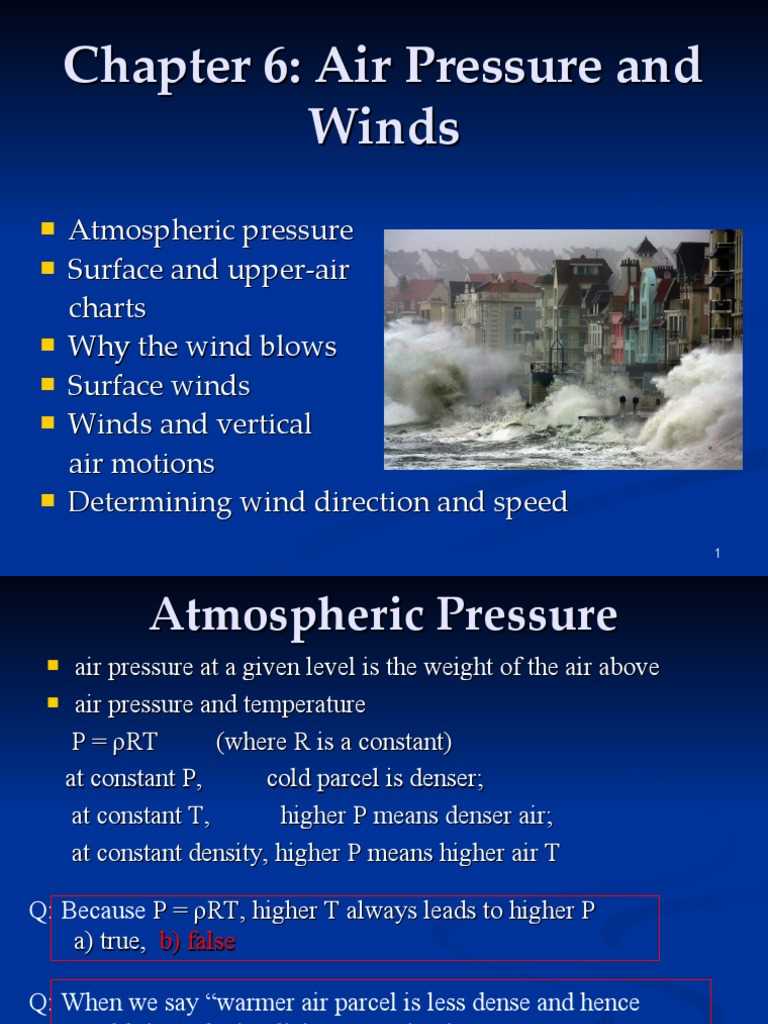
To analyze the movement of gases in the atmosphere, start by identifying the difference in density caused by varying temperatures. Higher temperatures cause molecules to spread out, decreasing density, while cooler temperatures cause molecules to contract, increasing density.
When you understand how temperature variations influence density, you can better grasp how differences in density create areas of higher and lower concentrations, leading to movement. These shifts are driven by differences in density, which leads to the circulation of air from high-pressure to low-pressure areas.
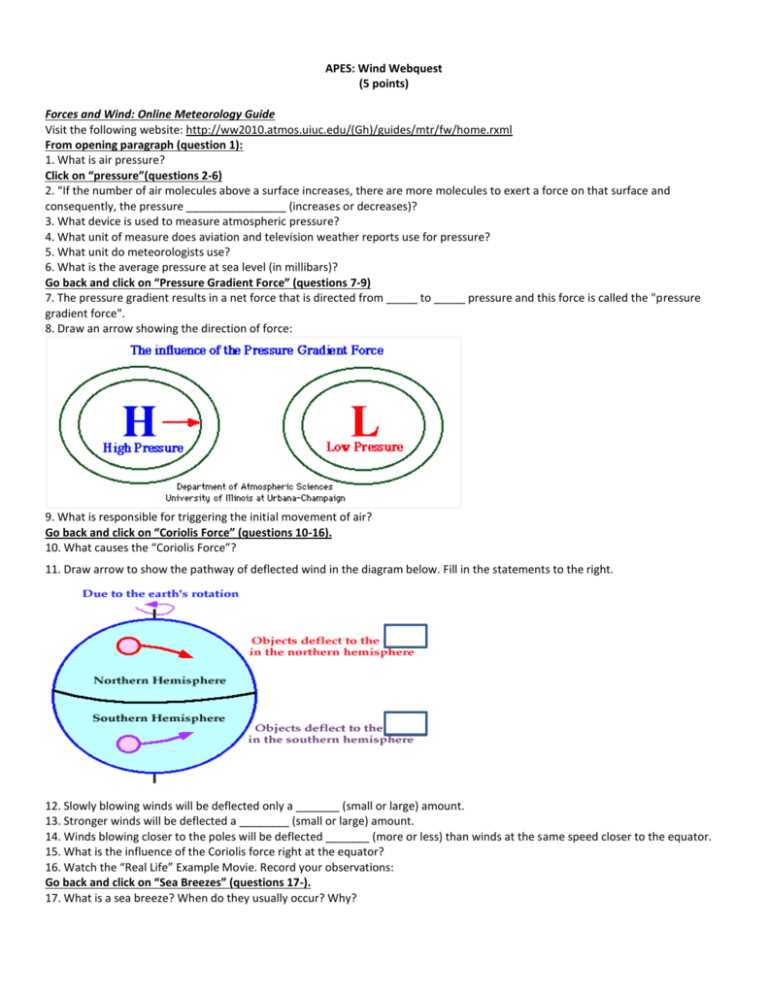
To calculate the resulting forces, observe the effects of factors like the rotation of the Earth, known as the Coriolis effect, which diverts moving gases in different directions depending on the hemisphere. Combining these factors helps explain the direction and speed of air currents across the globe.