Detailed Analysis and Insights for A Pair of Silk Stockings
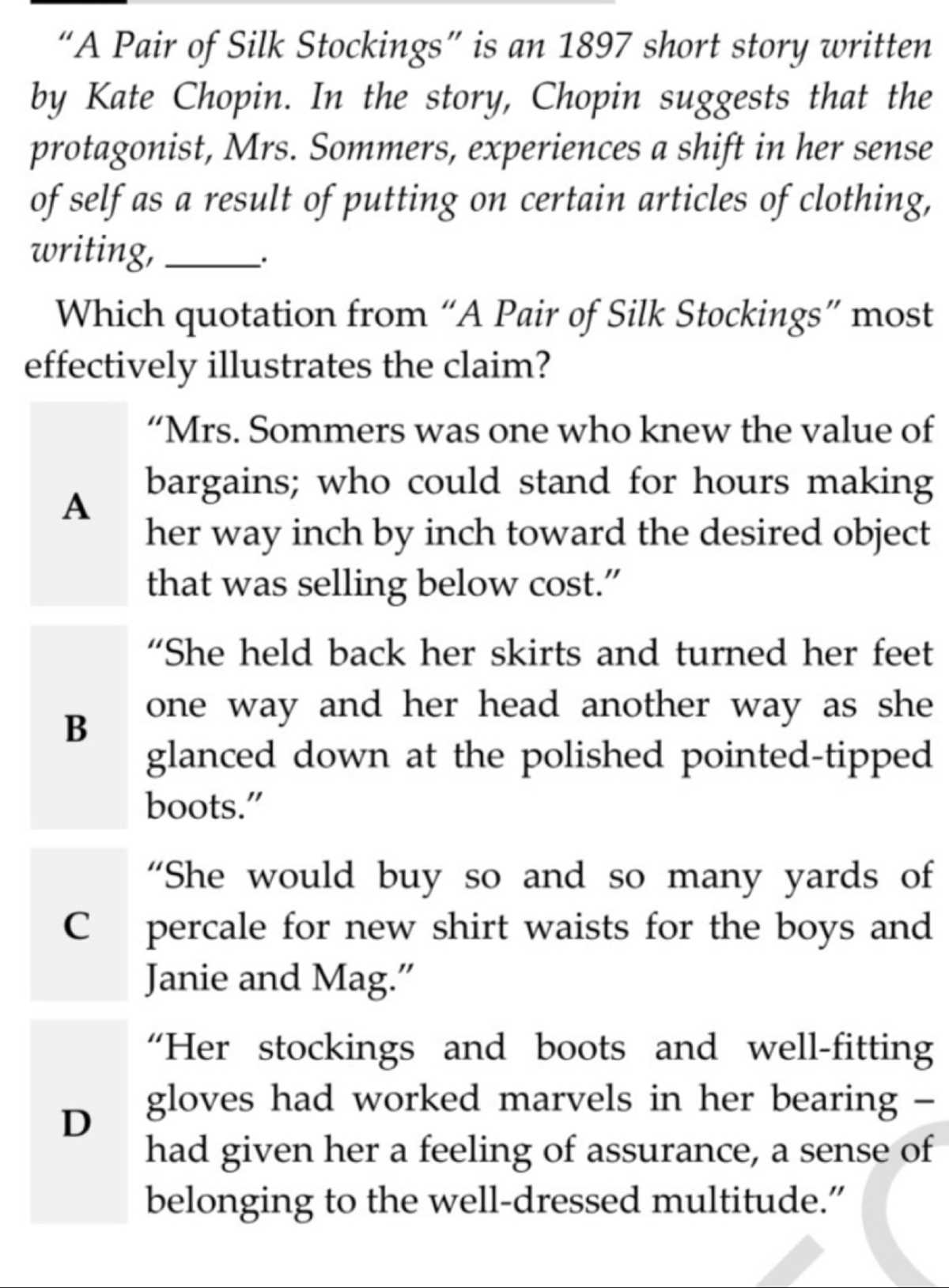
Start by identifying the key themes in Kate Chopin’s short story. The protagonist’s experience of indulgence offers a deep commentary on self-awareness and the role of material desires in shaping one’s identity. Pay close attention to her internal conflict between personal satisfaction and societal expectations, which is central to the narrative’s impact.
Focus on the symbolism within the plot. The luxury items purchased by Mrs. Sommers, especially the fine hosiery, serve as symbols of freedom and fleeting moments of personal pleasure. These items act as a stark contrast to her usual life of sacrifice and modesty, highlighting the tension between desires and responsibilities.
Next, examine how Chopin uses characterization to illustrate the emotional complexity of Mrs. Sommers. Her decision to purchase the expensive items is a turning point that illustrates her yearning for self-expression outside the roles imposed on her by family and society. This act serves as a temporary escape from the pressures of motherhood and domestic life.
Throughout the story, the setting plays a critical role in the development of the plot and character. The urban environment, with its shops and displays of wealth, contrasts with Mrs. Sommers’ modest life, reinforcing her struggle between self-denial and indulgence. Consider how the locations in the story–especially the department store–symbolize the unattainable desires that Mrs. Sommers temporarily acquires.
A Pair of Silk Stockings Analysis
When analyzing the narrative, focus on the protagonist’s internal struggle. The character, Mrs. Sommers, experiences a temporary yet profound shift in perspective when she indulges in purchasing luxurious items. This event highlights her desire for self-expression outside of her traditional role as a mother. It also reveals her yearning for a brief escape from her responsibilities. Consider how her choice to spend money on herself, rather than her children, reflects a deeper desire for personal freedom.
The symbolism throughout the story plays a crucial role in understanding the underlying themes. The luxury items purchased, including fine garments, represent more than material indulgence–they signify a momentary reclaiming of her identity and desires that have long been suppressed. This act contrasts sharply with her usual self-sacrificial nature, revealing her internal conflict.
To truly grasp the character’s evolution, pay attention to the setting. The department store, where Mrs. Sommers makes her purchase, serves as a symbol of unattainable desires and societal expectations. The space is a stark contrast to the simplicity of her everyday life, emphasizing the tension between the life she feels obligated to live and the one she briefly imagines for herself.
For more detailed analysis and discussion of Kate Chopin’s work, visit the official resources available on platforms such as Poetry Foundation.
How to Analyze the Main Themes in A Pair of Silk Stockings
To fully understand the themes in this story, focus on the central conflict between personal desires and social roles. The protagonist’s internal struggle reflects the larger theme of self-identity versus duty. Here are key points to consider:
- Individualism vs. Societal Expectations: Mrs. Sommers’ brief indulgence in luxury items challenges her role as a mother and caretaker. Analyze how her fleeting escape from responsibility contrasts with her usual self-sacrificing nature.
- Freedom and Escape: The items she buys are symbolic of her attempt to break free from the confines of her everyday life. Examine how this act represents her brief moment of freedom and self-expression.
- The Illusion of Happiness: Although Mrs. Sommers experiences a temporary joy from her purchase, it’s essential to explore the deeper meaning behind this fleeting happiness. Look for moments that suggest her contentment is shallow and short-lived.
- Social Class and Economic Status: Mrs. Sommers’ ability to buy expensive items highlights the divide between her working-class life and the wealth she briefly tastes. Consider how the story reflects issues of class and the fleeting nature of upward mobility.
By identifying these recurring themes and examining how they interact with the character’s actions, you can gain a deeper understanding of the story’s message and its critique of societal norms. Additionally, review how Chopin uses symbolism, such as clothing and the department store, to underscore these themes.
Understanding the Character Development of Mrs. Sommers
Mrs. Sommers’ character undergoes a subtle but significant transformation as the story progresses. Initially, she is portrayed as a self-sacrificing mother, devoted to the needs of her children. However, her experience in the store reveals deeper layers of her personality and desires. To understand her development, focus on these key points:
- Self-Sacrifice to Self-Indulgence: Mrs. Sommers’ initial actions reflect her role as a caretaker. Yet, when she decides to buy luxurious items for herself, she steps away from this selfless persona. This brief moment of indulgence marks a pivotal change in her character.
- Internal Conflict: Throughout her time in the store, Mrs. Sommers wrestles with feelings of guilt and joy. She briefly abandons her responsibilities, allowing herself to experience life outside her domestic role. This inner conflict is central to her character’s development, revealing her suppressed desires.
- Moment of Escape: Mrs. Sommers’ purchase and the time she spends in the city reflect her need to escape from the mundane. Her brief enjoyment represents her yearning for freedom, yet it is clear that this escape is temporary and does not provide lasting fulfillment.
- Realization of Limits: The character’s development culminates when she realizes that the joy she experiences is fleeting. Despite her brief escape, she returns to her duties, understanding the limitations imposed by her circumstances. This moment reinforces her struggle between duty and desire.
By analyzing these moments, we can better understand Mrs. Sommers as a complex character torn between personal aspirations and societal expectations. Her development is not defined by a dramatic change but by a fleeting experience that exposes her deeper frustrations and desires.
Exploring the Symbolism of the Silk Stockings
The luxurious garments in the story serve as a powerful symbol of fleeting indulgence and personal freedom. Their significance goes beyond mere material objects, offering deeper insight into the protagonist’s desires and inner conflict. Here’s how:
- Symbol of Escape: The garments represent a temporary escape from Mrs. Sommers’ everyday responsibilities. Purchasing them allows her to step outside the roles of mother and caretaker, providing a brief moment of personal liberation.
- Contrast with Ordinary Life: The luxurious nature of the items contrasts sharply with Mrs. Sommers’ usual life of scarcity and self-denial. They symbolize the desires and pleasures she rarely allows herself, highlighting the tension between her duties and her unfulfilled personal needs.
- Materialism vs. Emotional Fulfillment: The choice to buy these expensive items reflects a deeper yearning for emotional fulfillment, as they offer temporary joy but no lasting satisfaction. This creates a parallel between material desires and the pursuit of true happiness.
- Momentary Self-Worth: For Mrs. Sommers, the stockings serve as a way to reclaim a sense of self-worth. They are a symbol of reclaiming some form of personal identity beyond her role as a mother, even if that sense of worth is fleeting.
Ultimately, the garments act as a metaphor for Mrs. Sommers’ internal conflict between her responsibilities and her need for personal satisfaction. They provide an opportunity for self-expression but also remind her of the limits imposed by her social and familial roles.
Key Literary Devices Used in A Pair of Silk Stockings
The story effectively utilizes several literary devices that enhance its thematic depth and character development. These devices help convey the internal conflicts and social commentary present in the narrative. Here are the main ones:
- Symbolism: The luxurious garments serve as a symbol of personal freedom and the desire for self-expression. They represent the fleeting nature of indulgence and the tension between responsibility and personal desires.
- Imagery: The detailed descriptions of the environment, the store, and the luxurious items help the reader visualize Mrs. Sommers’ world and contrast it with her ordinary, mundane life. This vivid imagery enhances the emotional impact of her momentary escape.
- Irony: There is a subtle irony in Mrs. Sommers’ decision to indulge in a luxury that is completely at odds with her usual life of frugality. The choice of luxury contrasts with her financial and social status, adding complexity to her character.
- Internal Conflict: The internal struggle Mrs. Sommers experiences is central to the story. Her desire for indulgence and her guilt over neglecting her responsibilities create a powerful tension, revealing the complexity of her emotions and desires.
- Characterization: Through subtle actions and thoughts, the author reveals the complexity of Mrs. Sommers. Her brief but significant purchase reveals much about her need for self-worth, her struggle with her roles as a mother, and her desire for freedom.
These literary devices work together to deepen the narrative, revealing key themes such as the conflict between duty and personal desires, and the transient nature of material satisfaction.
How Setting Contributes to the Story’s Message
The setting plays a crucial role in conveying the central themes of the story. The environment is not just a backdrop but actively contributes to the development of the main character’s emotional journey and the story’s overall message.
The bustling city setting and the store where the protagonist makes her purchase contrast sharply with her ordinary life. This shift highlights the temporary escape she seeks from her everyday struggles and responsibilities. The urban environment symbolizes a space where individual desires and fantasies can momentarily take precedence over societal roles and obligations.
Moreover, the detailed descriptions of the store, with its luxurious items, amplify the tension between what the protagonist yearns for and the reality of her financial and familial constraints. The setting, therefore, underscores her inner conflict between duty and indulgence, revealing the transient nature of her escape and the fleeting satisfaction it provides.
In this way, the setting deepens the thematic exploration of personal freedom, self-worth, and the limitations imposed by social roles. The contrast between the humble surroundings and the brief indulgence in luxury also highlights the theme of self-sacrifice versus personal fulfillment.
Interpreting the Emotional Conflict in A Pair of Silk Stockings
The protagonist experiences a deep emotional conflict as she grapples with the choice between self-indulgence and familial responsibilities. Her decision to purchase luxury items symbolizes a moment of personal desire, breaking away from the constraints of her usual life. However, the joy she feels is fleeting, as the guilt of neglecting her duties weighs heavily on her.
Her internal struggle is marked by the tension between fulfilling her own needs and adhering to her role as a caretaker. This battle highlights the larger theme of self-sacrifice, as she temporarily steps away from the life she knows to experience a brief sense of freedom and pleasure. Yet, the emotional conflict remains unresolved as she realizes that the satisfaction of her indulgence is short-lived and does not erase the responsibilities she faces.
In this way, the emotional conflict becomes a lens through which the reader can explore themes of identity, self-worth, and the complex nature of personal freedom. The protagonist’s brief escape into a world of luxury ultimately underscores her inner dissatisfaction and the limitations of material fulfillment in resolving deeper emotional needs.
Examining the Role of Social Class in the Story

The story sharply portrays the tensions between social classes, highlighting how economic status shapes the characters’ actions and choices. The protagonist’s decision to indulge in luxury reflects her yearning to escape the constraints of her modest life, symbolizing a brief attempt to transcend her social position.
Social class acts as a constant backdrop, influencing not only the protagonist’s behavior but also her internal struggles. Her fleeting enjoyment of the luxury items contrasts with her day-to-day reality, where she is bound by financial limitations and responsibilities. This clash emphasizes the disconnect between the aspirations of those in lower social classes and the reality they face.
The story also explores how social expectations impact self-worth and personal identity. For the protagonist, the brief moment of indulgence serves as an expression of desire for status and recognition, yet it ultimately fails to offer any lasting fulfillment, reinforcing the limitations of materialism and the social class barriers that define her world.
Common Misinterpretations and How to Avoid Them
One common misinterpretation of the story is viewing the protagonist’s actions as purely selfish or materialistic. While it’s easy to label her brief indulgence as a moment of vanity, it is crucial to understand this as a deeper reflection of her longing for a life beyond her limited circumstances. The key is to focus on the emotional conflict driving her desire for luxury rather than reducing her actions to surface-level desires.
Another mistake is overlooking the social class commentary. The protagonist’s decision to purchase luxury items is often seen as an escape from her reality. However, this escape is not purely about wealth or consumption; it’s a symbolic act that illustrates her internal struggle with her position in society. To avoid this misinterpretation, consider how the context of economic hardship shapes the protagonist’s choices and emotions throughout the narrative.
Lastly, some readers may interpret the conclusion as a complete failure of the protagonist’s emotional growth. While the ending may seem unresolved, it actually speaks to the complexities of personal fulfillment and societal pressures. Avoid the temptation to view it as a defeat by recognizing that the protagonist’s moment of joy reflects a temporary but profound escape from the constraints of her life.