Understanding Nephron Structures with Note Guide and Answers
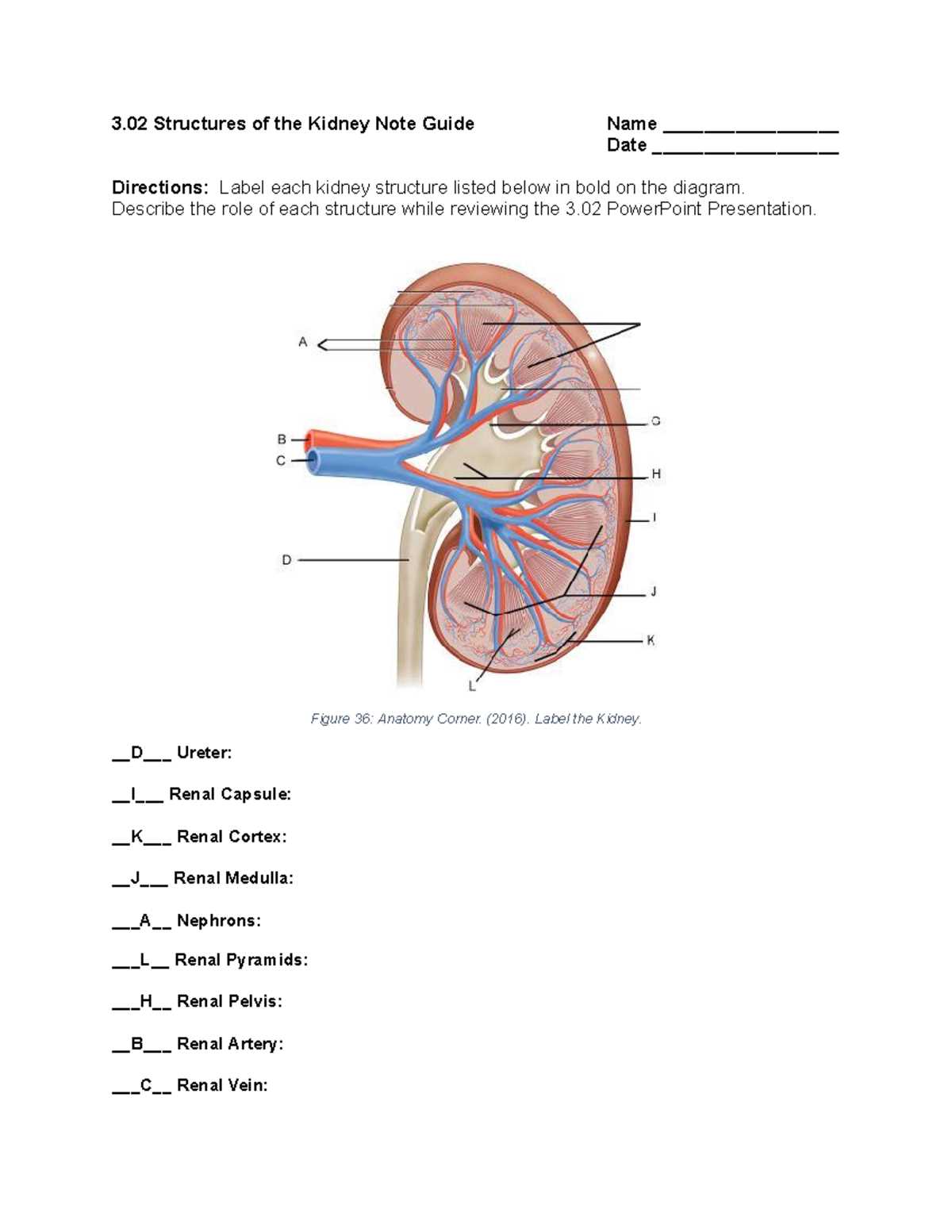
Focus on understanding the individual components involved in kidney filtration. Start by reviewing the structure of the renal corpuscle, which includes the glomerulus and Bowman’s capsule. The glomerulus acts as a network of capillaries where blood is filtered, while Bowman’s capsule captures the filtrate that passes through.
Next, examine the renal tubule, which consists of several key sections: the proximal convoluted tubule, loop of Henle, distal convoluted tubule, and collecting duct. These parts play crucial roles in reabsorbing water, ions, and nutrients, as well as secreting waste products into the urine.
For better comprehension, pay attention to how each section of the nephron contributes to the regulation of water and electrolyte balance. The loop of Henle is particularly important for concentrating urine, and the collecting duct helps determine the final urine volume by responding to antidiuretic hormone (ADH).
Study diagrams of the nephron and compare them with your notes to reinforce these concepts. Knowing the specific functions of each part will provide a clearer understanding of how the kidneys maintain homeostasis in the body.