Measuring Units Worksheet Solutions and Explanations
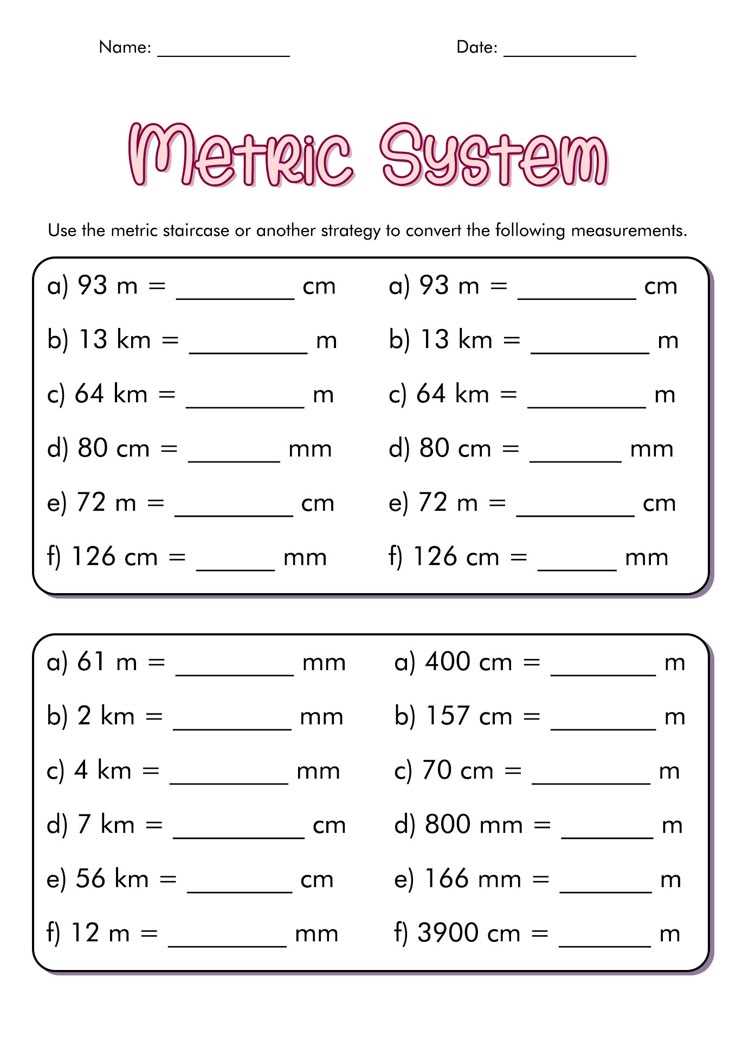
To successfully tackle measurement problems, start by identifying the type of value you’re working with and determining which conversion is needed. For example, converting from inches to centimeters requires knowledge of the conversion factor between these two systems. Having a clear understanding of the conversion factor is crucial to ensure accurate results.
One of the most common issues in solving these problems is forgetting to adjust the units properly during the process. Double-check your calculations to ensure that the correct numbers are used for the conversion factor. Also, consider working through examples step by step to solidify your grasp on the process.
Using reference tables can simplify the task of converting measurements, especially when dealing with less common units. Practice is key in mastering these conversions, as the more you work with them, the quicker and more confident you’ll become. Consistently reviewing each step in the conversion process helps in preventing common mistakes, such as mixing up units or applying incorrect conversion factors.
Measurement Calculations Solutions and Explanations
To convert from feet to inches, multiply the number of feet by 12. For example, 5 feet equals 60 inches because 5 × 12 = 60. It’s important to remember the conversion factor of 12 when switching between these two measurements.
For converting miles to kilometers, use the factor 1 mile = 1.60934 kilometers. For instance, 3 miles equals approximately 4.82802 kilometers because 3 × 1.60934 = 4.82802. Always round your final result to the appropriate decimal place depending on the level of precision required.
When switching between grams and kilograms, recall that 1 kilogram equals 1,000 grams. If you have 250 grams, divide by 1,000 to get 0.25 kilograms. It’s a straightforward conversion, but attention to detail is crucial for accuracy.
For temperature conversions, the formulas differ based on the type of conversion. To convert Celsius to Fahrenheit, multiply the Celsius value by 9/5 and then add 32. For example, 20°C becomes 68°F because (20 × 9/5) + 32 = 68. Ensure you follow the correct steps for each specific conversion to avoid errors.
Understanding Different Types of Measurement Units
Measurement systems are divided into several types, each suited to specific applications. Below are some of the most common categories:
- Length: Used to measure distance or size. Common units include meters, kilometers, feet, and miles. The metric system primarily uses meters (m) and kilometers (km), while the imperial system uses feet (ft) and miles (mi).
- Mass: Measures the amount of matter in an object. The metric system uses grams (g) and kilograms (kg), while the imperial system uses pounds (lb) and ounces (oz).
- Volume: Used to measure the amount of space an object occupies. Liters (L) are standard in the metric system, while gallons (gal) and fluid ounces (fl oz) are commonly used in the imperial system.
- Temperature: Measures the warmth or coldness of an object. The metric system uses Celsius (°C), while Fahrenheit (°F) is used in some countries, particularly the United States.
- Time: Measures the passage of time, with seconds (s), minutes (min), and hours (hr) being the most commonly used units.
- Speed: Measures how fast something moves. It is often expressed in kilometers per hour (km/h) or meters per second (m/s) in the metric system, and miles per hour (mph) in the imperial system.
Each system of measurement has its own set of rules for conversions. For instance, the metric system is decimal-based, making conversions simple, while the imperial system uses different factors that may require more complex calculations.
How to Convert Between Common Measurement Units
To convert between different measurement systems, follow these simple steps:
- Identify the units: Determine which measurement units you are converting from and to. For example, if you need to convert kilometers to miles, recognize that one unit is in the metric system and the other is in the imperial system.
- Use conversion factors: Every measurement has a conversion factor. For length, the conversion between meters and feet is 1 meter = 3.28084 feet. For weight, 1 kilogram = 2.20462 pounds. Make sure you use the correct conversion factor for each case.
- Multiply or divide: Depending on the direction of the conversion, multiply or divide the value by the conversion factor. For example, to convert kilometers to miles, multiply the number of kilometers by 0.621371. To convert from miles to kilometers, divide by the same factor.
- Double-check the result: After performing the conversion, verify that the result makes sense. If converting a large value from one system to another, recheck the calculation to avoid common mistakes.
Common conversion examples include:
- 1 inch = 2.54 cm
- 1 gallon = 3.785 liters
- 1 kilogram = 1000 grams
- 1 mile = 1.609 kilometers
By consistently applying these steps, converting between measurement systems becomes straightforward and accurate.
Using Unit Conversion Factors in Practice Problems
To apply conversion factors in practice problems, follow these steps:
- Understand the problem: Start by identifying the quantity you are working with and the desired unit for the solution. For example, if you have a measurement in inches and need to convert it to centimeters, you must know the conversion factor between these two systems.
- Find the conversion factor: Determine the appropriate factor for the conversion. For length, 1 inch equals 2.54 centimeters. For volume, 1 gallon equals 3.785 liters. Keep a list of common conversion factors for quick reference.
- Set up the equation: Write the equation so that the unit you want to cancel out is placed in the denominator. For instance, to convert 10 inches to centimeters, the equation will look like this: 10 inches × (2.54 cm / 1 inch). The inches cancel out, leaving centimeters.
- Perform the calculation: Multiply the initial value by the conversion factor. In the example above, 10 inches × 2.54 = 25.4 cm.
- Verify the result: Check if the result is reasonable. The converted value should match expectations based on the size or scale of the original quantity.
For practice problems, common conversions include:
- Distance: 1 mile = 1.609 kilometers
- Weight: 1 pound = 0.453592 kilograms
- Volume: 1 liter = 1000 milliliters
By following these steps and practicing with different problems, you’ll gain proficiency in using conversion factors for various measurement challenges.
Step-by-Step Guide for Solving Unit Conversion Exercises
Follow these steps to solve any conversion problem with confidence:
- Identify the starting and target quantities: Determine the initial measurement and the unit you need to convert to. For example, you might start with 10 miles and want to convert to kilometers.
- Select the correct conversion factor: Find the appropriate factor for the conversion. For length, for example, 1 mile = 1.609 kilometers. Keep a list of common factors handy.
- Set up the conversion equation: Write the equation so the unwanted unit cancels out. For instance, to convert miles to kilometers, the equation would be: 10 miles × (1.609 km / 1 mile). Here, miles cancel out.
- Multiply the initial quantity by the conversion factor: Perform the calculation. In the above case, 10 × 1.609 = 16.09 kilometers.
- Check the result: Make sure your final answer is reasonable. If the original number is smaller, the final result should be bigger if you’re converting to a larger unit, or vice versa.
Here’s an example of how to set up a unit conversion table for reference:
| From | Conversion Factor | To |
|---|---|---|
| 1 mile | 1.609 | kilometers |
| 1 pound | 0.453592 | kilograms |
| 1 liter | 1000 | milliliters |
Practice solving these problems with different measurements to become more proficient in applying the conversion process.
Common Mistakes to Avoid in Measurement Unit Problems
Avoid these common errors to improve accuracy in your calculations:
- Misunderstanding conversion factors: Ensure that you are using the correct conversion factor for each measurement. For example, converting kilometers to miles requires the factor 1 km = 0.621371 miles, not the reverse.
- Forgetting to cancel out units: When setting up conversions, always check that units cancel out appropriately. For instance, when converting 10 miles to kilometers, miles should cancel out, leaving kilometers as the final unit.
- Incorrect order of operations: Apply operations step by step, and ensure you’re multiplying or dividing in the correct order. Multiplying before dividing (or vice versa) can lead to incorrect results.
- Using approximate values without checking: When working with constants or conversion factors, always use the most precise value available to avoid errors from rounding too early in the process.
- Not considering significant figures: Pay attention to the precision of your measurements. The final result should reflect the significant figures of the least precise measurement you started with.
For more detailed guidelines on unit conversions, check reliable resources such as NIST (National Institute of Standards and Technology).
How to Apply Unit Conversions in Real-World Scenarios
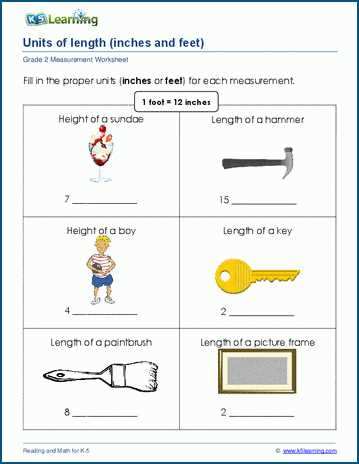
To apply conversions in everyday situations, follow these practical examples:
- Travel and Distance: When traveling abroad, converting kilometers to miles is often required. For instance, if you know the distance to your destination is 120 kilometers, multiply it by 0.621371 to find the distance in miles: 120 km * 0.621371 = 74.564 miles.
- Cooking: Recipes often require conversions between volume measurements. If a recipe asks for 250 milliliters of milk but your measuring cup is in fluid ounces, multiply 250 ml by the conversion factor (1 ml = 0.033814 fl oz) to get approximately 8.45 fl oz.
- Temperature: Converting between Celsius and Fahrenheit is common in daily life. To convert 25°C to Fahrenheit, multiply by 9/5 and add 32: (25 * 9/5) + 32 = 77°F.
- Shopping: When buying fabric, you’ll often encounter conversions from square meters to square feet. If a piece of fabric covers 5 square meters, multiply by the conversion factor (1 m² = 10.7639 ft²) to get 53.8195 square feet.
- Construction: When planning construction projects, converting from cubic meters to cubic feet is necessary. For example, if you need 10 cubic meters of concrete, multiply by 35.3147 (1 m³ = 35.3147 ft³) to get 353.147 cubic feet.
Using the correct factors and understanding the relationships between different measurements allows for quick and accurate conversions in various contexts.
Understanding the Relationship Between Metric and Imperial Units
The metric and imperial systems represent two distinct methods for quantifying physical properties. Here’s a breakdown of key relationships between the two systems:
- Length: 1 inch is equal to 2.54 centimeters. To convert inches to centimeters, multiply by 2.54. Conversely, 1 centimeter is approximately 0.393701 inches.
- Weight: 1 pound is equal to 0.453592 kilograms. To convert pounds to kilograms, multiply by 0.453592. For kilograms to pounds, multiply by 2.20462.
- Volume: 1 gallon is equal to 3.78541 liters. To convert gallons to liters, multiply by 3.78541. For liters to gallons, multiply by 0.264172.
- Temperature: Celsius and Fahrenheit are related by the formula: Fahrenheit = (Celsius × 9/5) + 32. To convert from Fahrenheit to Celsius, use the formula: Celsius = (Fahrenheit – 32) × 5/9.
Understanding these relationships helps in converting between the two measurement systems and facilitates accurate calculations in both personal and professional contexts.
Tips for Double-Checking Unit Conversion Calculations
To ensure accuracy when converting between different systems of measurement, follow these steps:
- Verify Conversion Factors: Always double-check the conversion factor before starting. A small mistake in the factor can lead to large errors.
- Check for Consistent Units: Ensure that both the starting and final units are correct and aligned. For example, when converting volume, ensure you’re comparing milliliters to milliliters or liters to liters.
- Reverse Calculation: After converting, reverse the calculation to see if you get back to the original value. This helps confirm that the conversion was done correctly.
- Estimate the Result: Before performing the calculation, estimate the final answer. This gives you a rough idea of what the result should be, which can help spot major errors in the calculation.
- Use a Calculator: When possible, use a calculator to perform the math. This reduces the risk of arithmetic mistakes that might occur with manual calculations.
- Check the Reasonableness: After obtaining the result, assess if the final number makes sense in context. For instance, if you convert 5 miles to kilometers and get a result of 50, it’s clearly incorrect.
By following these strategies, you can significantly reduce errors and ensure reliable conversion results.