Key Concept Builder Lesson 2 Types of Chemical Reactions and Answers
If you are studying the different ways substances interact and transform, it’s important to grasp the core categories in which these processes can be grouped. One of the most common distinctions involves how elements or compounds combine, break apart, or change into new products. The most prominent categories include synthesis, decomposition, single displacement, and double displacement reactions.
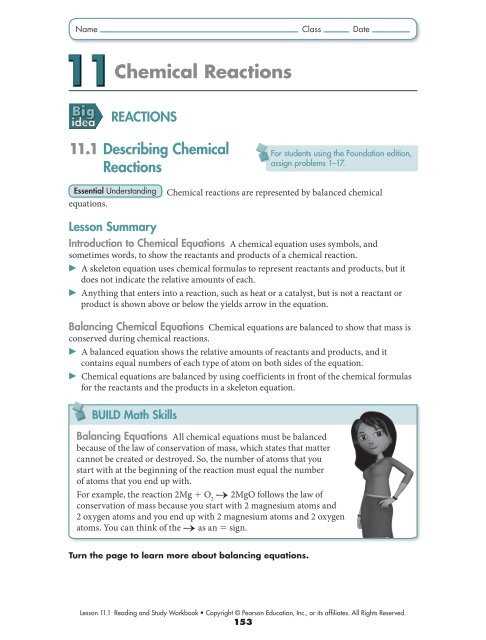
Synthesis reactions occur when two or more reactants combine to form a single product. This often involves simple elements joining to create more complex molecules, like the formation of water from hydrogen and oxygen.
Decomposition reactions are the opposite, where a single compound breaks down into two or more simpler substances. This can be observed when a compound like calcium carbonate is heated, leading to the release of carbon dioxide and calcium oxide.
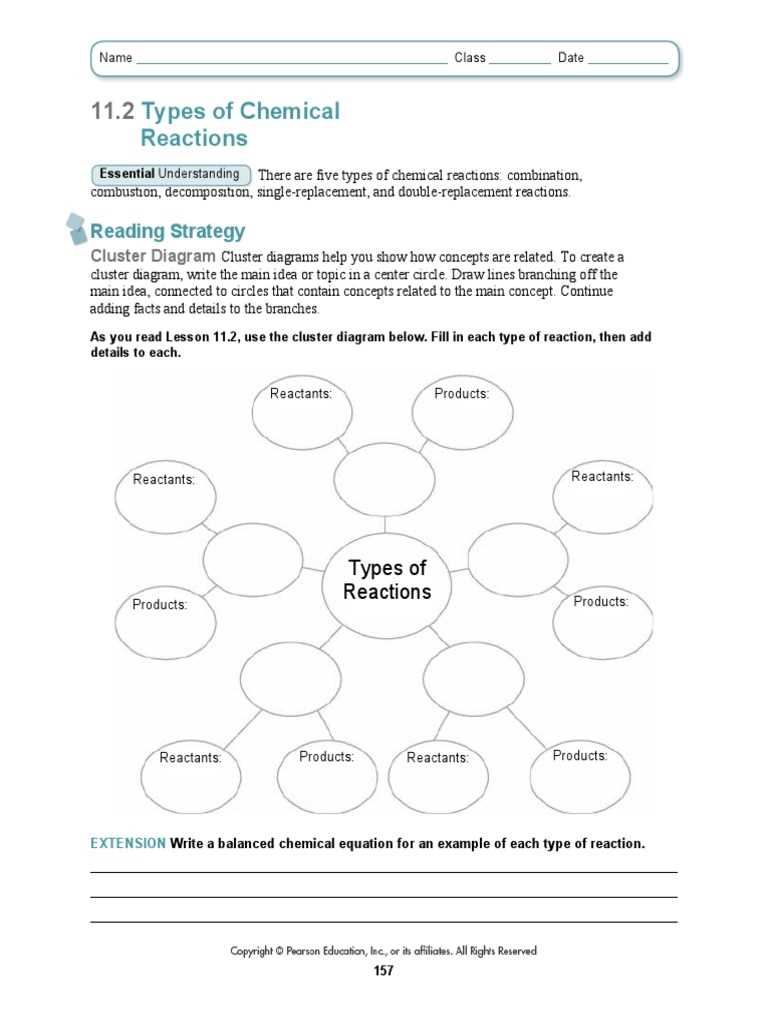
Single displacement reactions take place when one element replaces another in a compound, such as when zinc displaces copper from copper sulfate, resulting in the formation of zinc sulfate and copper metal.
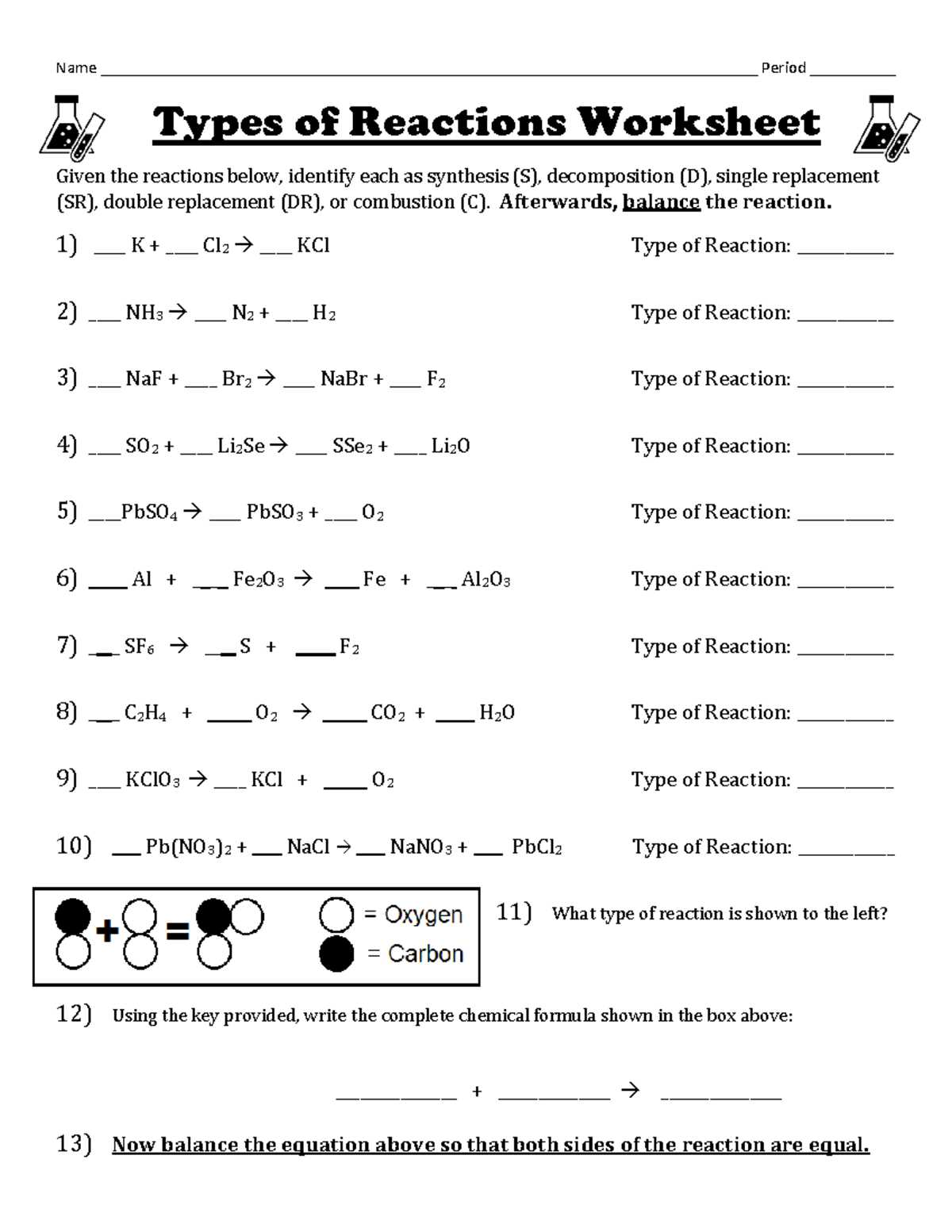
Double displacement reactions involve the exchange of ions between two compounds, often producing a precipitate, gas, or water. An example is when silver nitrate reacts with sodium chloride to form silver chloride and sodium nitrate.
By mastering the characteristics of each type, you will be able to predict the products and understand the underlying principles of each process. This is crucial for anyone looking to advance in the study of physical sciences or pursuing a career that involves chemical experimentation.