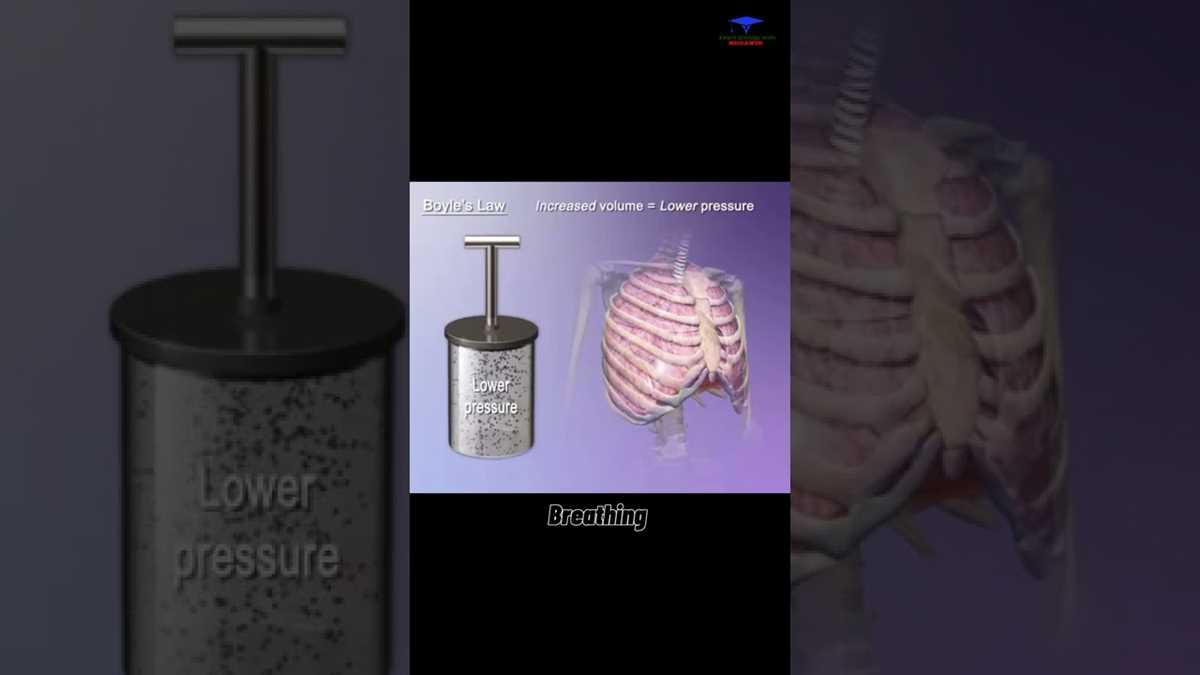
Understanding Boyle’s Law and Its Application in the Breathing Process
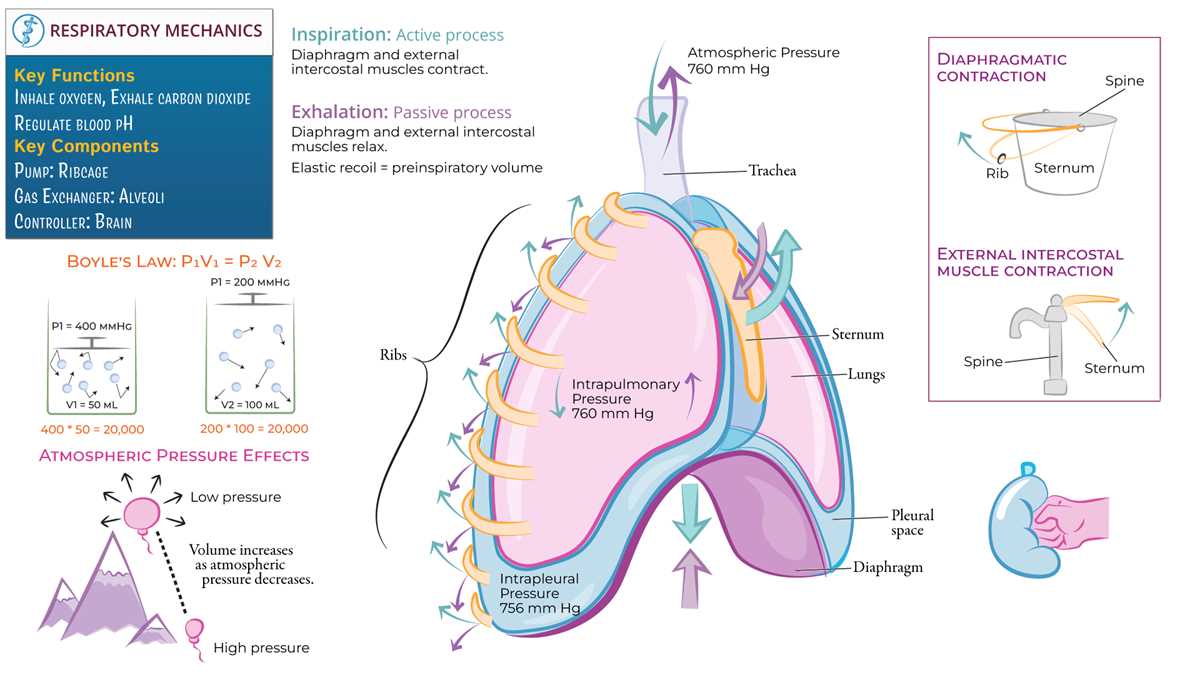
The inverse relationship between volume and pressure in the lungs is a direct consequence of physical principles governing gas behavior. When the chest expands, lung volume increases, leading to a decrease in air pressure within. This pressure difference allows air to flow in from the outside. Conversely, as the lungs contract, the internal pressure rises, pushing air out. This mechanism is crucial for efficient gas exchange in the respiratory system.
For optimal pulmonary function, it’s vital to understand how pressure adjustments impact the flow of gases. During inhalation, the diaphragm and intercostal muscles work together to enlarge the thoracic cavity. This creates a low-pressure environment, drawing air into the lungs. On exhalation, the muscles relax, reducing chest volume, increasing pressure, and forcing air out.
Any disruption to this balance can impair oxygen intake and carbon dioxide expulsion. Conditions like asthma or chronic obstructive pulmonary disease (COPD) involve compromised airflow due to changes in lung pressure dynamics, making effective treatment even more critical for restoring normal function.