Complete Guide to Understanding Electricity and Circuits
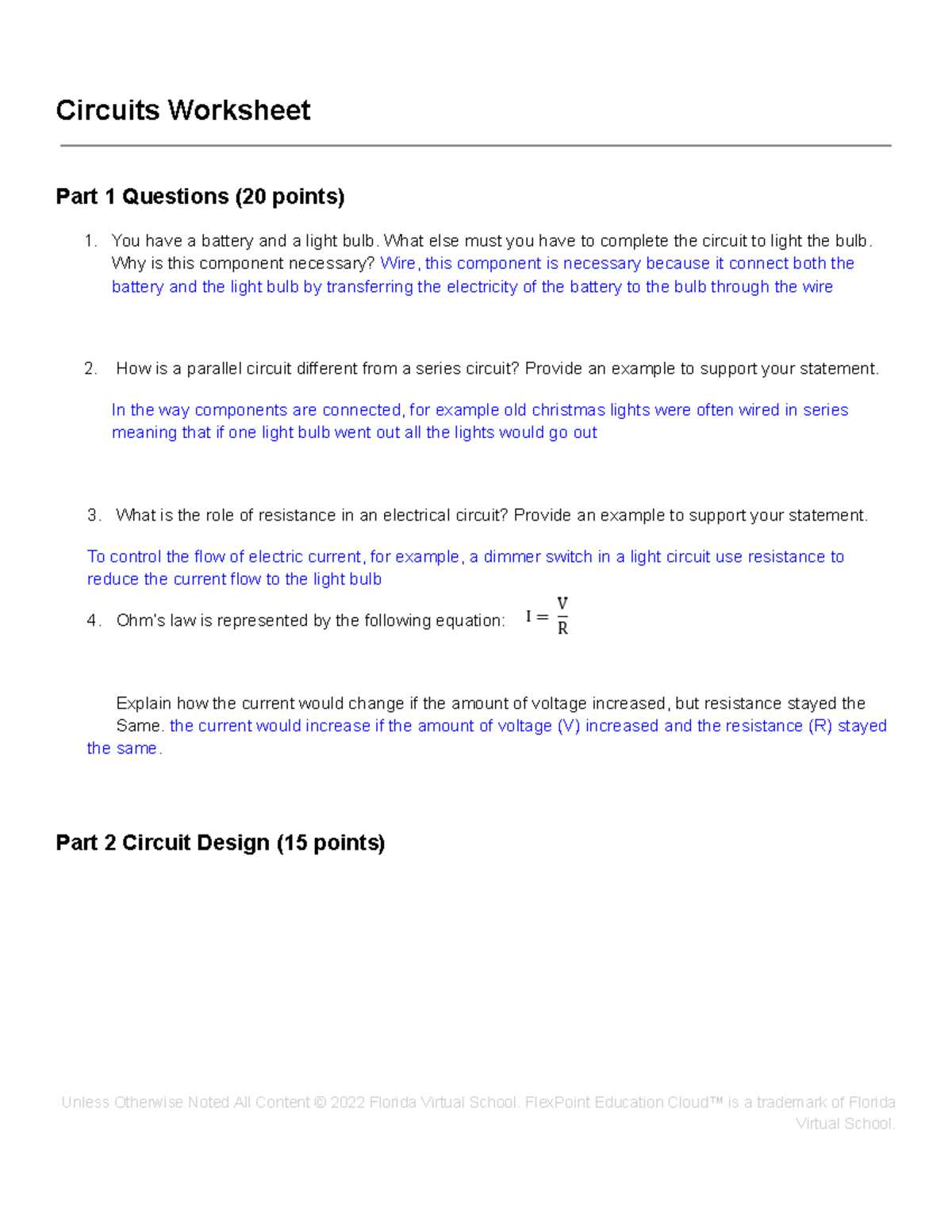
Start by reviewing the relationship between voltage, current, and resistance. The voltage in a system is the driving force that pushes the current through the components. Use Ohm’s Law (V = IR) to calculate any unknown parameter if two values are given. For instance, if you know the voltage and resistance, you can easily determine the current.
When examining a system, it’s important to identify whether components are connected in series or parallel. In a series connection, the current remains the same through all components, but the voltage is divided. In contrast, in a parallel connection, the voltage is the same across each component, while the current is divided based on the resistance.
Always double-check the component ratings before testing a system. Exceeding voltage or current limits can damage components or cause safety hazards. Use the appropriate tools, such as a multimeter, to measure voltage, current, and resistance, and ensure that all parts are operating within their designated parameters.
Understanding these fundamentals allows for effective troubleshooting. If a circuit is not functioning, check for open connections or faulty components. Pay close attention to signs of overheating or burnt components, which can indicate short circuits or overloads. By mastering the basic principles, you can confidently address issues that arise during maintenance or installation.
Solution Guide for Key Concepts in Current Flow and Component Function
To calculate current in a system, use Ohm’s Law. If voltage and resistance are known, rearrange the equation to find current (I = V/R). This principle applies to both simple and complex setups.
For series connections, remember that the total resistance is the sum of individual resistances. The current remains constant across all components, but the voltage is divided. In contrast, in parallel setups, the total resistance is calculated using the reciprocal formula (1/R_total = 1/R1 + 1/R2 + …), and voltage remains the same across each branch, while the current divides according to the resistance.
When testing a circuit, ensure your multimeter is correctly set to measure voltage, current, or resistance, depending on what you need. Always start by checking for continuity to rule out any broken connections or open circuits.
In case of a short circuit, check for components that are bypassing the load. For overloads, ensure the system is not drawing more current than the circuit is designed to handle. Overheating components, blown fuses, or tripped breakers are common signs of overcurrent situations.
By understanding how different components behave in various setups, you can confidently troubleshoot issues and make the necessary adjustments. Regularly check wiring diagrams to ensure all components are correctly configured before proceeding with repairs or modifications.
Understanding Ohm’s Law and Its Applications
To determine the relationship between voltage, current, and resistance in any system, apply Ohm’s Law, which states that current (I) equals voltage (V) divided by resistance (R): I = V / R. This formula is fundamental for calculating the flow of charge in various setups, whether you’re designing new systems or troubleshooting existing ones.
In real-world applications, Ohm’s Law is used to calculate how much current a circuit will carry based on the resistance and the power supply’s voltage. For instance, when installing new components or assessing malfunctioning units, knowing the voltage rating and resistance will help you identify the expected current draw and detect potential overloads.
In a series setup, the current remains the same across all components, but the voltage drops proportionally to the resistance. Use the law to predict the voltage loss across each resistor to avoid exceeding the system’s limits. Conversely, in parallel configurations, voltage stays constant across branches, and the current divides based on the resistance of each path. Understanding these relationships ensures a safer and more efficient design.
Another practical use of Ohm’s Law is in selecting the right wire size. To prevent overheating, ensure the wire gauge can handle the expected current, determined by the load and supply voltage. Proper selection helps avoid heat buildup, wire degradation, and possible fire hazards.
Finally, Ohm’s Law is critical for diagnosing issues. If the current in a system is higher than expected, it indicates a problem such as low resistance due to short circuits or faulty connections. Conversely, lower current than anticipated could suggest excessive resistance, such as a worn-out component or a poor connection.
How to Calculate Resistance, Voltage, and Current
To calculate current (I), use Ohm’s Law: I = V / R, where V is the voltage in volts (V) and R is the resistance in ohms (Ω). This formula helps you find how much current flows through a circuit when the voltage and resistance are known.
To calculate voltage (V), rearrange Ohm’s Law to: V = I * R. By multiplying the current by the resistance, you can determine the total voltage needed to push the current through the circuit.
To calculate resistance (R), use the formula: R = V / I. This will give you the resistance when the voltage across the component and the current flowing through it are known. It’s important to use the correct units for voltage (V), current (A), and resistance (Ω) for accurate results.
For practical use, always ensure that the correct units are used in your calculations. Voltage is measured in volts (V), current in amperes (A), and resistance in ohms (Ω). If you’re dealing with components in series or parallel, adjust your calculations accordingly based on the configuration.
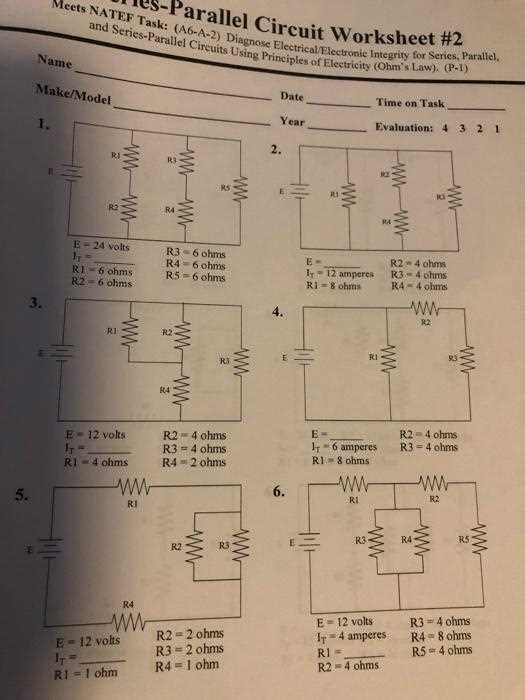
To calculate total resistance in a series circuit, simply add up the individual resistances: R_total = R_1 + R_2 + … + R_n. For parallel circuits, use the formula: 1 / R_total = 1 / R_1 + 1 / R_2 + … + 1 / R_n, then invert the result to find the total resistance.
Common Circuit Configurations and Their Functions
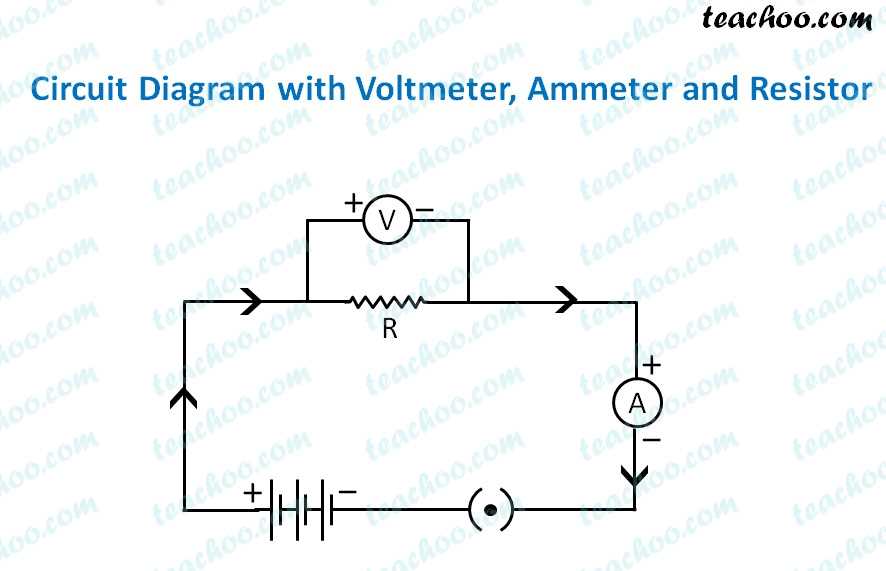
In a series layout, components are connected end-to-end, forming a single path for current. The current remains constant throughout the entire setup. However, the total resistance increases as more components are added. This configuration is typically used when devices must work together at the same current, like in Christmas lights.
In a parallel layout, components are arranged with multiple paths for current to flow. Each component experiences the same voltage. As more components are added, the overall resistance decreases. Parallel configurations are common in household wiring and allow each device to operate independently.
A combination of series and parallel setups, known as a mixed or complex circuit, allows for more flexibility in managing power distribution. This configuration is often used in more sophisticated systems where different devices require different voltages and resistances.
In a short circuit, the path of current is unintentionally altered, typically due to a low-resistance connection between two points. This can lead to excessive current flow, potentially damaging components or causing fire hazards. Safety devices like fuses and circuit breakers are essential for protecting the system.
When analyzing configurations, consider how current and voltage behave in each setup. For series circuits, the current is consistent, while voltage divides. For parallel circuits, voltage is constant across all components, but the current divides based on the resistance of each branch.
Troubleshooting Short Circuits and Open Circuits
To identify a short, inspect the wiring for any exposed or damaged areas that may cause unintended connections. Use a multimeter to check for continuity between conductors. If continuity is detected where it shouldn’t be, the short is likely located in that section.
If you suspect a short, power down the system immediately to prevent damage. Look for components that may have failed, such as insulation damage or faulty connections. In case of a blown fuse or tripped breaker, replace the faulty component and recheck the circuit for any further issues.
For an open connection, begin by ensuring the power is off. Use a multimeter to check for continuity across components. If no continuity is found, inspect the wiring and connections for any loose terminals or broken wires.
If you find an open, repair or replace the broken section of the circuit. Once repairs are made, use a multimeter again to confirm that the circuit is complete. In many cases, an open is the result of a loose or disconnected terminal, which is easily fixed.
- For short circuits, check for exposed wires or faulty components.
- For open circuits, ensure there are no loose connections or broken wires.
- Always turn off power before testing components with a multimeter.
Identifying Key Components in a Circuit Diagram
When analyzing a diagram, start by locating the power source. The source is typically represented by a symbol for a battery or power supply. From there, trace the conductors which connect various components in the system.
Next, identify resistors, capacitors, and inductors by their respective symbols. Resistors are represented by a zigzag line, capacitors by two parallel lines with a gap, and inductors are depicted as a series of loops or coils.
Switches are shown as either open or closed, depending on their state. A closed switch is depicted as a line connecting two points, while an open switch has a gap in the line. Identifying these will help you understand the flow of current.
Connectors such as junctions or nodes are also marked, usually as dots or small circles. These represent points where different wires or components are electrically connected. Ensure all connections are traced correctly to avoid errors in interpretation.
| Component | Symbol | Function |
|---|---|---|
| Resistor | Zigzag line | Limits current flow |
| Capacitor | Two parallel lines | Stores electrical energy |
| Inductor | Coil or loop | Stores energy in a magnetic field |
| Switch | Line with gap (open), line connected (closed) | Controls the flow of current |
| Power Source | Battery or power supply symbol | Provides electrical energy |
| Junction | Dot or circle | Connection point for components |
By familiarizing yourself with these symbols, you can accurately interpret diagrams and quickly identify key components within any schematic.
Using Multimeters to Measure Circuit Parameters
To measure voltage, set the multimeter to the voltage (V) setting and connect the probes across the two points where the voltage needs to be measured. Ensure the multimeter is set to the correct range (AC or DC) based on the circuit you are testing.
To measure current, set the multimeter to the current (A) setting. Connect the probes in series with the component or path where you need to measure the current. Never measure current across a component without breaking the circuit, as this could damage the meter or the circuit.
To measure resistance, switch the multimeter to the resistance (Ω) setting. Place the probes across the resistor or component, ensuring there is no power running through the circuit. A high reading means high resistance, while a low reading indicates low resistance.
Keep the following tips in mind when using a multimeter:
- Always check the battery level of the multimeter before use.
- Ensure the circuit is de-energized when measuring resistance to avoid damaging the multimeter.
- When measuring current, never exceed the maximum current rating of the multimeter.
- Double-check probe connections before taking measurements to ensure accuracy.
By using the multimeter correctly, you can easily diagnose problems, measure voltage, current, and resistance, and maintain safe operations while working on systems.
How to Read and Interpret Circuit Symbols
Begin by learning the standard graphical representations used in electrical schematics. Each symbol corresponds to a specific component such as resistors, capacitors, and diodes. Recognizing these symbols is crucial for accurate interpretation.
A resistor is represented by a zigzag line, a capacitor by two parallel lines with a gap, and a diode by a triangle pointing to a line. Power sources, like batteries, are drawn with two parallel lines, one longer than the other. Switches are typically shown as a break in the line, indicating an open or closed position.
Other complex components, such as transistors or transformers, also have their distinct symbols. For example, a transformer is represented by two coils of wire, each attached to a central core. Ground connections are marked with three horizontal lines stacked on top of each other, decreasing in width.
For a detailed guide on symbol meanings and common schematic standards, refer to resources like the Electronics Tutorials website, which offers a comprehensive list of common electrical symbols and their functions.
Protecting Systems with Fuses and Circuit Breakers
Install fuses or circuit breakers to safeguard against overloads or short circuits. Fuses contain a wire that melts when current exceeds safe levels, disconnecting the power supply. Replace a blown fuse with one of the same rating to restore function.
Circuit breakers, on the other hand, interrupt the power flow automatically when an overload is detected, but they can be reset once the issue is resolved. This makes circuit breakers a more convenient option for repeated use, while fuses must be replaced after activation.
For proper protection, choose a fuse or breaker with a current rating slightly above the normal operating current of the system. Ensure that each component in the setup is adequately protected by selecting the appropriate fuse or breaker for each individual circuit.
For detailed guidance on fuse and breaker ratings, visit the National Fire Protection Association website, which offers extensive resources on electrical safety standards and protection methods.