Stoichiometry Solution Guidance for Core Reaction and Yield Calculations
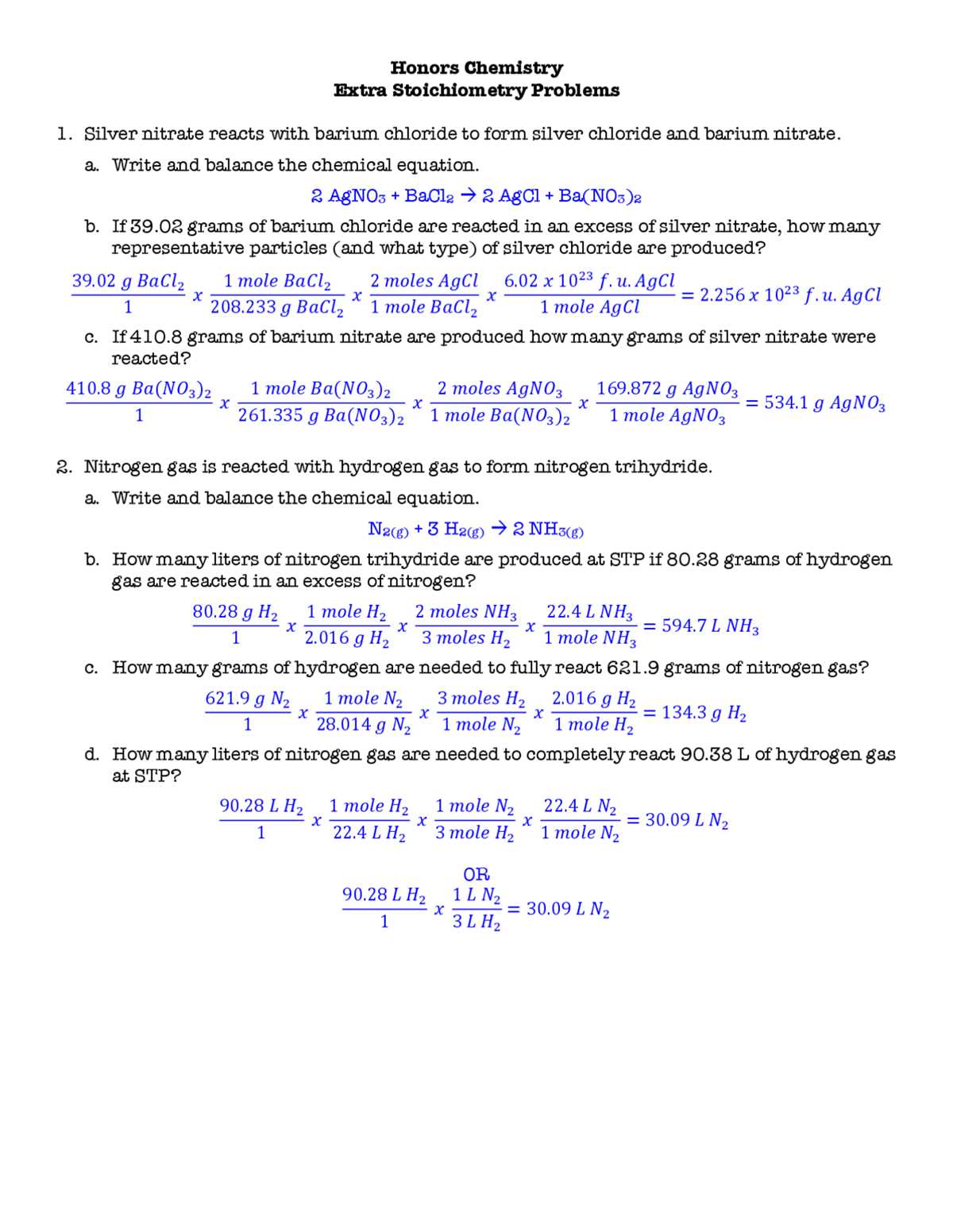
Begin by checking whether each chemical equation is balanced, as unbalanced coefficients distort mole ratios and lead to wrong results. A balanced setup provides the correct numerical links required for mass-to-mole conversions and product yield estimations.
Use measured reagent amounts to determine which substance limits the reaction. Compare available moles to the proportional requirements set by the balanced equation; the smallest ratio restricts product formation. This step prevents overestimating predicted output.
After locating the limiting component, compute the theoretical product quantity using its mole value and the reaction ratio. Convert the result into grams with precise molar masses taken from periodic-table data, avoiding rounded atomic weights that introduce calculational drift.
Check final values with consistent units and clear factor-label steps. Track significant figures according to the least certain measurement and verify that each numerical conversion follows logically from the previous operation.
Chemical Ratio Guidance for Practice Problems
Verify each reaction is balanced before running any calculations, since the coefficients supply the numerical links needed for converting mass to moles and projecting product amounts.
Identify the limiting component by comparing available moles with the proportional requirements given by the balanced reaction. The reagent producing the smallest quotient restricts product formation.
Use the mole value of that limiting component to compute the projected product output. Convert moles to grams with precise atomic masses sourced from current periodic-table data, avoiding rounded values that create drift.
Track every unit change with clear factor-label steps. Match significant figures to the least precise measurement and verify that each conversion aligns with the structure of the balanced reaction.
Balancing Reaction Equations for Subsequent Calculations
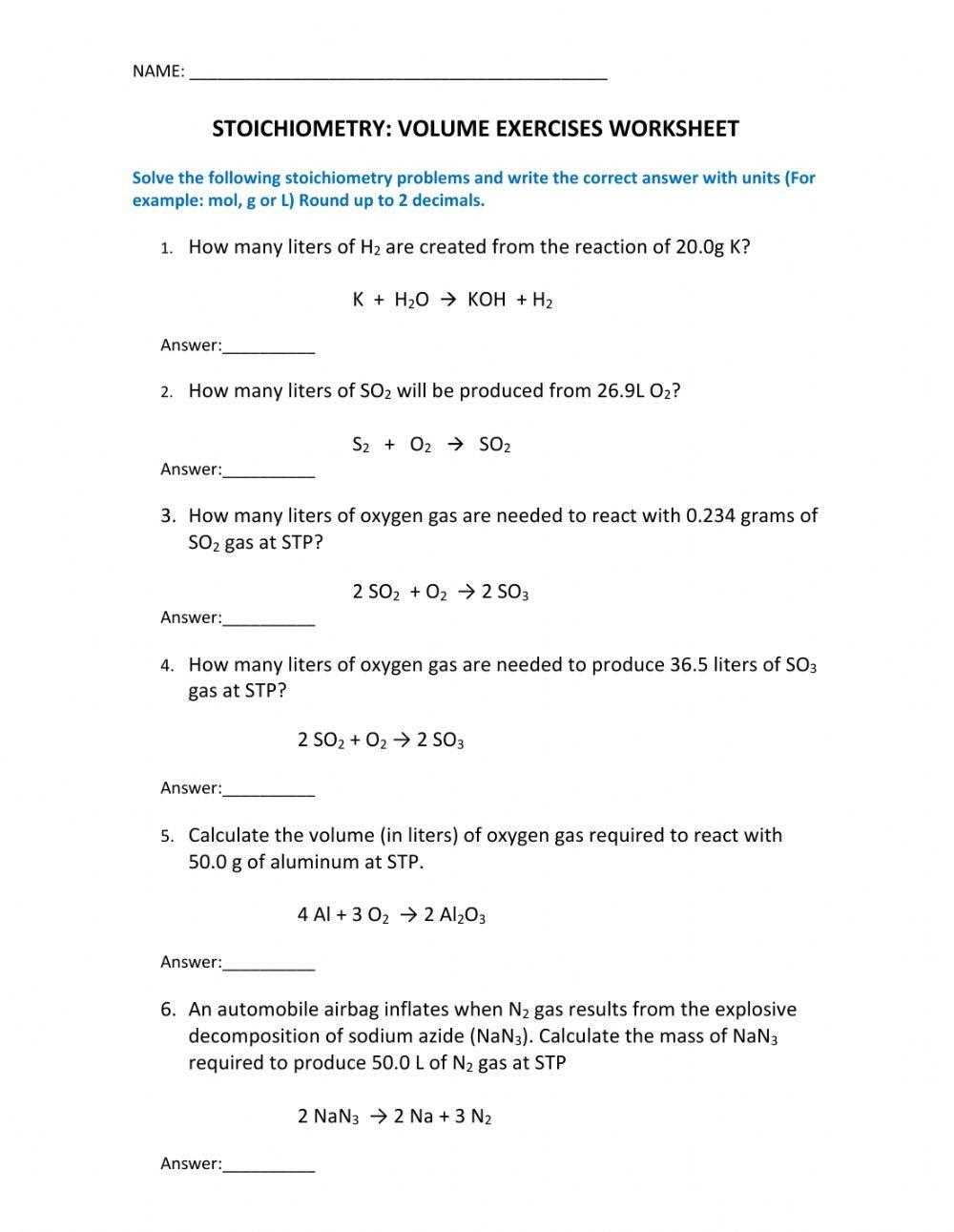
Match atom counts on both sides of the reaction before performing mass–mole–mass conversions, as the numerical coefficients determine every later ratio.
Use a fixed sequence to avoid misalignment of elements:
- Compare atoms of metals or other straightforward elements first.
- Adjust coefficients for polyatomic groups that remain intact across the reaction.
- Modify coefficients for hydrogen and oxygen last, since they often appear in multiple species.
Check your coefficients with a quick audit:
- List each element with its left-side and right-side totals.
- Confirm that no fractional values remain unless the reaction requires them; if fractions appear, multiply all coefficients by a common factor.
- Verify charge balance for ionic processes by matching net charge on both sides.
Once coefficients are established, use them directly as conversion factors between reactants and products, ensuring each mass or volume calculation aligns with the balanced structure.
Determining Molar Ratios Required for Each Conversion Step
Select numerical coefficients from the balanced reaction as your primary source for each proportional relationship, since these values dictate how many units of one substance correspond to another during mass or volume conversions.
Build each ratio with the target substance in the numerator to maintain directional clarity during calculations. This prevents accidental inversion, which commonly leads to incorrect yields or reagent estimates.
Follow a structured sequence:
- Identify the substance you begin with and convert it to moles using its molar mass.
- Extract the coefficient pair linking the starting substance to the desired product or reagent.
- Form a ratio using moles of product over moles of reactant or vice versa, depending on the calculation pathway.
When multiple steps are required, chain ratios by multiplying each segment without simplifying prematurely. This helps maintain clarity during multi-reactant scenarios or reactions involving intermediate species.
After applying all ratios, convert the resulting mole quantity to mass, volume, or particle count using standardized constants such as molar mass or Avogadro’s number.
Identifying the Limiting Reactant in Multi-Component Tasks
Compare the available mole quantities of each reagent against the required mole ratios from the balanced reaction, selecting the substance that satisfies the smallest fraction of its needed amount as the limiting component.
Convert all provided masses, volumes, or particle counts to moles before comparing, since unequal units distort proportional analysis. This prevents false assumptions based on mass alone, especially in systems where molar masses differ significantly.
Use a structured check:
- Determine the mole requirement for each reagent using its coefficient from the balanced reaction.
- Divide the actual mole quantity by its required amount.
- Identify the smallest resulting value; this reagent restricts final output.
Apply this identification before any yield calculation to avoid overestimating product formation or underestimating reagent consumption. This step becomes especially significant once more than two substances participate in the transformation.
For additional reference, see the detailed guidance provided by LibreTexts: https://chem.libretexts.org/Courses
Computing Theoretical Yield From Balanced Reaction Data
Select the limiting component first, because the predicted product mass must be based solely on the reagent that restricts formation, not on total input quantities.
Convert the limiting component to moles, then apply the numeric ratio from the balanced reaction to determine the mole quantity of the target substance. This ratio must come directly from the coefficients, not from mass or volume values.
- Write the balanced chemical statement with clear coefficients for each species.
- Identify the limiting component and calculate its mole count.
- Multiply this value by the coefficient ratio relating the limiting component to the desired product.
- Convert the resulting mole quantity of product to grams using its molar mass.
Check the final value by confirming that no step relied on mass comparisons without mole conversion, as such shortcuts distort proportional predictions, especially for compounds with high molar-mass variation.
Calculating Percent Yield Based on Actual Product Mass
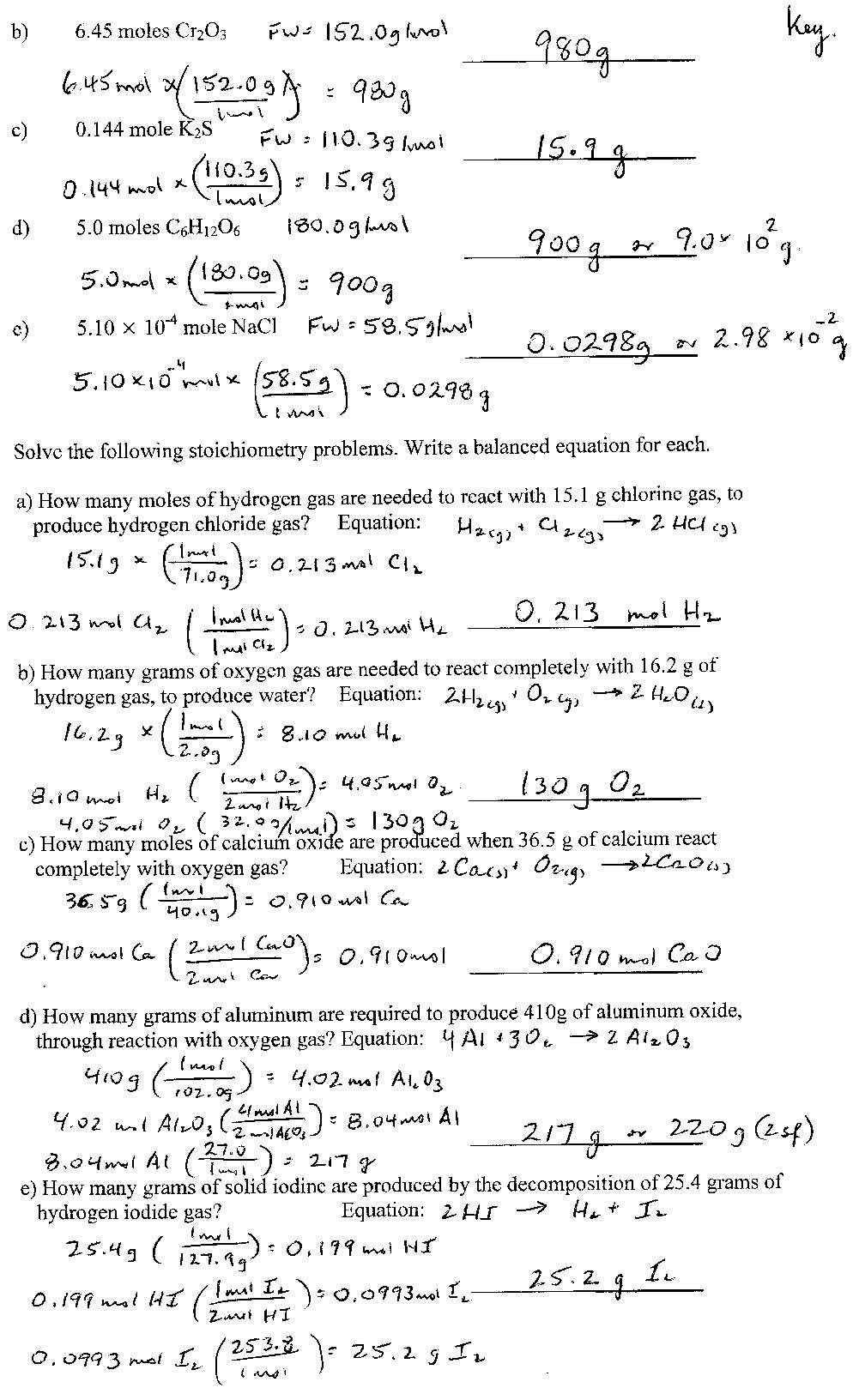
Use the measured product mass and divide it by the predicted product mass from balanced-reaction analysis, then multiply by 100 to obtain the production ratio.
Ensure the predicted value is derived strictly from the limiting component; using any other input inflates the theoretical figure and lowers the final ratio artificially.
Percent Yield Formula:
Percent Yield = (Actual Mass ÷ Theoretical Mass) × 100
Confirm that both masses refer to the same compound and are expressed in the same units. When the predicted mass is calculated in grams, convert the measured mass to grams as well before performing the division.
Recalculate if the ratio exceeds 100%, as such outcomes typically indicate incomplete drying, scale miscalibration, or incorrect theoretical-mass computation.
Applying Mole-Mass Conversions in Sequential Problem Chains
Convert each initial mass to moles before linking any reaction steps, since mole-based ratios control all subsequent numerical transitions.
Use the atomic or formula mass from the periodic table, dividing the given mass by that value to obtain the amount in moles. Avoid skipping this step, as direct mass-to-mass transitions introduce proportional errors.
When moving through multiple stages, apply a clear order:
1) mass → moles,
2) mole ratio → product moles,
3) product moles → mass.
This prevents circular calculations that distort final quantities.
Recheck the unit path for each step. If the mass unit cancels incorrectly or the molar factor is flipped, the entire chain collapses mathematically, producing outcomes that cannot align with balanced-reaction logic.
Checking Unit Consistency and Common Conversion Errors
Confirm that each numerical step maintains a clear unit path; inconsistent units create mismatched ratios that distort reaction-based calculations.
Track every cancellation explicitly. If grams remain after a mole ratio step, the factor orientation is incorrect. Reverse the fraction so that unwanted units cancel line by line.
Use molar mass only for mass–mole transitions and avoid placing it in mole–mole stages, as this misaligns proportional factors and inflates or deflates final quantities.
Reevaluate any step where multiple prefixes (mg, g, kg) appear. Convert all masses to grams before proceeding to avoid decimal-placement errors that multiply through the entire chain.
Check that volume-based data uses proper conditions. If a task provides gas volume at standard parameters, keep the fixed molar volume factor separate from mass conversions to prevent mixing incompatible unit systems.
Verifying Significant Figures and Rounding Rules in Final Outputs
Match the total digits in each reported value to the least precise measurement used in your calculation; mismatched precision skews comparative checks across multi-step tasks.
Apply rounding only after completing all numerical operations. Early trimming alters intermediate ratios and produces drift in mass–mole–volume chains.
Use standardized digit rules: digits 1–9 always count, leading zeros never count, zeros between digits count, and trailing zeros count only when a decimal point is present.
| Input Type | Required Treatment | Typical Outcome |
|---|---|---|
| Measured mass (e.g., 12.30 g) | Preserve all digits | 4 significant figures |
| Integer from a coefficient | No precision limit | Unlimited significance |
| Volume with no decimal (e.g., 250 mL) | Treat as ambiguous precision | 2–3 figures depending on context |
| Reported final mass | Round to least precise input | Matches limiting measurement |
Check for round-off that changes the first uncertain digit; if the dropped portion is ≥5, increase the final digit by one. For values ending in 5 followed only by zeros, round toward the nearest even digit to maintain statistical balance.