Comprehensive Solutions for Chemical Bonding Test Questions
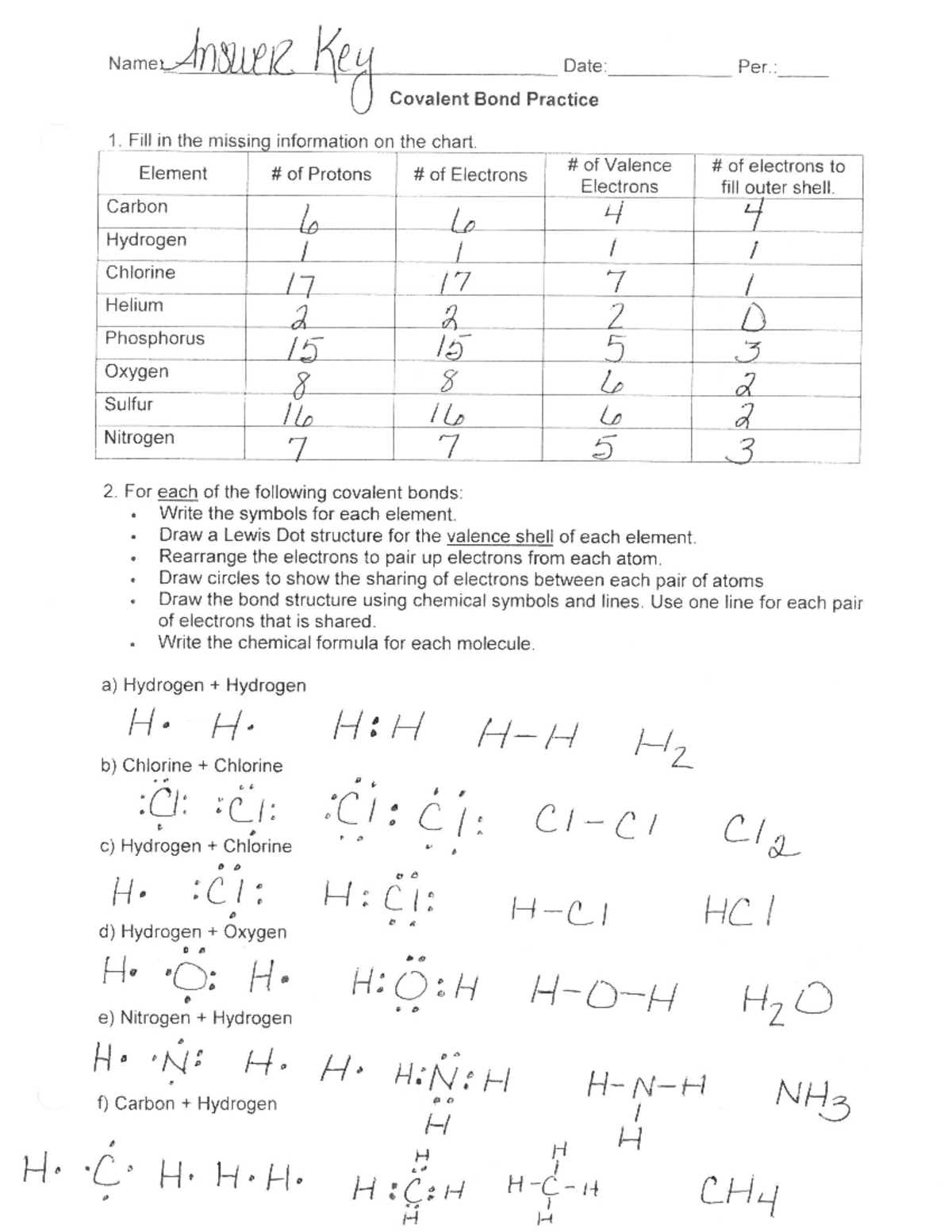
To master molecular interactions, it is crucial to understand how atoms combine through different forces and the resulting structure. The correct identification of bond types, electron distribution, and molecular geometry is vital in predicting a compound’s properties.
Begin by recognizing the differences between ionic, covalent, and metallic connections. Ionic compounds occur when electrons transfer between atoms, forming oppositely charged ions. In covalent molecules, atoms share electrons to achieve stable electron configurations. Metallic bonds involve a “sea of electrons” that move freely around metal ions.
Additionally, accurately drawing structures such as Lewis dot diagrams and predicting the shape of molecules based on VSEPR theory is key. An understanding of electronegativity allows for better prediction of electron sharing, providing insights into molecular polarity.
Chemical Bonding Test Answer Key
To correctly analyze molecular interactions, first identify the type of bond based on the electron sharing or transfer process. For ionic compounds, look for a significant difference in electronegativity between the two atoms, which leads to the formation of charged ions. In covalent compounds, electrons are shared between atoms with similar electronegativity, forming neutral molecules.
Next, focus on determining the structure of the molecules. Use Lewis dot diagrams to illustrate the electron arrangement, ensuring that each atom follows the octet rule, except for hydrogen, which follows the duet rule. Remember that in some cases, such as with molecules like carbon dioxide (CO₂), double bonds may form to satisfy the octet rule.
After that, apply VSEPR theory to predict the shape of the molecule. Consider the number of bonding and nonbonding electron pairs around the central atom. This will help you determine whether the molecule is linear, trigonal planar, tetrahedral, or another shape.
Lastly, calculate the molecular polarity based on the symmetry of the molecule and the difference in electronegativity. Polar molecules will have a partial positive charge on one side and a partial negative charge on the other, which influences their physical properties, such as solubility and boiling point.
How to Determine Bond Types: Ionic vs Covalent
To differentiate between ionic and covalent bonds, start by examining the electronegativity difference between the atoms involved:
- If the electronegativity difference is greater than 1.7, the bond is likely ionic. This occurs when one atom strongly attracts electrons, transferring them to another atom, resulting in the formation of ions.
- If the electronegativity difference is less than 1.7, the bond is covalent. Atoms in covalent bonds share electrons more equally or with slight polarity.
In ionic compounds, one atom loses electrons (becoming positively charged) and the other gains electrons (becoming negatively charged). The oppositely charged ions are held together by strong electrostatic forces.
Covalent compounds, on the other hand, involve atoms that share electrons. These bonds can be polar if there is a slight difference in electronegativity, or nonpolar if the electronegativity values are very similar.
To further confirm the bond type, examine the physical properties of the substance:
- Ionic compounds tend to have high melting and boiling points and are usually soluble in water, with electrical conductivity in solution.
- Covalent compounds often have lower melting and boiling points and may not conduct electricity in any state.
Identifying Bonding Patterns in Molecules
To identify the bonding patterns in a molecule, begin by considering the elements involved and their respective valence electrons. Follow these steps:
- Determine Electronegativity Differences: Compare the electronegativity values of the atoms. A large difference typically indicates an ionic bond, while similar electronegativities suggest covalent bonding.
- Check for Lone Pairs: Assess whether any atoms have lone pairs of electrons. These influence the geometry and bond angles in the molecule.
- Examine the Molecular Geometry: Use the VSEPR (Valence Shell Electron Pair Repulsion) theory to predict the shape based on electron pairs and bonds. The shape of a molecule can indicate the type of bonding and the number of bonds between atoms.
Common patterns include:
- Linear Molecules: Formed by two atoms or by three atoms with no lone pairs on the central atom (e.g., CO2).
- Trigonal Planar: Seen in molecules with three bonding regions around the central atom, such as in BF3.
- Tetrahedral: Four bonding regions around the central atom, as seen in CH4.
- Polyatomic Molecules: Complex molecules with multiple atoms often exhibit various bond types and geometries depending on the atoms involved (e.g., H2O, NH3).
Review the structure of the molecule using models or diagrams to confirm the bonding patterns, ensuring to check the bond lengths and angles for consistency with theoretical predictions.
Steps for Drawing Lewis Structures in Bonding Exercises
Follow these steps to correctly draw Lewis structures when working through bonding exercises:
- Count Total Valence Electrons: Determine the number of valence electrons for all atoms in the molecule. Add them up, keeping in mind that each bond will use two electrons.
- Choose a Central Atom: Select the atom with the lowest electronegativity (usually not hydrogen) as the central atom. This atom will form bonds with others.
- Connect Atoms with Single Bonds: Draw single bonds between the central atom and surrounding atoms. Each bond represents two electrons.
- Distribute Remaining Electrons: Place the remaining valence electrons around the atoms, starting with the outer atoms. Ensure each atom (except hydrogen) has a full octet (8 electrons) if possible.
- Check for Octet Completion: If the central atom doesn’t have a full octet, try forming double or triple bonds by moving lone pairs of electrons from surrounding atoms to form additional bonds.
- Final Verification: Ensure all valence electrons are used and that all atoms have appropriate electron configurations (octet rule for most atoms, duet rule for hydrogen).
By following these steps, you can accurately draw the Lewis structure of a molecule and identify the type of bonds formed between atoms.
Common Misconceptions in Chemical Bonding Tests
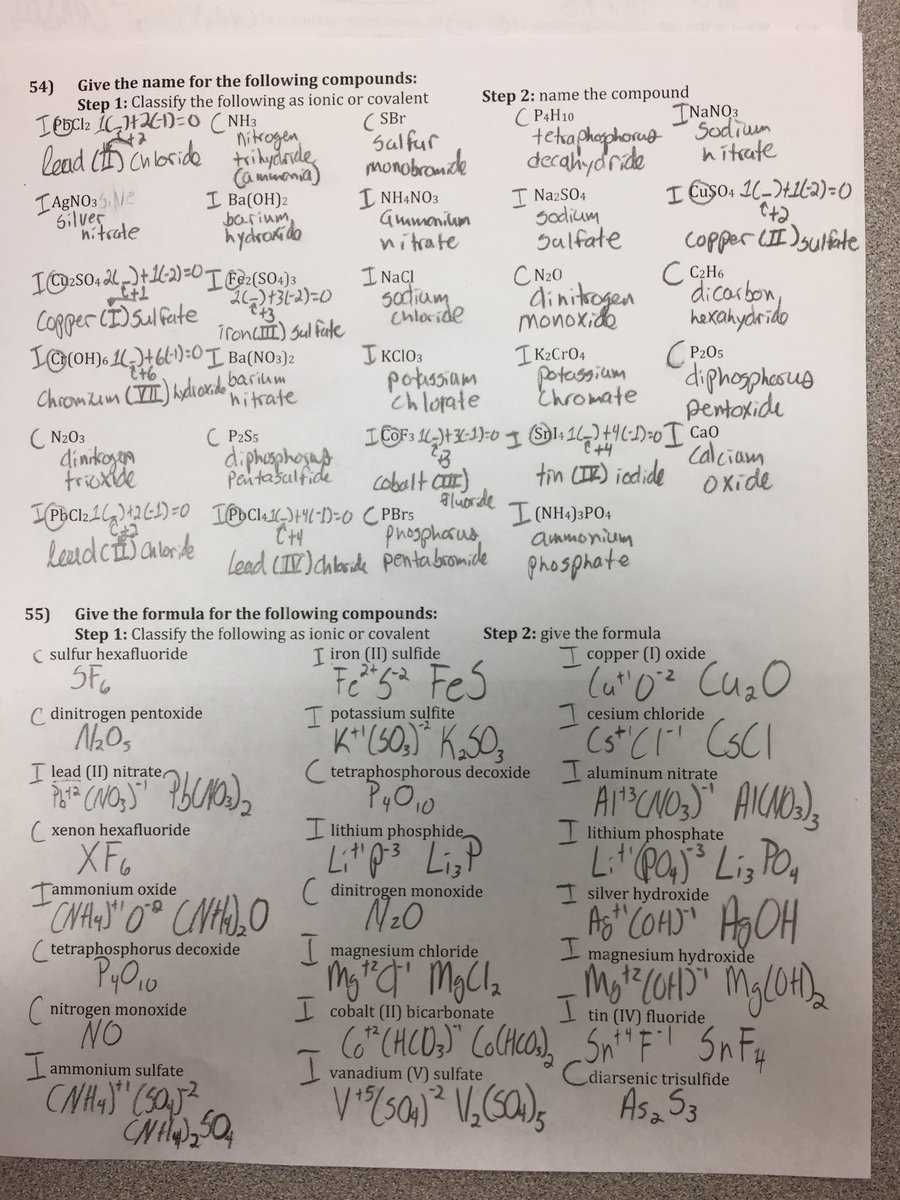
Many students encounter certain misconceptions during exercises involving atomic connections. Below are some of the most common misunderstandings and clarifications:
- Assuming All Atoms Form Octets: Not every atom follows the octet rule. Elements like hydrogen and boron may only require two or six electrons, respectively.
- Confusing Ionic and Covalent Bonds: Ionic interactions occur when electrons are transferred, while covalent connections happen when electrons are shared. Many confuse these two concepts, especially when the difference in electronegativity is small.
- Believing Single Bonds Are Always the Strongest: Single bonds are not always the strongest. In some cases, double or triple bonds can provide greater stability, especially in molecules with larger atoms or in resonance structures.
- Overlooking Resonance Structures: Some molecules have multiple valid Lewis structures. Overlooking resonance structures can lead to inaccurate representations, especially in molecules like ozone (O3) or nitrate (NO3-).
- Misunderstanding Lone Pairs of Electrons: Lone pairs are often neglected or incorrectly placed. Ensure that lone pairs are distributed properly and not counted as bonding electrons.
- Expecting Symmetry in All Molecules: Not all molecular shapes are symmetrical. The presence of lone pairs, different bonding arrangements, or multiple central atoms can lead to asymmetry.
By addressing these common mistakes, you’ll improve your ability to solve exercises related to atomic connections and draw more accurate molecular structures.
Understanding Electronegativity and Its Role in Bonding
Electronegativity is the ability of an atom to attract electrons in a chemical bond. This property significantly influences the nature of interactions between atoms. The difference in electronegativity between two atoms determines the type of bond formed between them.
When the electronegativity difference is large (usually greater than 1.7), an ionic bond is formed. In this case, one atom strongly attracts electrons, leading to the transfer of electrons from one atom to another, creating charged ions.
If the electronegativity difference is small or non-existent (usually less than 1.7), the atoms will share electrons more equally, leading to a covalent bond. In these cases, electrons are shared between atoms to fill their outer electron shells.
The concept of electronegativity is key to predicting molecular properties such as polarity. In polar covalent bonds, electrons are not shared equally, creating partial charges on the atoms. Nonpolar covalent bonds occur when electrons are shared equally.
For a deeper understanding of electronegativity trends and their effects on molecular structures, visit reputable sources like the ChemBlink database for comprehensive data.
How to Predict Molecular Geometry Based on Bonding
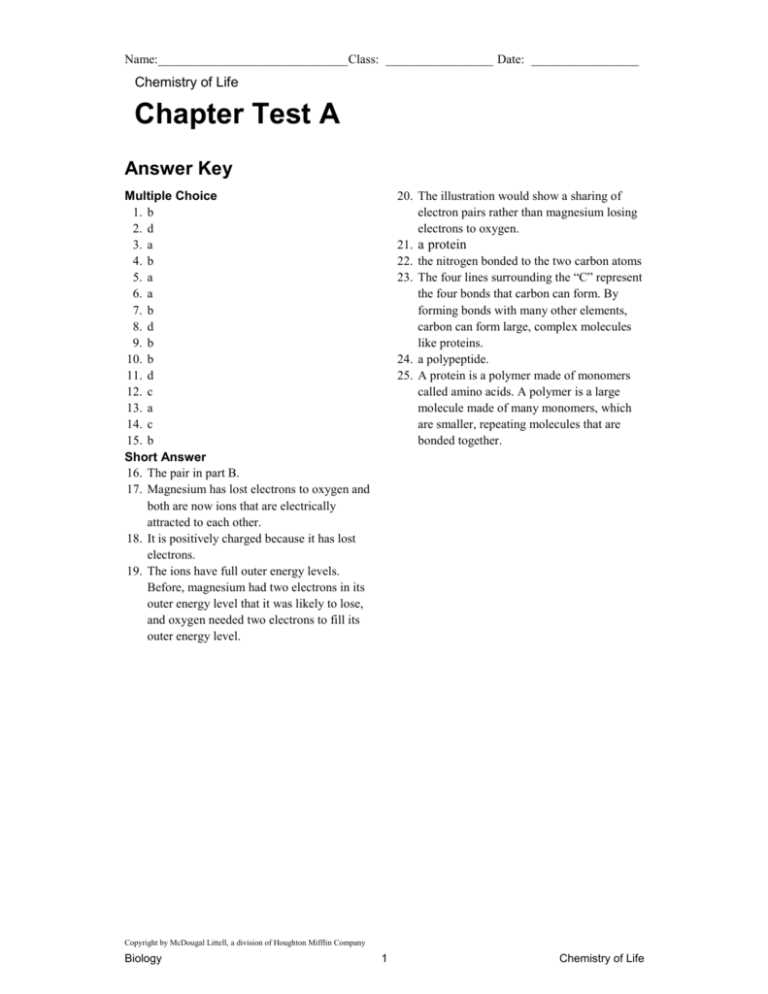
To predict the shape of a molecule, consider the number of bonds and lone pairs around the central atom. The Valence Shell Electron Pair Repulsion (VSEPR) theory provides a systematic approach to determining molecular geometry by considering electron pairs’ repulsion.
Follow these steps to determine molecular geometry:
- Count the electron pairs: Identify the number of bonding pairs and lone pairs around the central atom.
- Determine electron pair geometry: Based on the number of electron pairs, assign the electron geometry using VSEPR theory (e.g., linear, trigonal planar, tetrahedral).
- Consider lone pairs: Lone pairs occupy more space than bonding pairs and can alter the bond angles. Adjust the shape accordingly (e.g., bent, trigonal pyramidal).
- Apply molecular shape names: The final molecular shape depends on how atoms are arranged, considering bond pairs and lone pairs (e.g., linear, bent, trigonal planar, tetrahedral).
For example, a molecule with two bonding pairs and no lone pairs will have a linear geometry, while a molecule with three bonding pairs and one lone pair will adopt a trigonal pyramidal shape.
Use this approach to predict molecular geometry accurately for simple molecules and understand how electron pairs influence the overall shape.
Practical Applications of Chemical Bonding in Everyday Life
Understanding how atoms link together to form molecules helps explain many common materials and processes. For instance, the properties of water–such as its ability to dissolve various substances–are due to the polar nature of its molecules. This characteristic influences everything from cleaning to biological functions.
In cooking, the Maillard reaction that creates flavors and colors in foods is a direct result of chemical interactions. The heat causes molecules in food to break apart and reassemble into new compounds, transforming taste and texture.
The creation of polymers, which are widely used in plastics, clothing, and medical devices, depends on strong molecular links. The flexibility or rigidity of materials like PVC, polyethylene, or nylon is determined by the types of interactions between the atoms in their chains.
Even in the field of energy, understanding molecular interactions is key. Battery technologies rely on the movement of electrons through bonds, while fuel combustion involves breaking bonds in fuels to release energy.
By recognizing how atoms connect and form compounds, it’s easier to understand everyday phenomena, from why some materials are strong and others flexible, to how heat or electricity can change the structure of substances.
Tips for Analyzing and Interpreting Bonding Test Results
When reviewing results from bonding exercises, focus on the following strategies:
- Identify the Type of Interaction: Determine if the connection is ionic, covalent, or metallic. Each type has distinct characteristics in terms of electron sharing or transfer.
- Check Electron Distribution: Look at how electrons are arranged. For covalent connections, ensure shared pairs are clearly indicated, while for ionic connections, check for transferred electrons between atoms.
- Examine Molecular Geometry: Confirm if the shape of the molecule fits with the predicted structure based on the bonding. Use the VSEPR model to assess angles and geometry.
- Balance Charge and Electronegativity: Ensure that atoms with higher electronegativity are placed appropriately. The distribution of charge should make sense based on atomic characteristics.
- Validate with Energy Considerations: Lower energy configurations are generally more stable. Check if the proposed bonds minimize energy, ensuring the stability of the structure.
By carefully following these steps, you will be able to interpret and assess molecular structures more accurately, identifying potential errors or inconsistencies in the analysis.